Ciborinia camelliae
L.M.Kohn
Study description
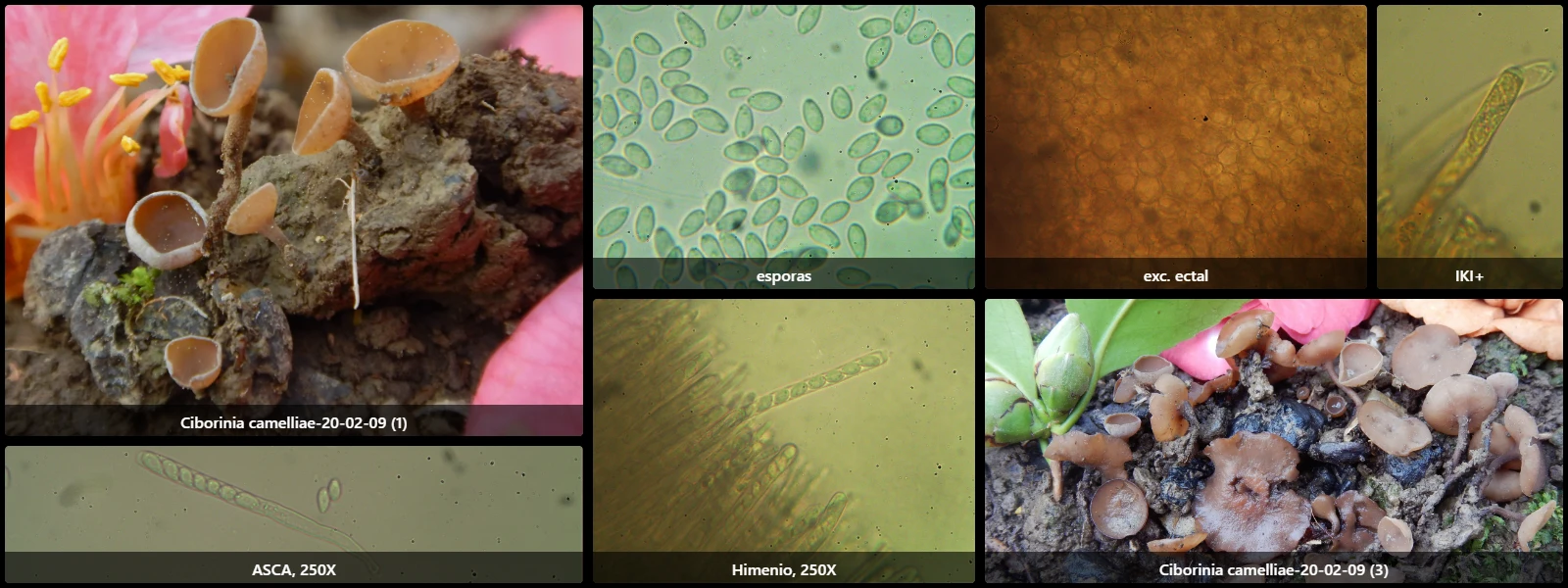
A remarkable ascomycete owing to its fruiting habit. The fungus infects camellia flowers (Camellia spp.), causing premature flower blight. Subsequently, a sclerotium develops within the fallen petals on the ground, from which the sexual ascomata emerge under favorable conditions.
The apothecia are cupulate and brownish with a long stipe. At maturity the asci release millions of ascospores that infect neighboring camellias, thereby completing the species' life cycle.
Fruiting typically occurs in late winter, primarily between February and March.
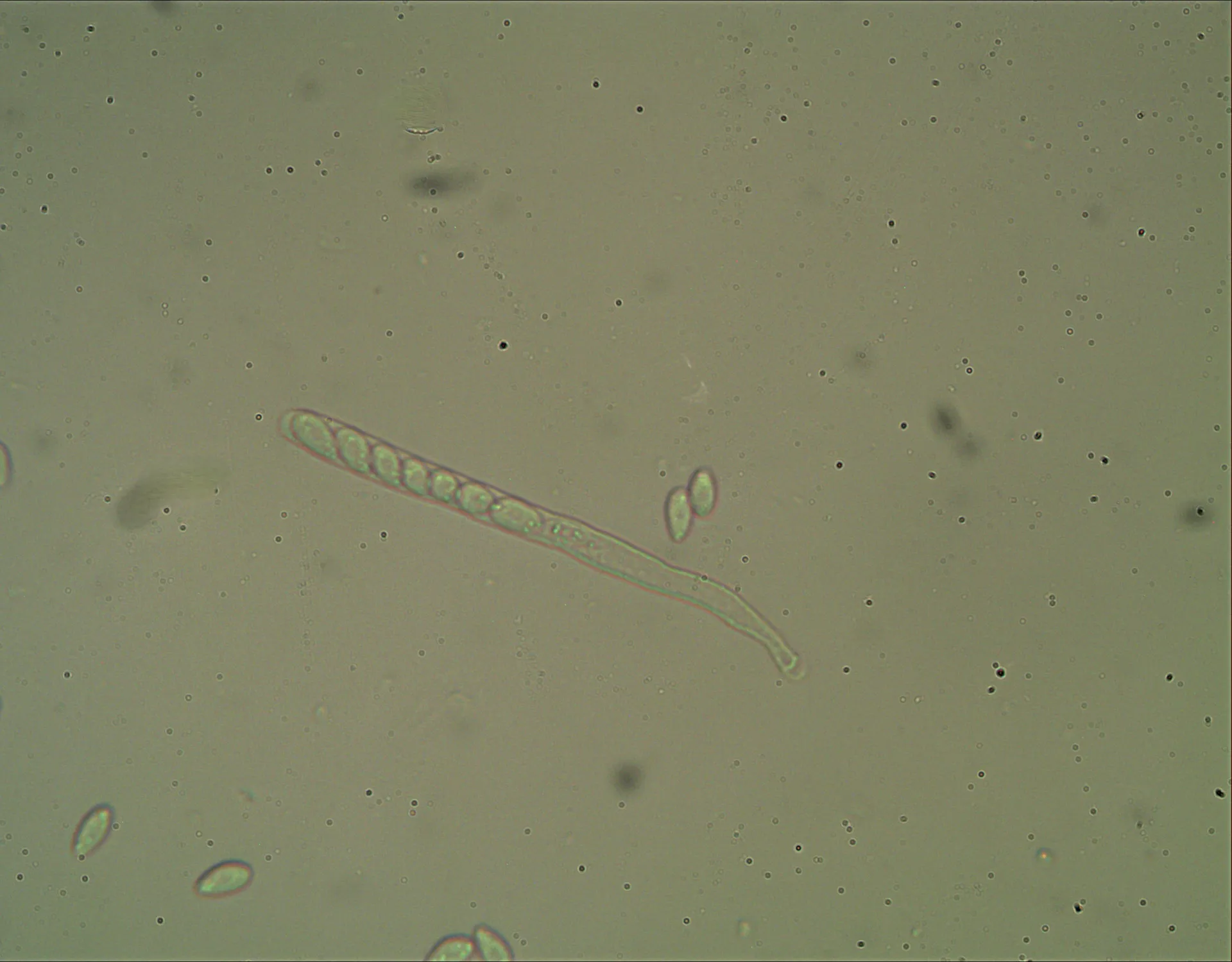
The microscopic study is based on a collection made in the municipality of Aia (Gipuzkoa) under Camellia japonica in February.
An additional photograph is included from a later collection in Arrigorriaga (Bizkaia), also under Camellia japonica in late February.
Geographic references
Map generated from global occurrence data from GBIF. GBIF.
Study measurements
Values in Microns (µm)Macroscopic gallery
.webp)
Microscopic gallery