

Zygospermella insignis
(Mouton) Cain
Study description
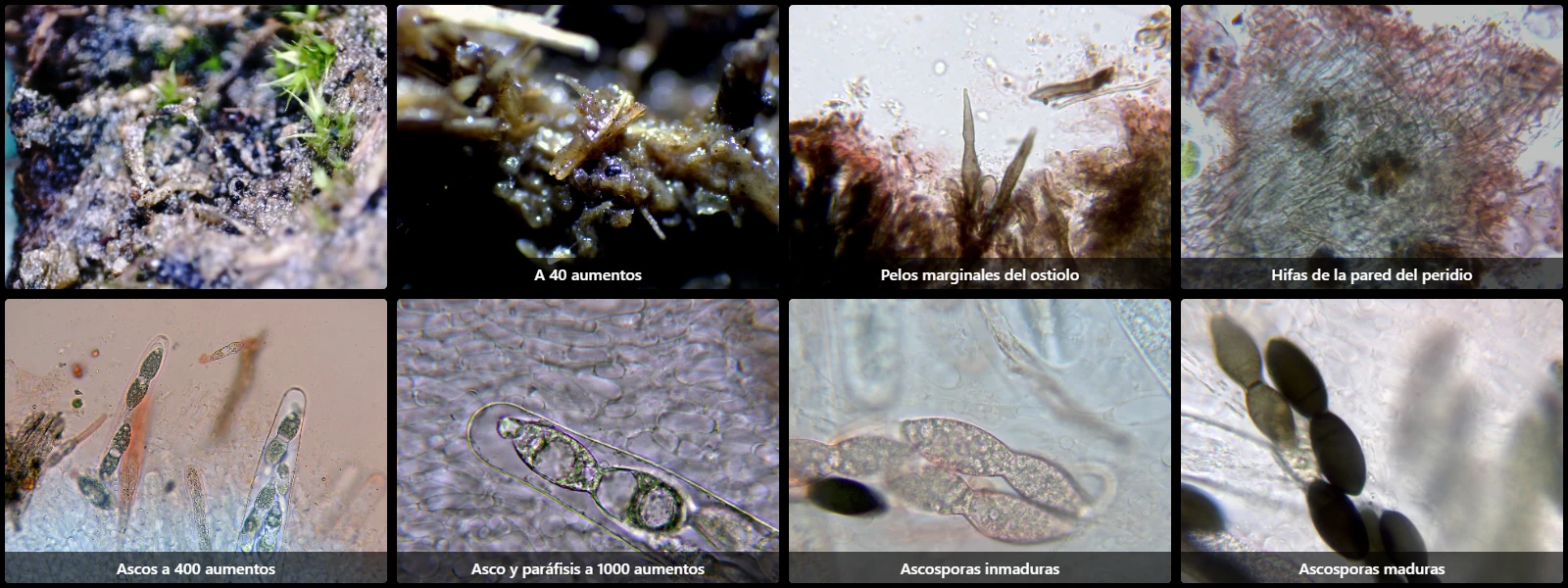
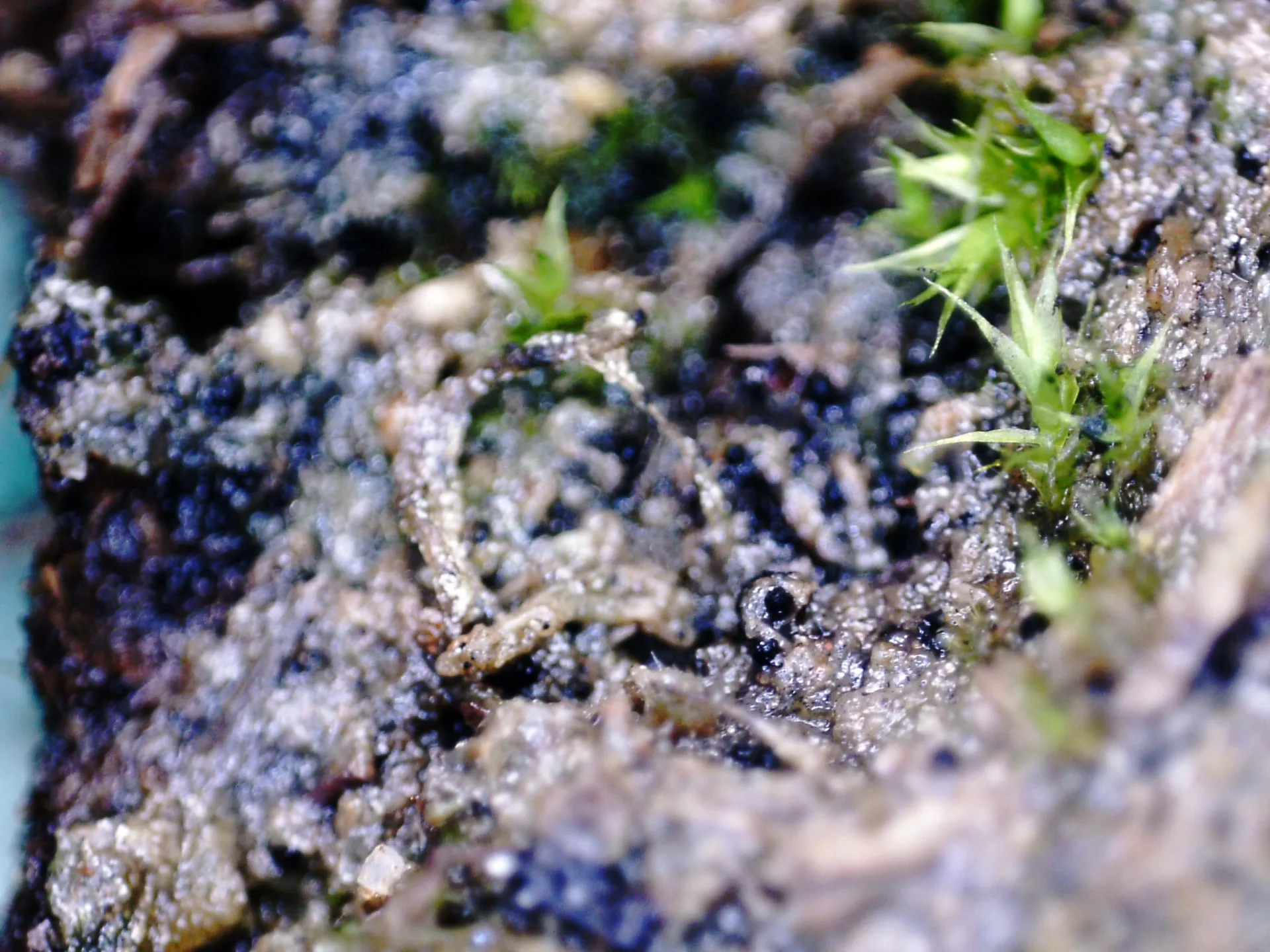
A coprophilous fungus colonizing well-decayed dung, especially of cattle, with superficial to semi-immersed, subglobose to pyriform perithecia, 0.6 to 0.9 mm high by 0.3 to 0.5 mm wide, very dark brown to black, with an ostiole surrounded by rigid hairs (setae).
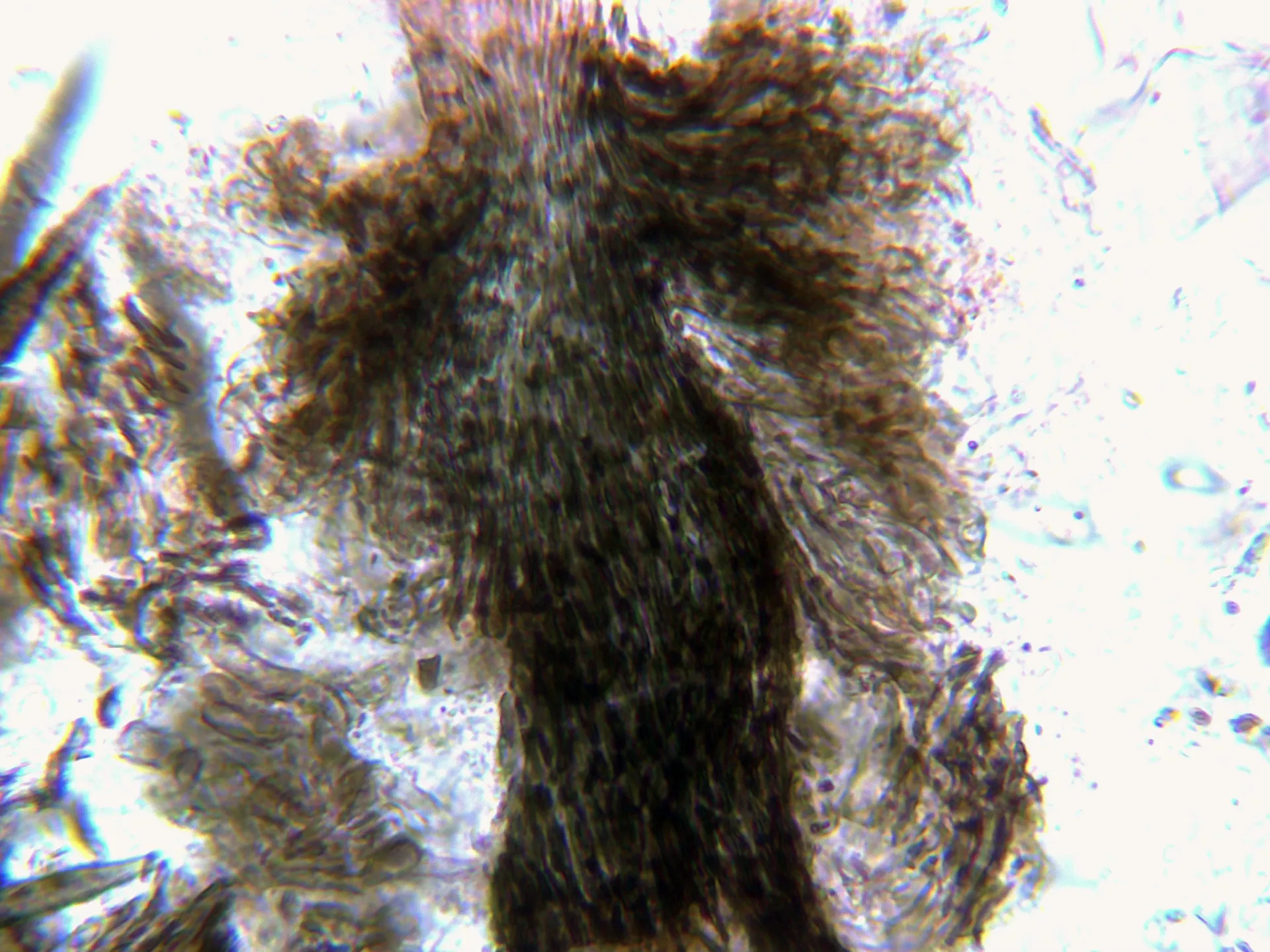
Peridial wall hyphae of textura globulosa-angularis, moderately thick-walled, 6 to 14 µm in diameter, with abundant light brown pigment inside.
Hairs surrounding the ostiole up to 50 µm long, 3 to 4 µm wide at the base, with brown intracellular pigment, and with a broad base gradually tapering towards the apex, which is slightly more hyaline.
Asci cylindrical to slightly clavate, 200 to 250 µm long by 24 to 39 µm wide, with spore arrangement within the ascus uniseriate (with spores overlapping laterally) to biseriate in the widest part, and without apparent reaction in Melzer's reagent or IKI (inamyloid).
Paraphyses very abundant, filiform, hyaline, multiseptate, branched, 3 to 8 µm wide, usually collapsing upon ascus maturation.
Ascospores bicellular, with a central septum and a marked constriction at the septum, initially hyaline before turning very dark brown to black at maturity, 45 to 60 µm long by 12 to 17 µm wide, with hyaline appendages that tend to dissolve rapidly in microscopic mounts.
Geographic references
Map generated from global occurrence data from GBIF. GBIF.
Study measurements
Values in Microns (µm)Macroscopic gallery
Microscopic gallery