

Xylaria hypoxylon
(L.) Grev.
Study description
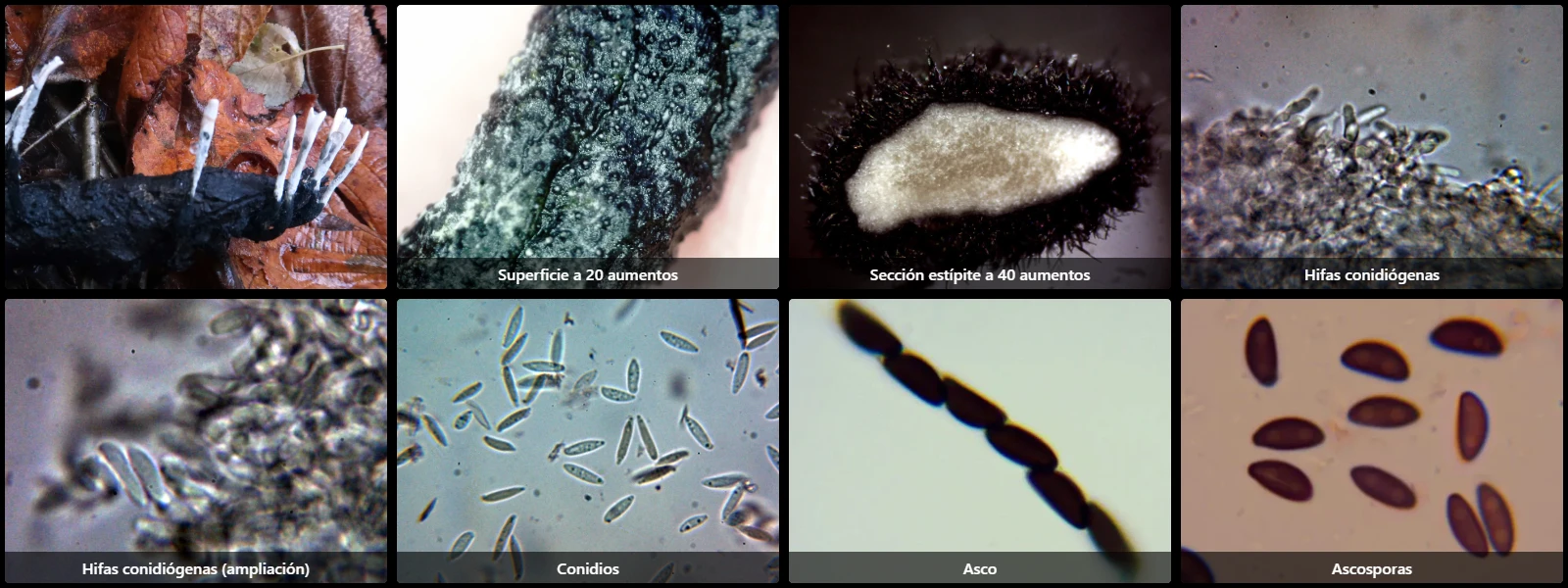
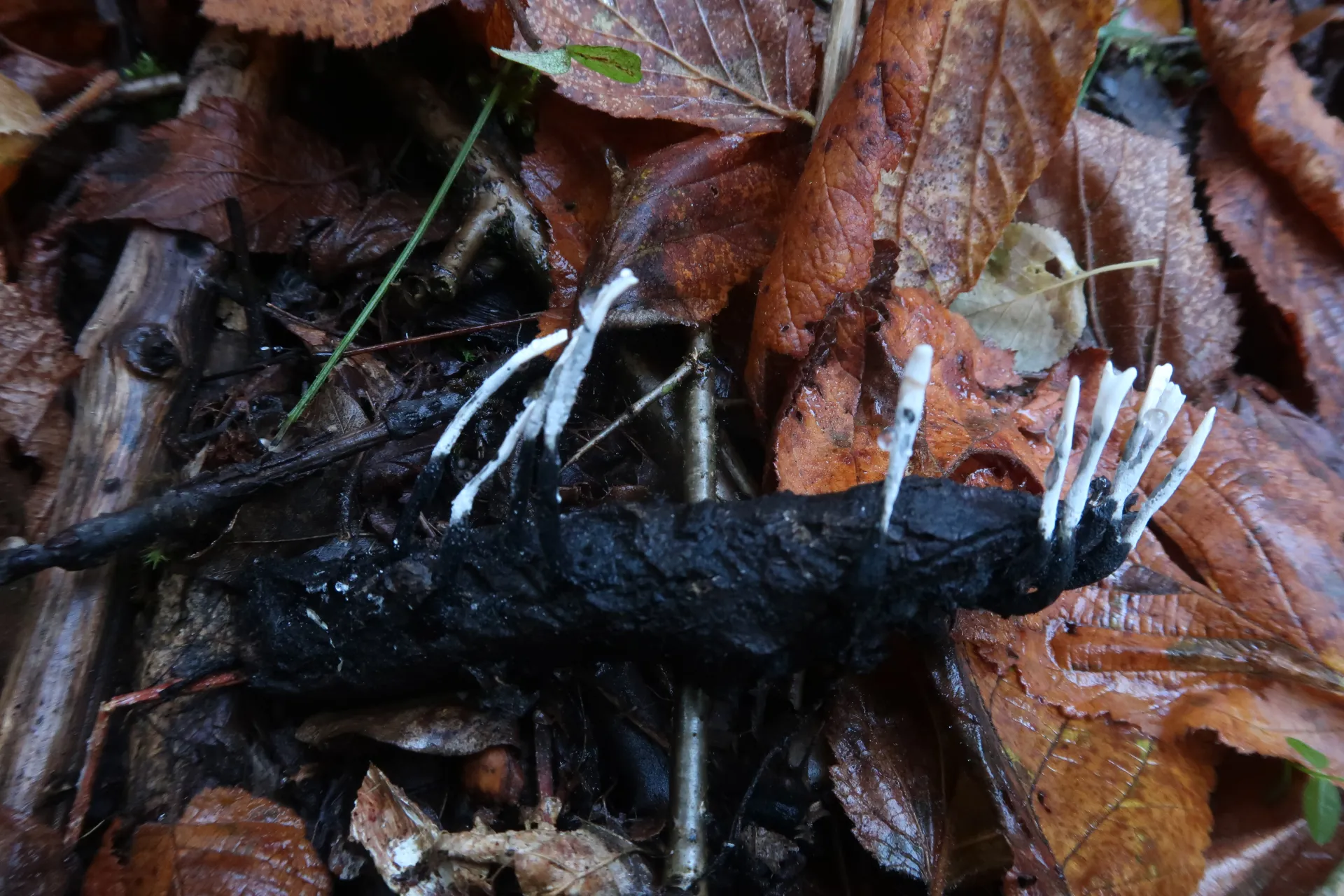
On decaying wood of broadleaf trees on the ground, with cylindrical to clavate, stipitate fruit bodies, often branched, 3 to 7 cm high by 3 to 8 mm wide, blackish, occasionally with a whitish apex due to conidial accumulation (asexual stage of the species).
Conidiogenous cells cylindrical, hyaline, branched, 25 to 40 µm long by 2 to 3 µm wide.
Conidia cylindrical to fusiform, smooth, hyaline, thin-walled, 10 to 13 µm long by 2.5 to 3.5 µm wide, with a slight content of small oil droplets inside.
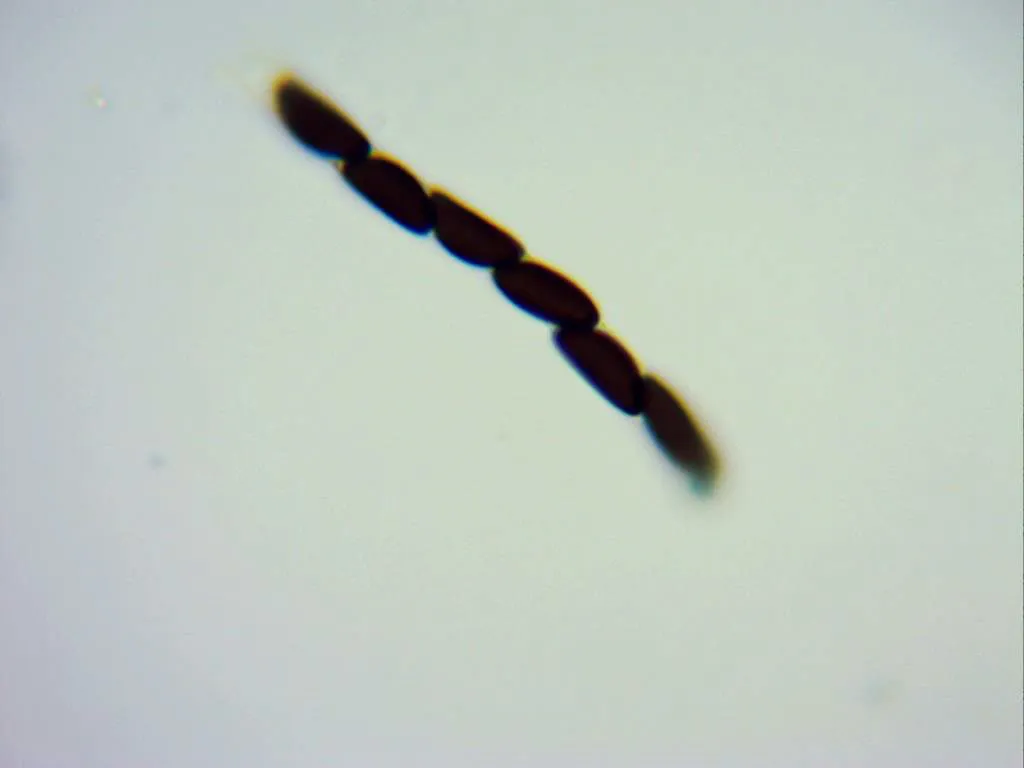
Asci cylindrical, eight-spored (octosporic), 100 to 150 µm long by 7 to 9 µm wide, with uniseriate spore arrangement within the ascus, and with an amyloid reaction of their apical apparatus in Melzer's reagent.
Paraphyses filamentous, smooth, hyaline, septate, thin-walled, 1.5 to 2.5 µm wide, projecting considerably above the level of the asci.
Ascospores reniform (kidney-shaped), smooth-walled, dark brown to black under the microscope, 11 to 15 µm long by 4.5 to 6 µm wide, with a straight germ slit occupying almost the entire length of the spore.
Geographic references
Map generated from global occurrence data from GBIF. GBIF.
Study measurements
Values in Microns (µm)Macroscopic gallery
Microscopic gallery