

Xylaria carpophila
(Pers.) Fr.
Study description
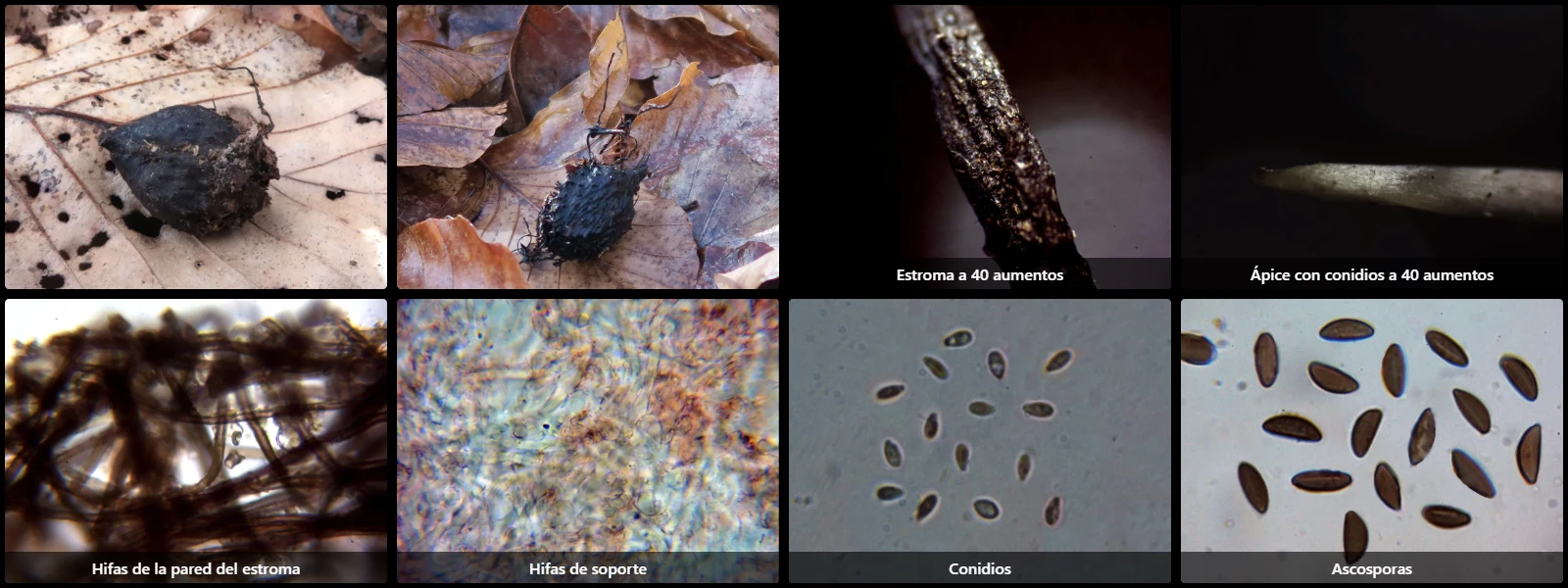
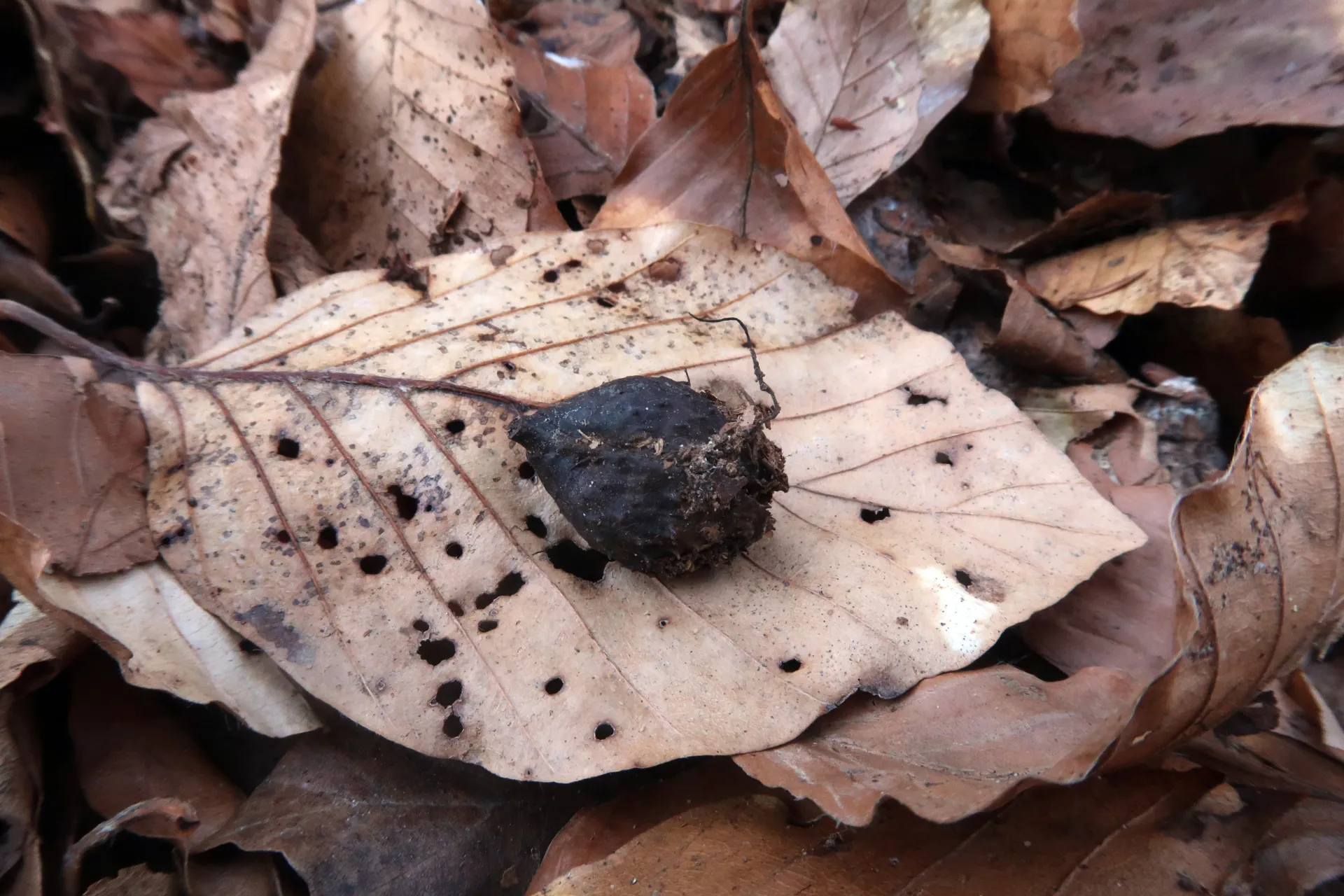
On decaying beechmast (fallen beechnuts) on the ground, with filiform stromata, 2 to 5 cm tall, up to 1 mm wide, blackish, occasionally with the apical area covered in a whitish bloom corresponding to an accumulation of conidia in this zone (asexual or conidial stage of the species).
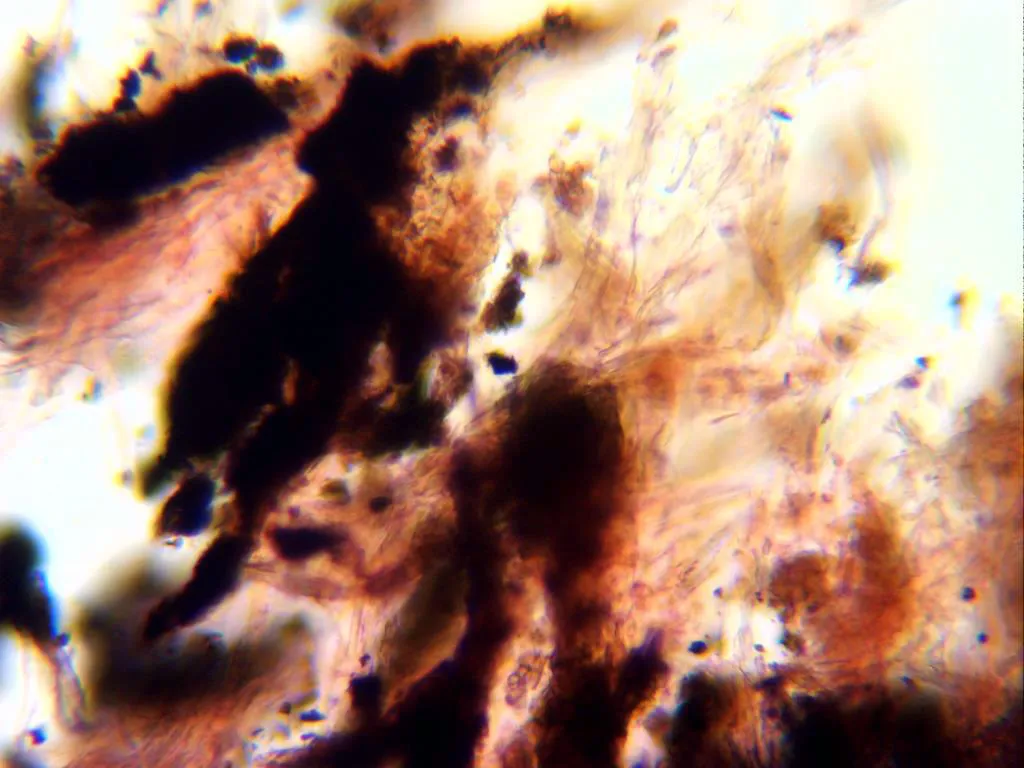
Stromatal wall with a layer of hyphae of textura intricata, formed by thick-walled cylindrical hyphae intertwined with each other, 2 to 4 µm wide, with abundant brown pigment inside, septate with simple septa.
Supporting stromatal hyphae cylindrical, branched, hyaline or with a slight ochre-brown pigment inside, 2 to 4 µm wide, septate with simple septa.
Conidiogenous cells cylindrical to subcylindrical, hyaline, 10 to 20 µm long by 2 to 4 µm wide.
Asci not observed; according to literature cylindrical, eight-spored (octosporic), 110 to 130 µm long by 5 to 7 µm wide, with an amyloid apical ring.
Ascospores ellipsoidal to fusiform, asymmetric, with one side more flattened, brown under the microscope, 10 to 13 µm long by 4.5 to 5.5 µm wide, with a straight germ slit running almost the entire length of the spore, often containing oil drops inside.
Conidia ovoid to ellipsoidal, smooth, hyaline, with a pointed end, 4.5 to 6 µm long by 2 to 3 µm wide.
Geographic references
Map generated from global occurrence data from GBIF. GBIF.
Study measurements
Values in Microns (µm)Macroscopic gallery
Microscopic gallery