


Xylaria allantoidea
(Berk.) Fr.
Study description
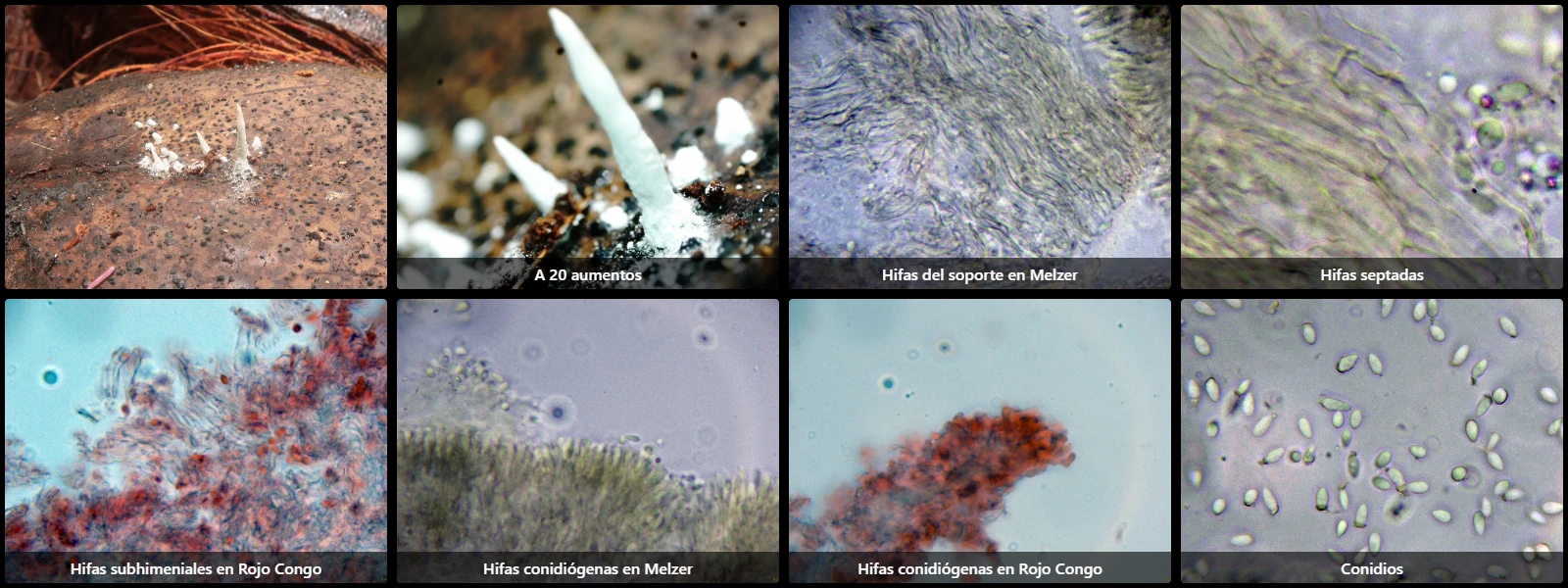
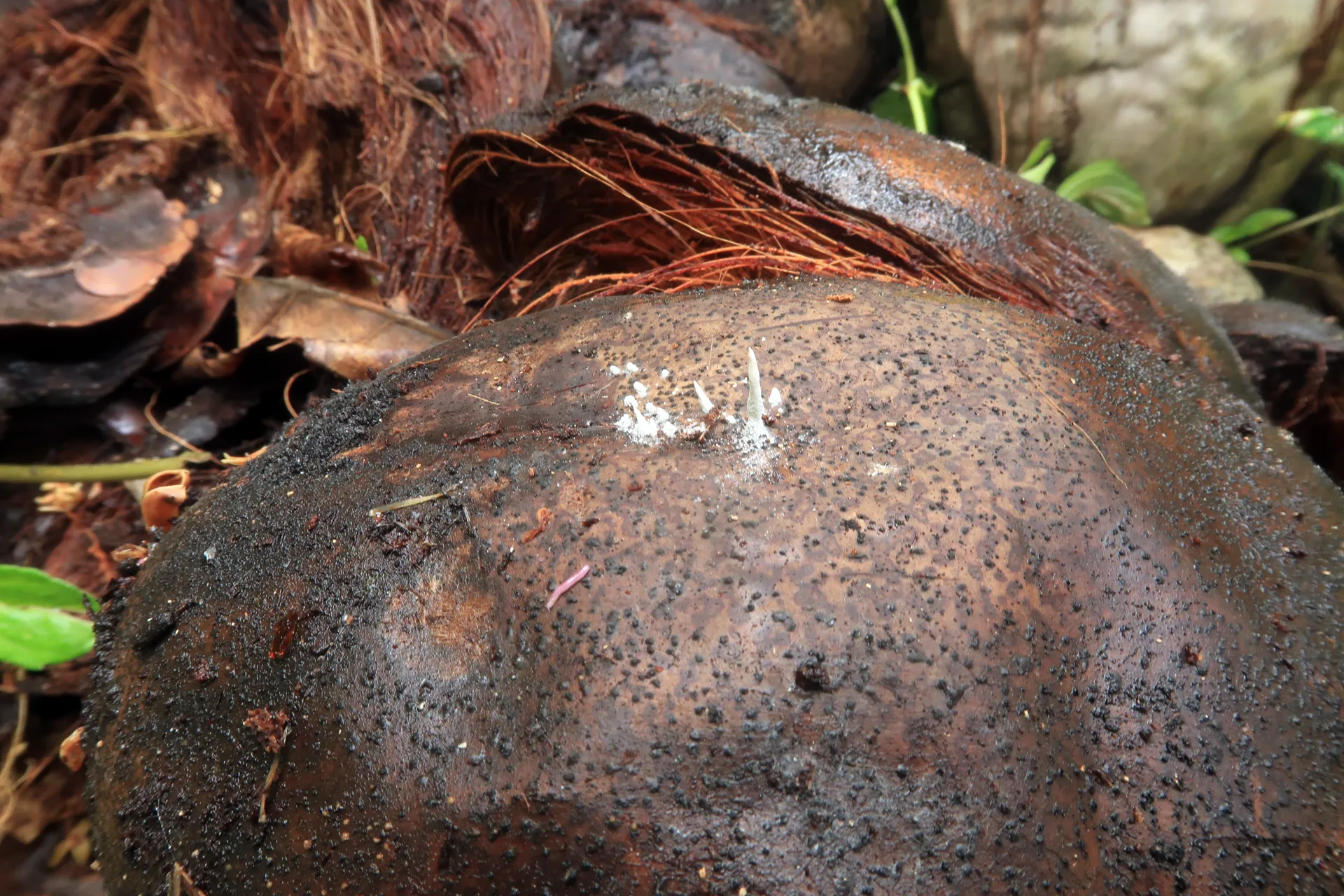
Tropical species developing on plant debris such as dead wood or fallen logs; specimens in this study fruiting on a decaying coconut husk on the ground.
This study corresponds to the anamorph (asexual or conidial stage of the species), with horn- or spine-shaped conidiomata, pure white due to the accumulation of conidia on their surface, 2 to 6 mm tall by 0.8 to 1.3 mm wide at the base.
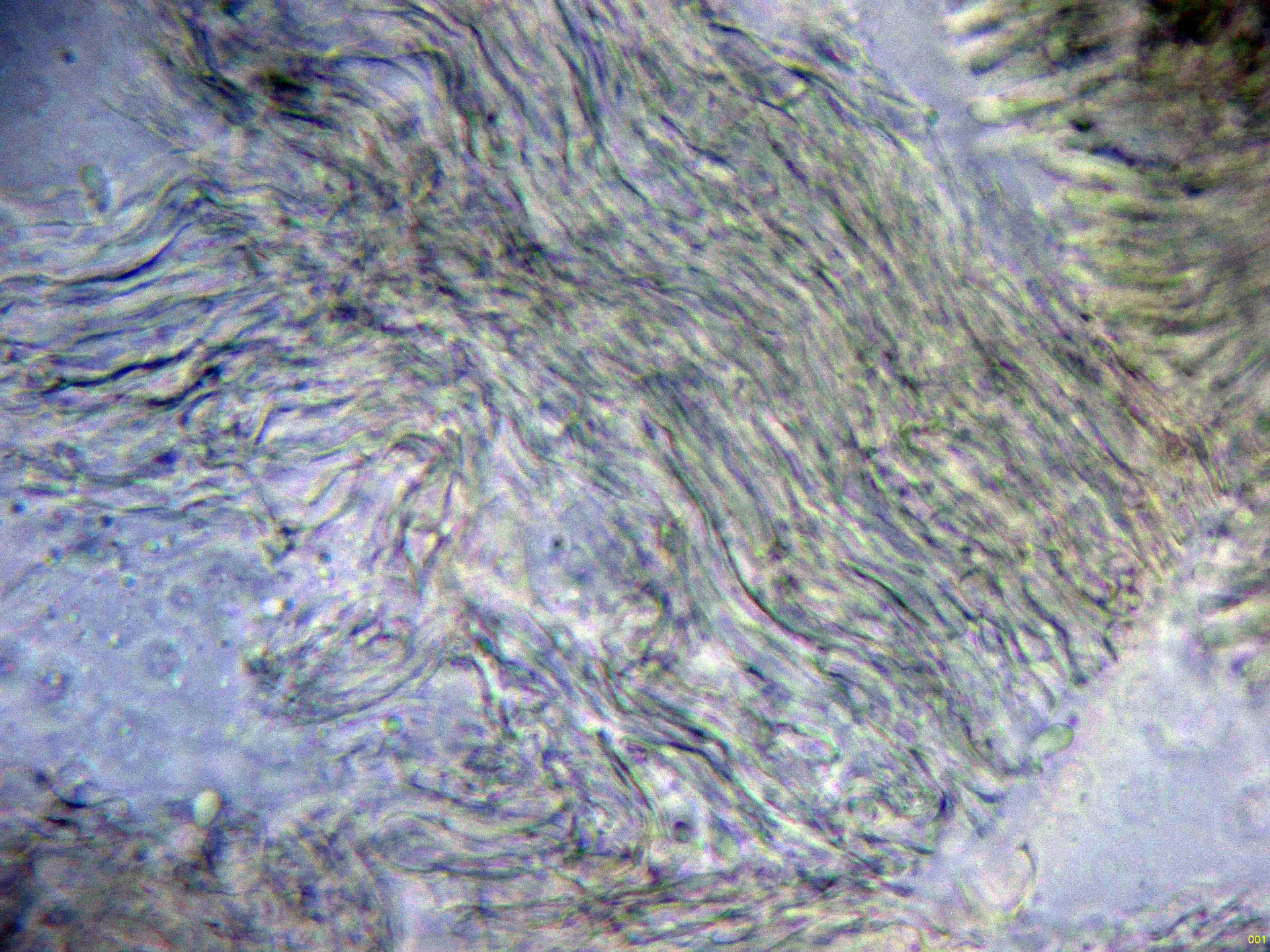
Subhymenial and supporting hyphae hyaline, cylindrical, arranged parallel to each other, 2.5 to 6 µm wide, septate with simple septa.
Conidiogenous cells cylindrical to slightly clavate, hyaline, 15 to 20 µm long by 2.5 to 3.5 µm wide.
Conidia ellipsoidal, with a pointed end (pip- or seed-shaped), smooth, hyaline, thin-walled, 5.5 to 7.5 µm long by 3 to 4 µm wide, with a smooth and homogeneous interior.
Herbarium material available: JTP2802/26.
Geographic references
Map generated from global occurrence data from GBIF. GBIF.
Study measurements
Values in Microns (µm)Macroscopic gallery
Microscopic gallery
Genetic / Phylogenetic Study
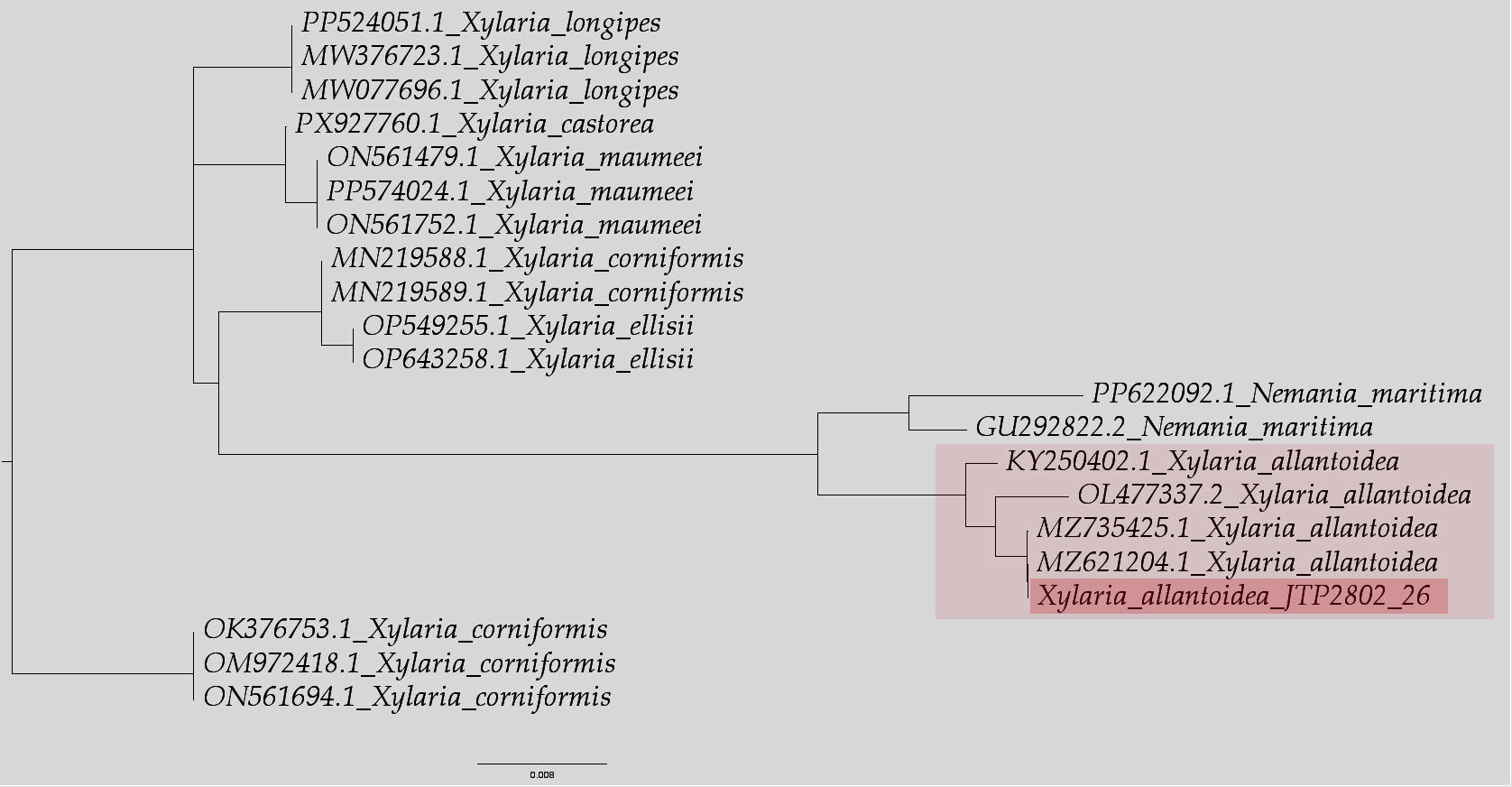
Phylogenetic Tree
Sequences and Data
Sequencing (Chromatogram)
Select a file to visualize the chromatogram