

Xerula pudens
(Pers.) Singer
Study description
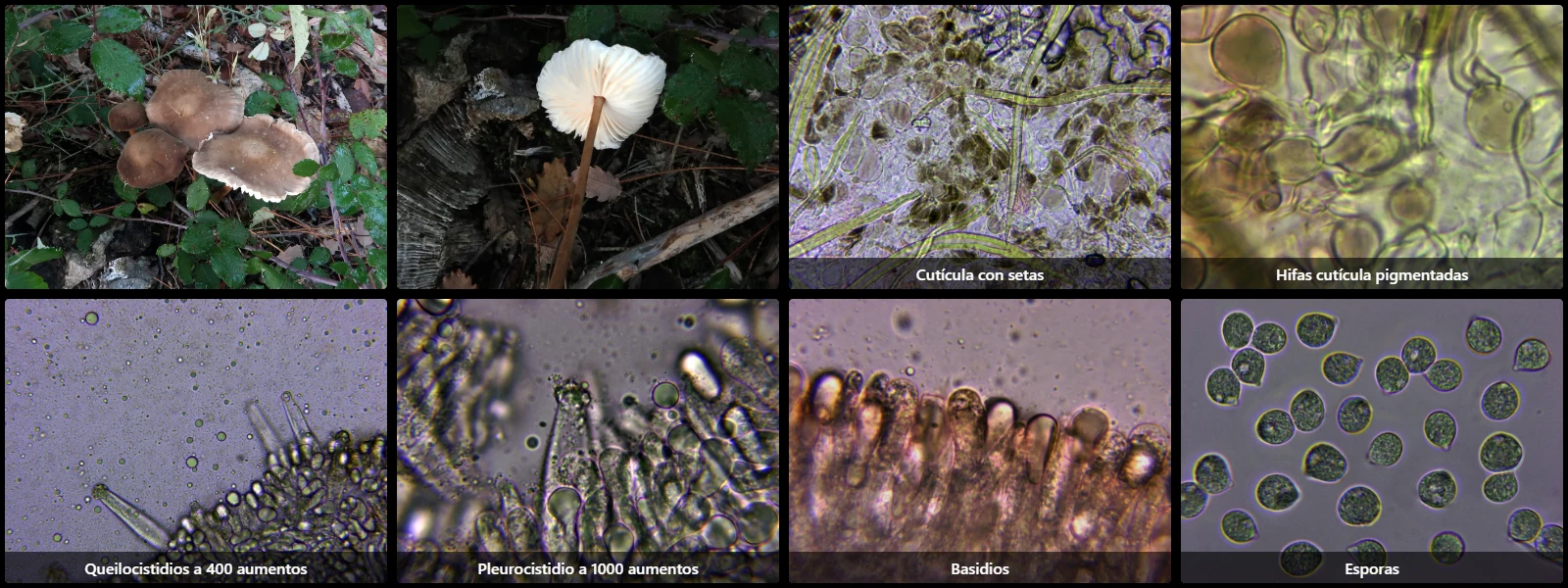
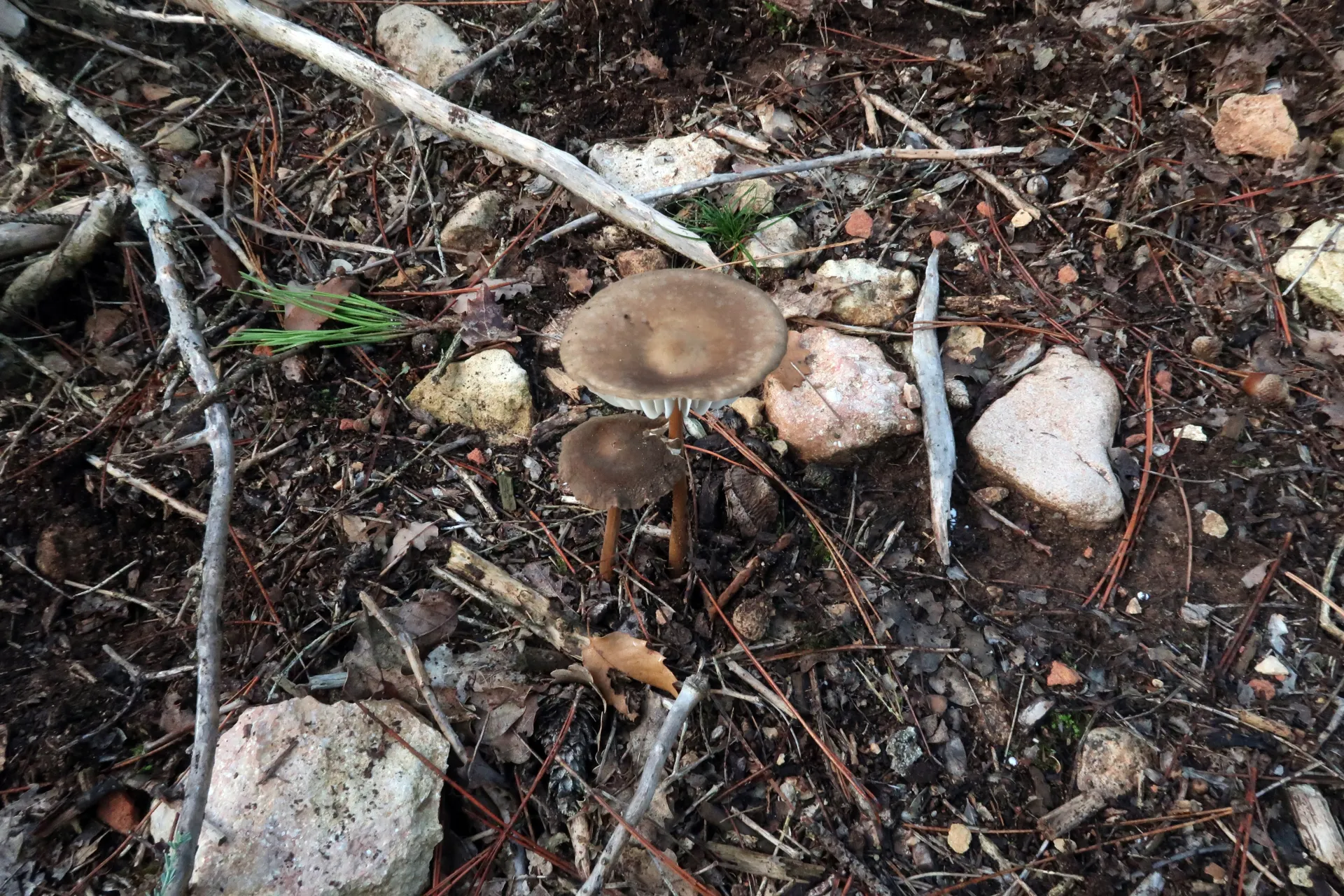
Under broadleaf trees, such as Fagus or Quercus, on buried roots or near stumps, with a convex to flattened cap, retaining a central umbo, 4 to 10 cm in diameter, with a velvety greyish-brown surface, broad white gills adnate to emarginate, a reddish-brown cylindrical radicating stipe, without distinct odour, and with a sweet, nutty taste.
Cellular cuticle, formed by subglobose, pyriform to vesiculose hyphae, 30 to 50 µm long by 10 to 20 µm wide, with abundant brown pigment inside, septate and without clamp connections.
Pileipellis with abundant very long setae, cylindrical, with a simple base, up to 500 µm long, very thick-walled, yellowish, and with pointed apices.
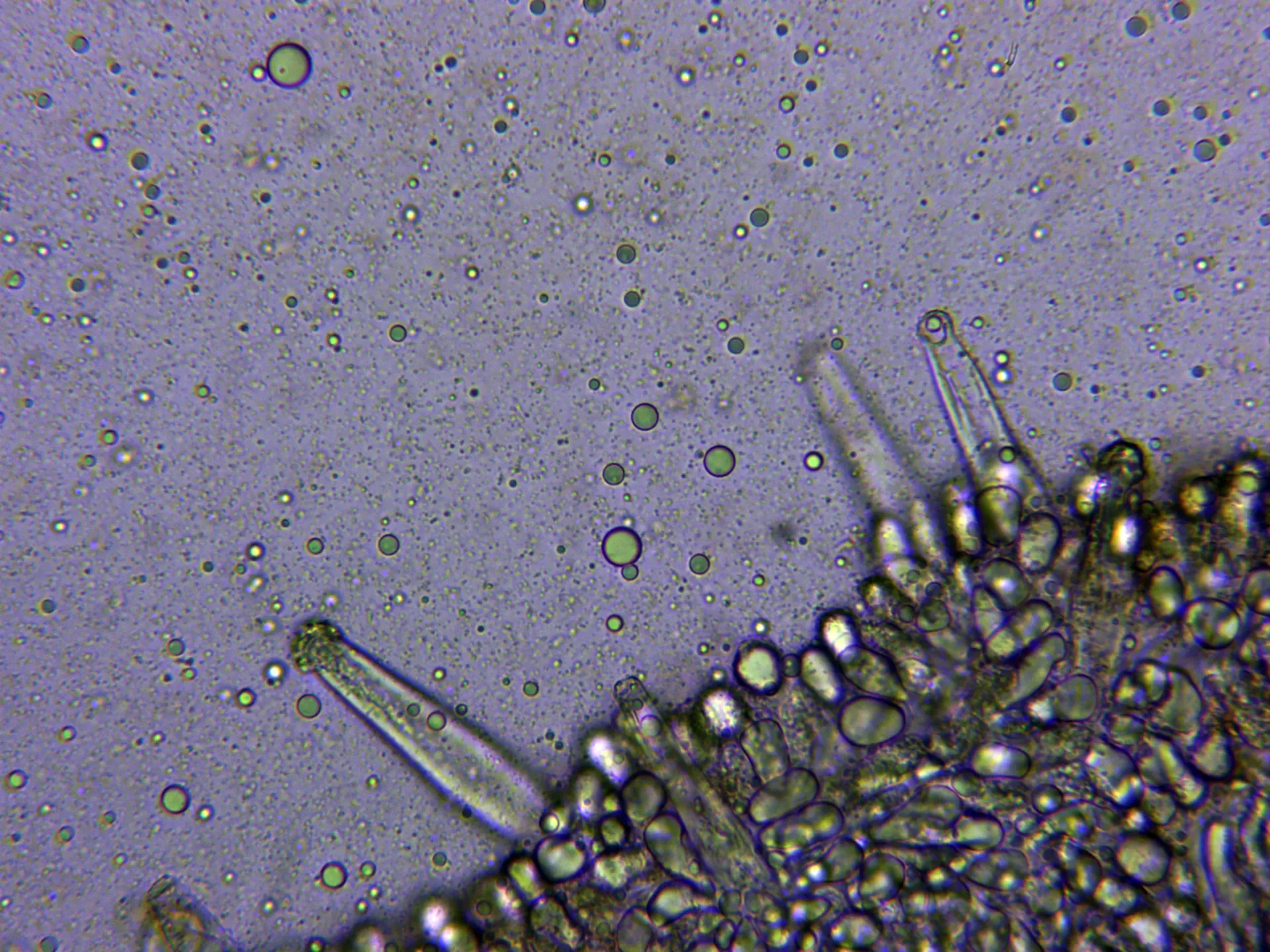
Cheilocystidia and pleurocystidia cylindrical to fusiform, ventricose, thick-walled, 90 to 110 µm long, with a maximum width of 20 to 30 µm, mostly with apical encrustations.
Lamellar trama regular or parallel.
Basidia clavate, 30 to 45 µm long by 7 to 9 µm wide, with a simple base (not clamped), and tetrasporic.
Spores subglobose to ovoid, smooth, hyaline, thin-walled, with a prominent apiculus at one end, 10 to 13 µm long by 9 to 11.5 µm wide, with slight granular content inside, and inamyloid in Melzer's reagent.
Geographic references
Map generated from global occurrence data from GBIF. GBIF.
Study measurements
Values in Microns (µm)Macroscopic gallery
Microscopic gallery