

Xeromphalina campanella
(Batsch) Kühner & Maire
Study description
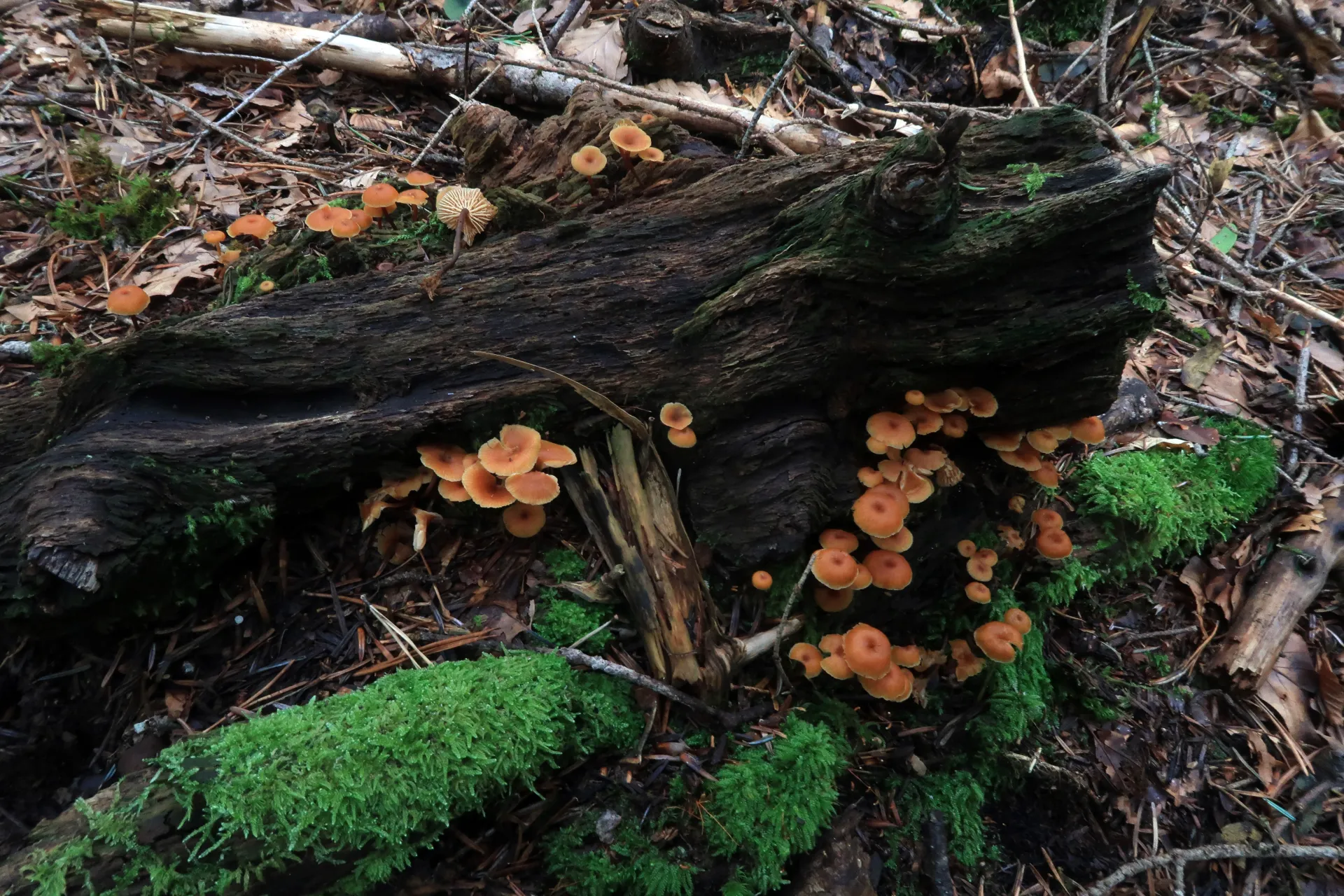
On decaying wood or woody debris of conifers, with a campanulate cap with a depressed center, 0.5 to 2 cm in diameter, smooth yellow to orange surface darker in the center, decurrent pale yellow, anastomosing gills, a slender, dark reddish-brown cylindrical stipe, without noticeable odour, and with a sweet taste.
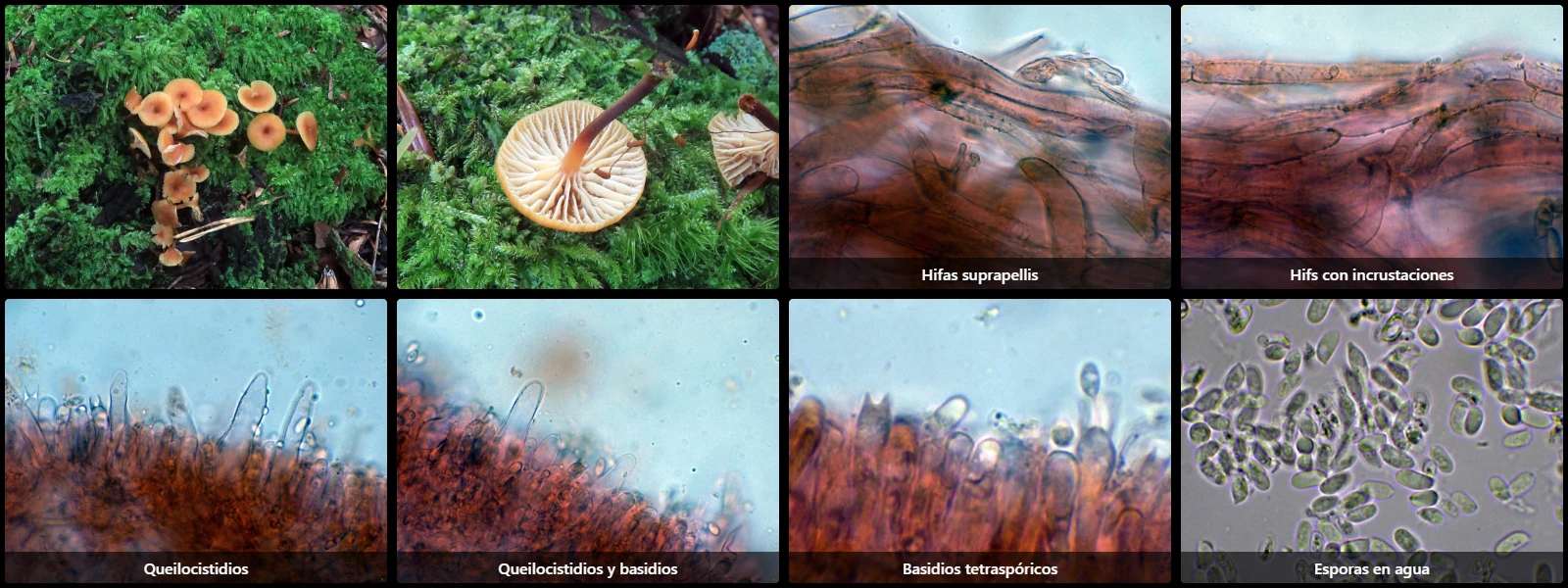
Filamentous cuticle formed by hyphae arranged more or less parallel to slightly intertwined, 8 to 15 µm wide, with brown pigment inside, encrusted on the surface, septate with clamp connections.
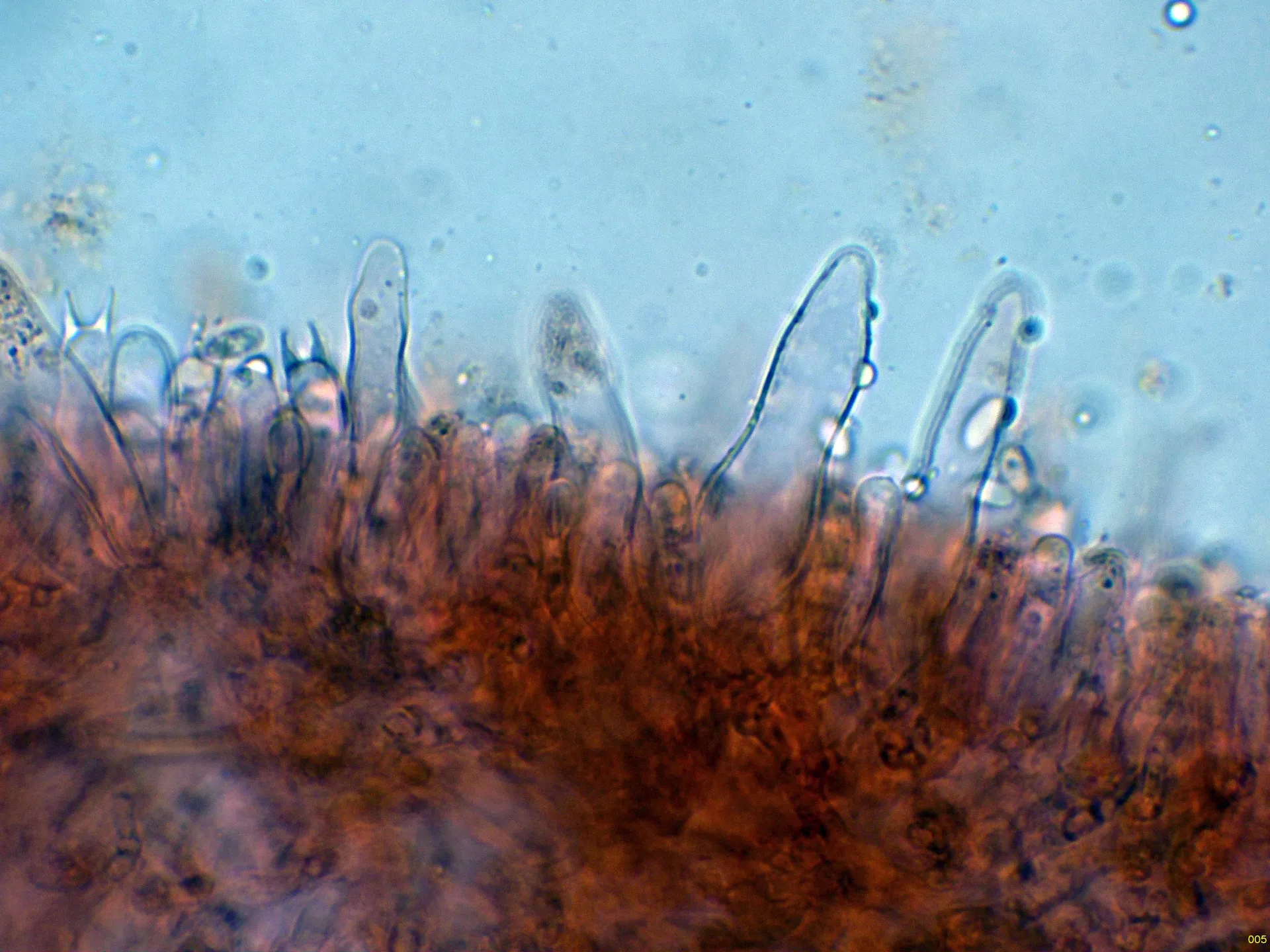
Cheilocystidia cylindrical to lageniform, ventricose, 35 to 55 µm long by 10 to 15 µm wide.
Without pleurocystidia.
Lamellar trama regular or parallel.
Basidia cylindrical to slightly clavate, 20 to 25 µm long by 5 to 6 µm wide, with basal clamp connections and tetrasporic.
Spores cylindric-ellipsoidal, smooth, hyaline, thin-walled, with an eccentric apiculus at one end, 6 to 7.5 µm long by 3 to 4 µm wide, with slight homogeneous granular content inside, and amyloid in Melzer's reagent.
Herbarium material available: JTP1980/23.
Geographic references
Map generated from global occurrence data from GBIF. GBIF.
Study measurements
Values in Microns (µm)Macroscopic gallery
Microscopic gallery