

Wojnowicia buxi
Bertault & Malençon
Study description
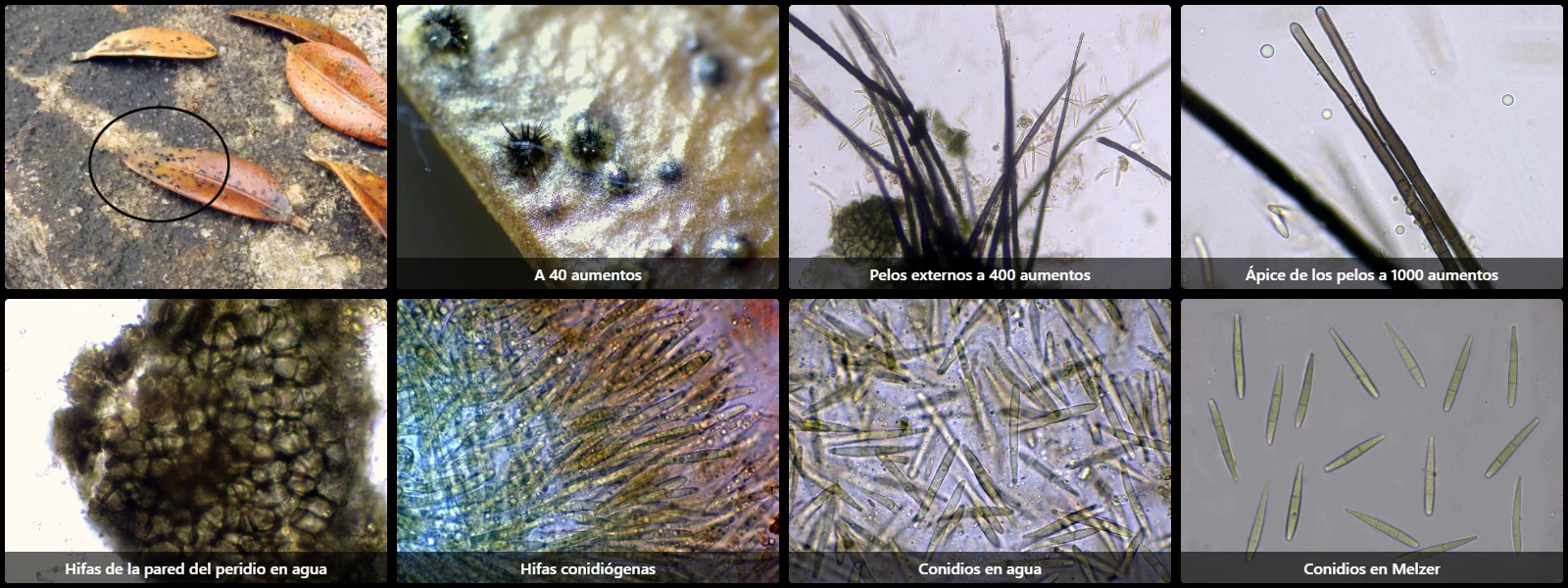
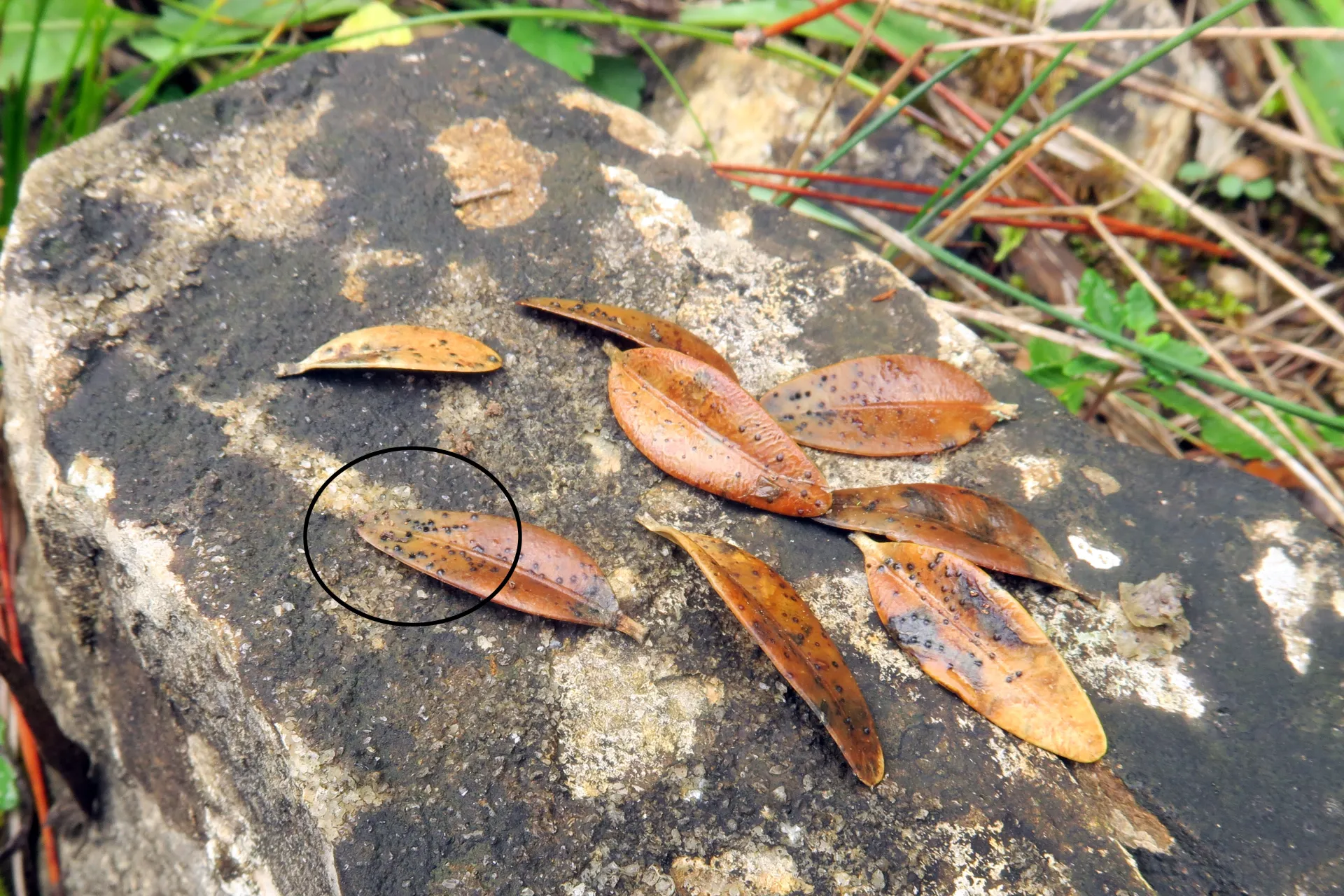
An anamorph with the appearance of Capronia fruiting on the surface of decaying ground leaves of Buxus sempervirens, with blackish ascomata (conidiomata) 100 to 280 µm in diameter, bearing long external hairs.
External hairs exceeding 250 µm in some cases, 6 to 8 µm wide at their base, thick-walled, septate with brown intracellular pigment, more hyaline towards the tips, and ending rounded.
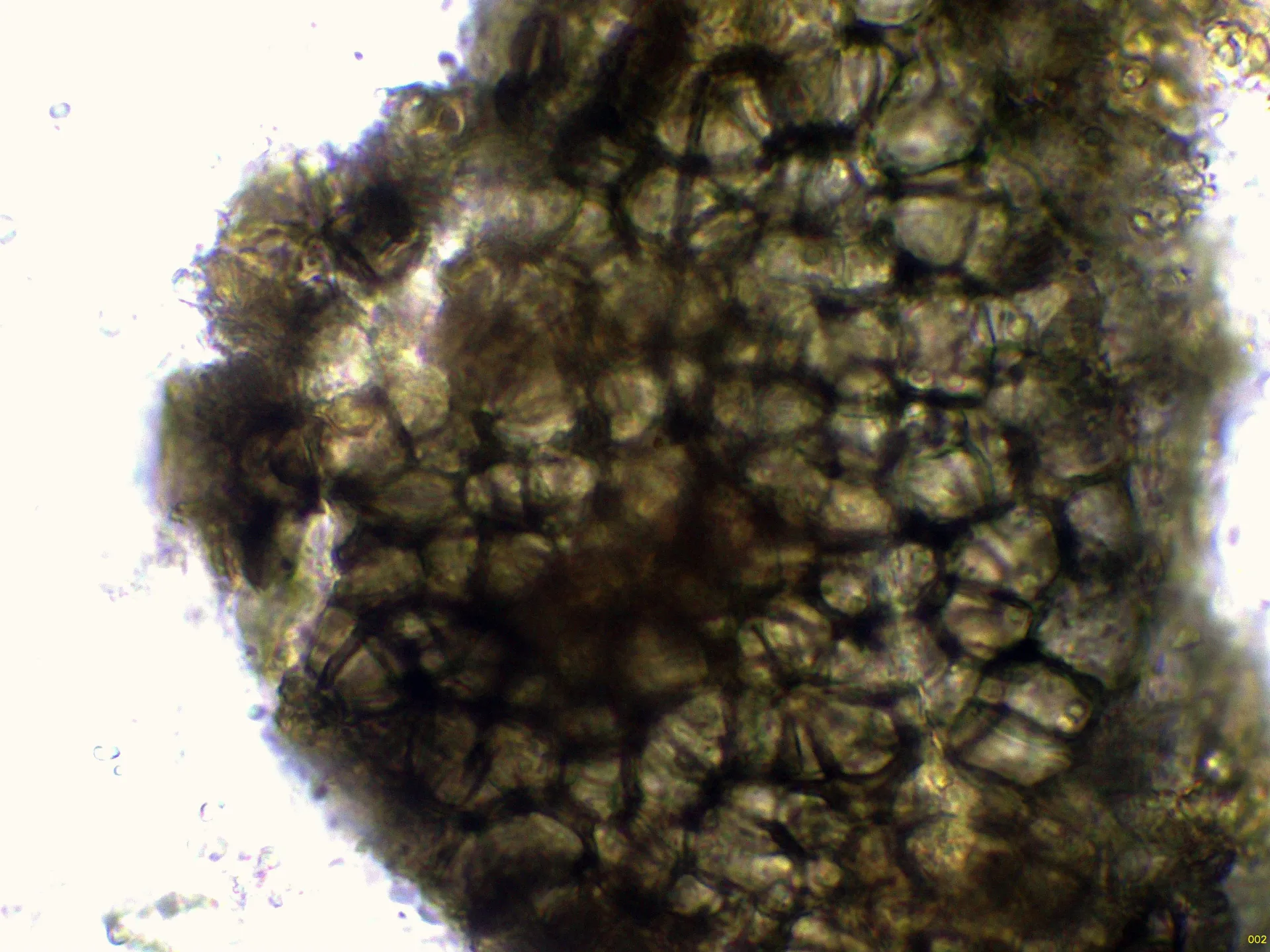
Peridial wall composed of thick-walled hyphae of textura globulosa-angularis, 7 to 16 µm in diameter.
Conidiogenous cells difficult to observe, but a vertical palisade-like arrangement arranged parallel is discerned, suggesting a radial layout, these conidiogenous cells cylindrical with rounded endings.
Conidia fusiform, smooth, hyaline, with one end more pointed, mostly 2-septate and exceptionally some 3-septate, these septa more noticeable in Melzer's reagent, without any constriction, 27 to 37 µm long by 3 to 4.5 µm wide, with a homogeneous interior, without distinct oil drops, and inamyloid in Melzer's reagent.
Herbarium material available: JTP2669/25.
Geographic references
Map generated from global occurrence data from GBIF. GBIF.
Study measurements
Values in Microns (µm)Macroscopic gallery
Microscopic gallery