

Vuilleminia pseudocystidiata
Boidin, Lanq. & Gilles
Study description
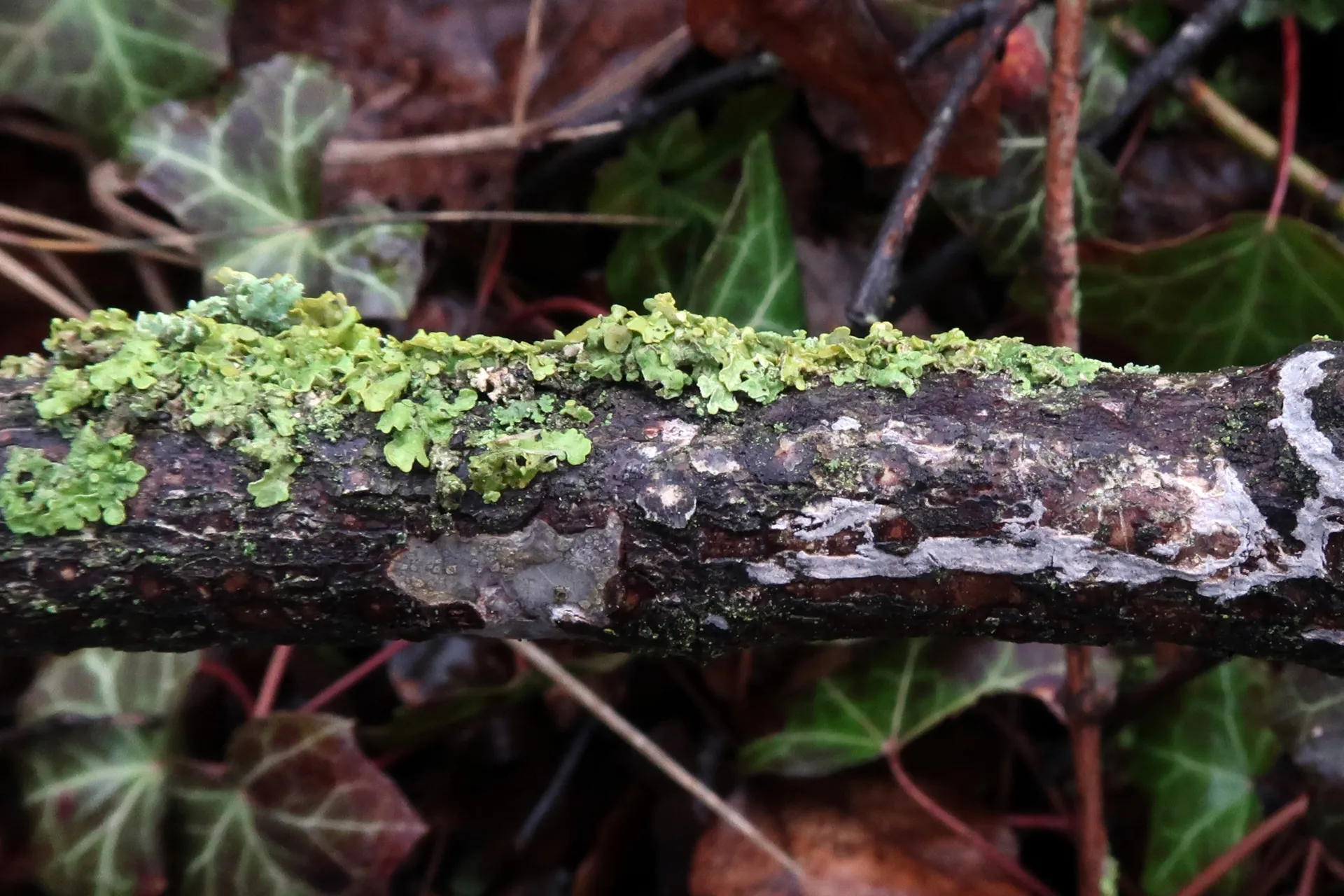
In riparian woods, on decaying dead branch debris on the ground, with completely resupinate basidiomes, thin, forming irregular patches, with a smooth surface, greyish with bluish or pinkish tones, of waxy consistency when fresh to powdery when dry.
Monomitic hyphal system, with hyaline hyphae, thin- to slightly thick-walled, 2 to 3.5 µm wide, septate with clamp connections at the septa.
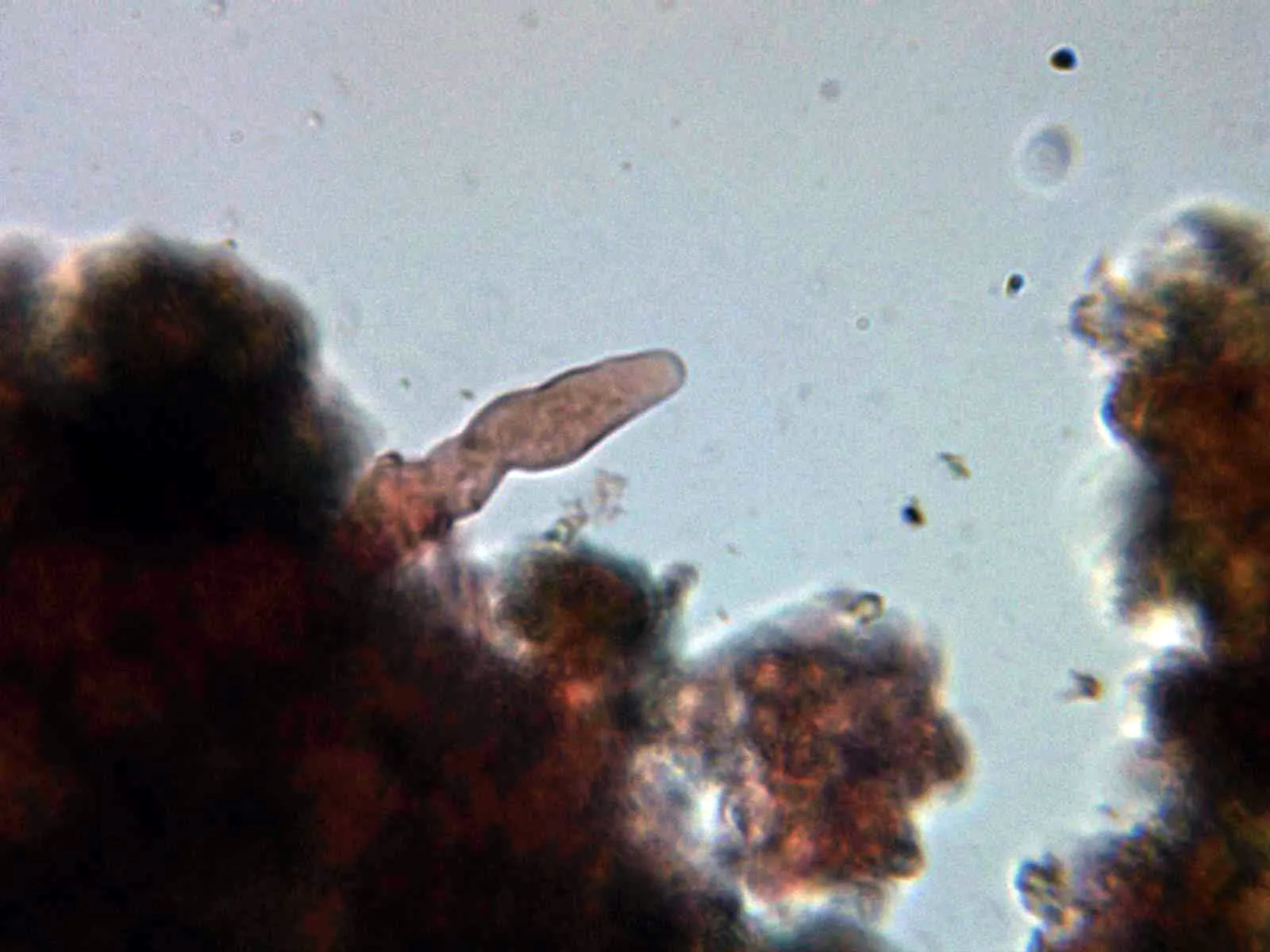
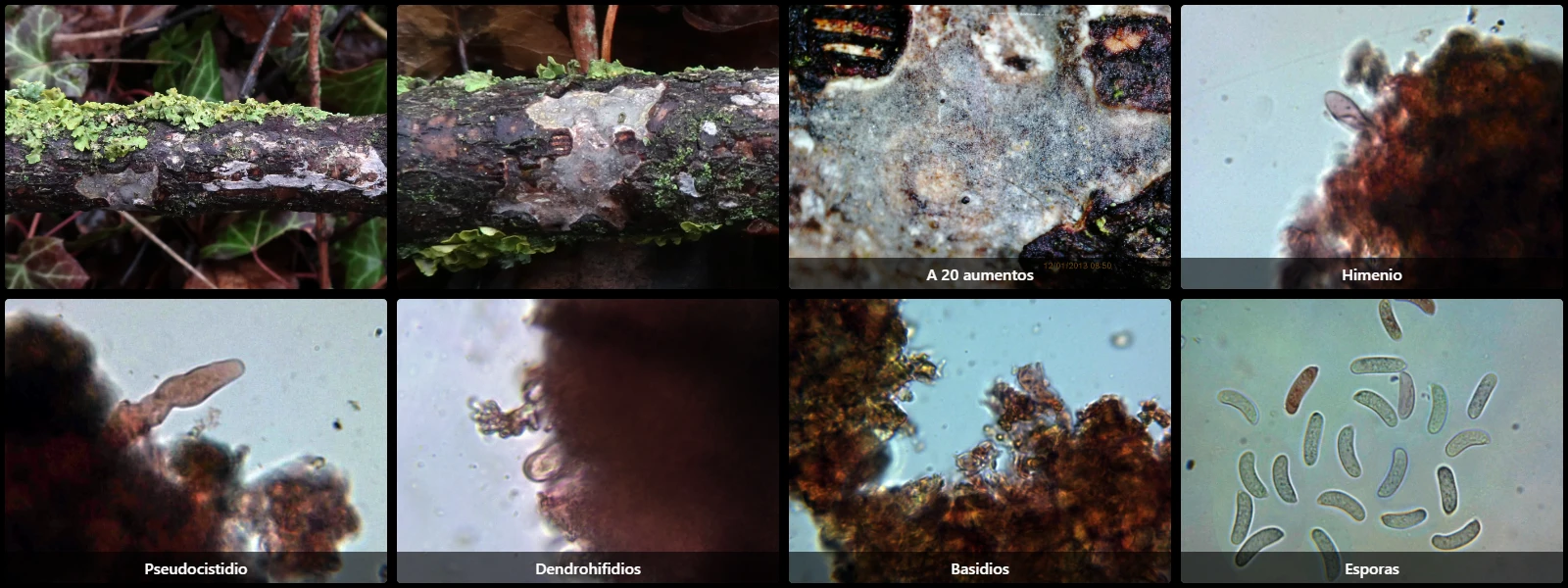
Terminal elements in the hymenium resembling pseudocystidia, cylindrical to sinuous, 75 to 120 µm long, projecting considerably above the level of the basidia.
Dendrohyphidia scattered among the basidia, arborescent, heavily branched, only 1.5 to 2.5 µm wide.
Basidia cylindrical, deeply immersed in the hymenium, 70 to 100 µm long by 6 to 9 µm wide, with basal clamp connections and tetrasporic.
Spores allantoic, smooth, hyaline, thin-walled, with a prominent eccentric apiculus at one end, 14 to 17 µm long by 4 to 4.5 µm wide, with slight granular content inside, and inamyloid in Melzer's reagent.
It differs from its congener, the common Vuilleminia comedens, by the presence of pseudocystidia and by its narrower spores (spore width for Vuilleminia comedens is 5 to 7 µm).
Geographic references
Map generated from global occurrence data from GBIF. GBIF.
Study measurements
Values in Microns (µm)Macroscopic gallery
Microscopic gallery