

Vararia ochroleuca
(Bourdot & Galzin) Donk
Study description
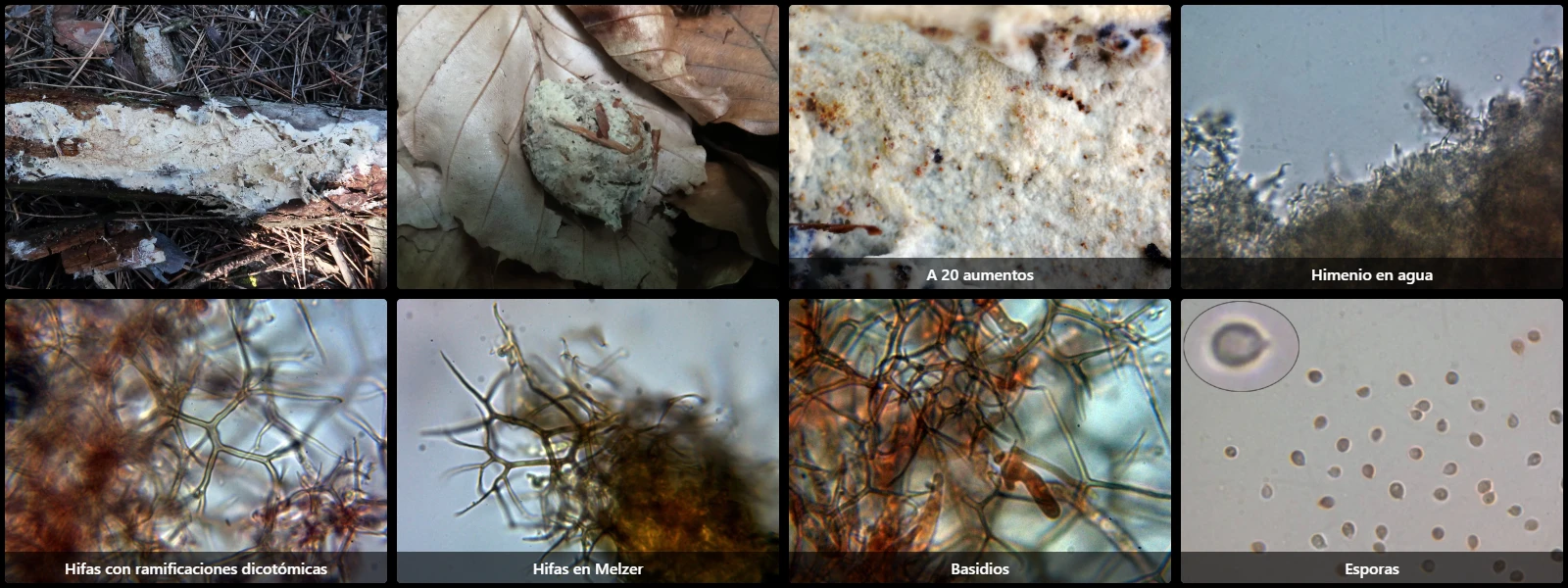
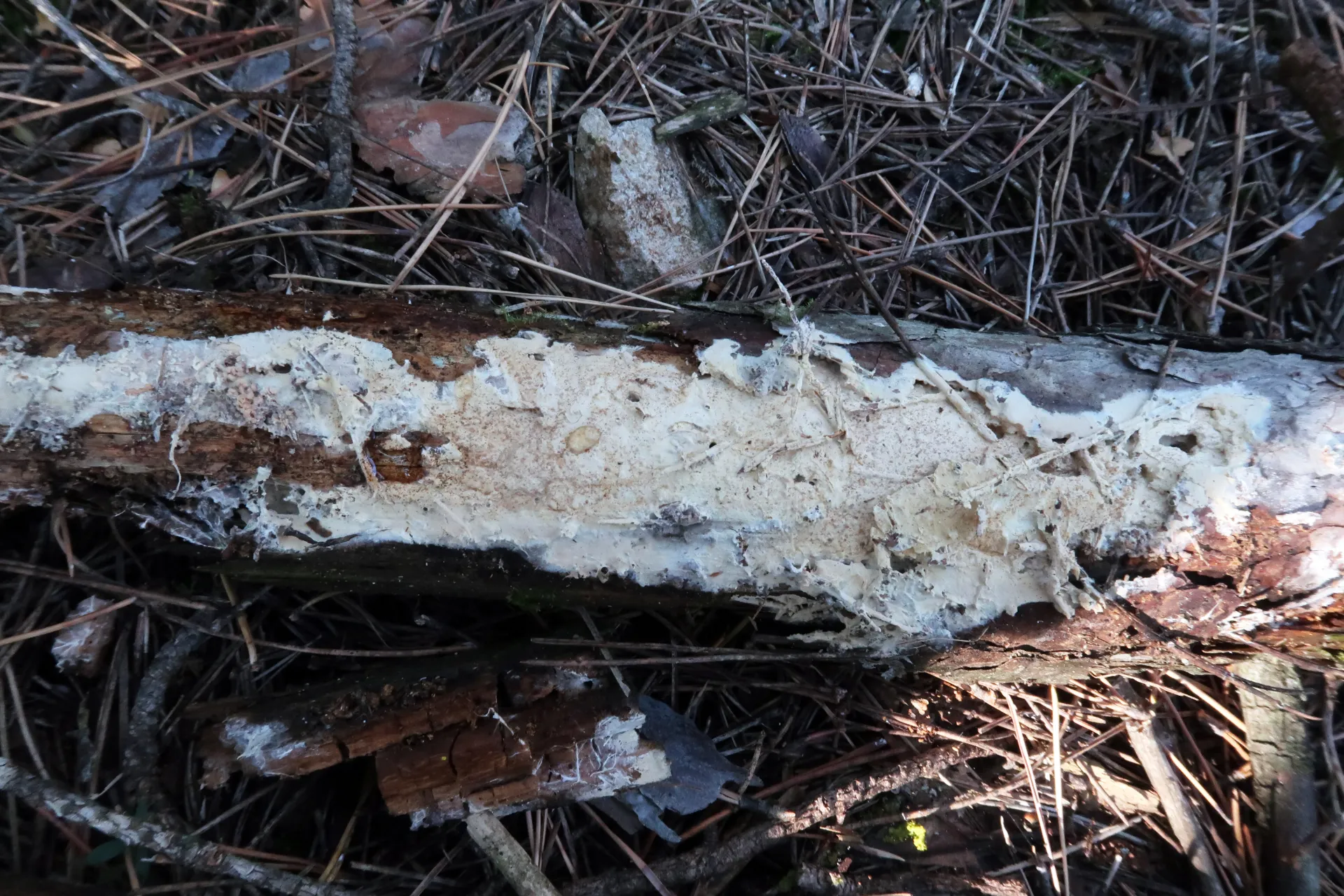
On decaying wood or plant debris on the ground, with completely resupinate basidiomes, easily separable from the substrate, 0.5 to 2 mm thick, pale yellow to cream, pruinose in appearance, with a whitish, diffuse growing margin.
Generative hyphae at the base of the subiculum cylindrical, hyaline, thin-walled, arranged horizontally and parallel, 1.5 to 3.5 µm wide, septate with simple septa (without clamp connections).
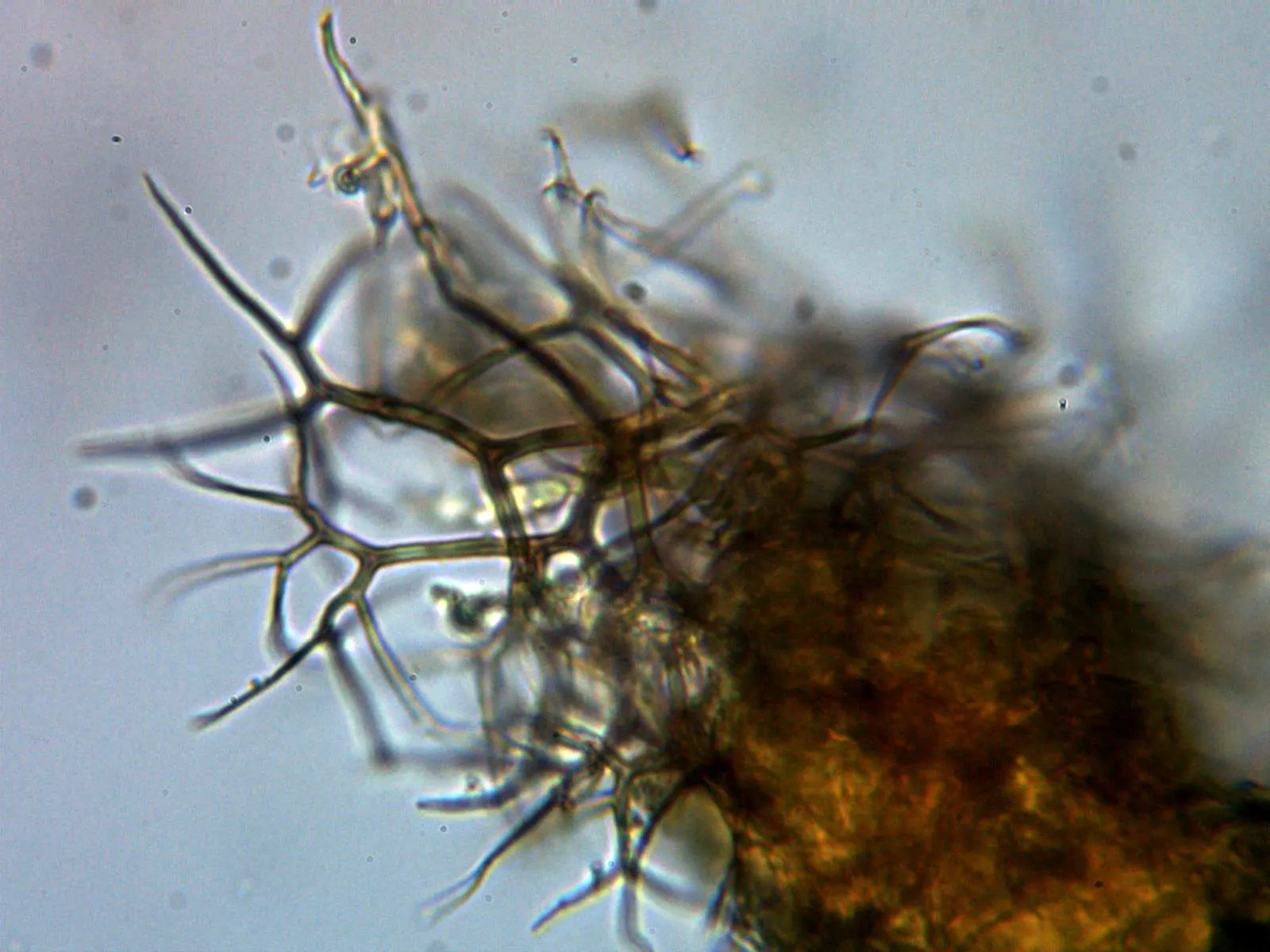
Numerous dichohyphae (hyphae with dichotomous branching) in the hymenium, thick-walled (with walls up to 0.8 µm thick), with brown pigment inside, 1.5 to 3.5 µm wide.
Gloeocystidia not observed; according to literature scattered, deeply immersed in the hymenium, ventricose to lageniform, 25 to 50 µm long by 7 to 17 µm wide.
Basidia cylindric-utriform, 15 to 19 µm long by 3 to 4 µm wide, and with two or four sterigmata (bi- or tetrasporic).
Spores ovoid, smooth, hyaline, thin-walled, with a distinct apiculus at one end, 3.5 to 4.5 µm long by 2.5 to 3.3 µm wide, with a homogeneous interior, very scarce granular content, and inamyloid in Melzer's reagent.
Geographic references
Map generated from global occurrence data from GBIF. GBIF.
Study measurements
Values in Microns (µm)Macroscopic gallery
Microscopic gallery