

Valsaria insitiva
(Tode) Ces. & De Not.
Study description
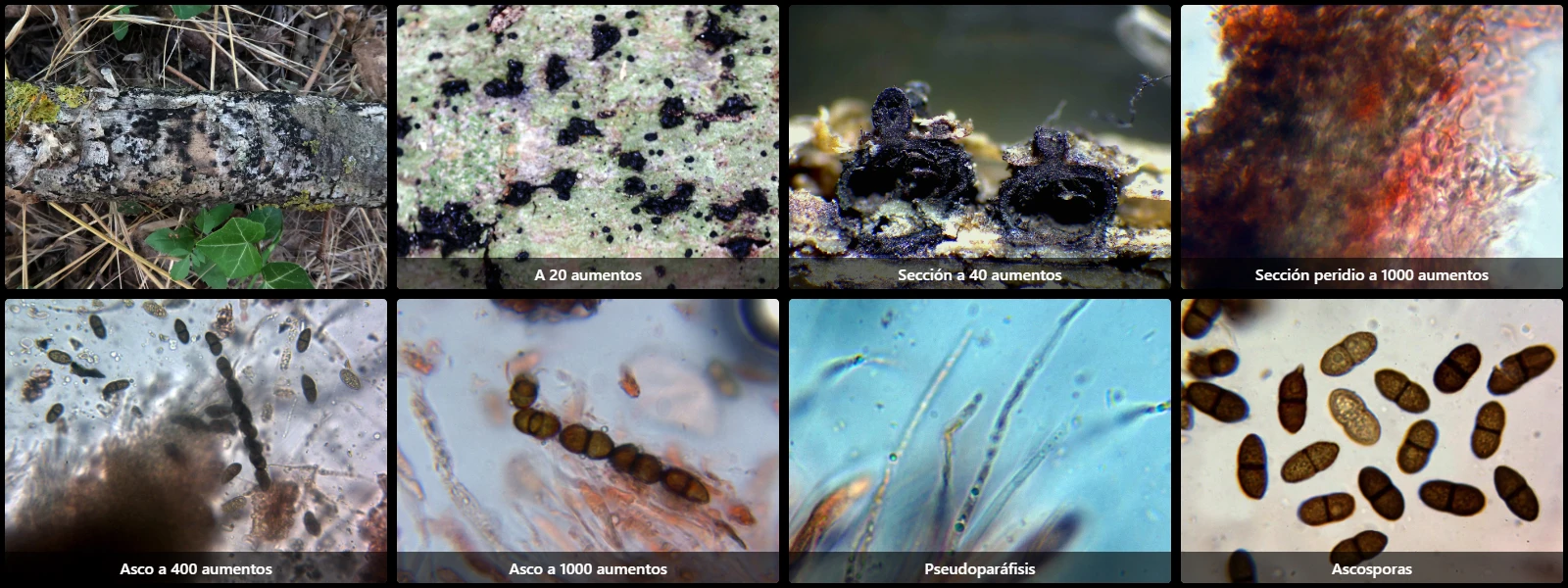
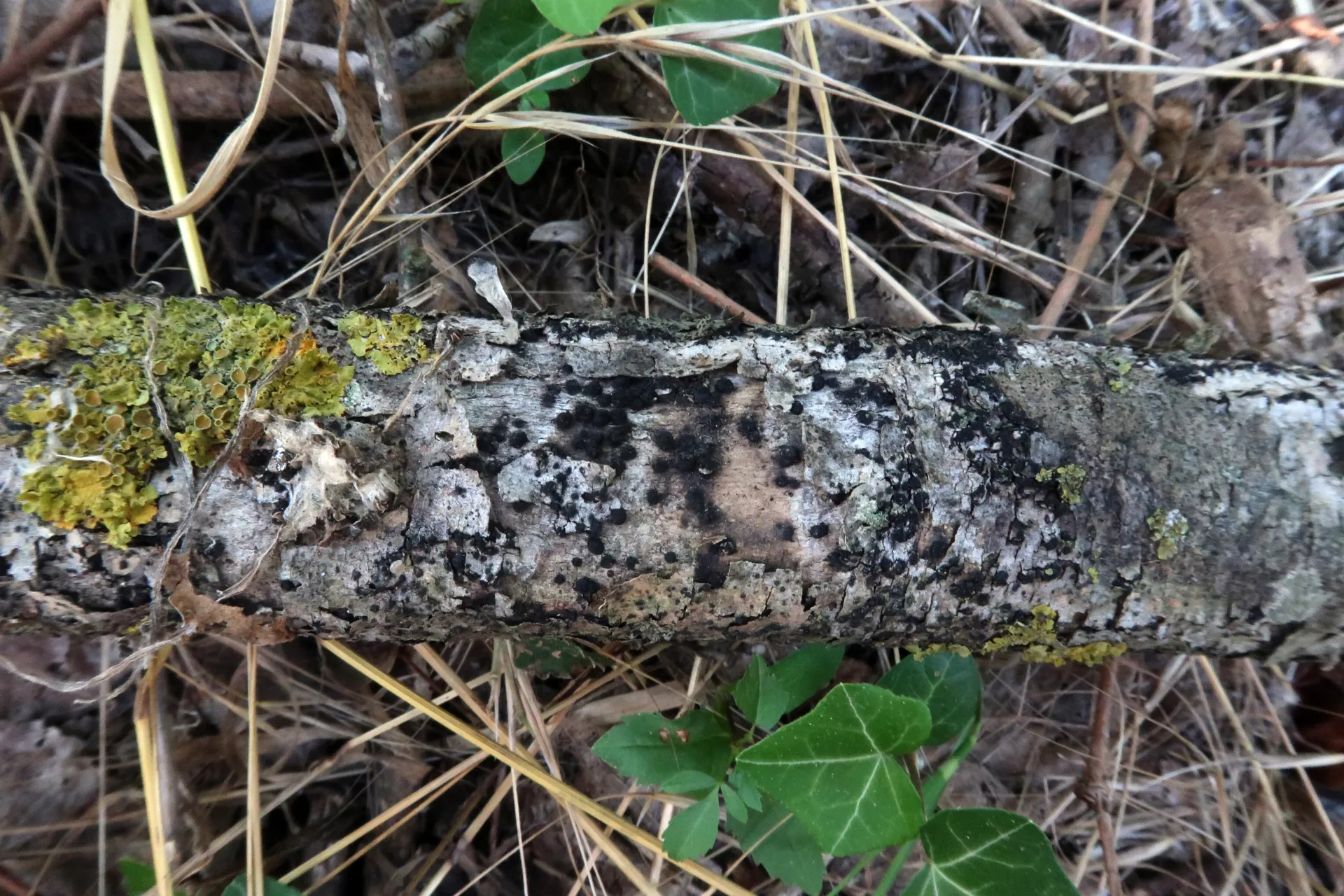
On bark or dead wood of broadleaf trees, such as Quercus, Laburnum, or Prunus, with stromata deeply immersed in the substrate, carbonaceous in appearance, blackish, 0.4 to 0.8 mm high by 0.3 to 0.5 mm in diameter, coalescent, so that several stromata can group together yielding a much larger diameter, with 5 to 15 perithecia per stroma arranged in clusters vertically to obliquely.
Hyphae of the peridial wall thick-walled, tightly compacted together, elongated, those on the outside containing abundant dark brown pigment inside, and those on the inner part with only slight brown pigment or virtually hyaline.
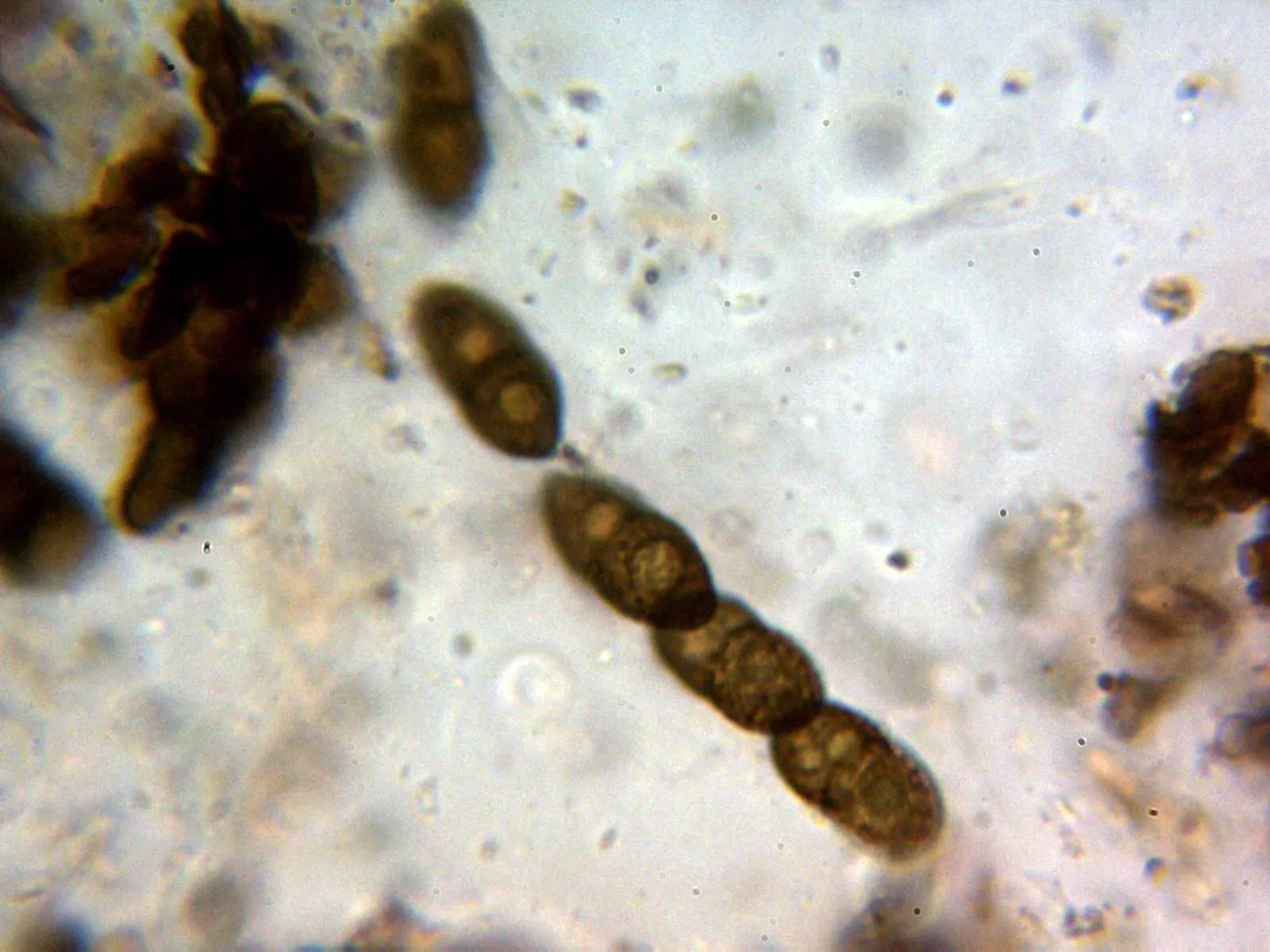
Asci cylindrical, eight-spored (octosporic), bitunicate, 80 to 125 µm long by 10 to 14 µm wide, pedicellate, with spores arranged in a single row (uniseriate) inside the ascus, with spores occupying three-quarters or more of the total ascus length, and with a minute apical apparatus amyloid in Melzer's reagent or IKI.
Pseudoparaphyses filiform, immersed in a gelatinous matrix, 1.5 to 3 µm wide.
Ascospores ellipsoidal to oblong, two-celled (bicellular), with a central transverse septum, slightly constricted at the septum, brown under the microscope, smooth- and thick-walled, 15 to 19 µm long by 8 to 10 µm wide.
Geographic references
Map generated from global occurrence data from GBIF. GBIF.
Study measurements
Values in Microns (µm)Macroscopic gallery
Microscopic gallery