

Ursicollum fallax
Gryzenh. & M.J.Wingf.
Study description
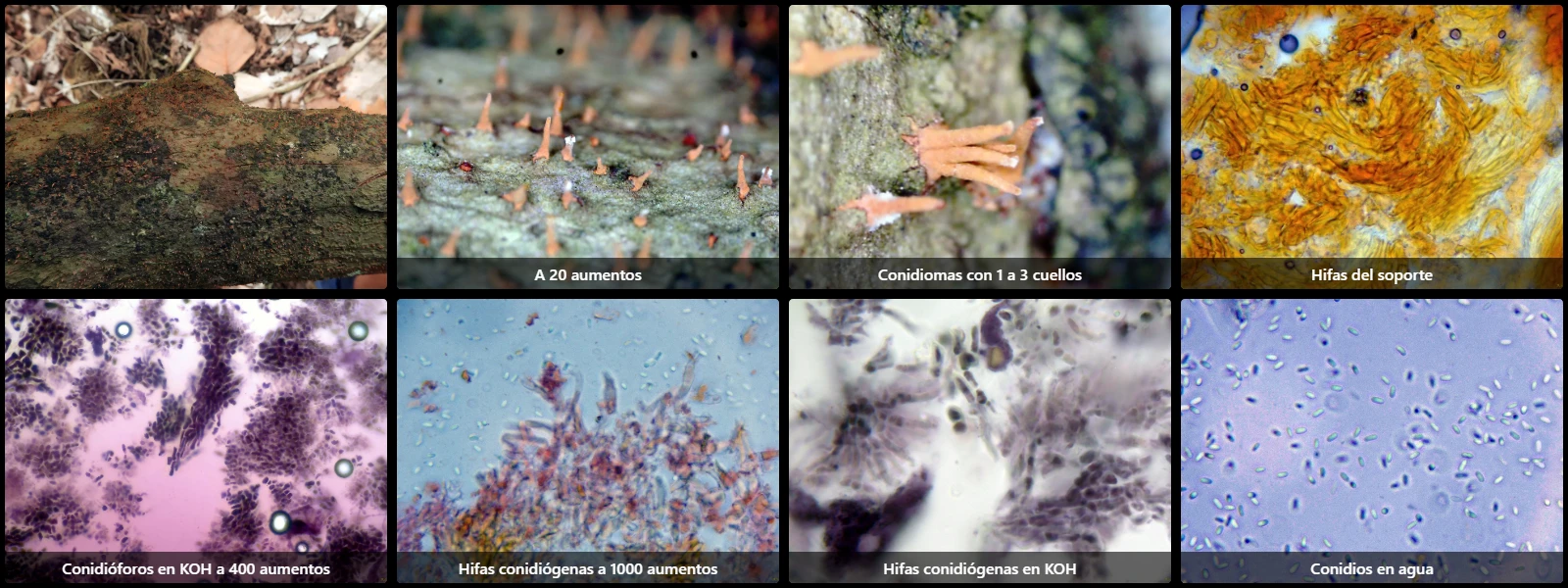
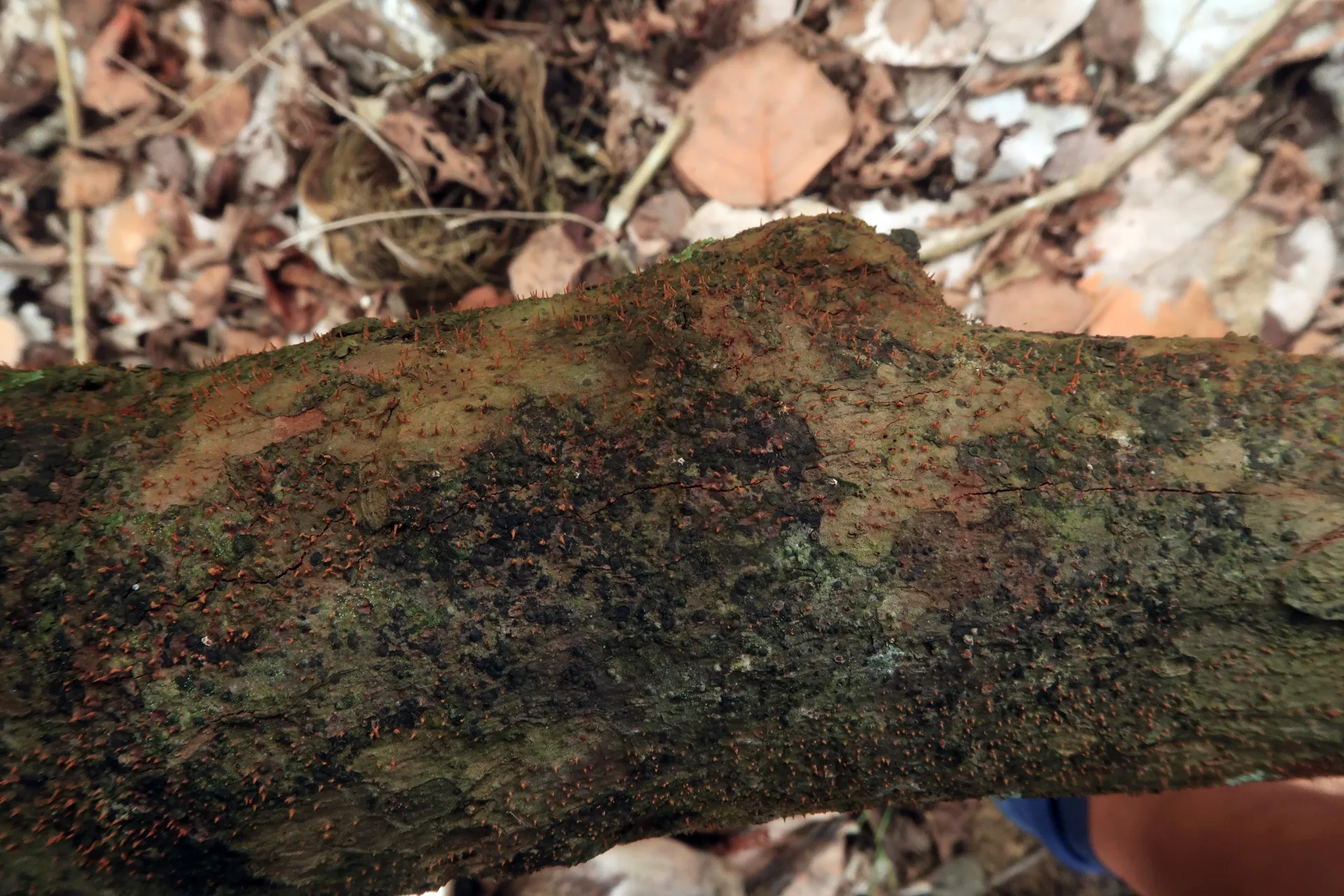
Species typical of tropical or subtropical climates, on the bark of a living trunk of Coccoloba uvifera (commonly known as sea grape), with curious conidiomata shaped like tiny horns, orange, emerging in a scattered manner yet very abundant, solitary or in small groups of up to 3 necks on a common base, 0.4 to 0.6 mm high by 0.15 to 0.4 mm wide at the base.
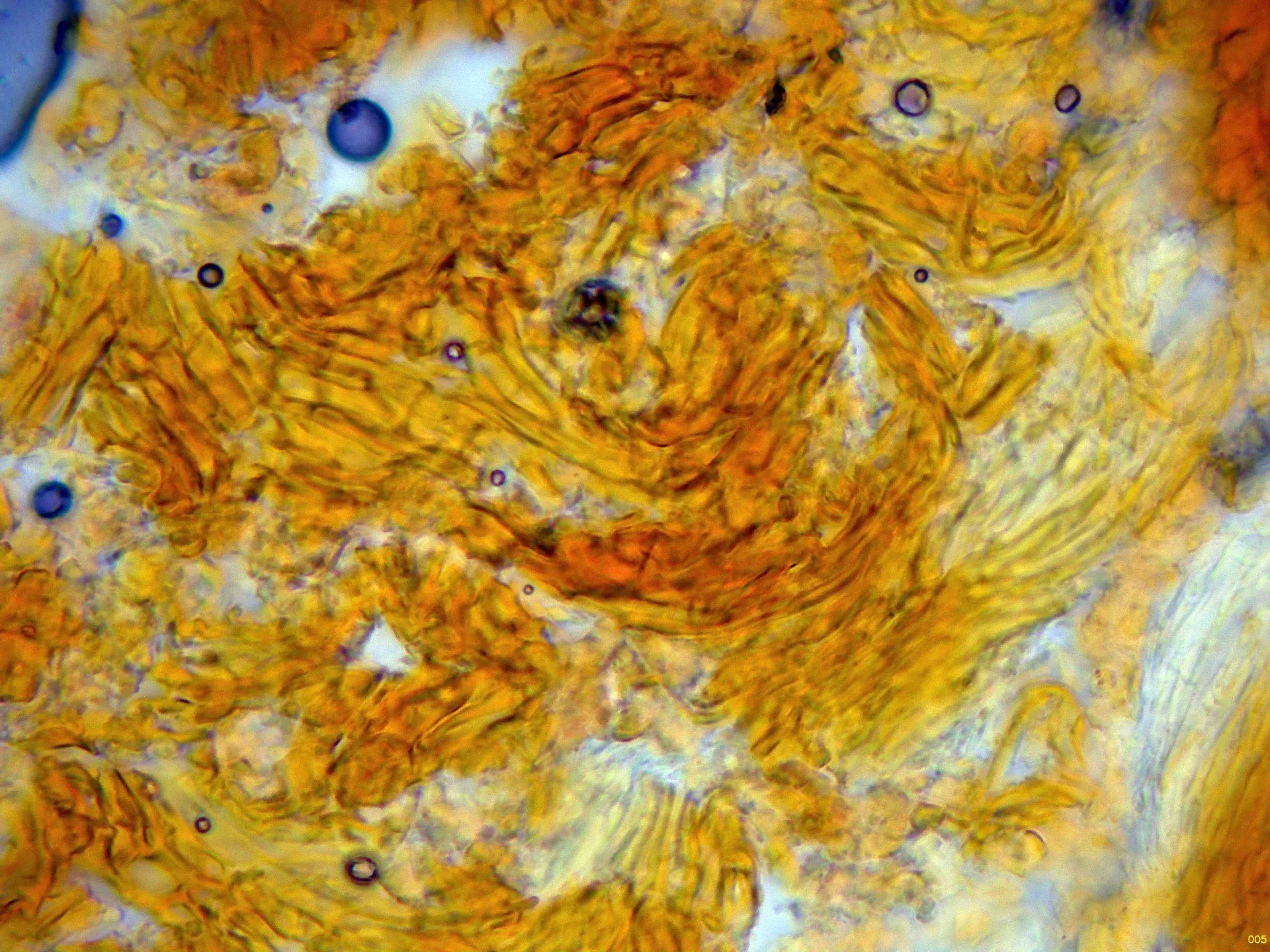
Supporting tissue of the neck prosenchymatous, with hyphae arranged parallel, very compacted, 2 to 4 µm wide, with abundant orange intracellular pigment, and with a basal tissue predominantly pseudoparenchymatous in appearance.
Conidiophores cylindrical, hyaline, 6 to 35 µm in total length, with phialidic conidiogenous cells, cylindrical to lageniform, 1.5 to 2.5 µm wide.
Conidia cylindrical, unicellular (aseptate), smooth, hyaline, thin-walled, 3 to 4 µm long by 1 to 2 µm wide, with homogeneous contents, without oil drops.
Herbarium material available: JTP2803/26.
Geographic references
Map generated from global occurrence data from GBIF. GBIF.
Study measurements
Values in Microns (µm)Macroscopic gallery
Microscopic gallery
Genetic / Phylogenetic Study
Phylogenetic Tree
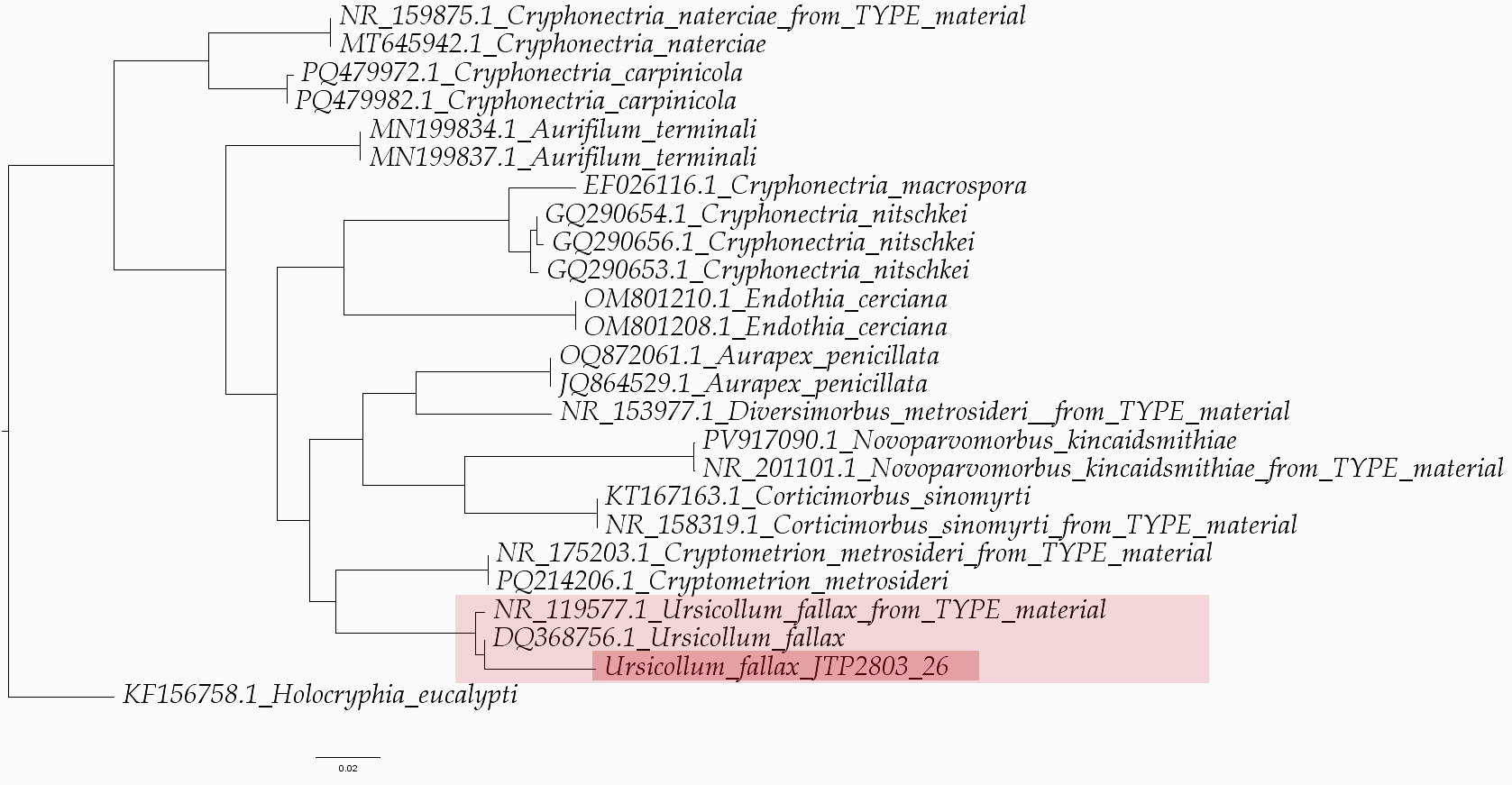
Sequences and Data
Sequencing (Chromatogram)
Select a file to visualize the chromatogram