

Unilacryma bispora
J.C.Zamora & S.Ekman
Study description
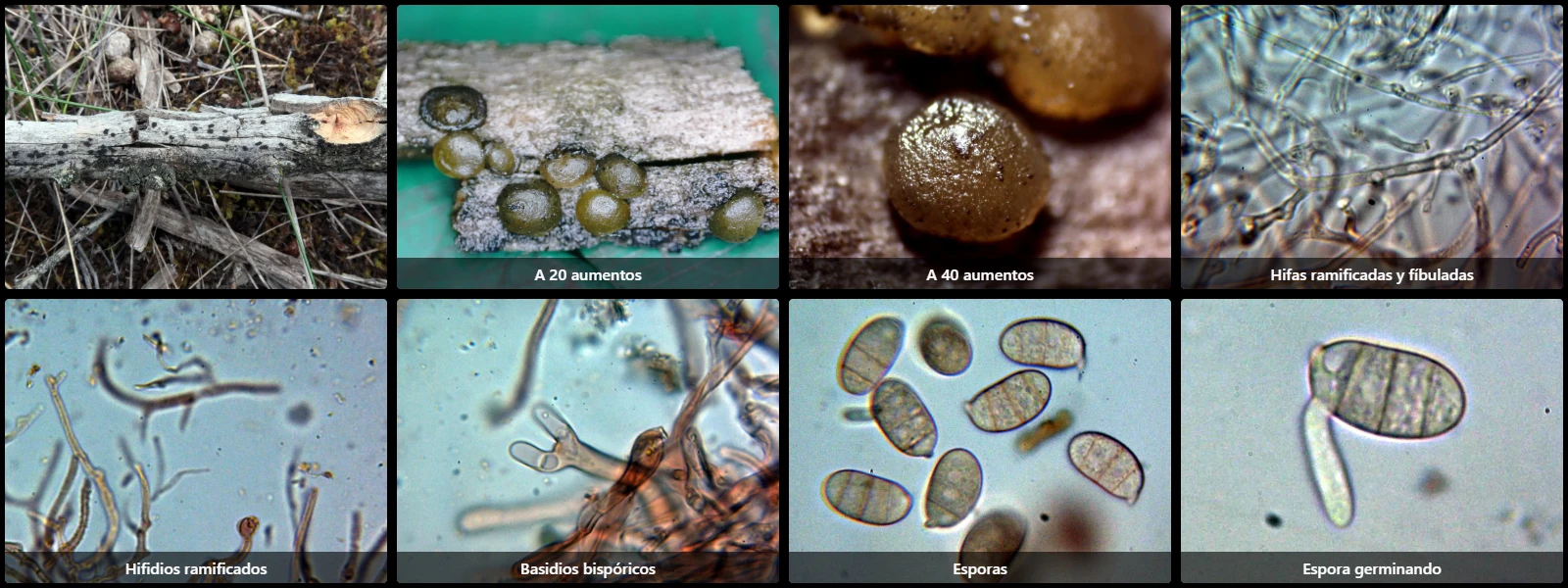
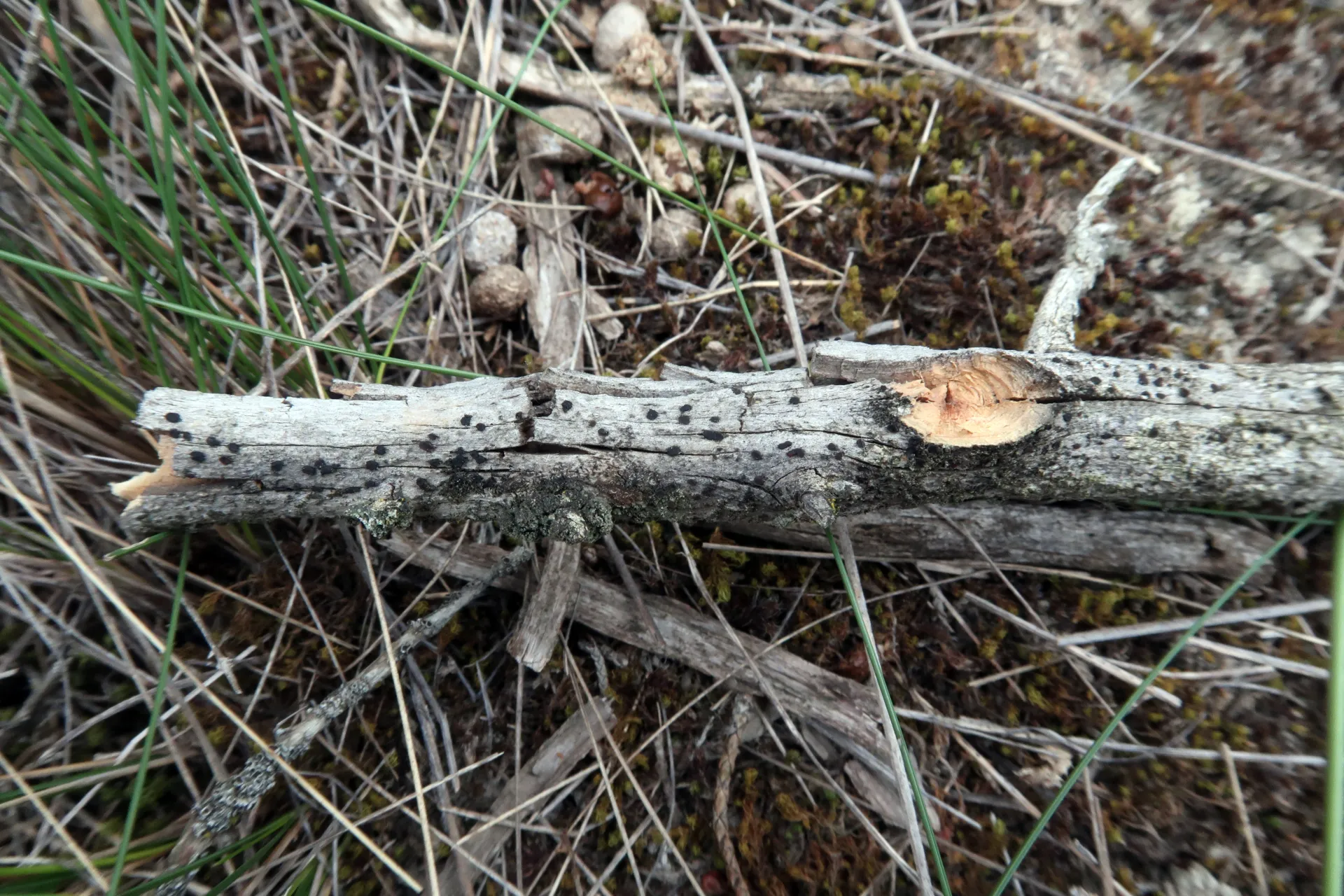
On small decaying twigs of conifers on the ground, preferably Pinus sylvestris, with subglobose basidiomes of gelatinous consistency, only 0.3 to 0.8 mm in diameter, yellowish-brown with greenish tinges, which distinguishes them from Dacrymyces, the latter mostly showing orange hues.
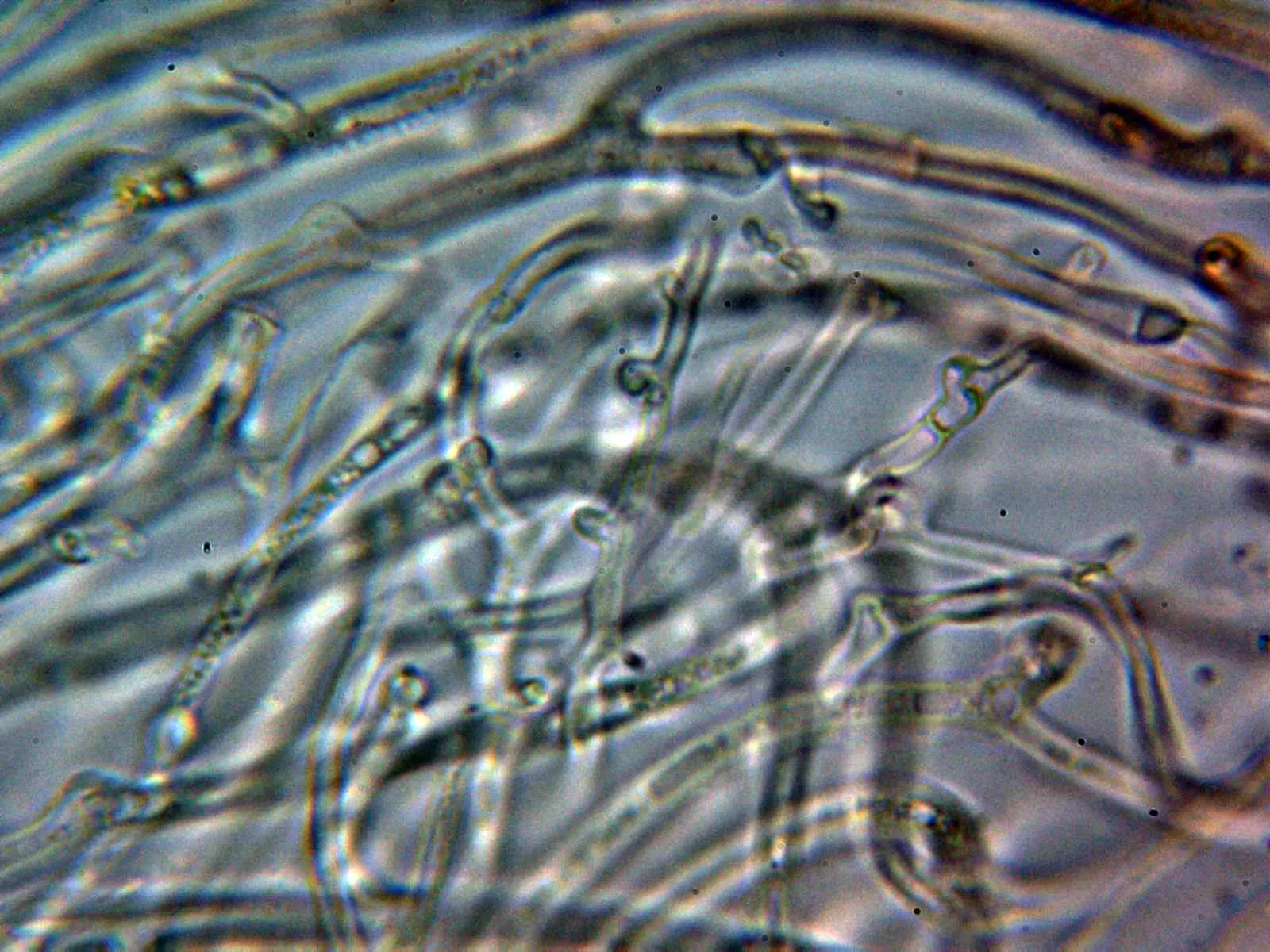
Monomitic hyphal system, with hyaline context hyphae, smooth- and moderately thick-walled, 1.5 to 4 µm wide, separated from each other by gelification, abundantly branched, septate, mostly with clamp connections, although some scattered simple septa can be observed.
Hyphidia present among the basidia, thin-walled, abundantly branched.
Basidia bisporic, hyaline, tuning-fork-shaped (furcate), 30 to 50 µm long by 4.5 to 6.5 µm wide, with two thick sterigmata on which the spores are produced.
Spores ellipsoidal, smooth, hyaline, thin-walled, with a distinct eccentric apiculus at one end, 1- to 3-septate (with 1 to 3 transverse septa), 15 to 20 µm long by 9 to 12 µm wide; these spores can produce conidia (asexual stage) or germ tubes to facilitate the spread of the species.
Geographic references
Map generated from global occurrence data from GBIF. GBIF.
Study measurements
Values in Microns (µm)Macroscopic gallery
Microscopic gallery