

Typhula erythropus
(Pers.) Fr.
Study description
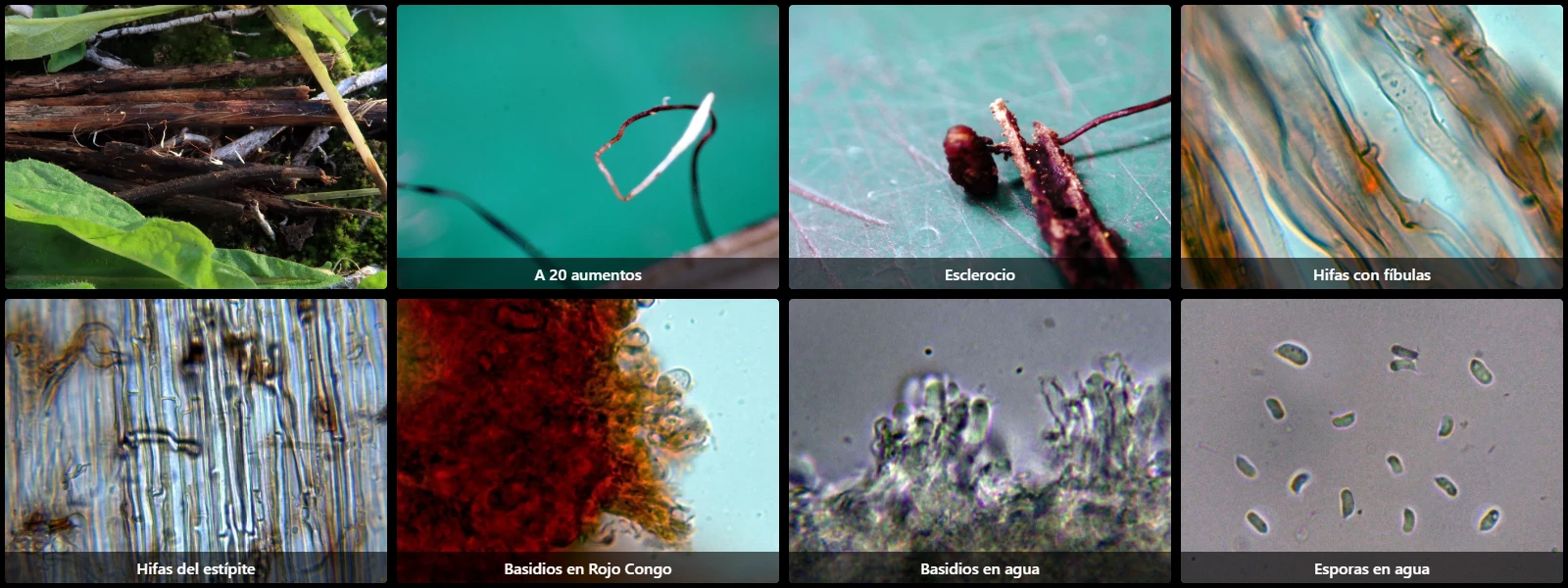
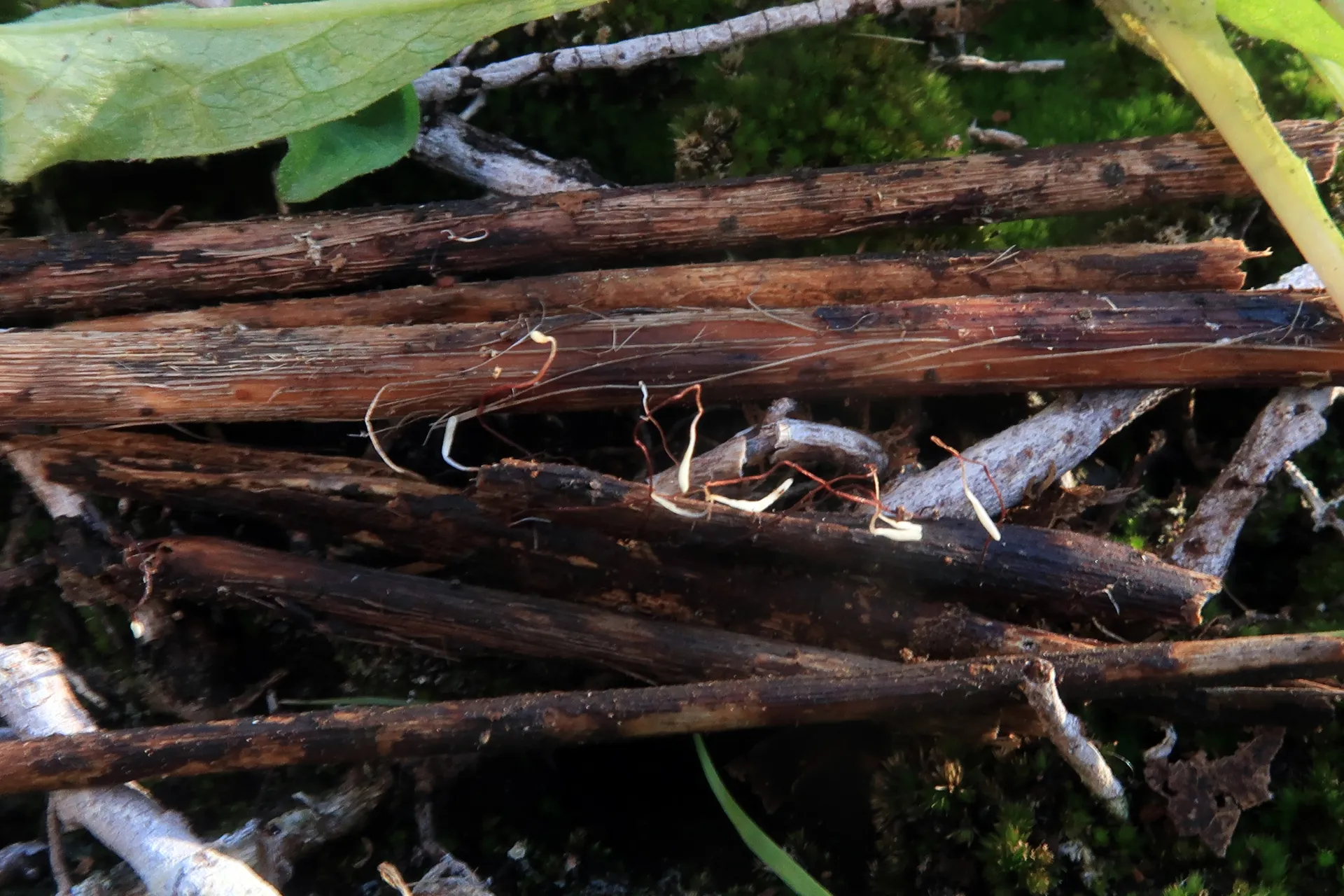
On decaying fine stems, petioles, or leaves of broadleaf trees, with a cylindrical to clavate white head, a long filiform reddish-brown stipe, with a total length of 1 to 3 mm, and an oval reddish-brown sclerotium at the base immersed in the host tissue.
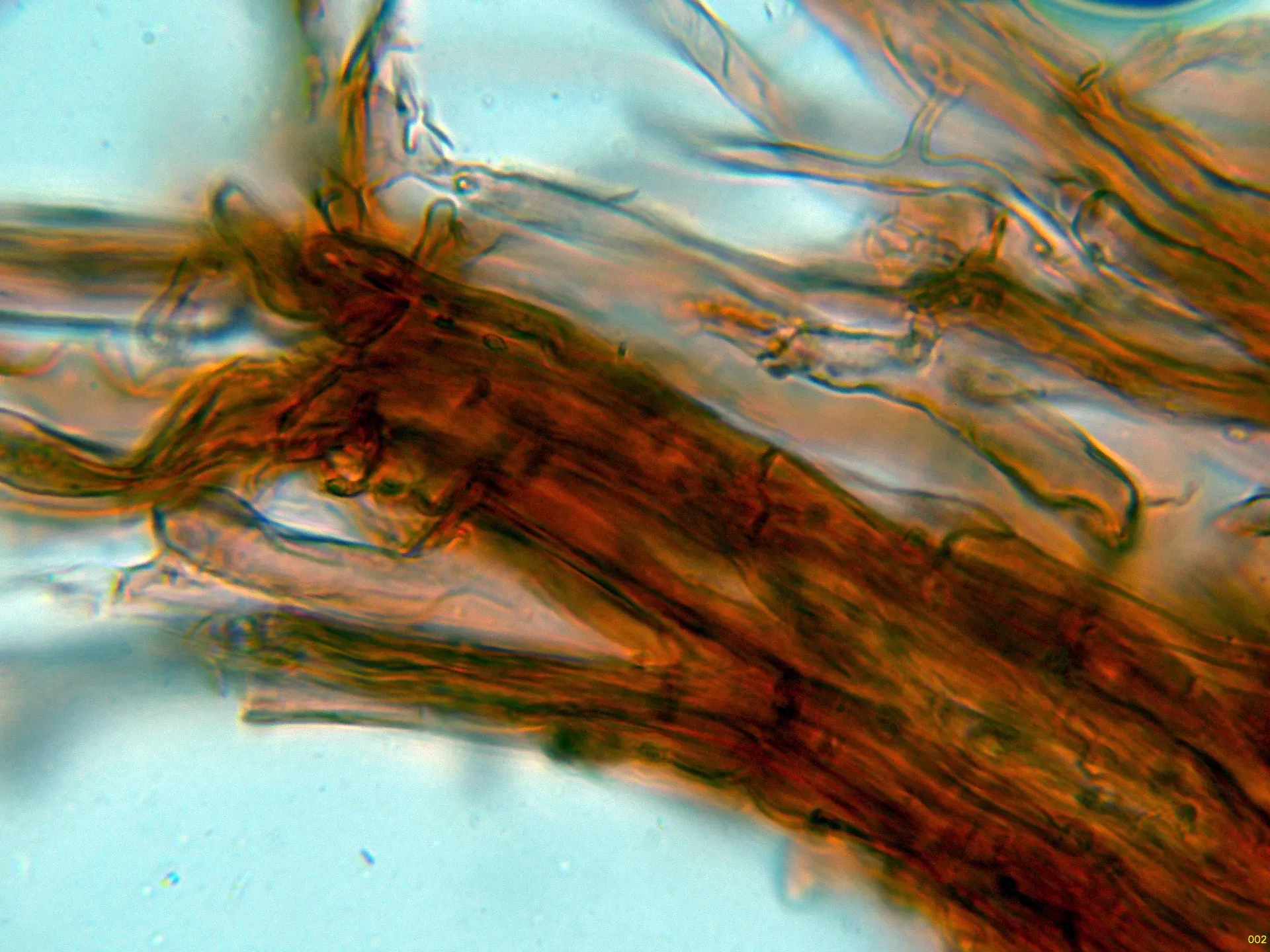
Monomitic hyphal system, with hyaline subhymenial hyphae, thin- to moderately thick-walled, 3 to 7 µm wide, those of the stipe with reddish-brown intracellular pigment, all septate with clamp connections.
Caulocystidia present on the stipe surface, subulate, septate, thick-walled, with brown pigment inside.
Basidia cylindric-clavate, 25 to 40 µm long by 5 to 6 µm wide, with basal clamp connections and tetrasporic.
Spores cylindric-ellipsoidal to very slightly allantoic, smooth, hyaline, thin-walled, 4.5 to 7 µm long by 2 to 3 µm wide, with small oil drops inside, and with a very weakly amyloid reaction in Melzer's reagent.
Herbarium material available: JTP2005/23.
Geographic references
Map generated from global occurrence data from GBIF. GBIF.
Study measurements
Values in Microns (µm)Macroscopic gallery
Microscopic gallery