

Tubulicrinis accedens
(Bourdot & Galzin) Donk
Study description
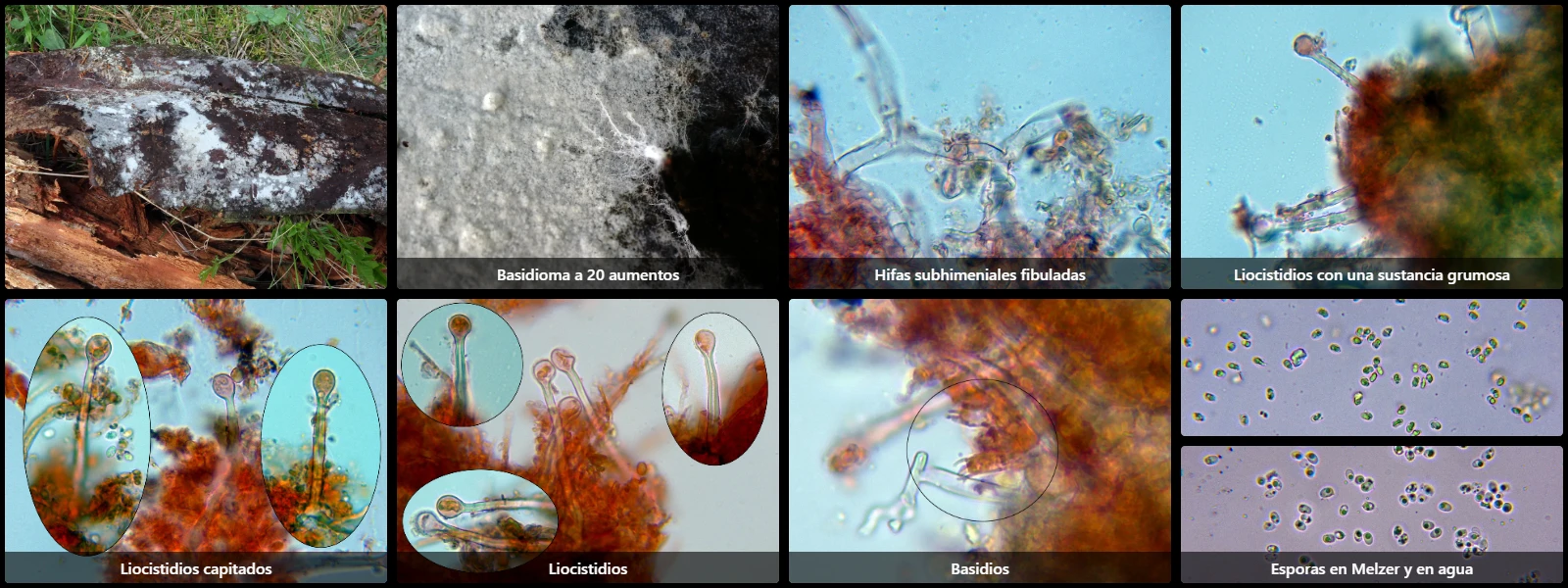
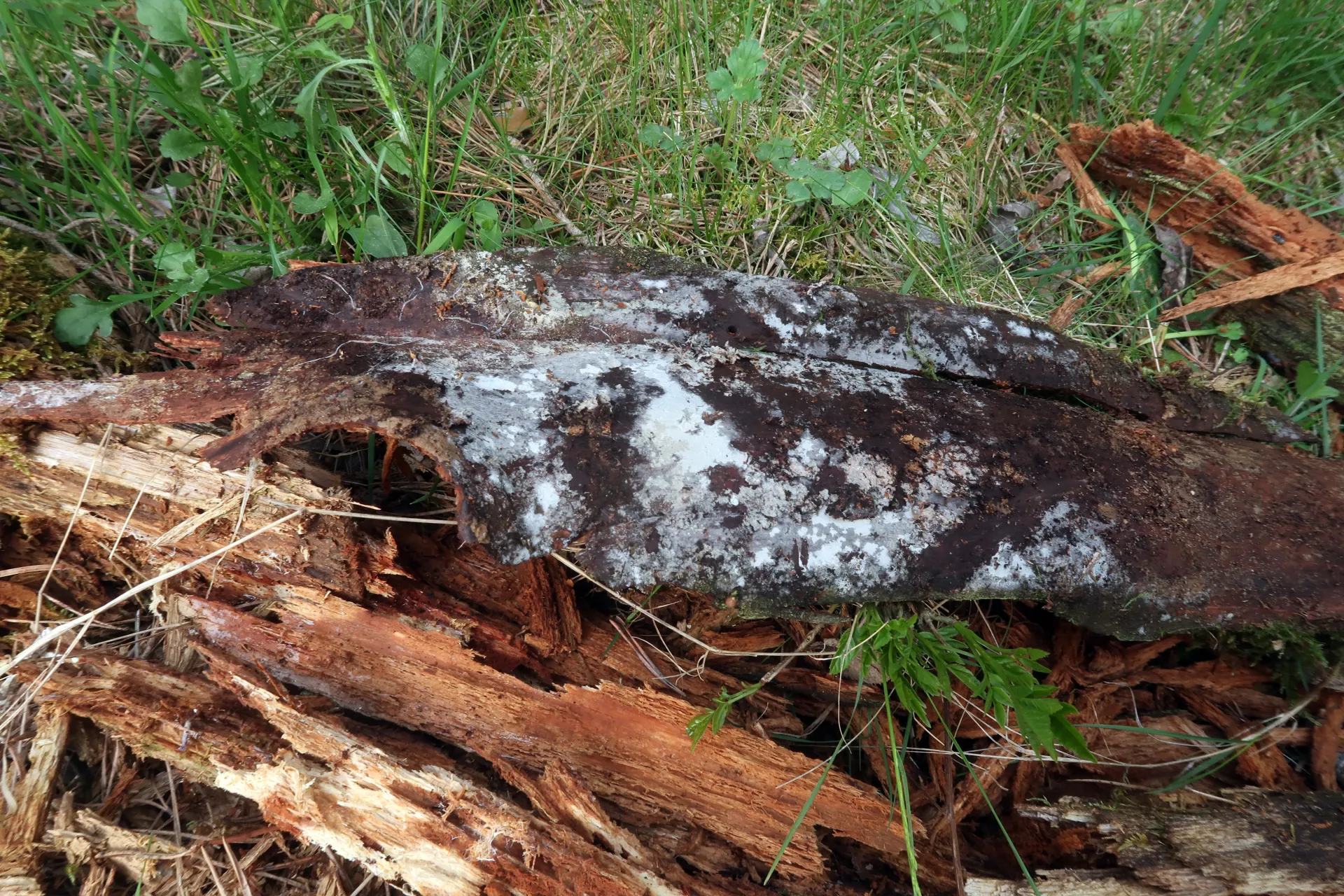
On decaying wood or bark of conifers on the ground, such as pines or firs, with resupinate basidiomes, tightly adnate to the substrate, forming discontinuous irregular patches, with a smooth, slightly farinaceous surface, whitish-grey, and with an indeterminate, ill-defined growing margin.
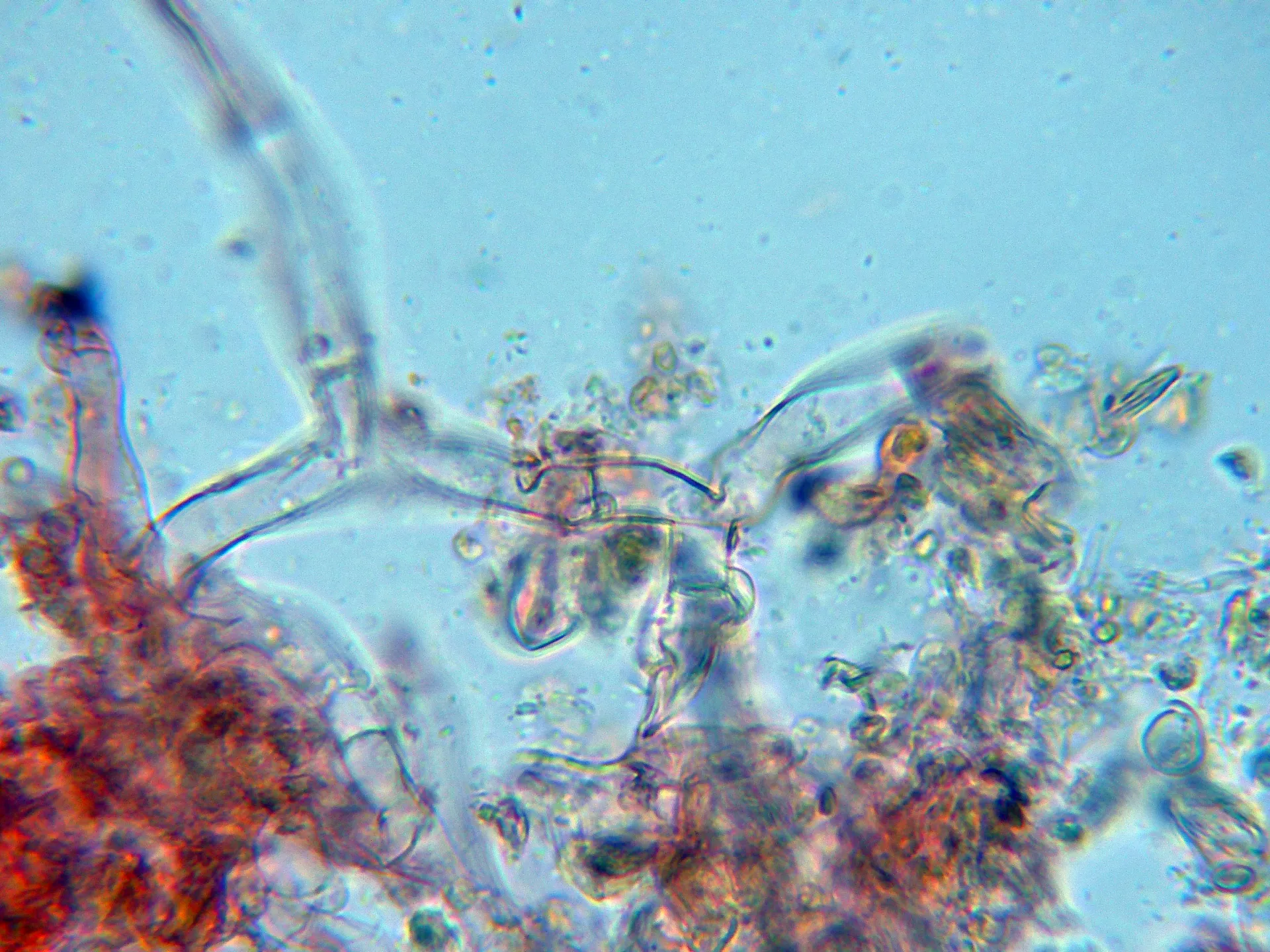
Monomitic hyphal system, with hyaline generative hyphae, thin- to slightly thick-walled, 2 to 5 µm wide, with some branches, septate with clamp connections at the septa.
Cystidia abundant, lyocystidium-type, thick-walled, capitate, 40 to 60 µm long by 2.5 to 3.5 µm wide, and with apical enlargements of 6 to 8 µm.
Basidia cylindric-clavate, 12 to 15 µm long by 4 to 5 µm wide, with basal clamp connections, and with two or four sterigmata (bi- or tetrasporic).
Spores ellipsoidal, smooth, hyaline, thin-walled, with an eccentric apiculus at one end, 4 to 5 µm long by 3 to 3.5 µm wide, with oil or lipid drops inside (guttulate), and turning golden-yellow in Melzer's reagent (inamyloid).
Geographic references
Map generated from global occurrence data from GBIF. GBIF.
Study measurements
Values in Microns (µm)Macroscopic gallery
Microscopic gallery