Tubercularia lateritia
(Berk.) Seifert
Study description
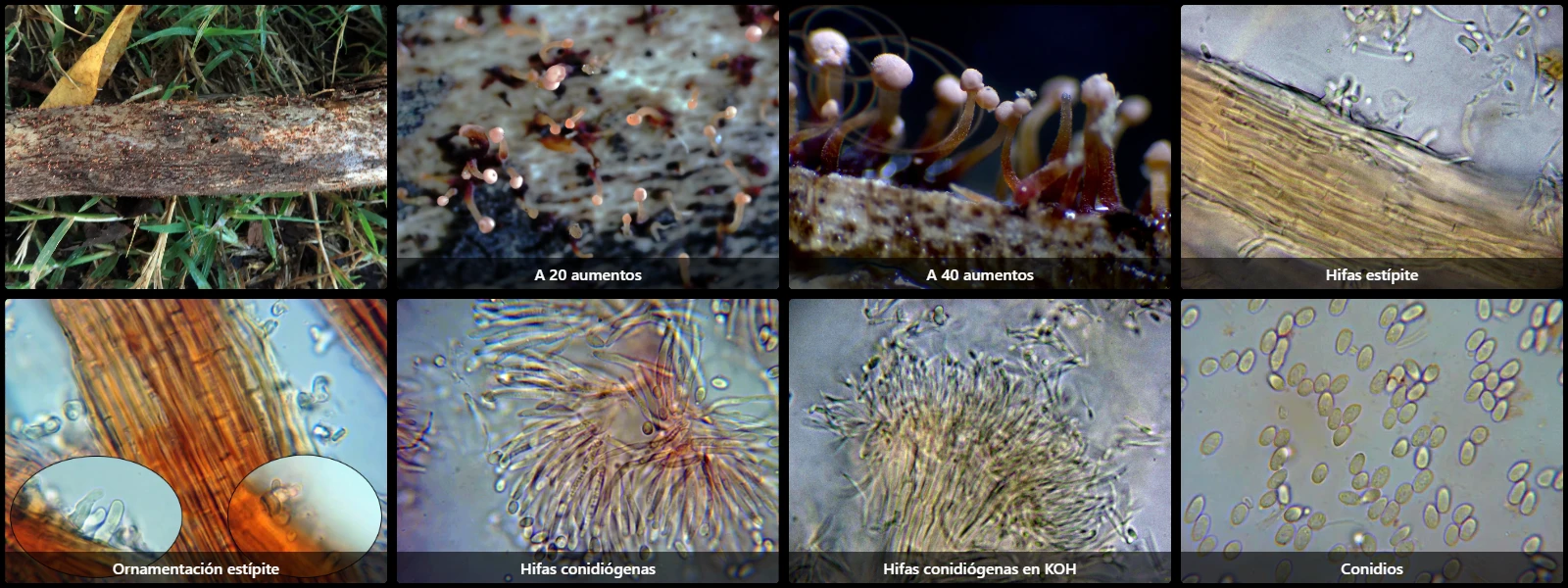
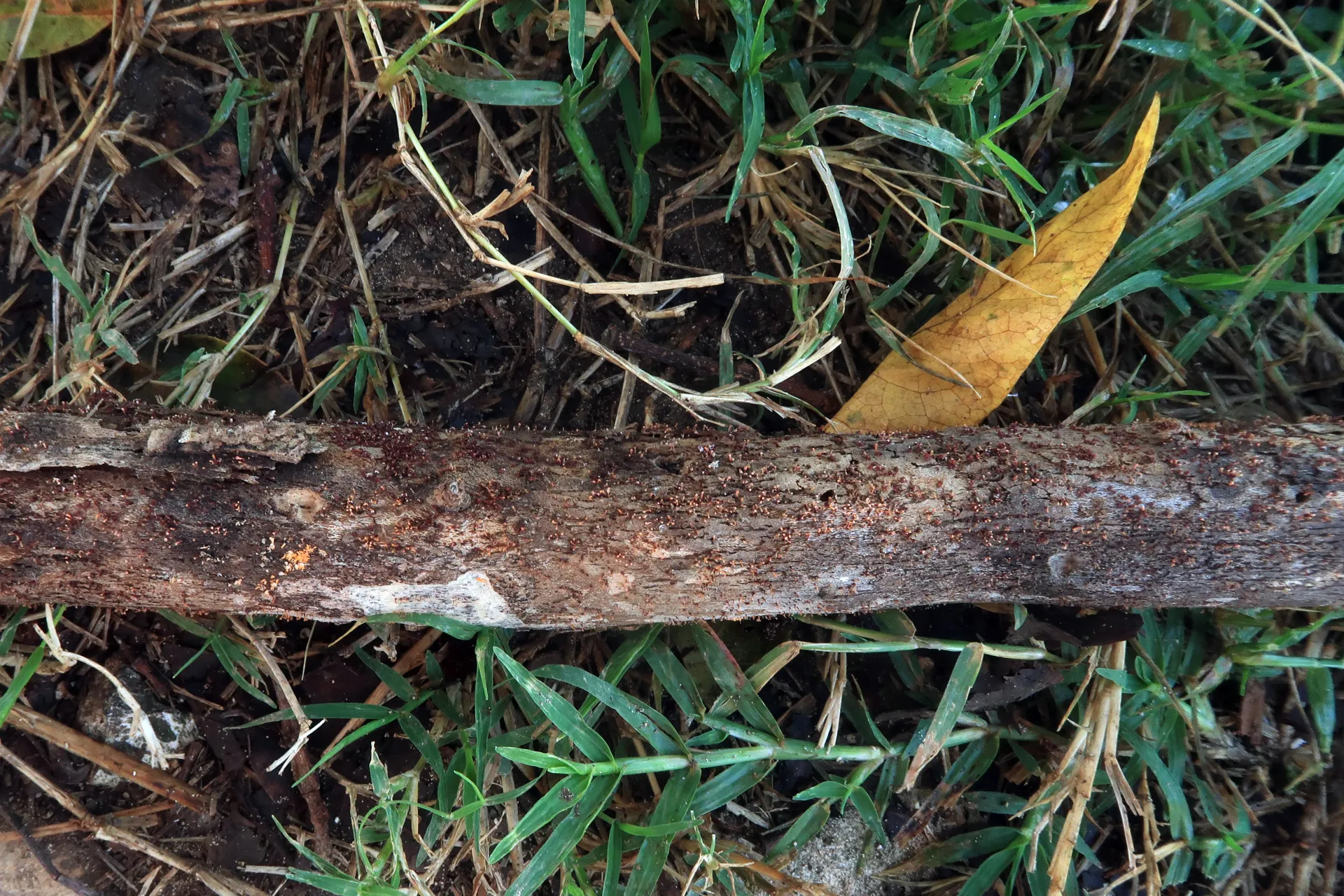
A tropical or subtropical species widely distributed throughout Central America and the Caribbean, on decaying wood on the ground, forming large colonies on the substrate, with cylindrical, capitate synnemata up to 2 mm in height, a reddish-brown stipe, a yellowish-brown head, growing singly or in small clusters of a few specimens arising from a common base.
Stipe with outer hyphae arranged parallel to each other, thin-walled, with abundant yellowish-brown intracellular pigment, 2 to 4 µm wide, and those of the innermost part of similar morphology but more hyaline.
Stipe surface highly ornamented with abundant cylindrical to sinuous terminal cells, and like the superficial hyphae, containing yellowish intracellular pigment.
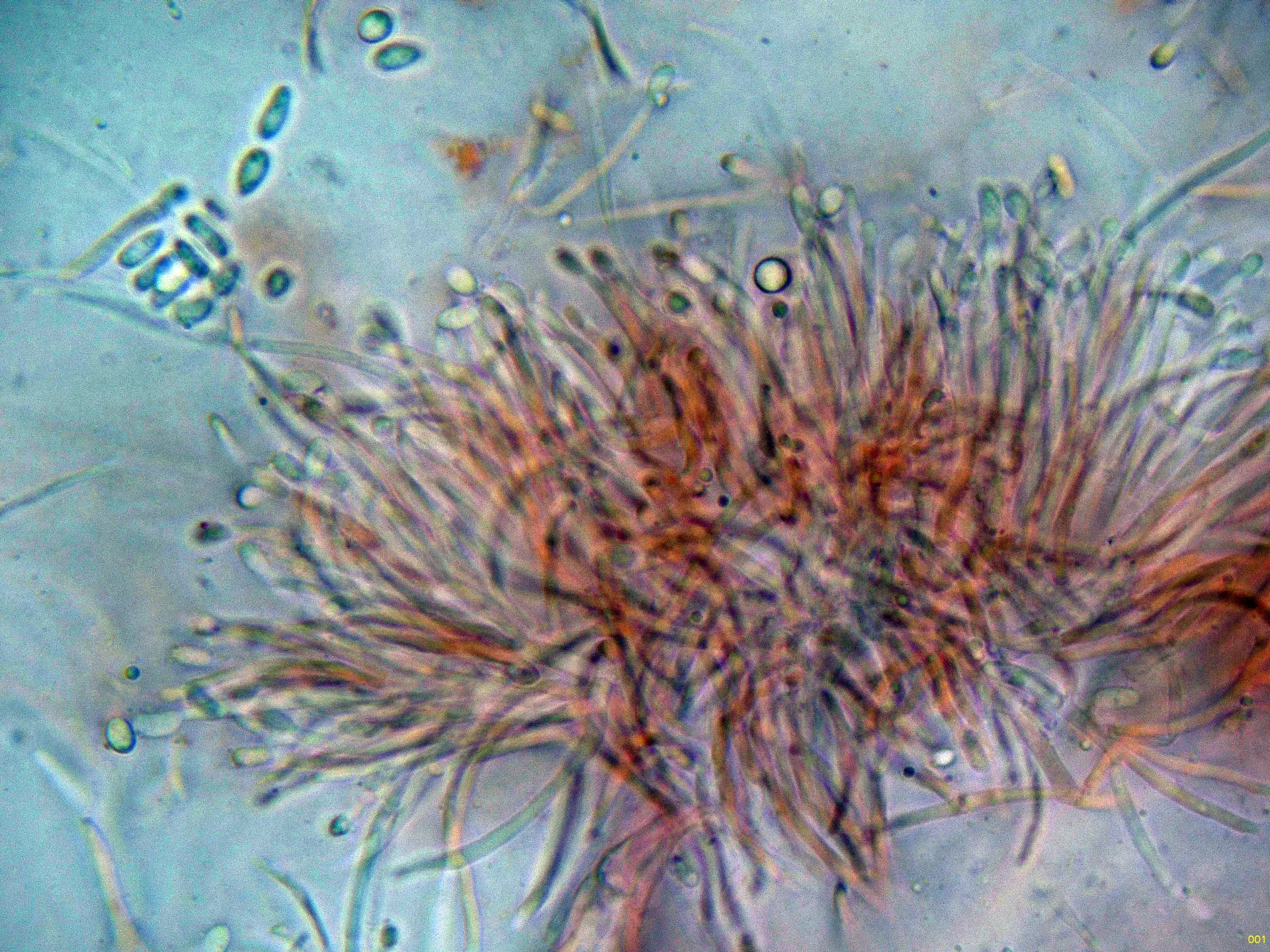
Conidiophores hyaline, septate, and up to 200 µm long.
Conidiogenous hyphae with cylindrical to subulate phialides, 15 to 30 µm long and 2 to 3 µm wide.
Conidia ellipsoid, smooth, hyaline, thin-walled, 5 to 7 µm long, 3 to 4 µm wide, with homogeneous contents, smooth to very slightly granular.
Herbarium material available: JTP2749/26.
Geographic references
Map generated from global occurrence data from GBIF. GBIF.
Study measurements
Values in Microns (µm)Macroscopic gallery
Microscopic gallery