

Tubaria minutalis
Romagn.
Study description
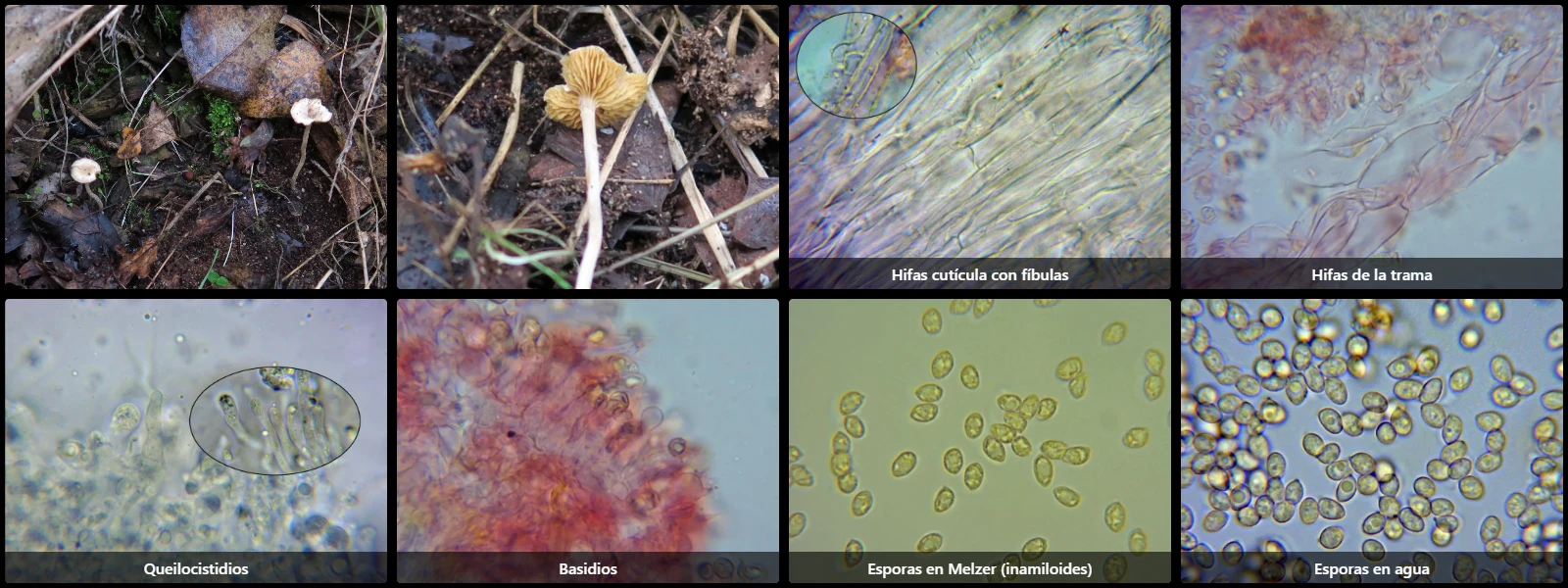
On plant debris or decaying buried wood, very small in size, with a cap measuring only 3 to 8 mm, with a smooth, hygrophanous surface in shades ranging from ochre-brown to pale ochre, adnate to subdecurrent orange gills, a fragile cylindrical stipe, and without distinct odour or taste.
Filamentous cuticle composed of cylindrical hyphae arranged more or less parallel, 4 to 9 µm wide, with a light brown pigment inside, septate with clamp connections.
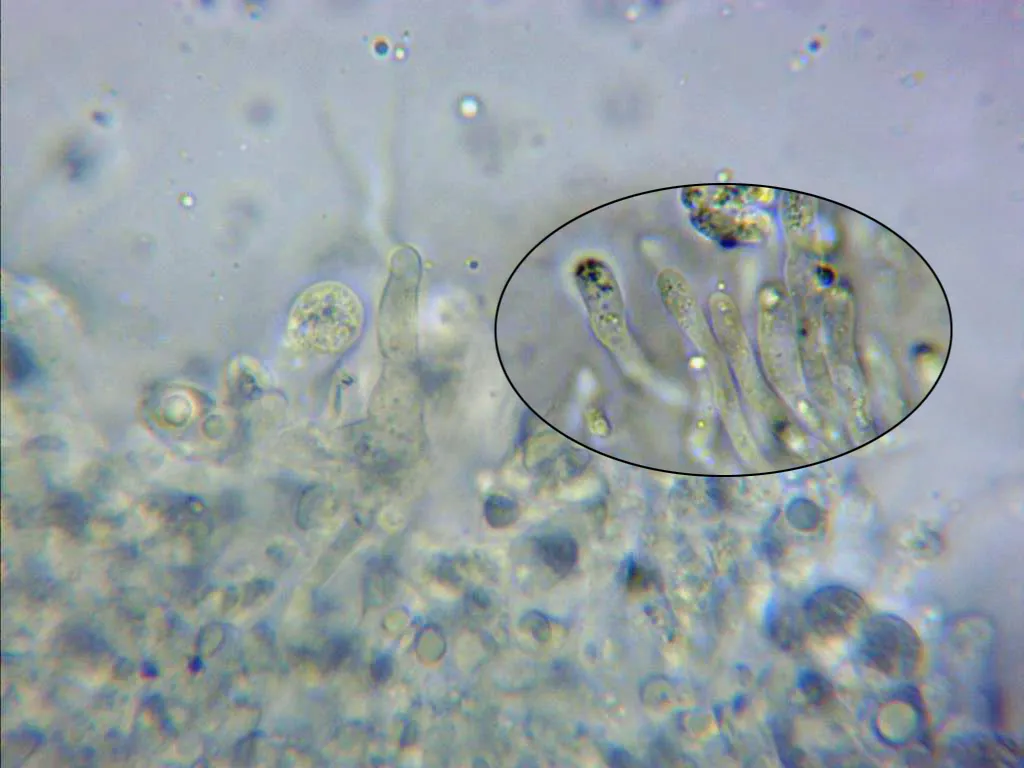
Cheilocystidia abundant, cylindrical to slightly lageniform, sinuous, hyaline, thin-walled, 25 to 45 µm long, with a maximum width of 5 to 8 µm.
Without pleurocystidia.
Basidia cylindric-clavate, 15 to 25 µm long by 5 to 8 µm wide, with basal clamp connections and tetrasporic.
Spores ovoid to slightly amygdaliform, smooth, hyaline, thin-walled, with a discreet eccentric apiculus at one end, 4.5 to 6.5 µm long by 3.5 to 4.5 µm wide, containing oil drops of varying sizes inside, and inamyloid in Melzer's reagent.
Geographic references
Map generated from global occurrence data from GBIF. GBIF.
Study measurements
Values in Microns (µm)Macroscopic gallery
Microscopic gallery