

Tubaria conspersa
(Pers.) Fayod
Study description
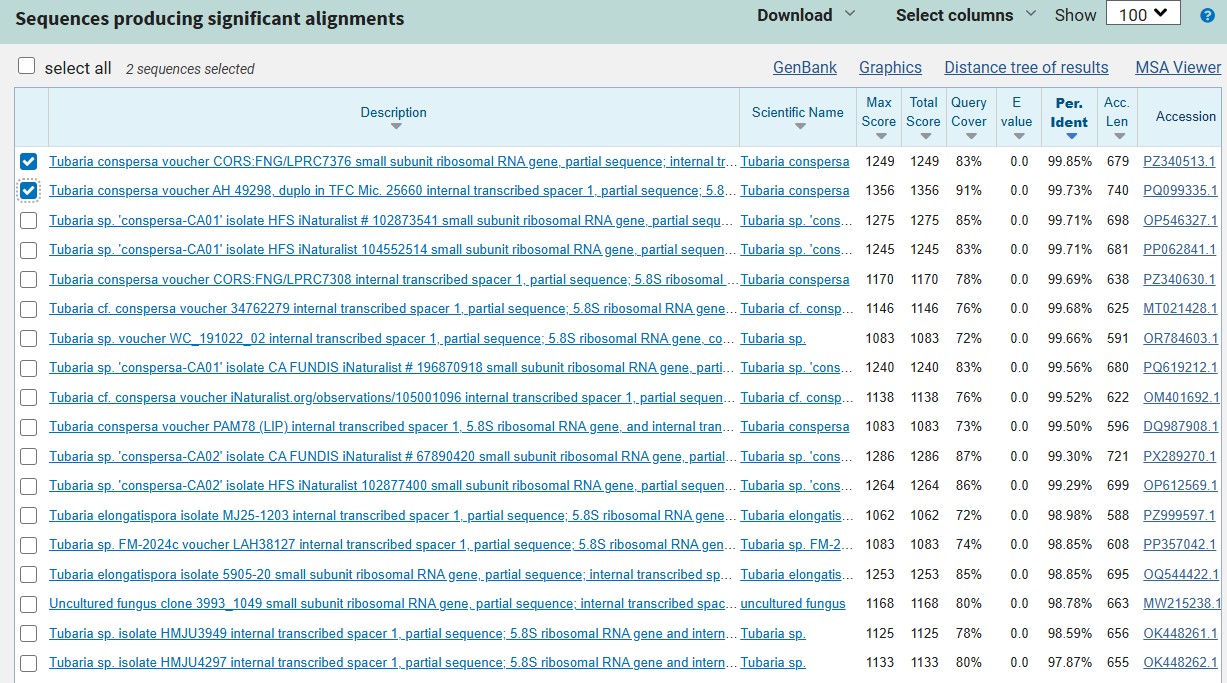
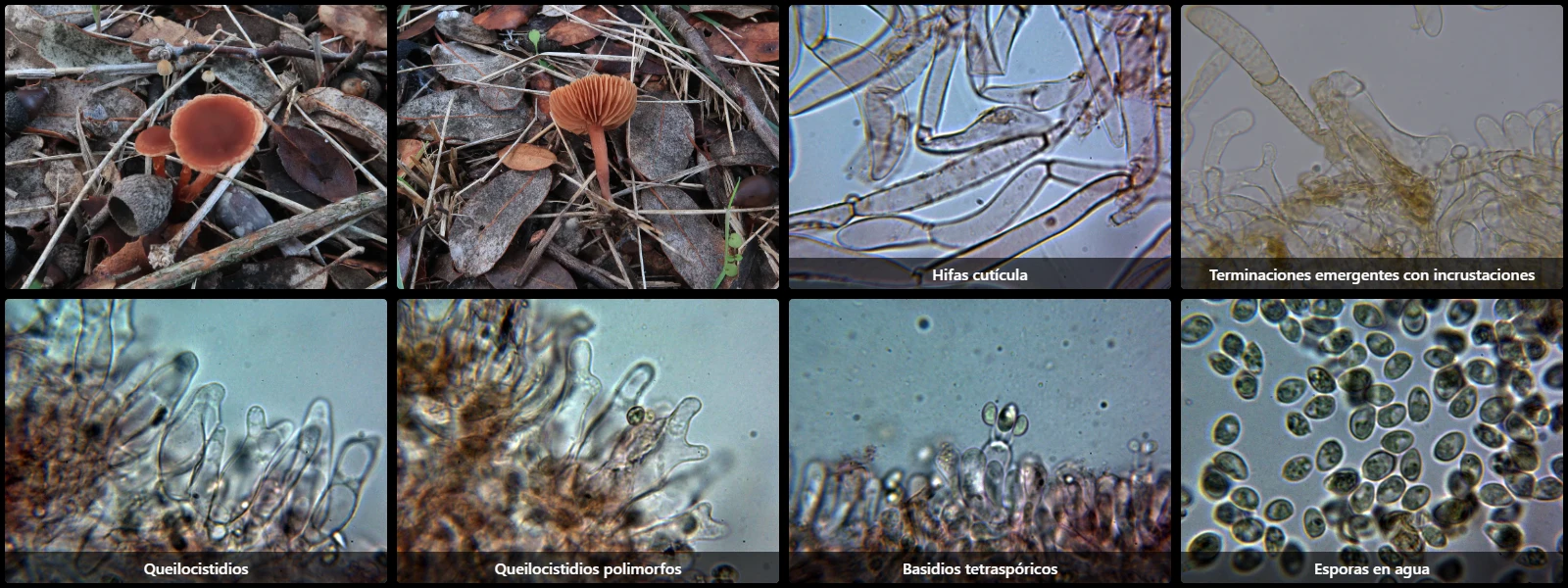
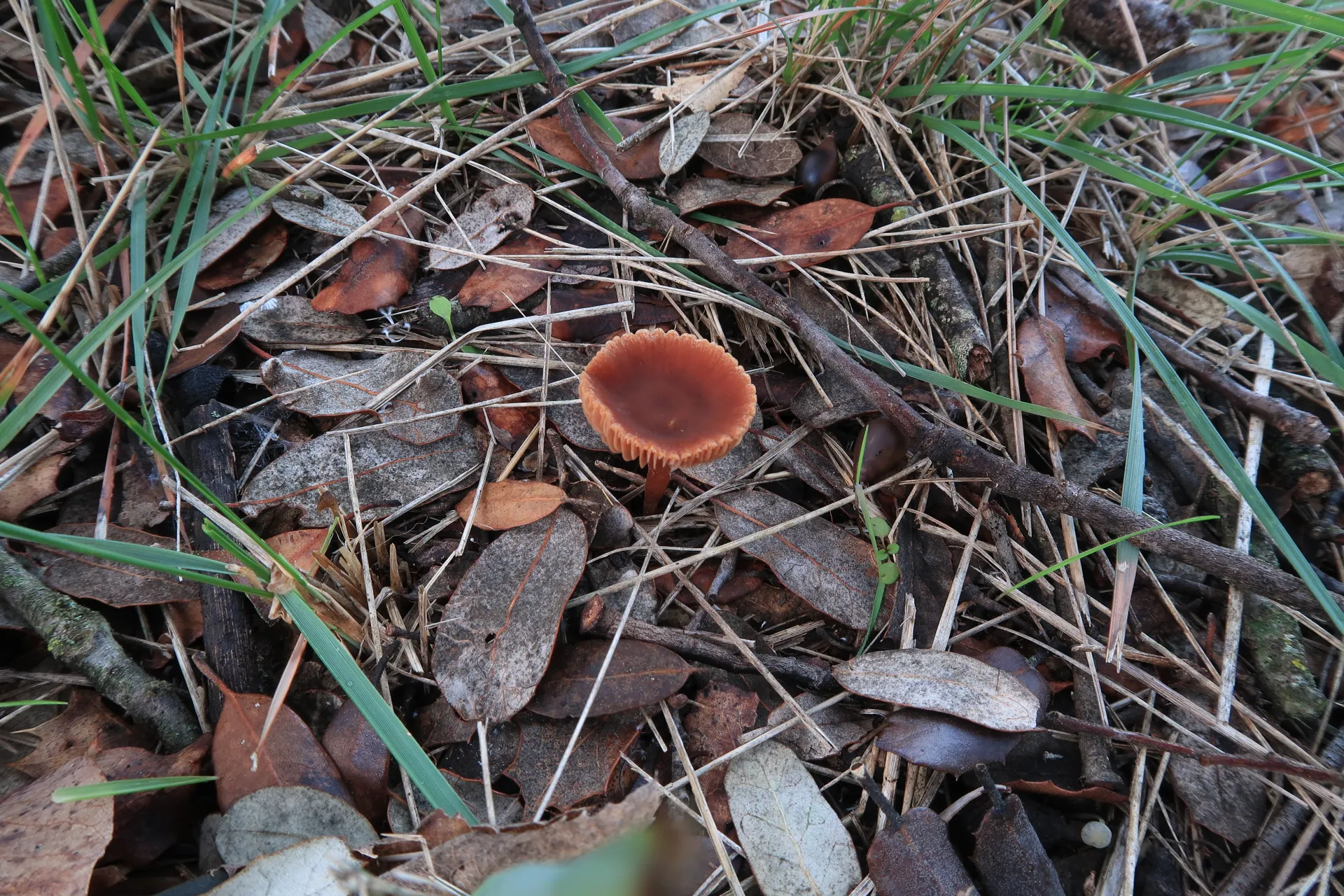
Forest species on plant debris and bare soil, with a convex to flattened cap, 1 to 2 cm in diameter, brown, darker in the center, broad adnate orange-brown gills, a fragile cylindrical stipe with whitish fibrils, a weak odour, and a sweet (insipid) taste.
Filamentous cuticle formed by hyphae arranged more or less parallel, 5 to 12 µm wide, with some emergent endings containing a slight brown pigment inside, often encrusted, septate and mostly clamped.
Cheilocystidia polymorphic, cylindrical, fusiform to utriform, even bifurcate, 35 to 65 µm long by 7 to 12 µm wide.
Basidia clavate, 20 to 30 µm long by 7 to 9 µm wide, partially clamped and tetrasporic.
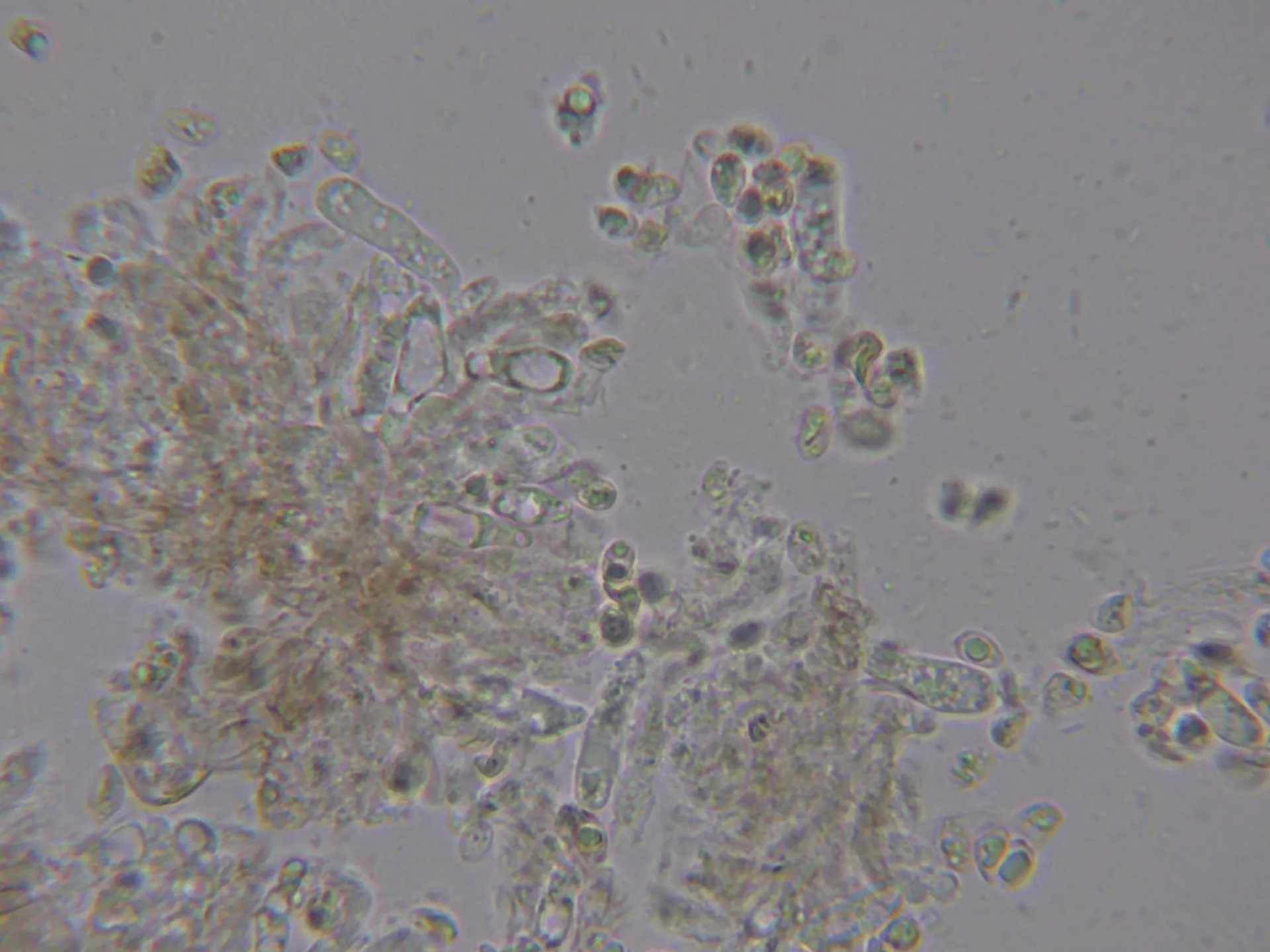
Spores ellipsoidal, smooth, hyaline, thin-walled, pale yellowish-grey under the microscope, with a barely noticeable eccentric apiculus at one end, 6 to 8 µm long by 4 to 4.5 µm wide, with small oil drops inside, and without reaction in Melzer's reagent (inamyloid).
Geographic references
Map generated from global occurrence data from GBIF. GBIF.
Study measurements
Values in Microns (µm)Macroscopic gallery
Microscopic gallery
Genetic / Phylogenetic Study
Phylogenetic Tree