

Tricholoma scalpturatum
(Fr.) Quél.
Study description
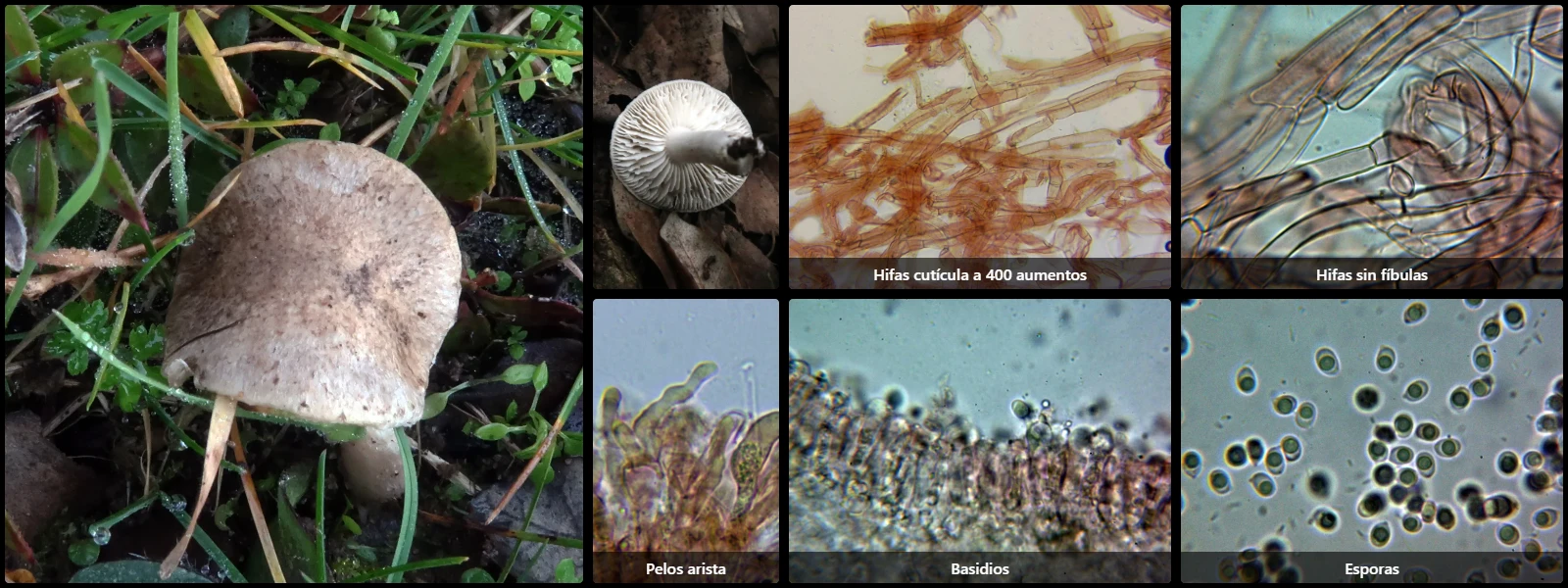
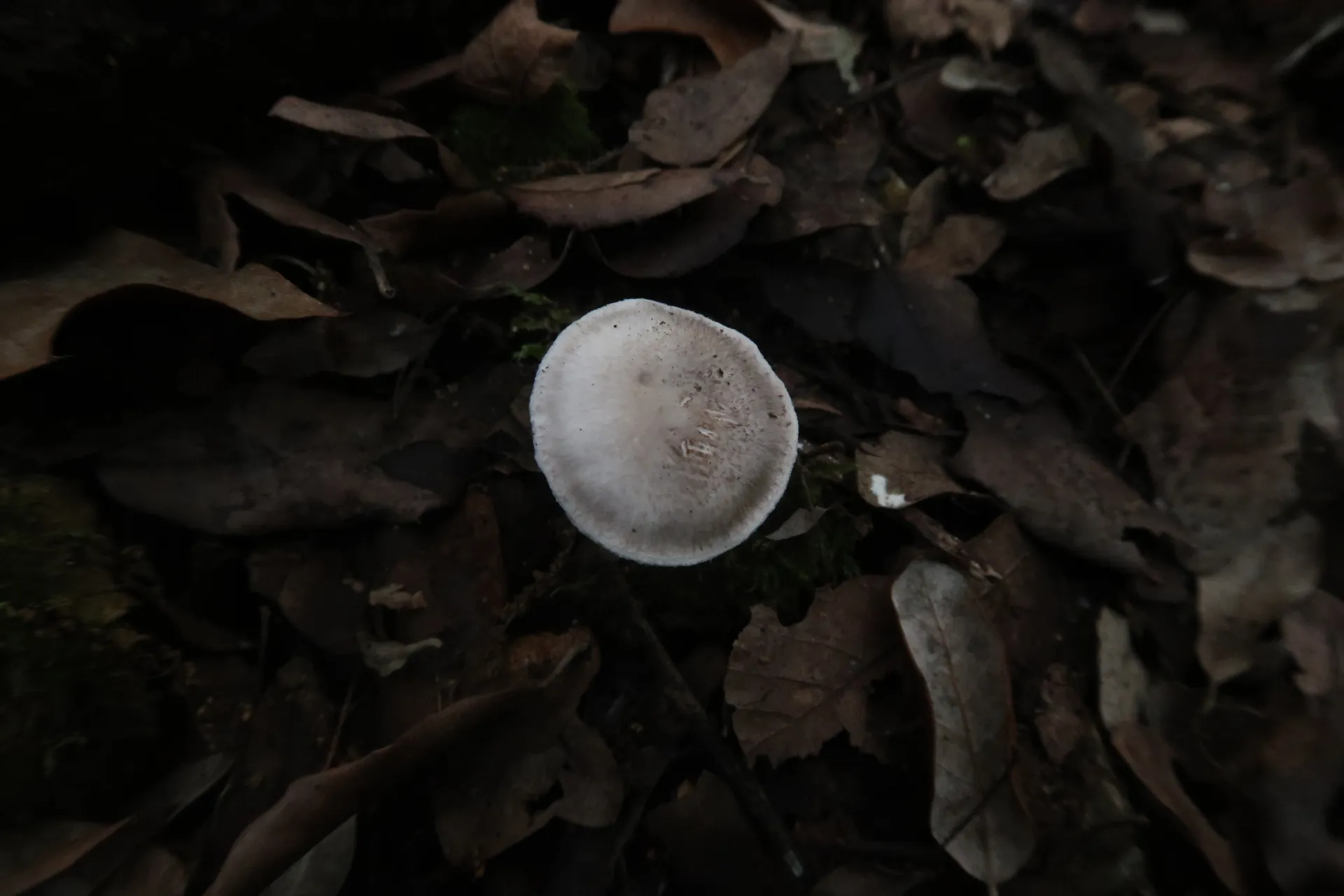
Species typical of pine or holm oak woods, with a convex to flattened cap, 3 to 7 cm in diameter, with a surface bearing greyish-brown radial fibrils, adnate to decurrent with a tooth gills that tend to turn yellow with age, a cylindrical stipe with abundant fibrils, and a mealy odour and taste.
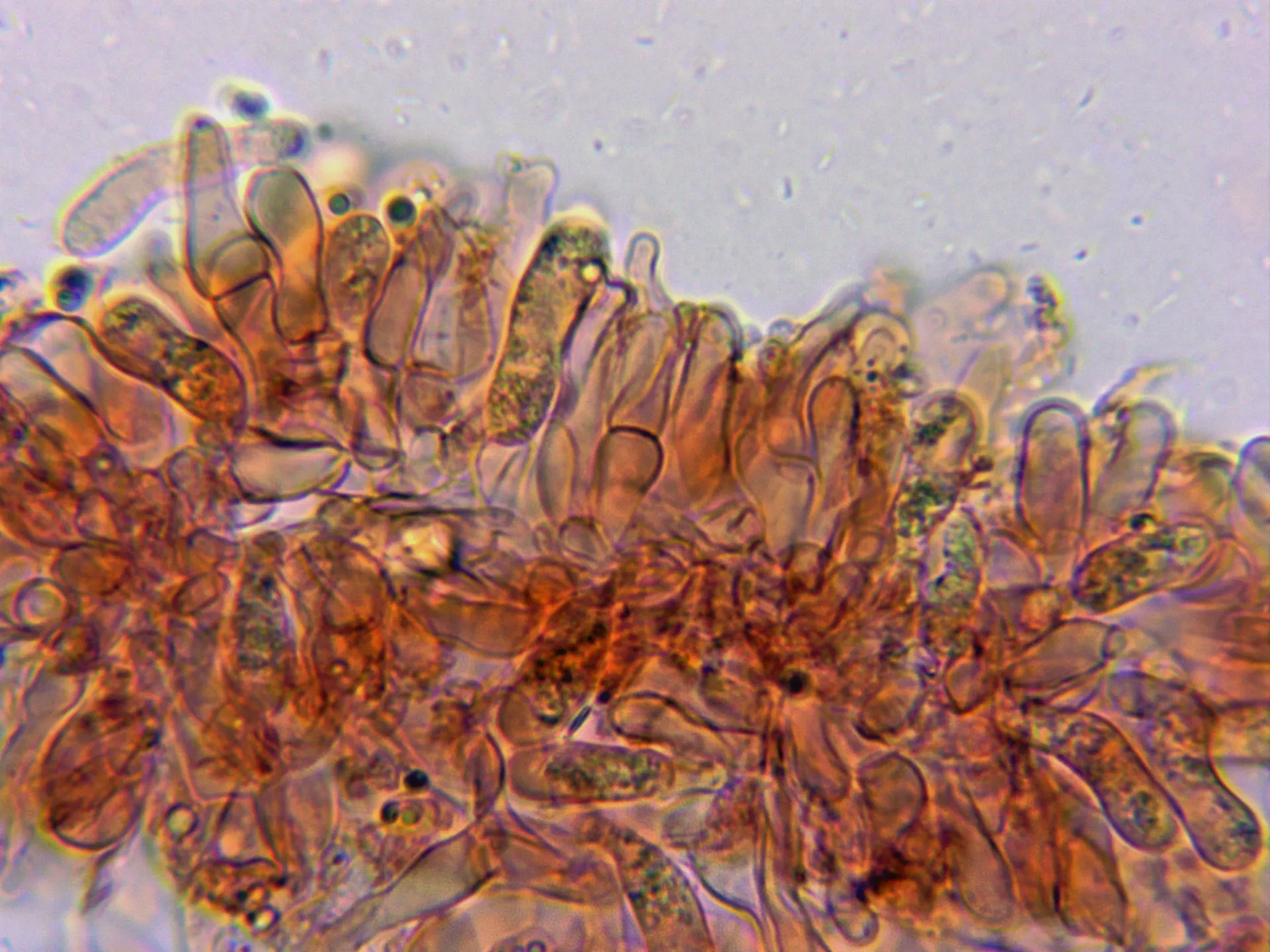
Filamentous cuticle formed by hyphae arranged more or less parallel, 5 to 8 µm wide, with a light pale yellowish-brown intracellular pigment, with some emergent endings grouped in bundles or fascicles, with swellings up to 14 µm, all septate with simple septa (without clamp connections).
Without cystidia, but with some sterile terminal hyphae resembling hairs, narrower than the basidia and slightly projecting above their level.
Lamellar trama regular or parallel.
Basidia cylindric-clavate, 25 to 30 µm long by 5 to 7 µm wide, with a simple base and tetrasporic.
Spores ellipsoidal, smooth, hyaline, thin-walled, with an eccentric apiculus at one end, 4.5 to 6 µm long by 3 to 4 µm wide, with a thick oil drop inside, and inamyloid in Melzer's reagent.
Geographic references
Map generated from global occurrence data from GBIF. GBIF.
Study measurements
Values in Microns (µm)Macroscopic gallery
Microscopic gallery