

Tricholoma acerbum
(Bull.) Quél.
Study description
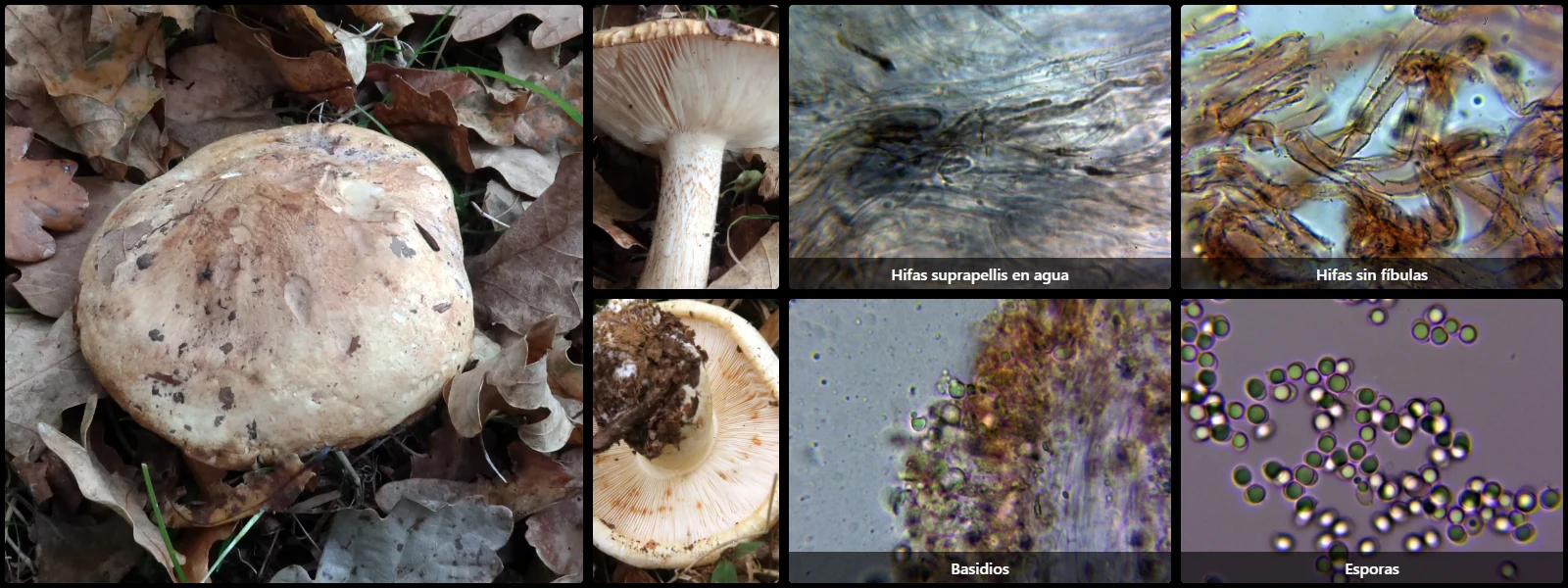
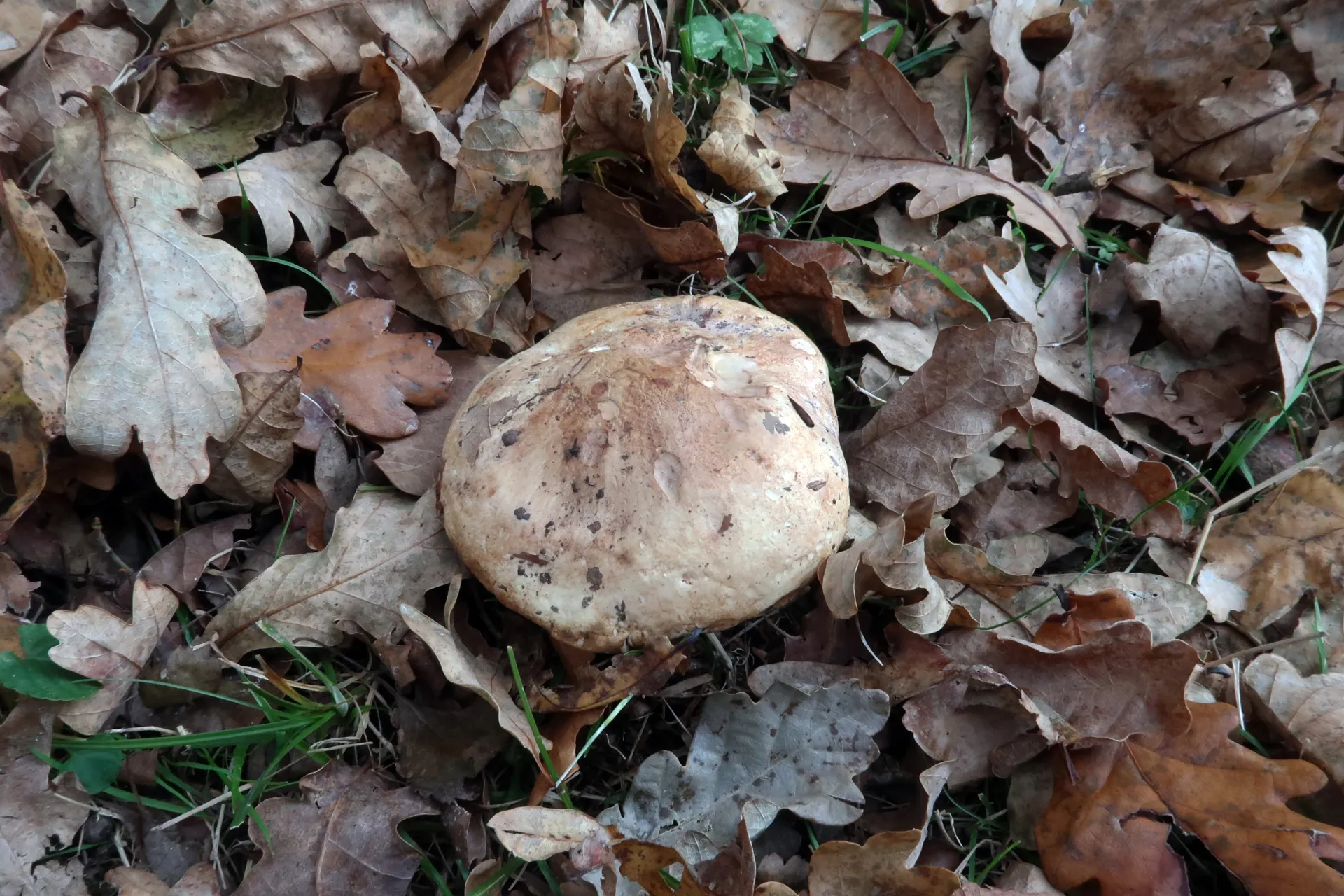
A species typical of broadleaf forests, preferring calcareous soils, with a convex to flattened pileus, inrolled margin, 5 to 15 cm in diameter, cream to brownish with reddish tints at the center, adnate cream-white lamellae that become spotted with age, cylindrical stipe concolorous with the pileus, lacking a distinct odor, and with a slightly acrid to bitter taste upon mastication.
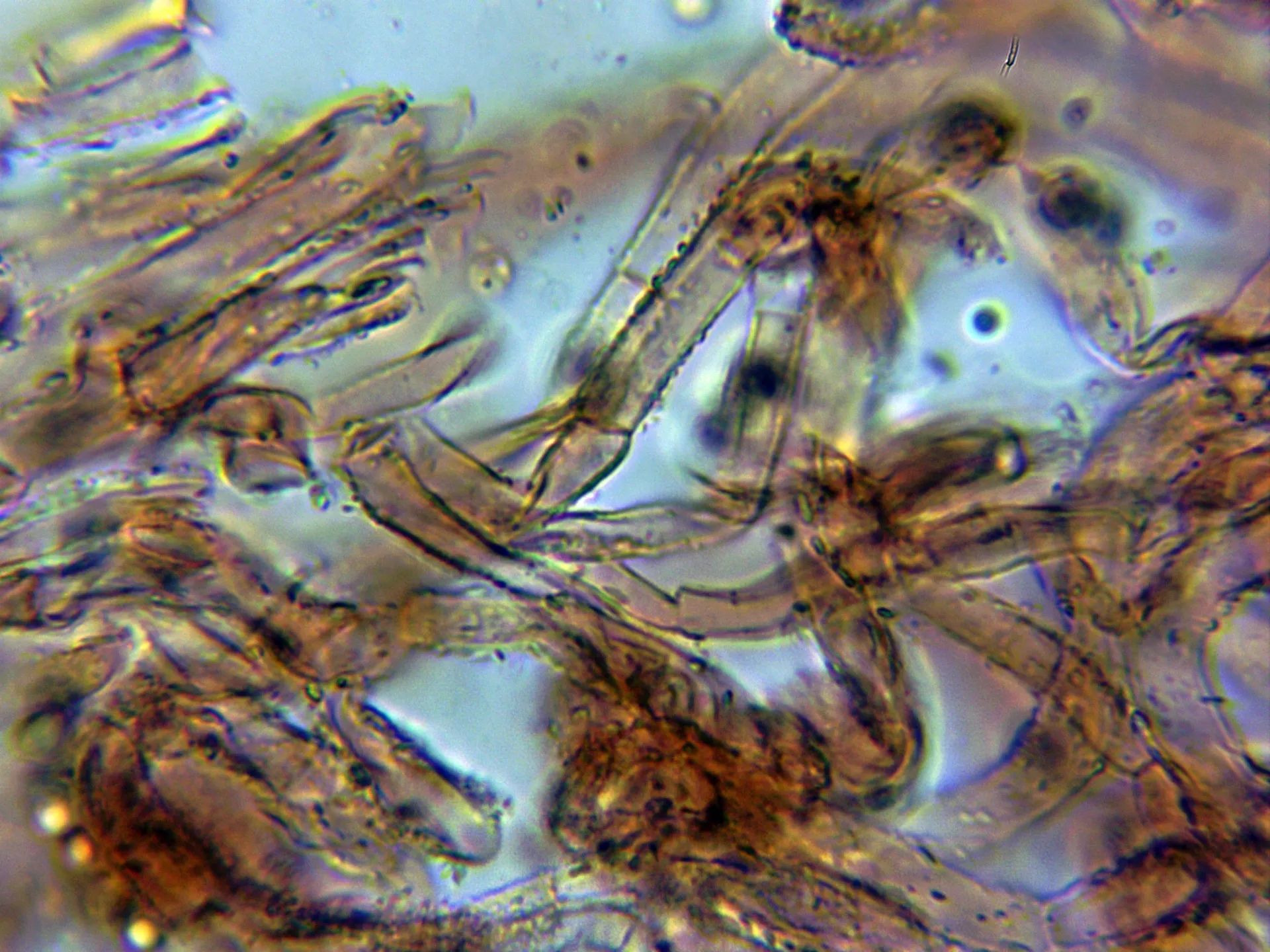
Cuticle filamentous, formed by thin-walled hyphae containing brownish pigment inside, densely interwoven, 2.5 to 5 µm wide, septate with simple septa (without clamp connections).
Without cystidia or other sterile elements in the hymenium.
Lamellar trama regular.
Basidia cylindric-clavate, 25 to 30 µm long, 5 to 7 µm wide, with simple base and four sterigmata (4-spored).
Spores ovoid to short-ellipsoid, smooth, hyaline, thin-walled, with an eccentric apiculus at one end, 4.5 to 6 µm long, 3.5 to 4.5 µm wide, containing a large oil droplet inside occupying much of the total volume, inamyloid in Melzer's reagent.
Geographic references
Map generated from global occurrence data from GBIF. GBIF.
Study measurements
Values in Microns (µm)Macroscopic gallery
Microscopic gallery