Trichoglossum octopartitum
Mains
Study description
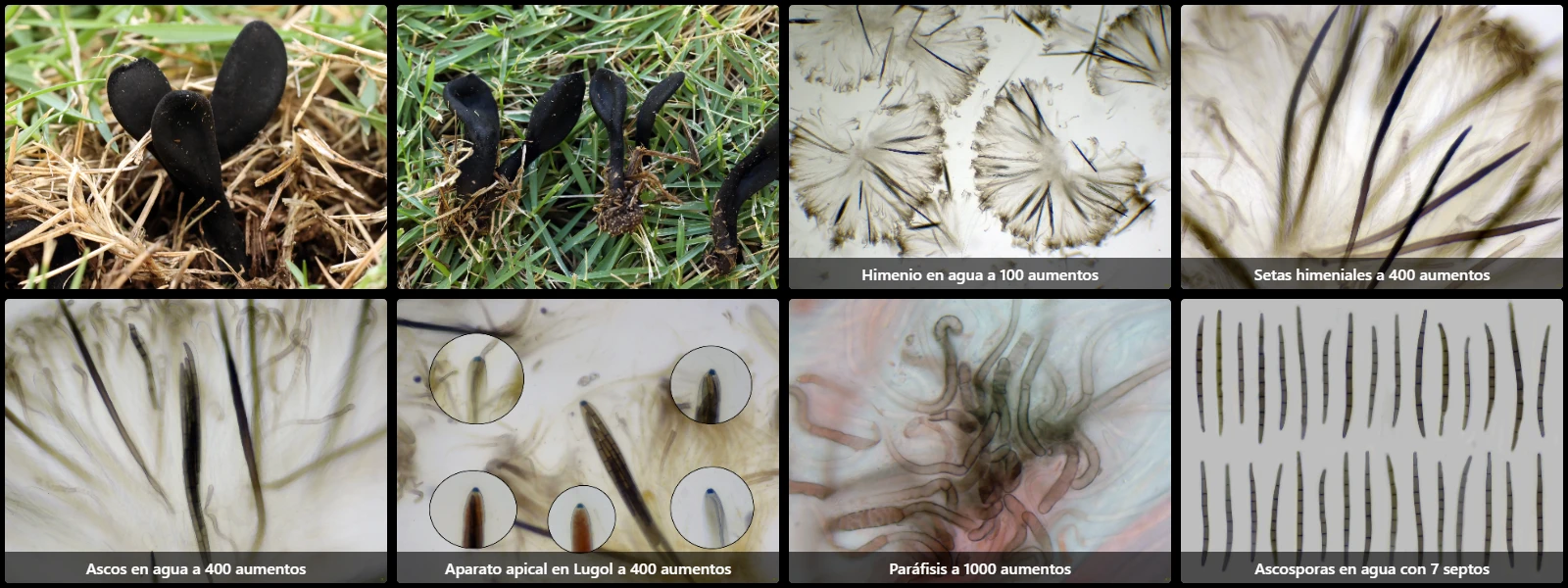
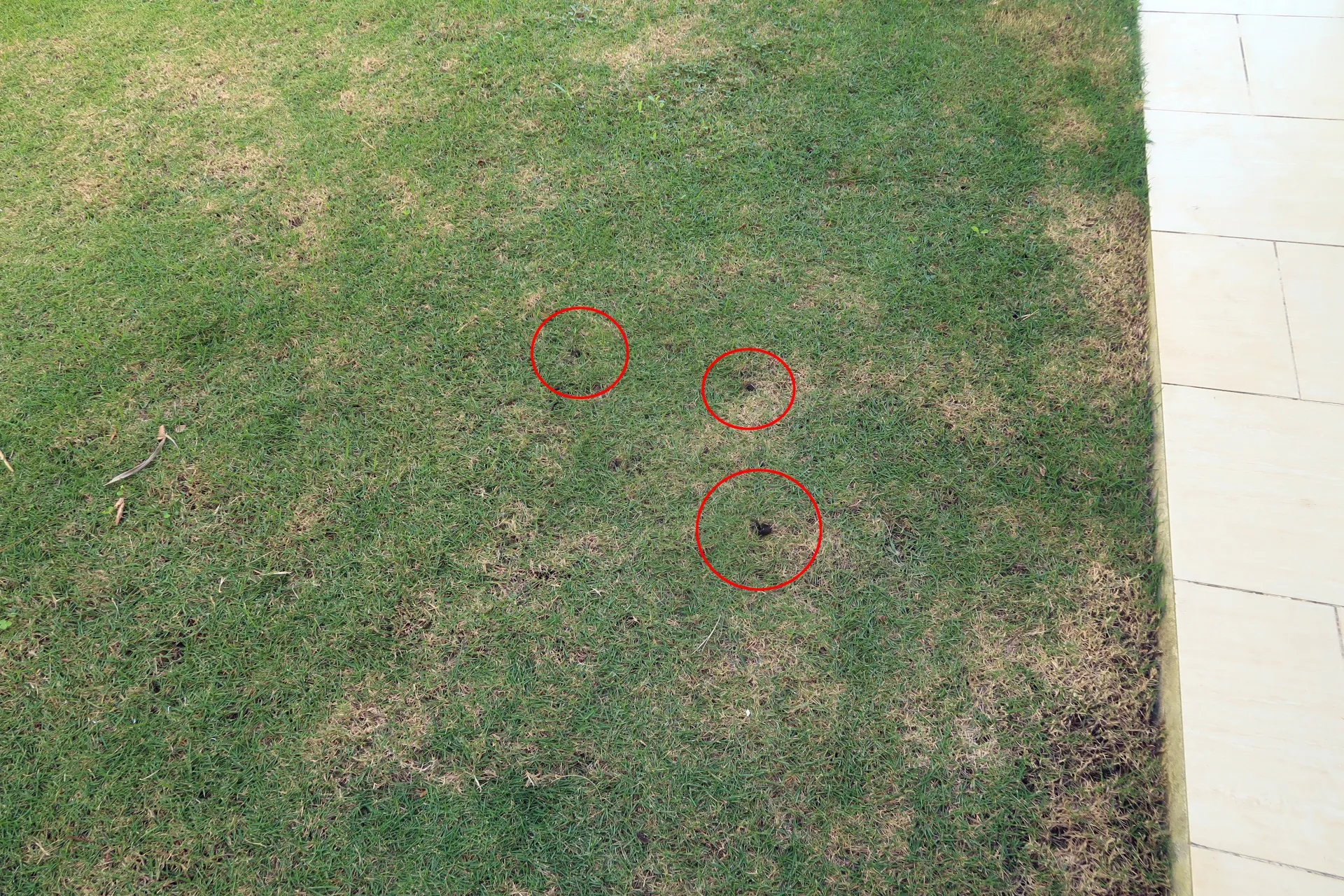
A species typical of subtropical climates, distributed across large areas of Central America, sprouting among grass or fallen leaf litter on the ground, with clavate, tongue- or spatula-shaped ascomata, 1.5 to 4 cm in height, 3 to 4 mm wide, black, with their entire surface covered in hairs or setae giving them a villous appearance.
External hairs or setae dark brown to black, thick-walled, 110 to 240 µm long, 5 to 7 µm wide at the base, straight, rigid, with pointed ends.
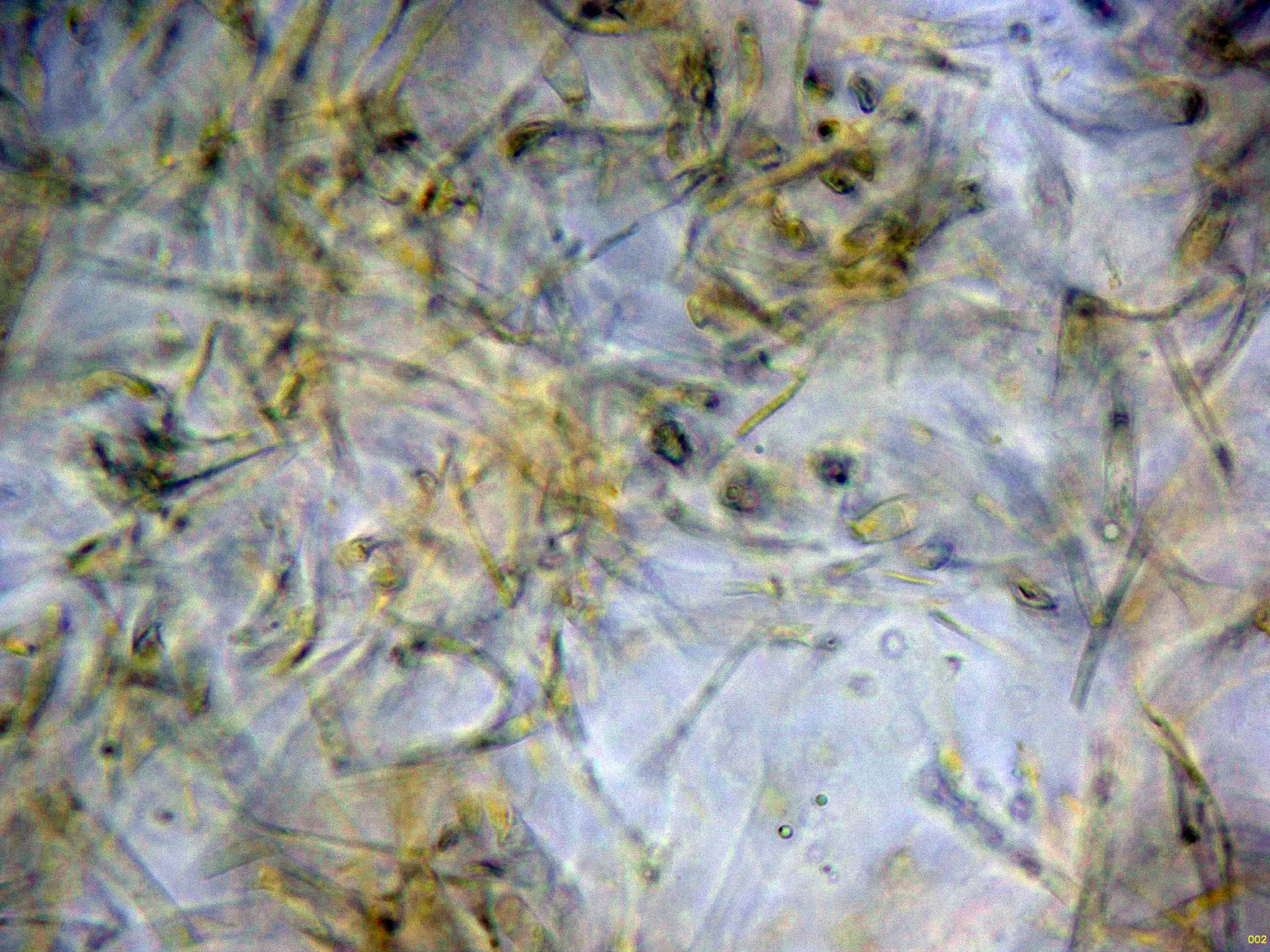
Medullary excipulum of textura intricata, composed of filamentous, septate, interwoven hyphae.
Asci cylindric-clavate to fusiform, inoperculate, 8-spored, short-pedicellate, 175 to 205 µm long, 16 to 21 µm wide, with spores arranged in parallel within the ascus, and an amyloid apical apparatus in Melzer's reagent.
Paraphyses filiform, septate, with brownish-pigmented contents, 2.5 to 4 µm wide, apical swellings of terminal cells 5 to 9 µm, projecting considerably above the level of the asci.
Ascospores very elongated, filiform, mostly with seven septa dividing the spore into eight parts (hence its specific epithet), light brown under the microscope, 75 to 140 µm long, and 4 to 6 µm wide.
Herbarium material available: JTP2746/26.
Geographic references
Map generated from global occurrence data from GBIF. GBIF.
Study measurements
Values in Microns (µm)Macroscopic gallery
Microscopic gallery