

Tretomyces lutescens
(J.Erikss. & Ryvarden) K.H.Larss., Kotir. & Saaren.
Study description
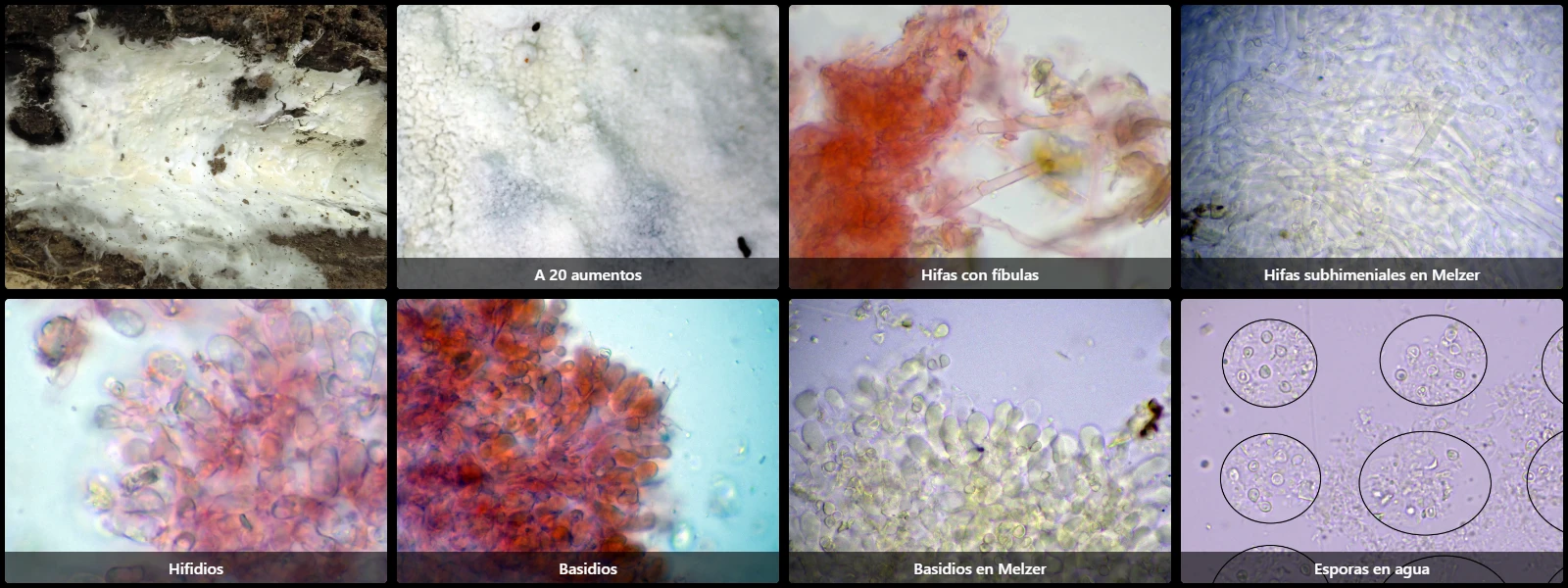
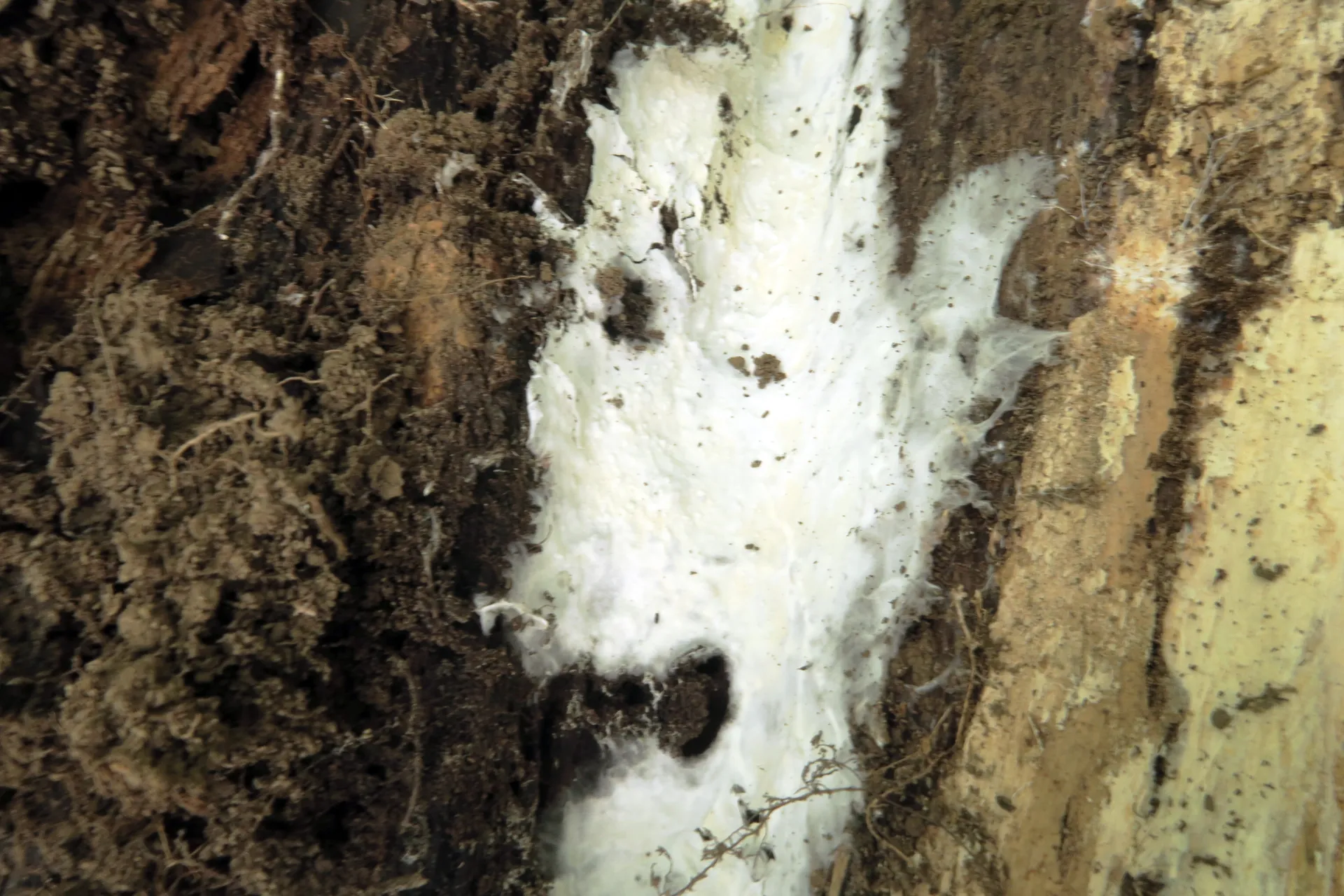
On dead wood on the ground in an advanced state of decay, with completely resupinate, relatively thick basidiomes, yellowish to ochre, with a smooth hymenium, soft consistency, and a whitish, poorly defined growing margin with some rhizomorphs.
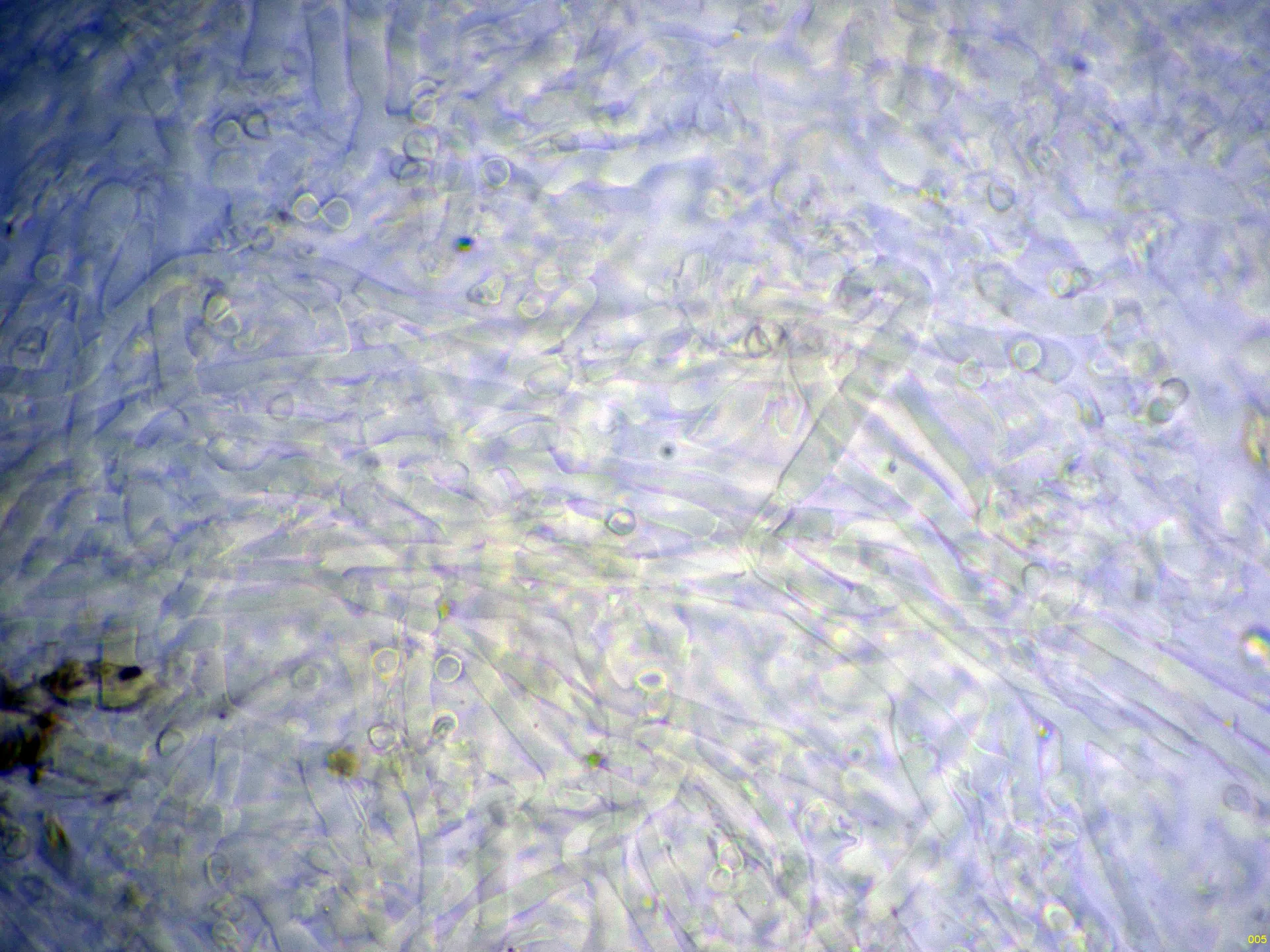
Monomitic hyphal system, with thick-walled, smooth, hyaline subicular hyphae, 2 to 3 µm wide, densely interwoven (anastomosing), and thin-walled, hyaline context hyphae, profusely branched, 3 to 4 µm wide, septate and with clamp connections.
Without cystidia, but with some digitiform elements among the basidia (hyphidia).
Basidia clavate, 11 to 16 µm long, 4 to 6 µm wide, with basal clamp connections, generally 4-spored.
Spores subglobose to ovoid, with a slightly pointed end bearing the apiculus, smooth, hyaline, moderately thick-walled, 3.3 to 4 µm long, 2.7 to 3.3 µm wide, inamyloid in Melzer's reagent or IKI.
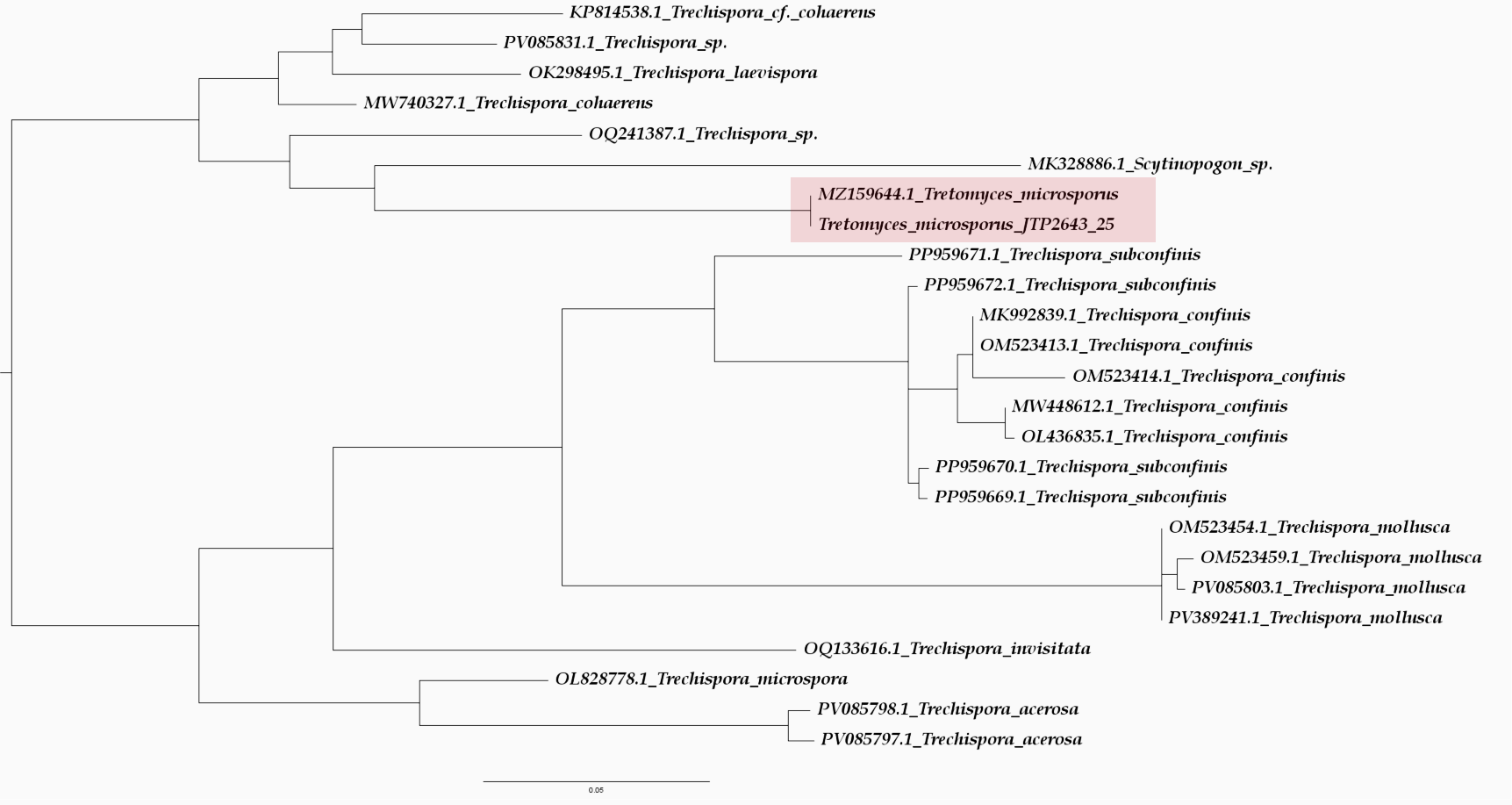
Observations: Note on the phylogenetic tree the extreme proximity at the molecular level to Tretomyces microsporus (currently no sequences of Tretomyces lutescens are available for comparison); however, Tretomyces microsporus cannot be considered if only due to spore size, the latter having spores according to the original description measuring only 2 to 2.5 µm long and 2 to 2.3 µm wide.
Herbarium material available: JTP2643/25.
Geographic references
Map generated from global occurrence data from GBIF. GBIF.
Study measurements
Values in Microns (µm)Macroscopic gallery
Microscopic gallery
Genetic / Phylogenetic Study
Phylogenetic Tree
Sequences and Data
Sequencing (Chromatogram)
Select a file to visualize the chromatogram