

Trametes polyzona
(Pers.) Justo
Study description
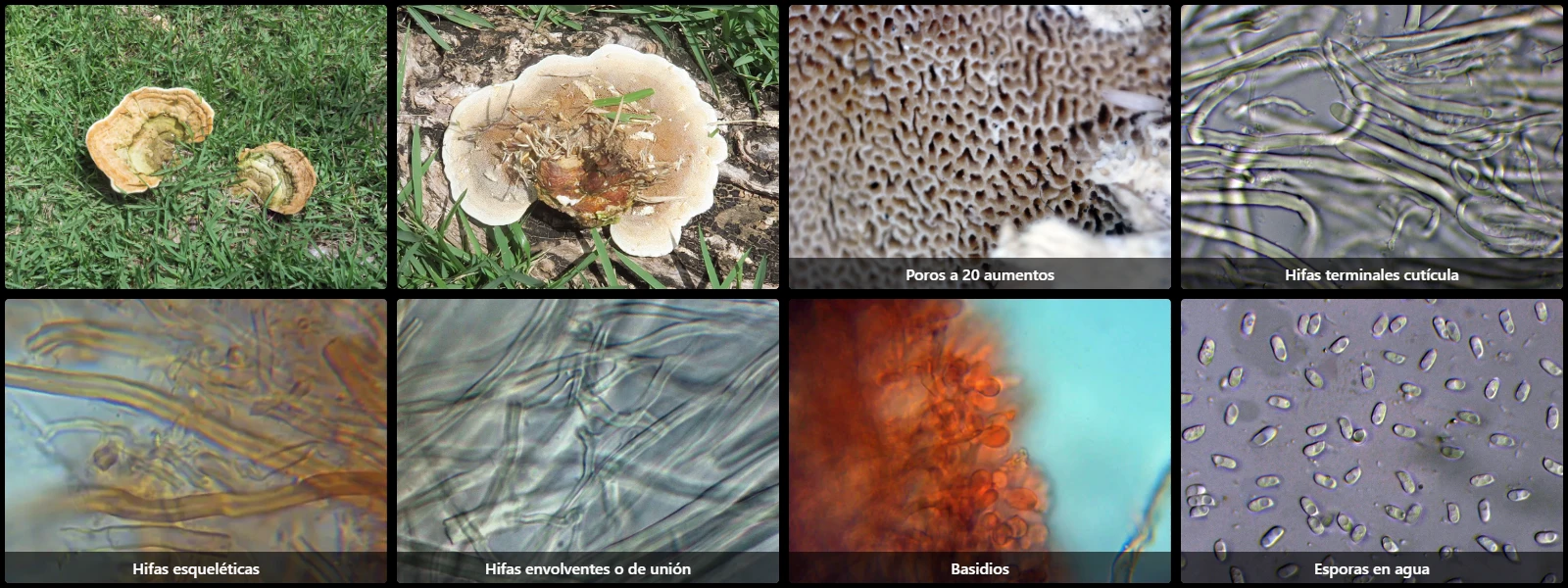
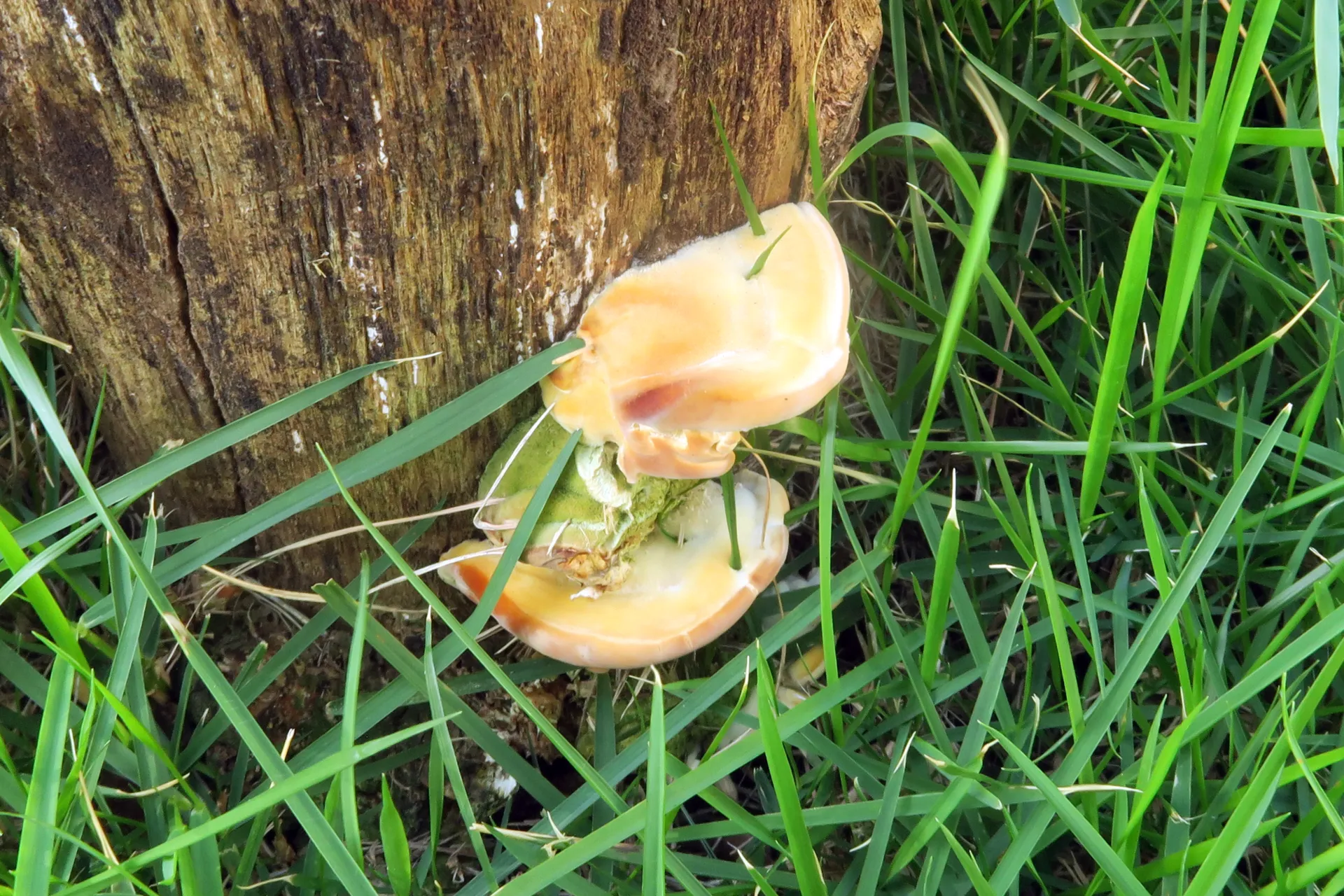
A species typical of tropical or subtropical climates on decaying dead wood, formerly known as Coriolopsis polyzona, with a semicircular pileus bearing concentric bands of ochre to brown, a velvety surface, white to cream angular pores, and a coriaceous, flexible consistency when fresh.
Trimitic hyphal system, with thick-walled skeletal hyphae, hyaline or with faint yellowish pigment inside, unbranched, 4 to 7.5 µm wide; hyaline, thin-walled generative hyphae, 2 to 4.5 µm wide, septate and with clamp connections; and thick-walled binding hyphae, hyaline, profusely branched, tortuous, 2.5 to 5 µm wide.
Hyphae of the surface layer of the cuticle with emergent hyaline endings having rounded apices.
Without cystidia, but with some sterile elements resembling cystidioles, with dimensions very similar to those of basidia.
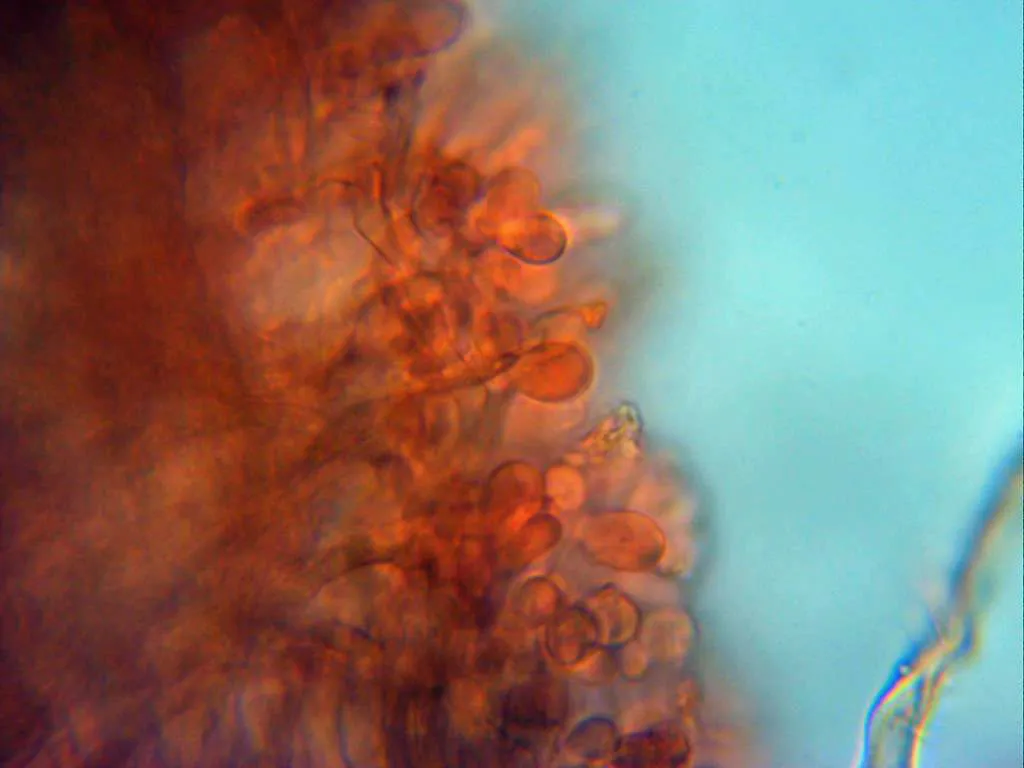
Basidia clavate, 15 to 20 µm long, 5 to 7 µm wide, with basal clamp connections, 4-spored.
Spores ellipsoid to oblong, smooth, hyaline, thin-walled, with an eccentric apiculus at one end, 5.5 to 7 µm long, 3 to 3.5 µm wide, containing oil droplets of varying sizes inside, inamyloid in Melzer's reagent.
Herbarium material available: JTP2387/25.
Geographic references
Map generated from global occurrence data from GBIF. GBIF.
Study measurements
Values in Microns (µm)Macroscopic gallery
Microscopic gallery