Tomentella stuposa
(Link) Stalpers
Study description
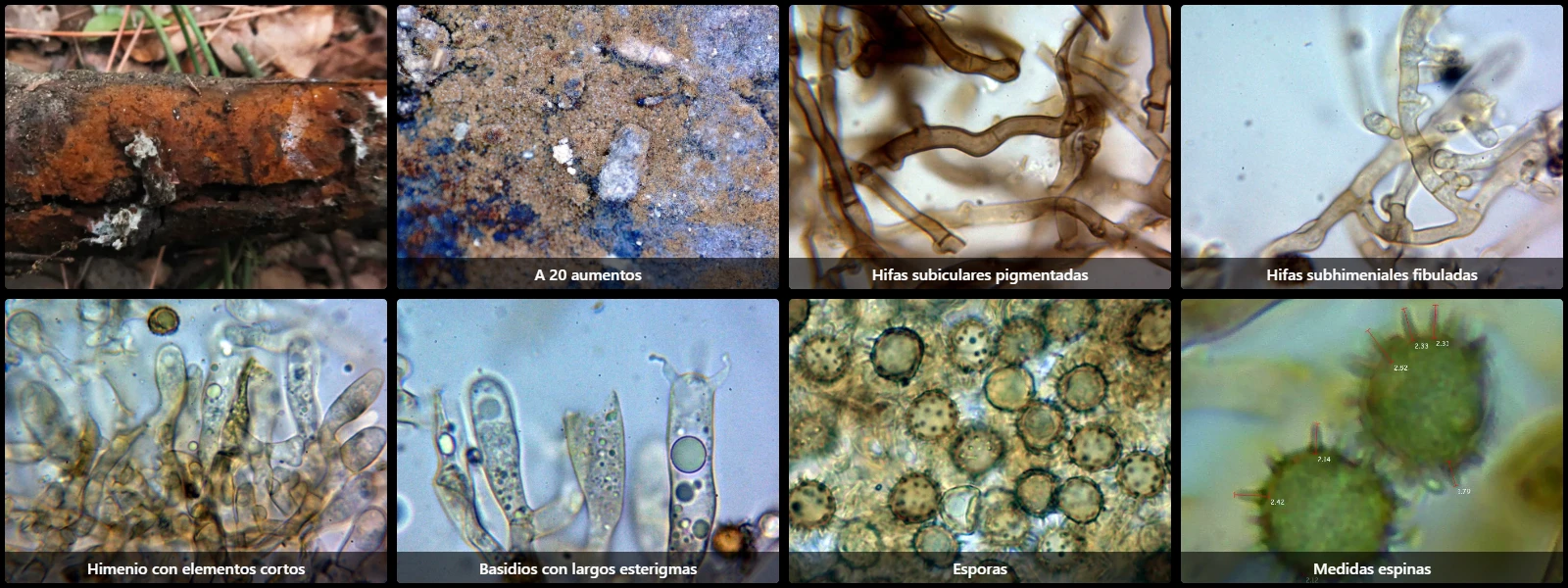
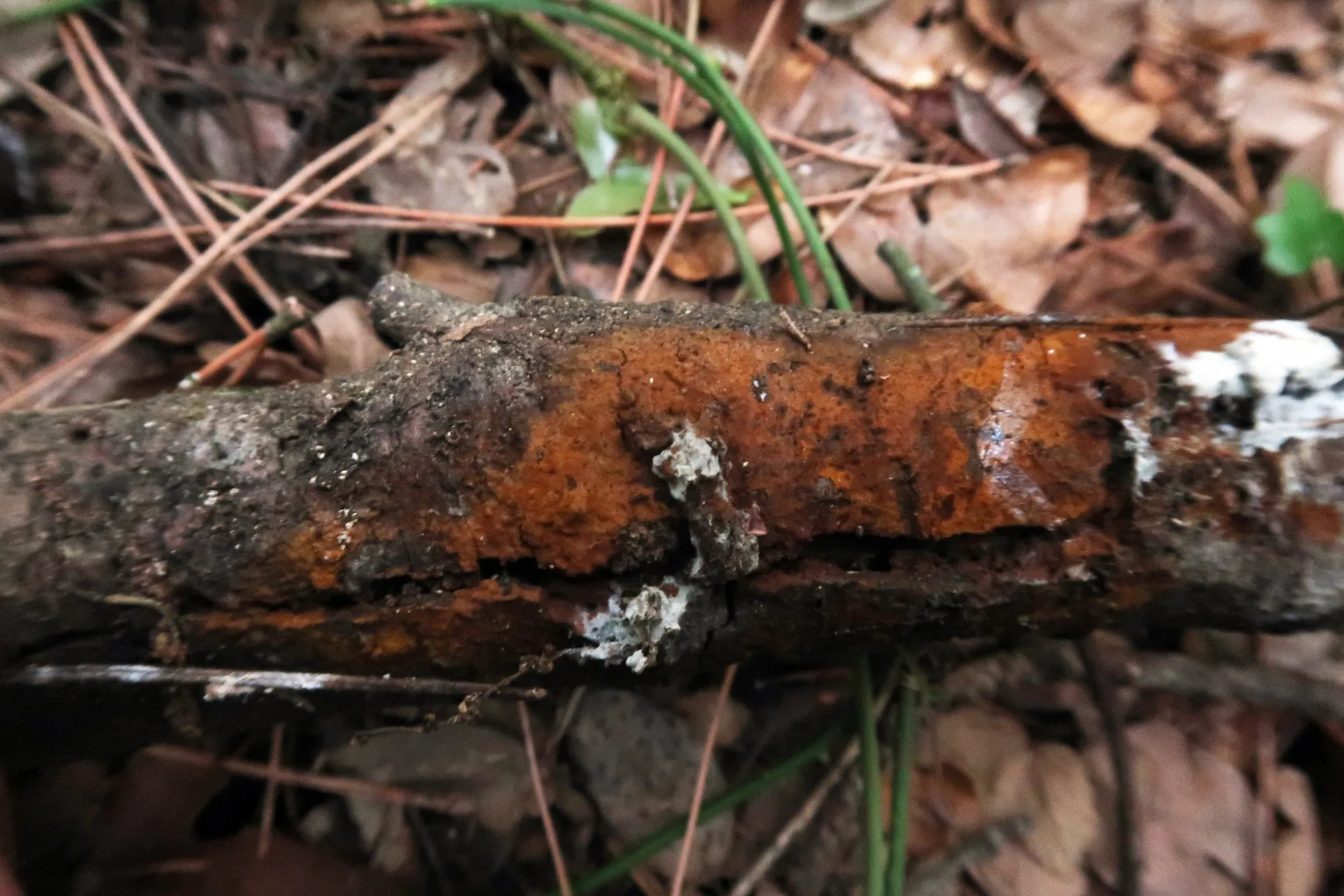
On decaying bark or wood on the ground, with resupinate basidiomes, tightly adhering to the substrate, with a smooth brown surface, fibrous subiculum, and an indeterminate, diffuse growing margin.
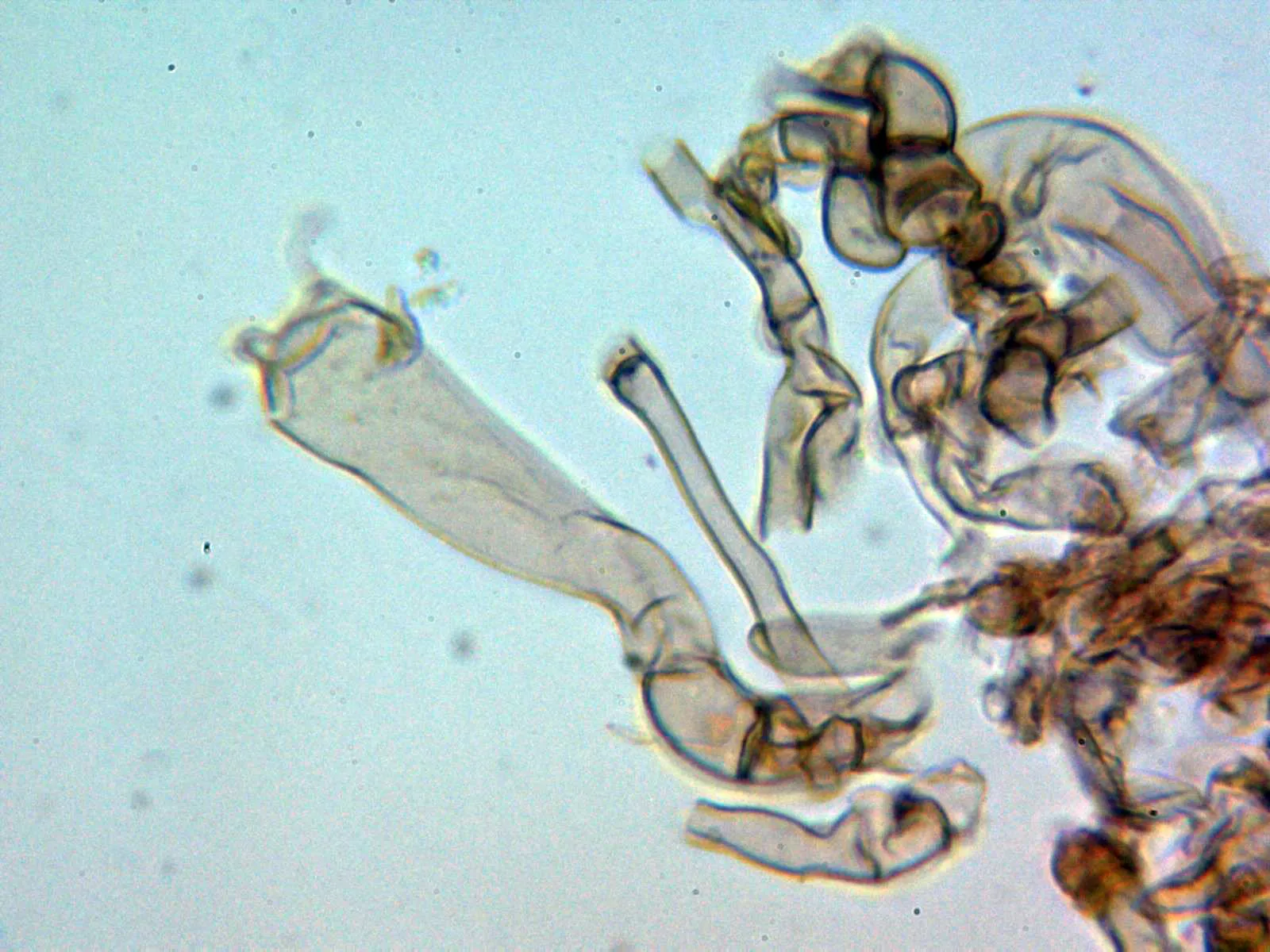
Subicular hyphae thick-walled, with abundant brown intracellular pigment, 4 to 7 µm wide, branched, unencrusted on their surface, septate, with clamp connections.
Subhymenial hyphae thin-walled, hyaline or with only faint brownish pigment inside, 3 to 8 µm wide, septate, and like the subicular hyphae clamped.
Without cystidia.
Basidia cylindrical to utriform, 35 to 65 µm long, 8 to 11 µm wide, with basal clamp connections, 4-spored, with sterigmata up to 9 µm long and 2 to 3 µm wide at the base, intermixed with some short, subglobose to pyriform immature basidia up to 15 µm wide.
Spores globose to subglobose, echinulate, brownish under the microscope in water, 8 to 11 µm long, 7.5 to 10 µm wide, ornamented with long spines up to 3 µm high, inamyloid in Melzer's reagent.
Herbarium material available: JTP2126/24 and JTP2480/25.
Geographic references
Map generated from global occurrence data from GBIF. GBIF.
Study measurements
Values in Microns (µm)Macroscopic gallery
Microscopic gallery