Tomentella griseoviolacea
Litsch.
Study description
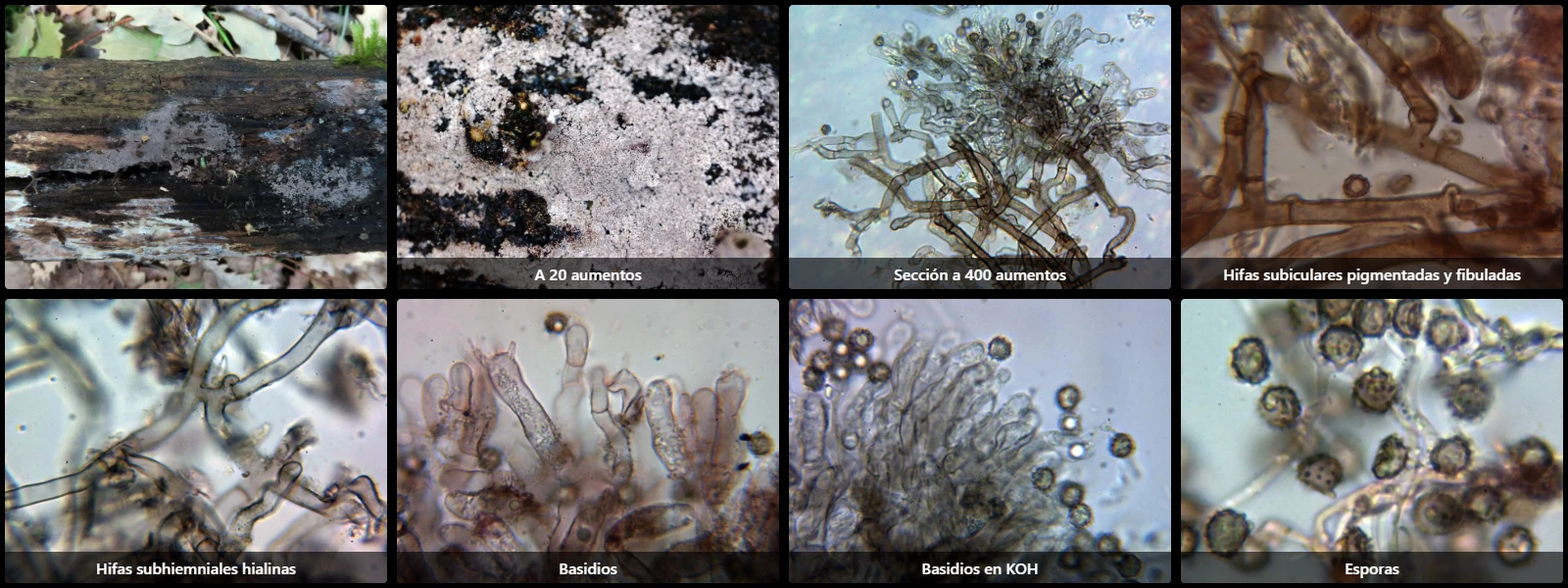
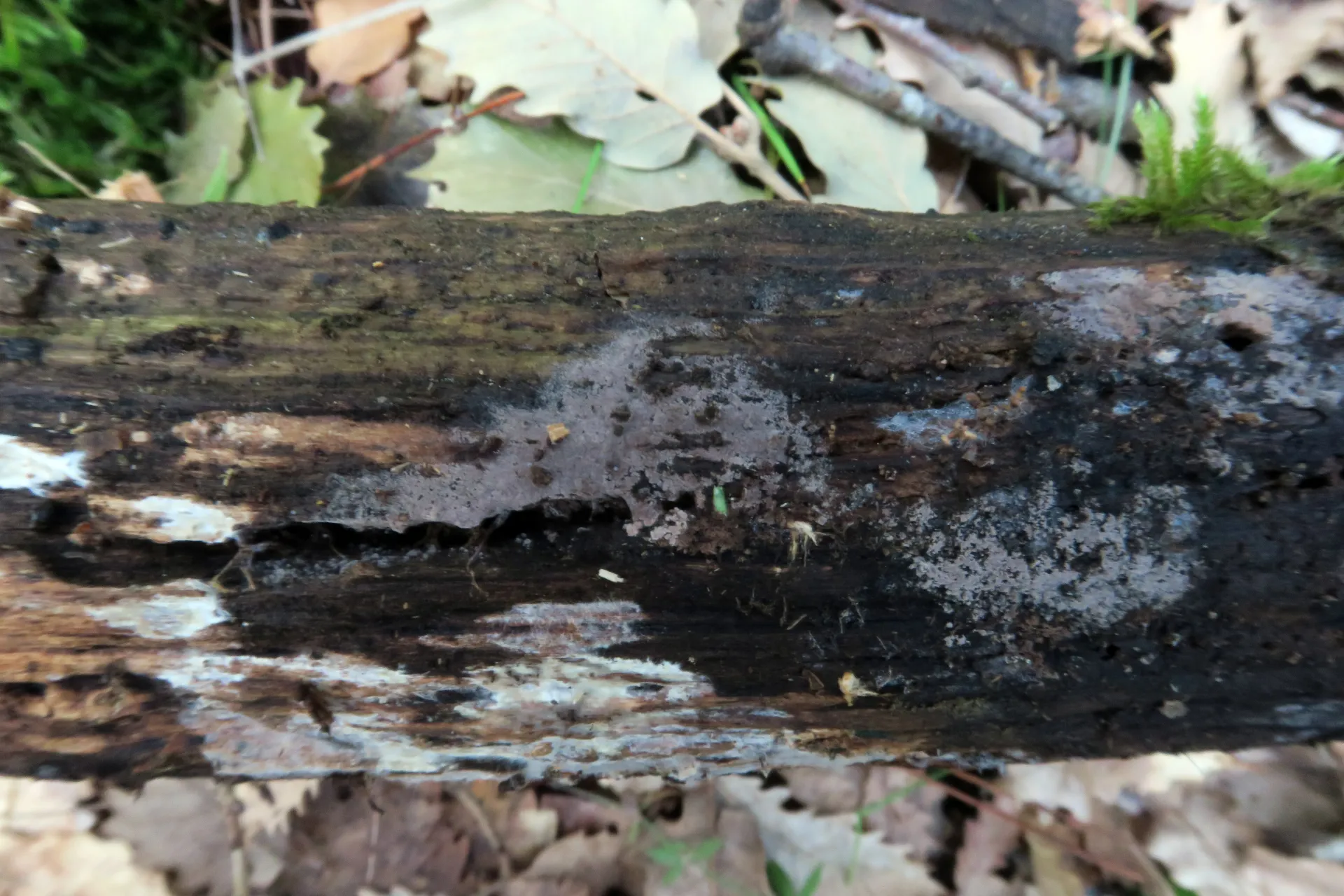
On the surface of dead decaying wood on the ground, with resupinate fruit bodies, very thin, up to 0.2 mm thick, easily separable from the substrate, with a discontinuous hymenial surface, smooth to slightly granulose, brownish-grey, and an undifferentiated growing margin.
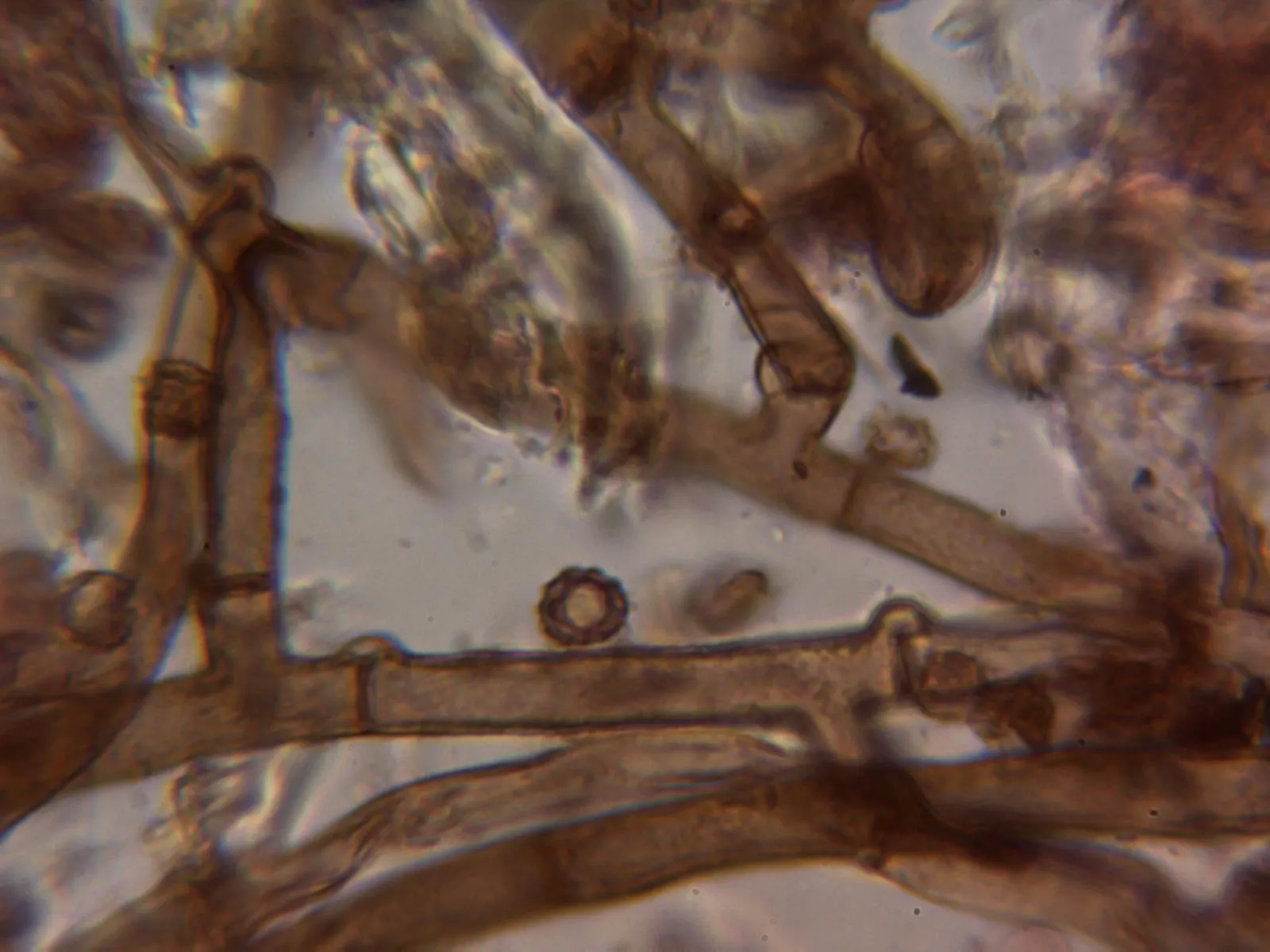
Subicular hyphae thick-walled, branched, 3 to 5 µm wide, containing brownish pigment inside, septate and mostly clamped.
Subhymenial hyphae hyaline or with only very faint yellowish-brown pigment inside, thin-walled, 2 to 4 µm wide, branched, septate, with clamp connections.
Without cystidia.
Basidia irregular, subcylindrical, clavate to urniform, 35 to 55 µm long, 7 to 9 µm wide, with faint internal contents turning greenish-grey in KOH, with basal clamp connections, 4-spored, with sterigmata up to 7 µm.
Spores subspherical to ellipsoid, thick-walled, irregular in outline, echinulate, pale brown under the microscope, 5.5 to 8 µm long, 5 to 6.5 µm wide, ornamented with isolated spines 0.5 to 1 µm high, inamyloid in Melzer's reagent.
Geographic references
Map generated from global occurrence data from GBIF. GBIF.
Study measurements
Values in Microns (µm)Macroscopic gallery
Microscopic gallery