


Tomentella bryophila
(Pers.) M.J.Larsen
Study description
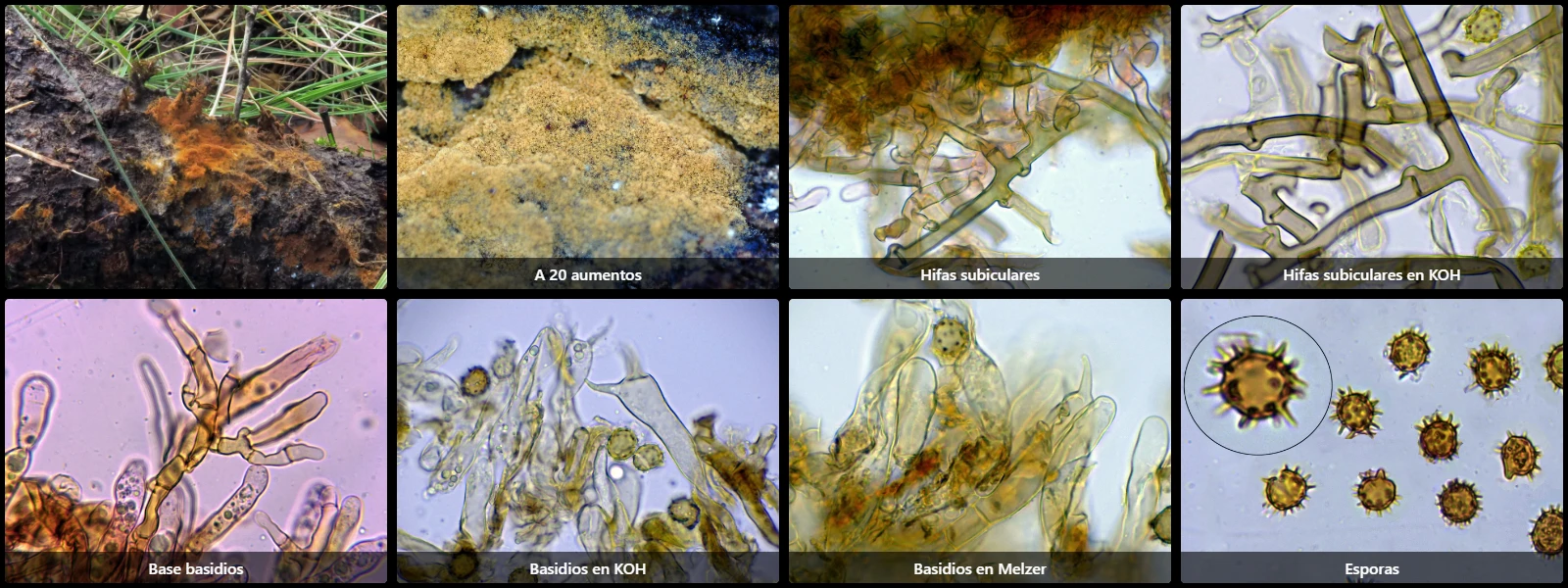
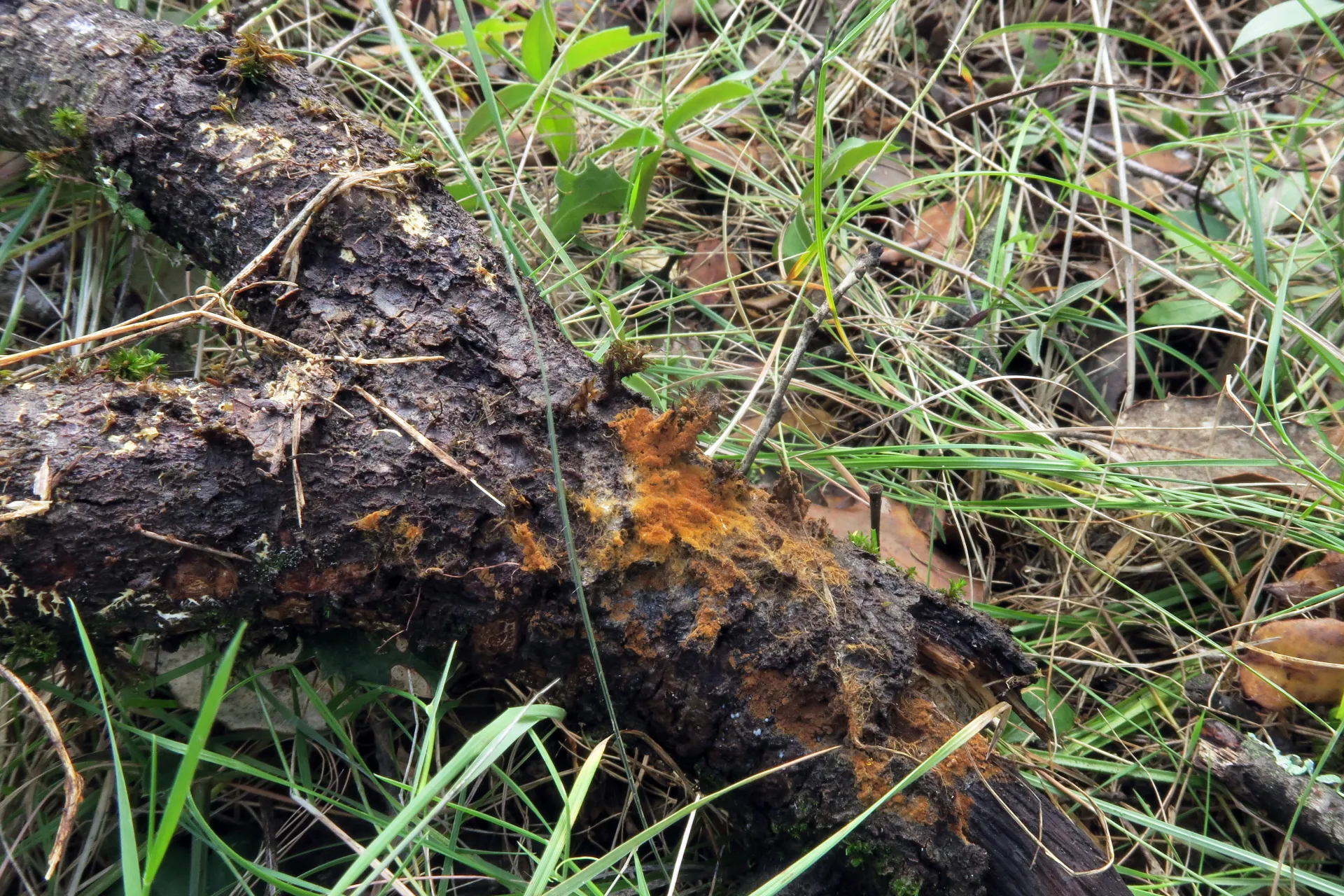
On dead decaying wood or bark on the ground of broadleaf trees, also conifers, with completely resupinate basidiomes, loosely attached to the substrate, thin, orange-brown, of fibrous consistency, and with a diffuse, poorly defined growing margin.
Monomitic hyphal system, with thick-walled subicular hyphae, 4 to 8 µm wide, containing brown pigment inside, profusely branched, septate with large clamp connections.
Subhymenial hyphae thin- to slightly thick-walled, 4 to 6 µm wide, with slight yellowish-brown intracellular pigment, septate, and like the subicular hyphae with clamp connections.
Without cystidia.
Basidia cylindric-clavate, 50 to 60 µm long, 9 to 11 µm wide, with long sterigmata up to 9 µm, with basal clamp connections, 4-spored.
Spores globose to subglobose, with regular outline, brown under the microscope, echinulate, with long spines up to 3 µm high, 9.5 to 12 µm long excluding ornamentation, 8.5 to 11 µm wide, with a prominent apiculus at one end, inamyloid in Melzer's reagent.
Herbarium material available: JTP2132/24 and 2707/25.
Geographic references
Map generated from global occurrence data from GBIF. GBIF.
Study measurements
Values in Microns (µm)Macroscopic gallery
Microscopic gallery
.webp)