Tomentella alpina
Peintner & Dämmrich
Study description
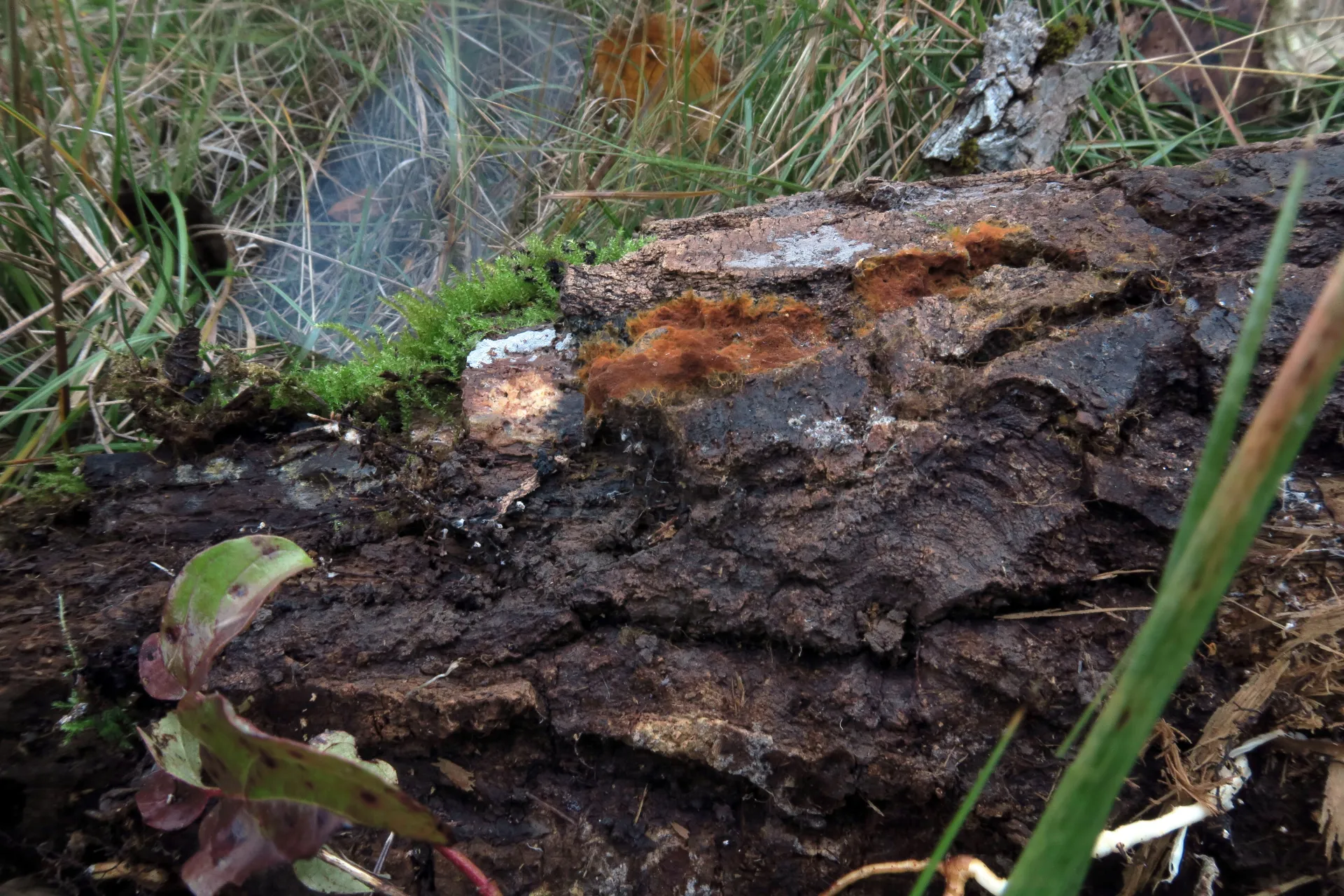
On decaying wood or bark on the ground, with completely resupinate fruit bodies, tightly adhering to the substrate, smooth brown surface, lacking rhizomorphs, with a fibrillose consistency under high magnification.
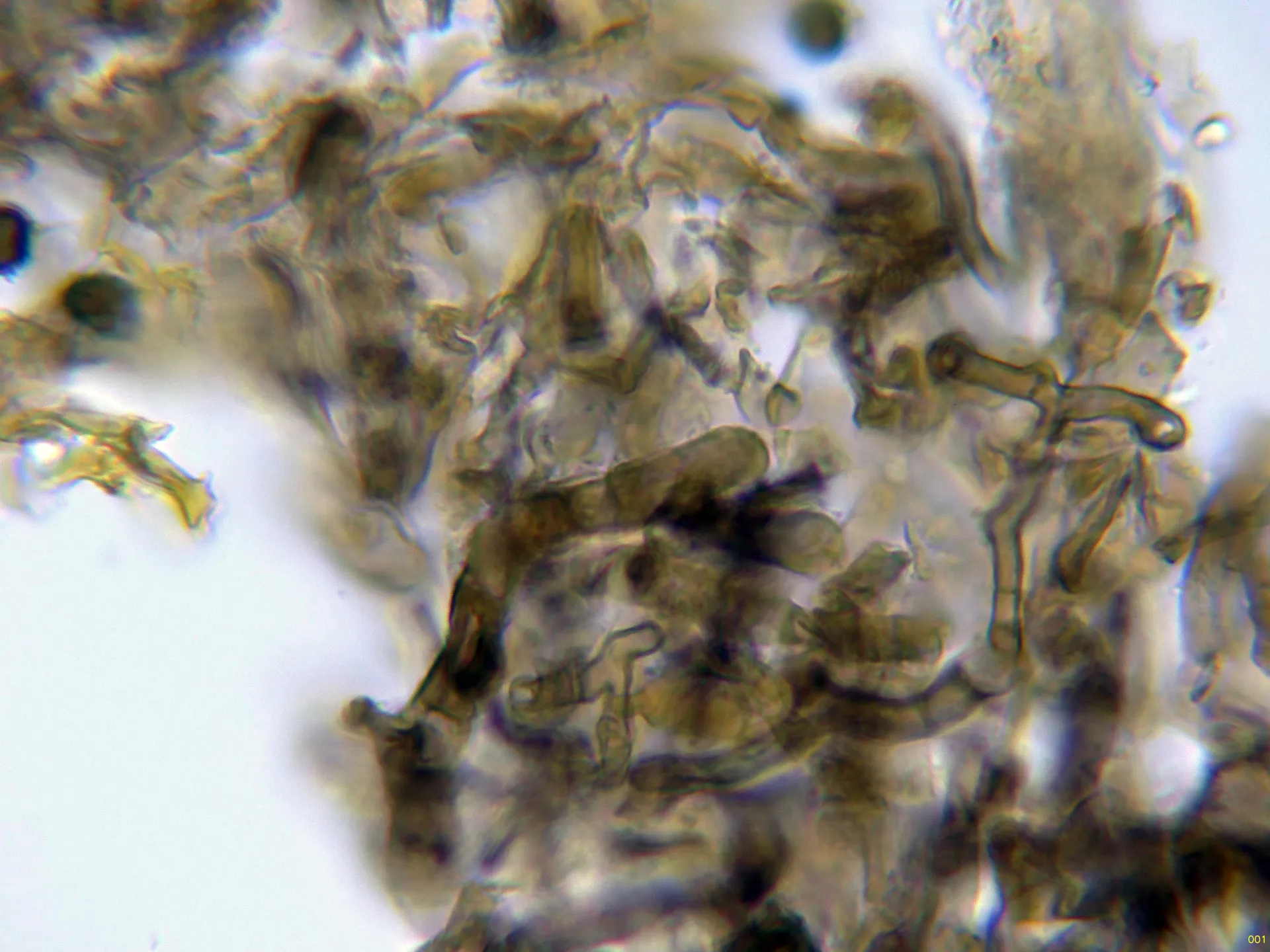
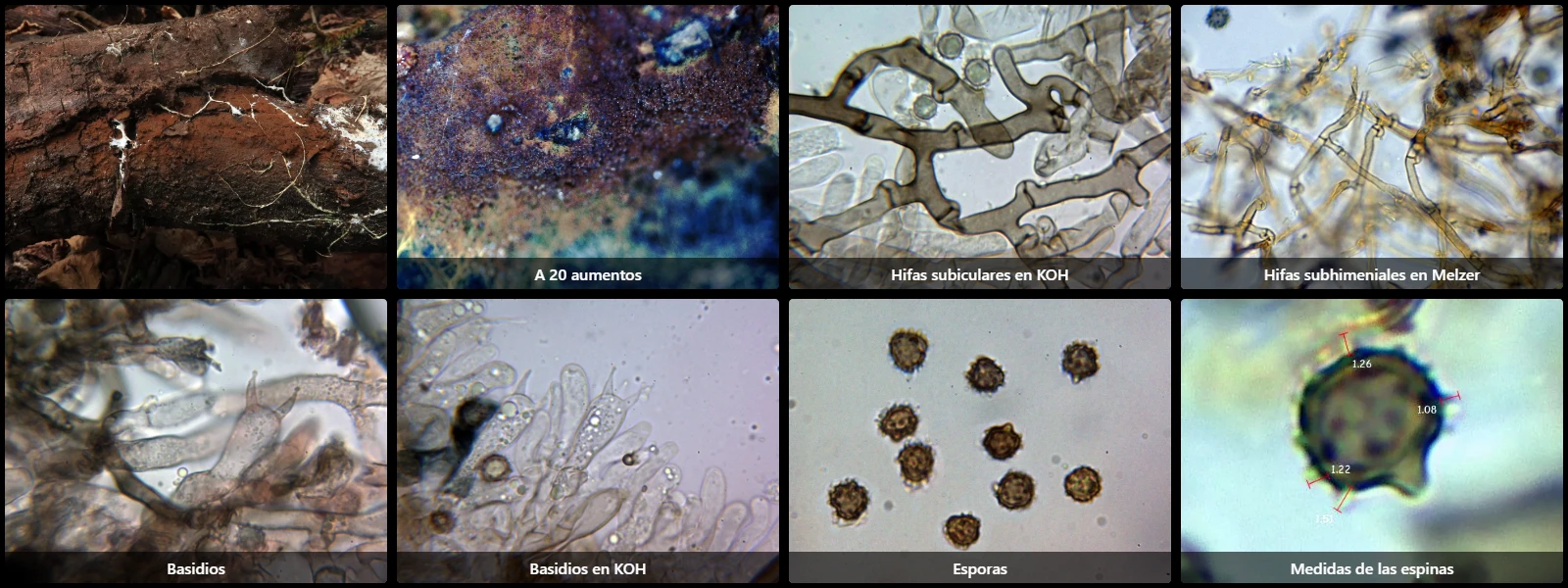
Subicular hyphae thick-walled, 5 to 7 µm wide, with wall thickness of 1 to 2 µm, profusely branched, with brownish intracellular pigment, septate, with large clamp connections.
Subhymenial hyphae thin- to moderately thick-walled, hyaline or with slight brownish pigment inside, 2 to 5 µm wide, branched, septate, with clamp connections.
Without cystidia.
Basidia subcylindrical to slightly clavate, 35 to 50 µm long, 8.5 to 11 µm wide, with basal clamp connections, 4-spored.
Spores globose to subglobose, brownish-brown under the microscope, echinulate, with simple spines 1 to 1.4 µm high, 7.5 to 9 µm long excluding ornamentation, 7 to 8.5 µm wide, with a prominent apiculus at one end, inamyloid in Melzer's reagent.
Herbarium material available: JTP2208/24 and 2616/25.
Geographic references
Map generated from global occurrence data from GBIF. GBIF.
Study measurements
Values in Microns (µm)Macroscopic gallery
Microscopic gallery