Terana coerulea
(Lam.) Kuntze
Study description
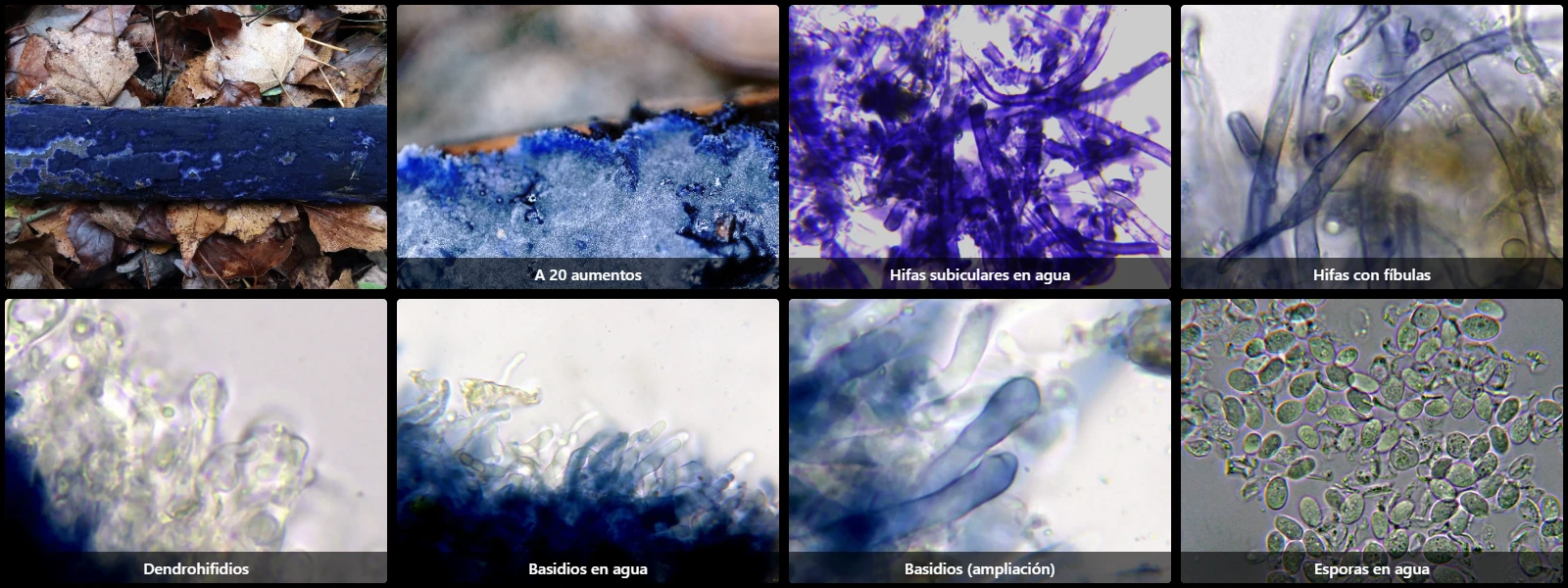
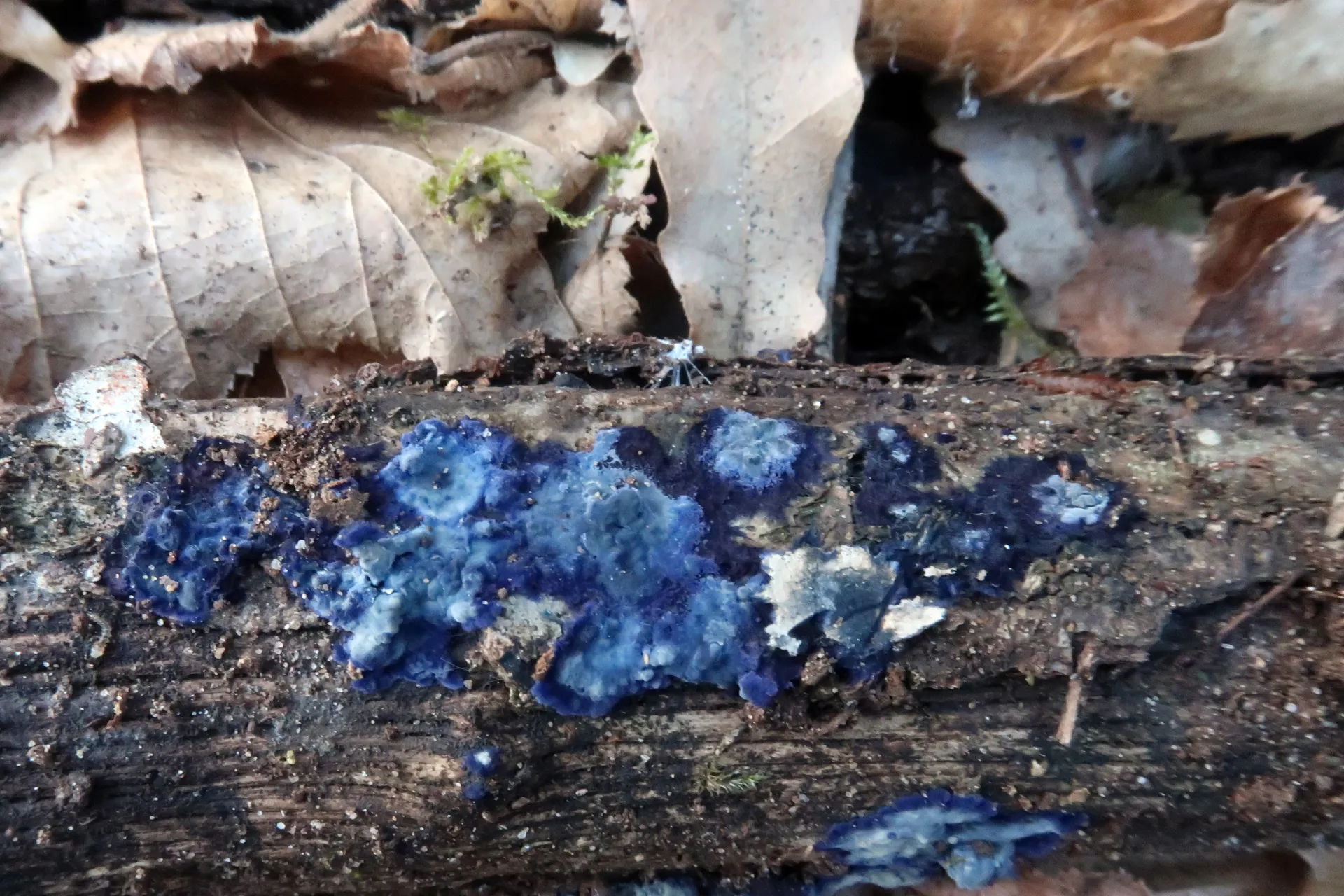
On bark of decaying fallen branches of Quercus, Fraxinus, or Corylus, with completely resupinate basidiomes tightly adhering to the substrate, smooth to slightly irregular surface of an intense blue color, a well-defined whitish, slightly fibrillose growing margin, and waxy, soft consistency when fresh.
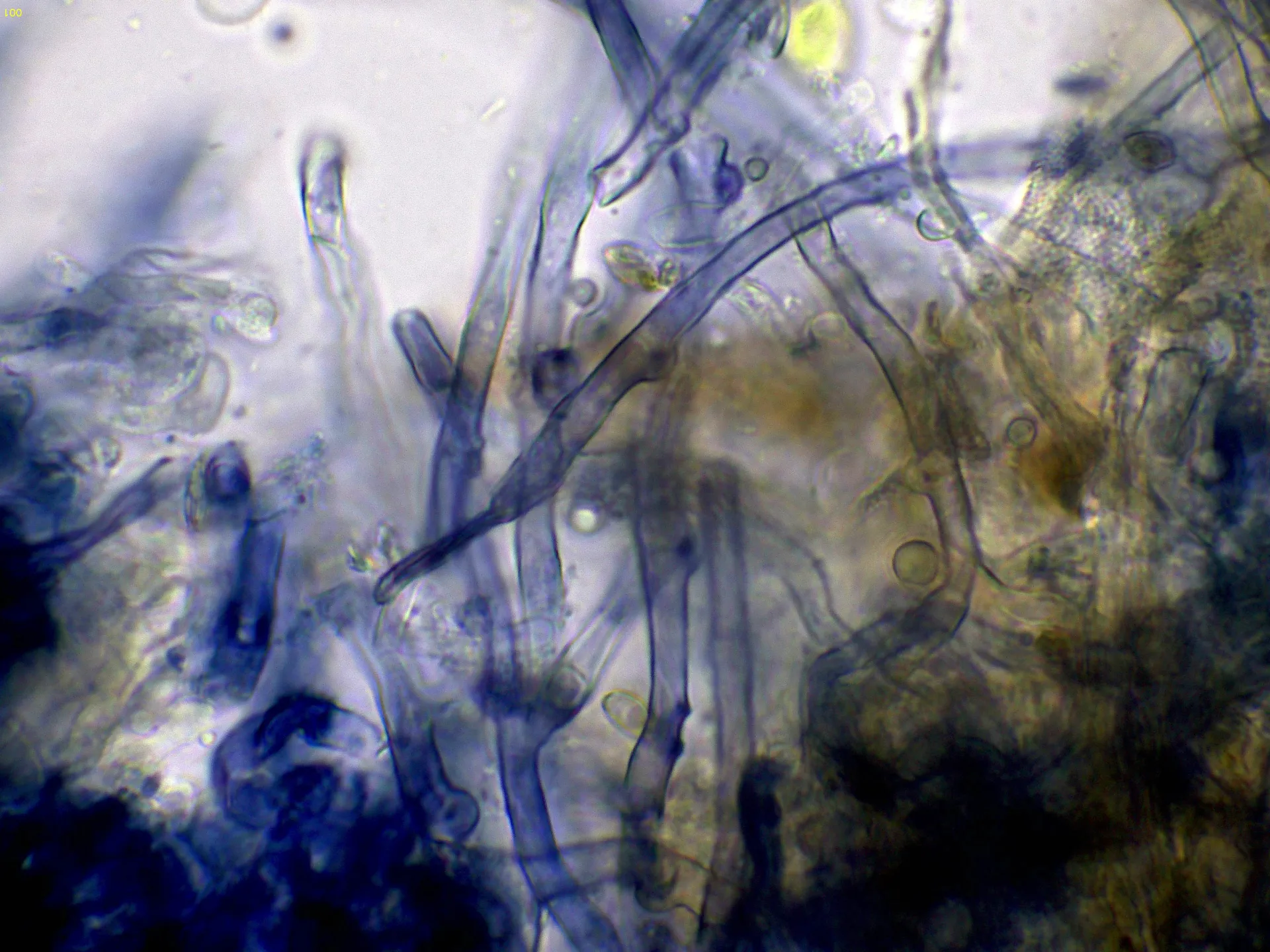
Monomitic hyphal system, composed of filamentous subicular hyphae, thin- to moderately thick-walled, 3 to 6 µm wide, with bluish intracellular pigment and abundant blue amorphous granules on their surface, septate and with clamped septa.
Without cystidia, but with basidia-like structures with outgrowths (dendrohyphidia), 25 to 30 µm long and 4 to 5 µm wide.
Basidia cylindric-clavate, with blue pigment inside, 30 to 40 µm long, 5 to 7 µm wide, with basal clamp connections, 4-spored.
Spores ellipsoid, smooth, hyaline, thin-walled, with a prominent apiculus at one end, 7 to 11 µm long, 6 to 9 µm wide, with slightly granular contents inside, inamyloid in Melzer's reagent.
Herbarium material available: JTP2113/24 and JTP2452/25.
Geographic references
Map generated from global occurrence data from GBIF. GBIF.
Study measurements
Values in Microns (µm)Macroscopic gallery
Microscopic gallery