Tephrocybe rancida
(Fr.) Donk
Study description
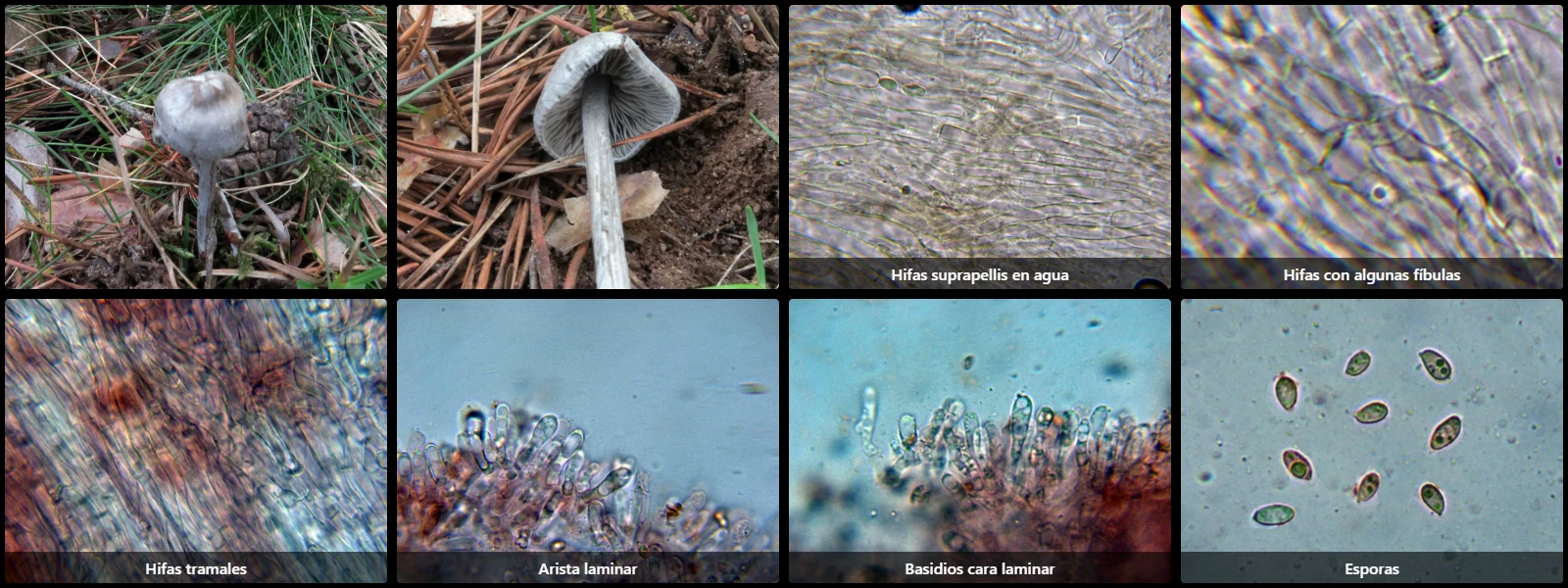
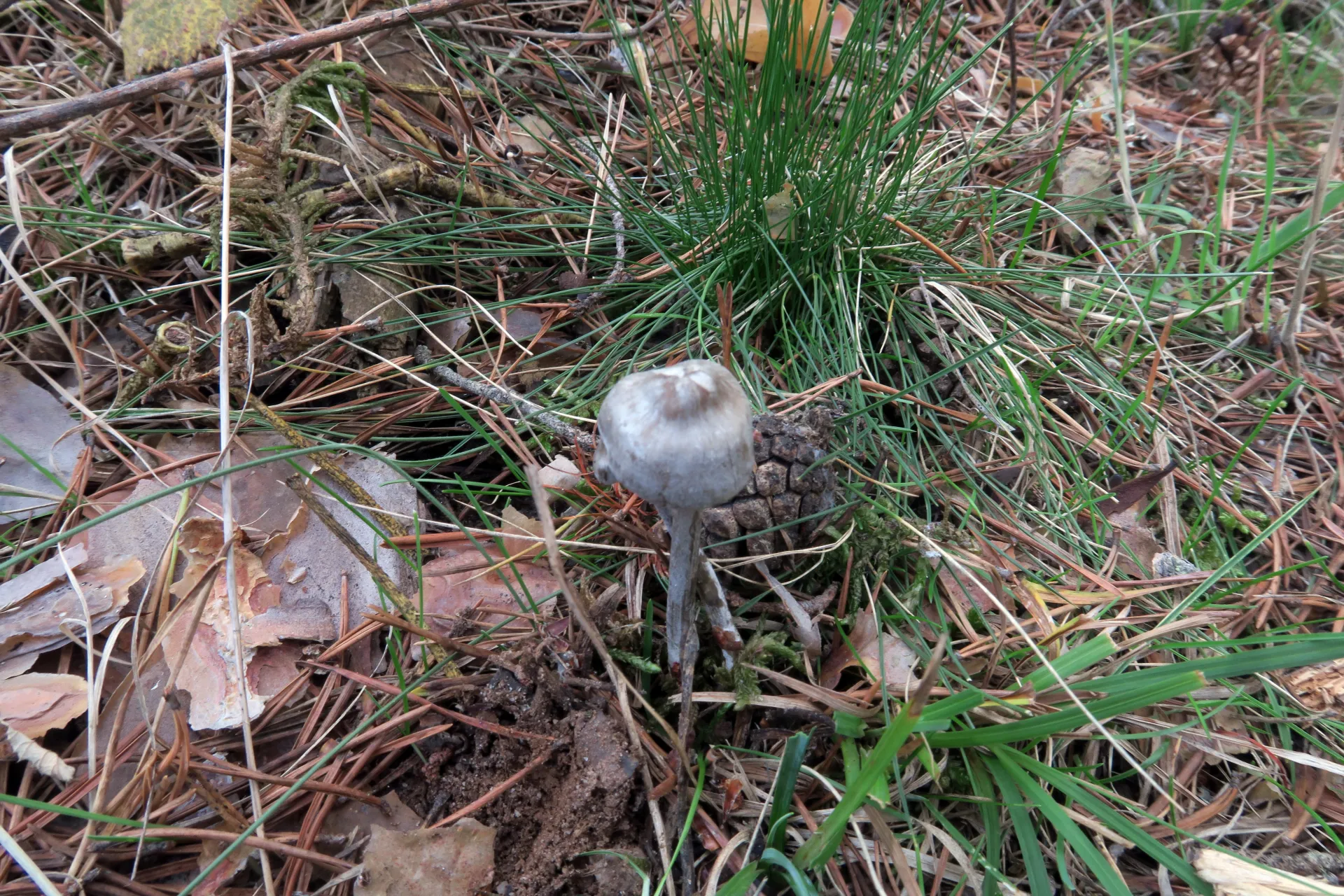
Under broadleaf trees or conifers, preferring acidic soils, with a hemispherical to convex pileus retaining a central umbo, 2 to 4 cm in diameter, fibrillose greyish-brown surface, virtually free ochre-grey lamellae, cylindrical greyish stipe with whitish pruina, strong rancid-farinaceous odor, and farinaceous taste.
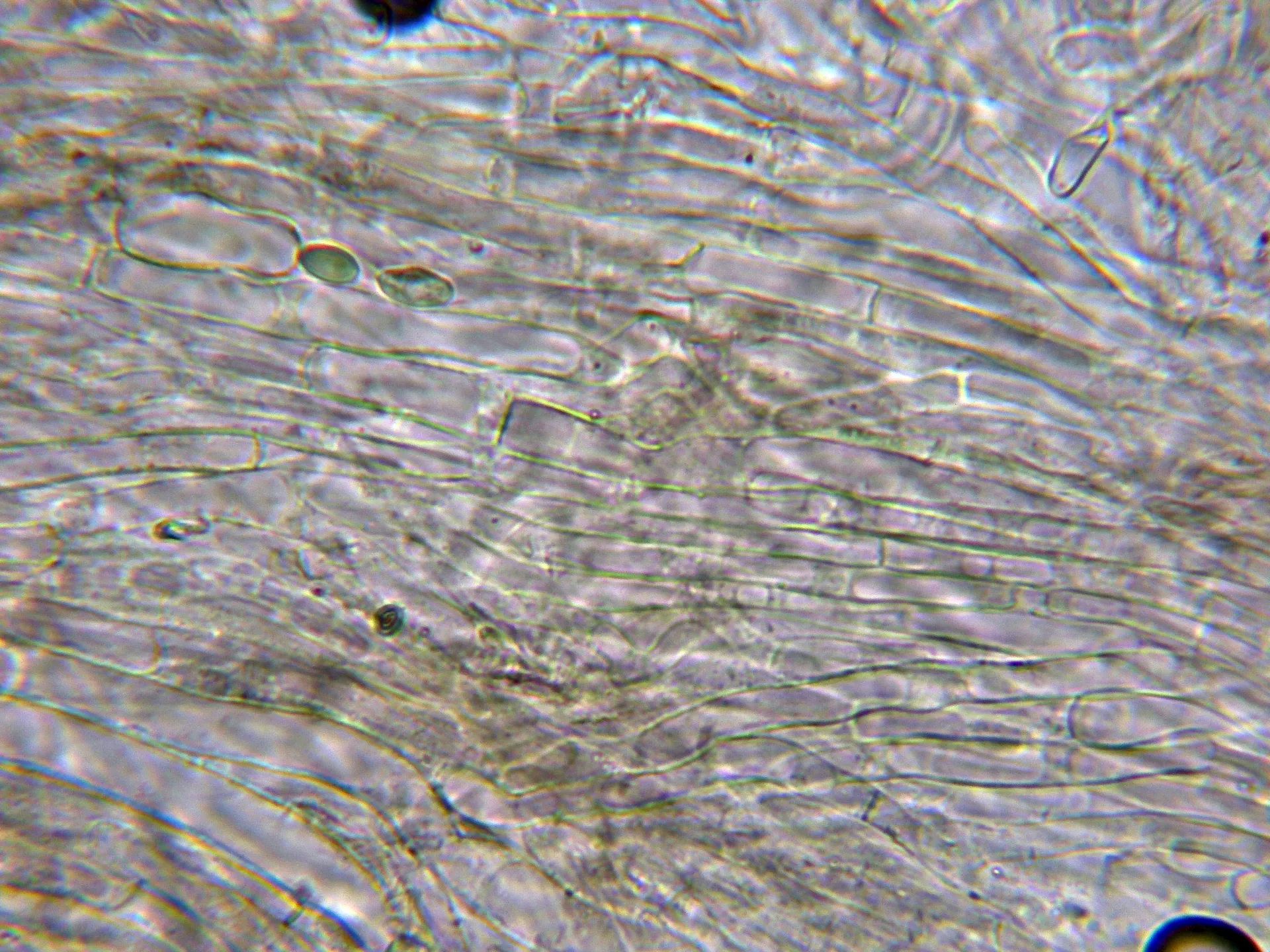
Cuticle filamentous, composed of thin-walled hyphae arranged more or less parallel to only very slightly interwoven, 3 to 7 µm wide, with slight greyish pigment inside, septate and with septa partially clamped.
Lamellar edge fertile, without elements differentiated from basidia or basidioles.
Lamellar trama regular to parallel.
Basidia cylindric-clavate, 25 to 30 µm long, 5 to 7 µm wide, with abundant siderophilous granulation inside, basal clamp connections, mostly 4-spored.
Spores ellipsoid, smooth, hyaline, thin-walled, slightly pointed at the end bearing the apiculus, 6 to 8.5 µm long, 3.5 to 4.5 µm wide, with oil droplets of various sizes inside, inamyloid in Melzer's reagent.
Geographic references
Map generated from global occurrence data from GBIF. GBIF.
Study measurements
Values in Microns (µm)Macroscopic gallery
Microscopic gallery