


Tephrocybe platypus
(Kühner) M.M.Moser
Study description
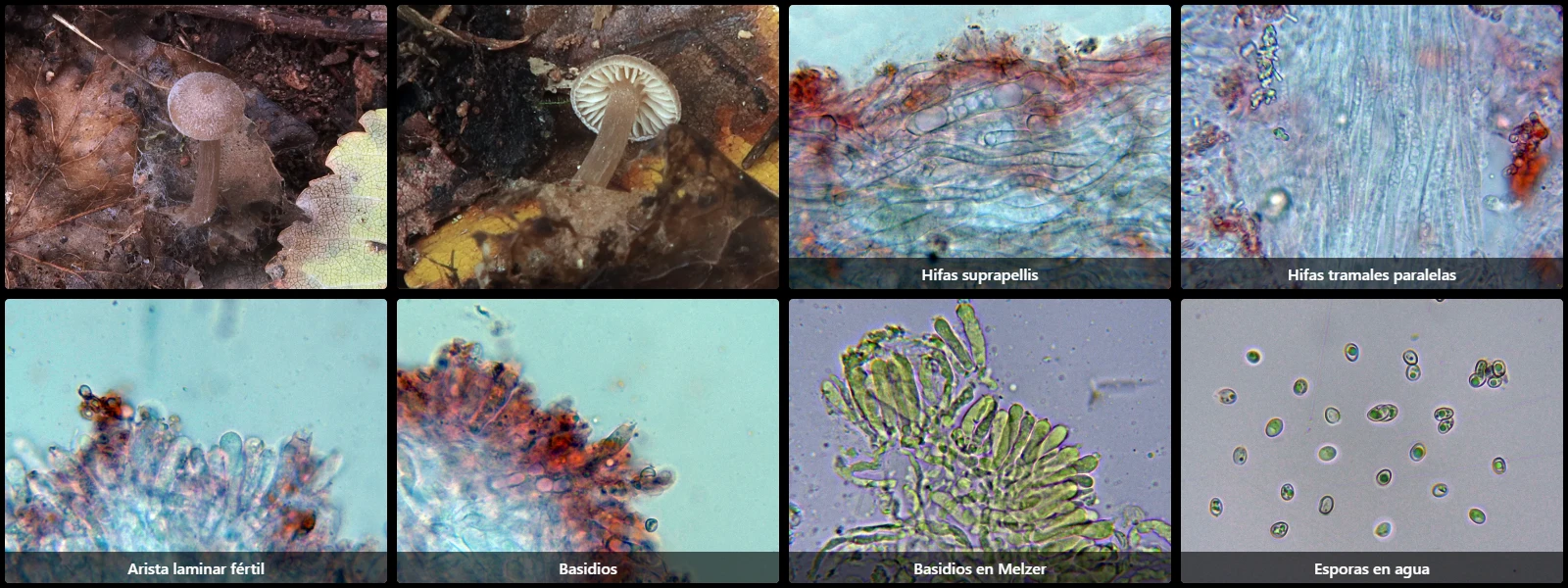
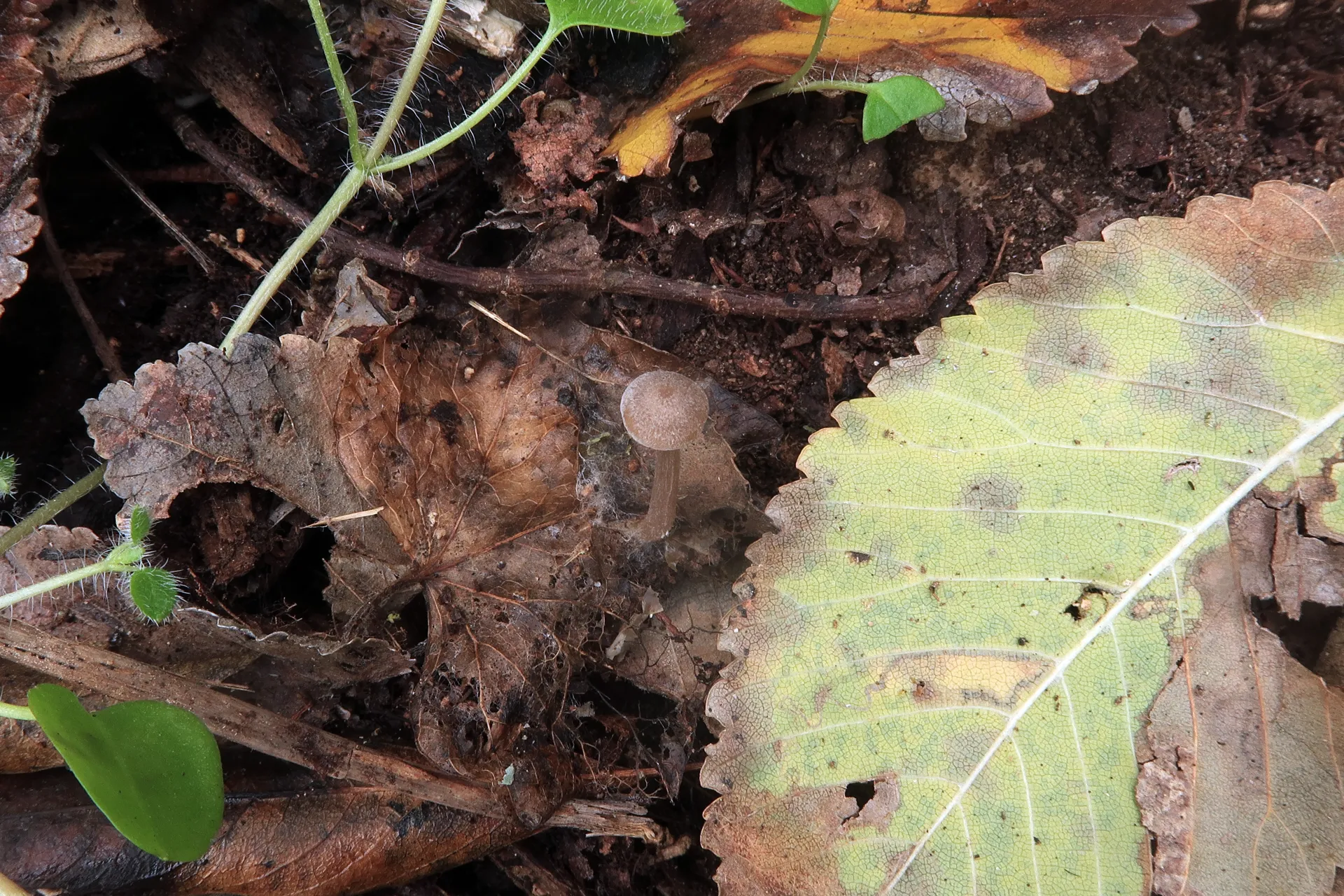
On decomposing leaf litter on the ground, along riverbanks, under Populus, Salix, or Quercus, with a convex to flattened pileus, 1 to 3 cm in diameter, smooth surface, brown with greyish hues, adnate to very slightly decurrent white lamellae, cylindrical brownish-grey stipe pruinose at the top, rancid-flour (farinaceous) odor, and sweet taste.
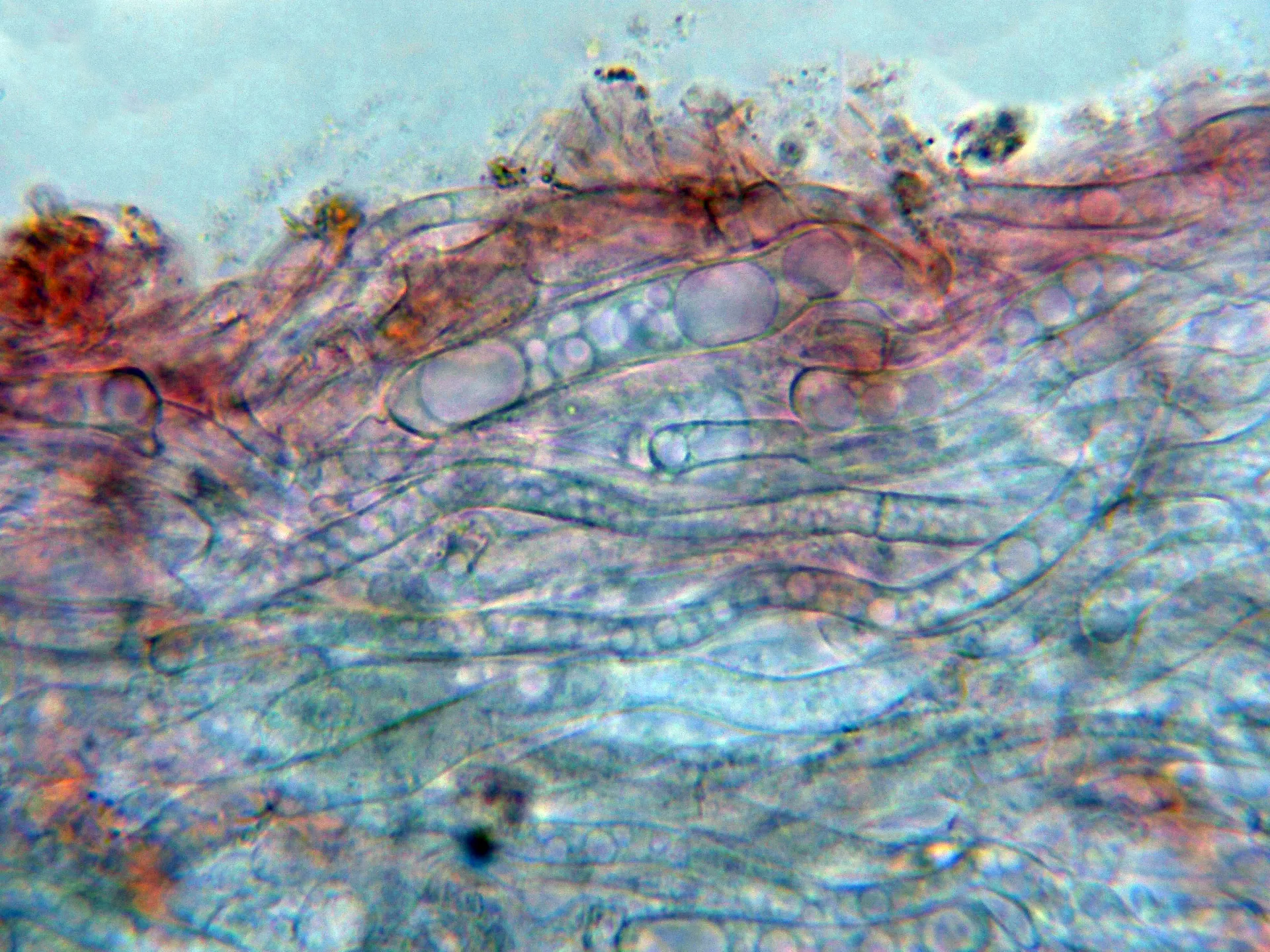
Cuticle filamentous, formed by hyphae arranged parallel to irregularly interwoven, thin-walled, with slight ochraceous intracellular pigment, 3 to 7 µm wide, septate and with clamp connections at the septa.
Lamellar edge fertile, without elements differentiated from basidia or basidioles.
Lamellar trama regular to parallel.
Basidia cylindric-clavate, 16 to 25 µm long, 4 to 5.5 µm wide, with abundant siderophilous granulation inside, basal clamp connections, and 1 to 4 sterigmata.
Spores ellipsoid, smooth, hyaline, slightly thick-walled, 7.5 to 9 µm long, 5 to 6 µm wide, with one or several oil droplets inside, inamyloid in Melzer's reagent.
Herbarium material available: JTP2469/24.
Geographic references
Map generated from global occurrence data from GBIF. GBIF.
Study measurements
Values in Microns (µm)Macroscopic gallery
Microscopic gallery
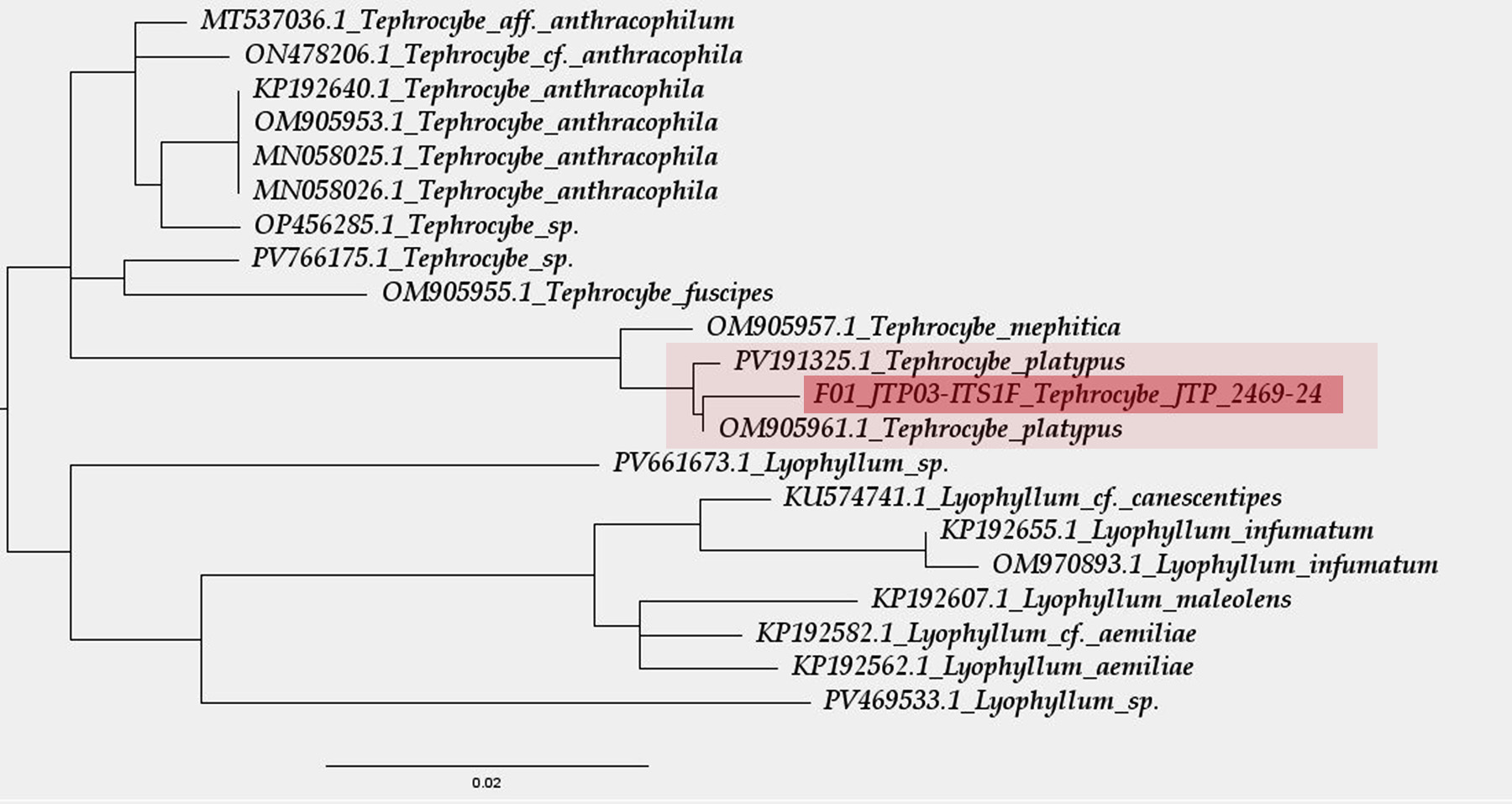
Genetic / Phylogenetic Study
Phylogenetic Tree
Sequences and Data
Sequencing (Chromatogram)
Select a file to visualize the chromatogram