Tephrocybe atrata
(Fr.) Donk
Study description
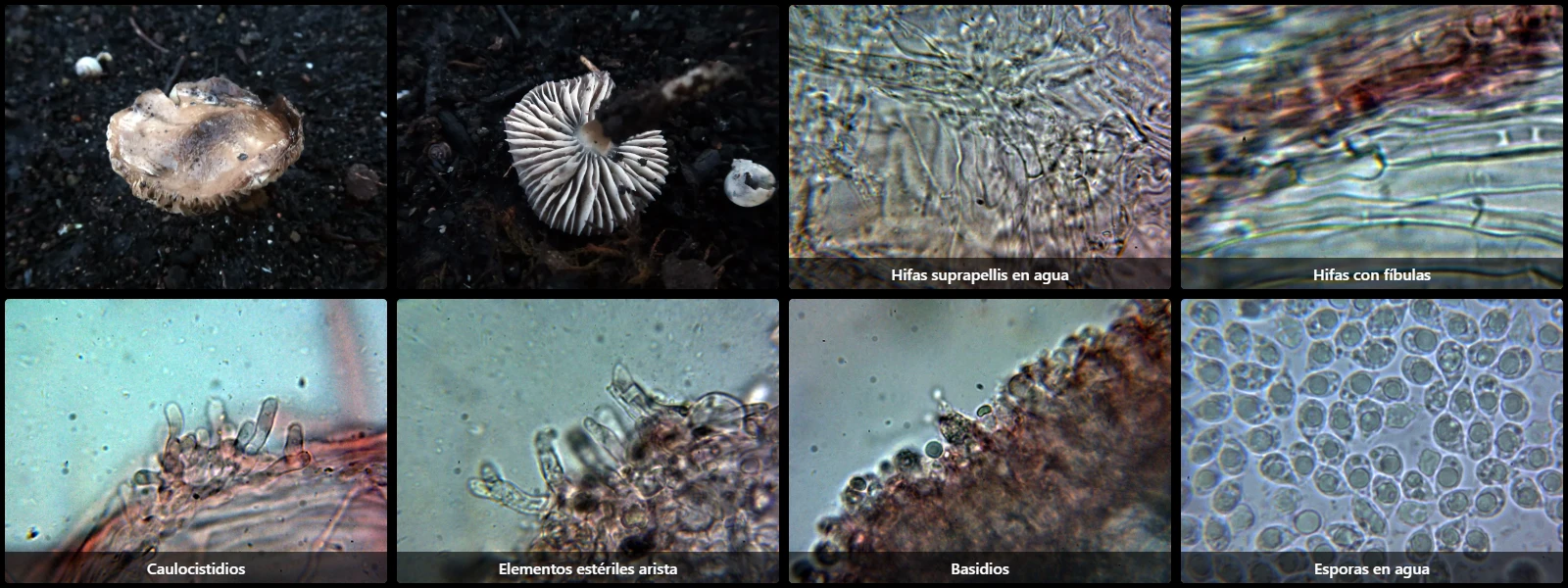
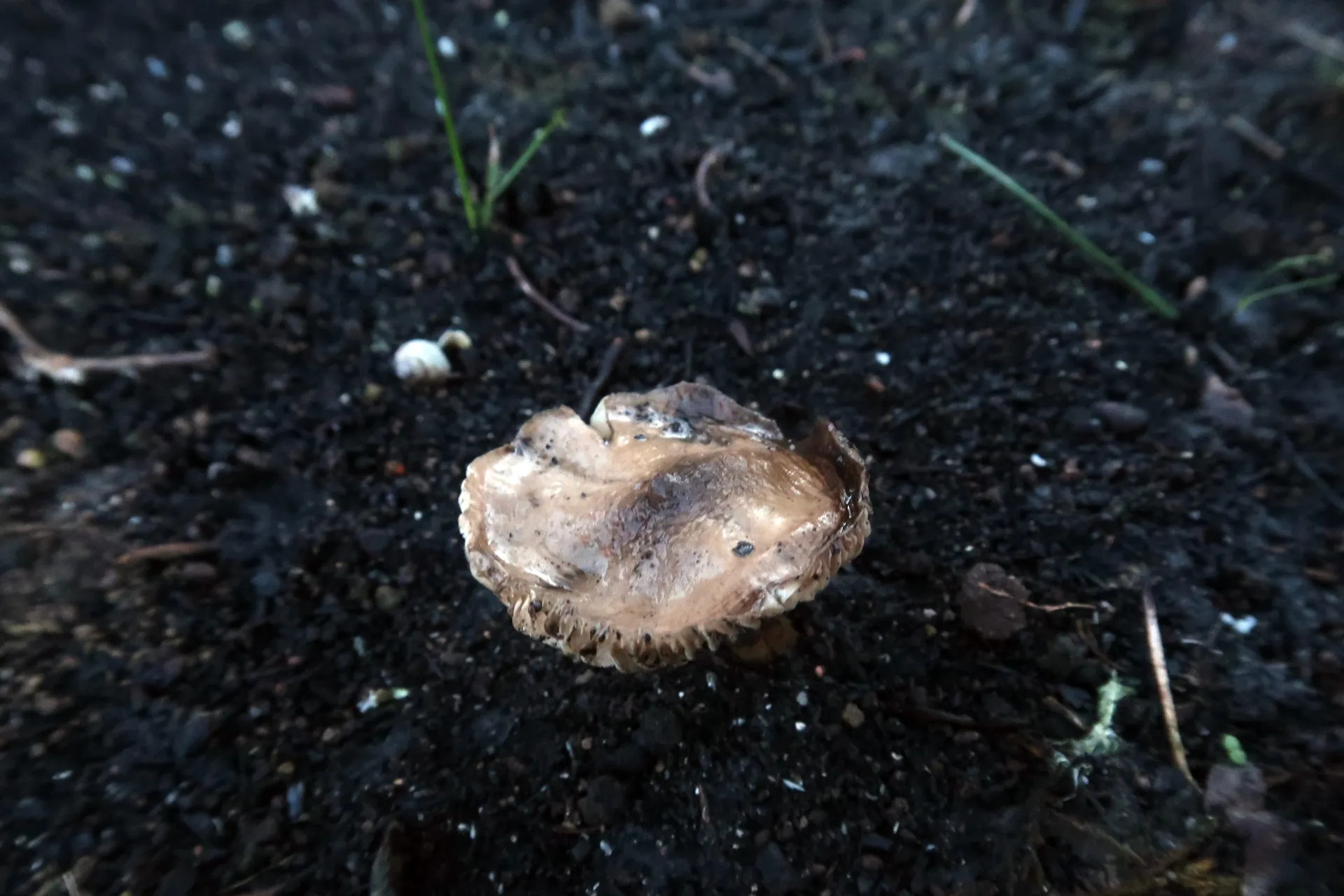
Associated with burned soil, charcoal pits, or burned wood, with a convex to flattened pileus, 1.5 to 3 cm in diameter, brownish darker at the center, thick gills decurrent by a tooth, ochre-grey, with a cylindrical stipe darker than the pileus, and farinaceous odor and taste.
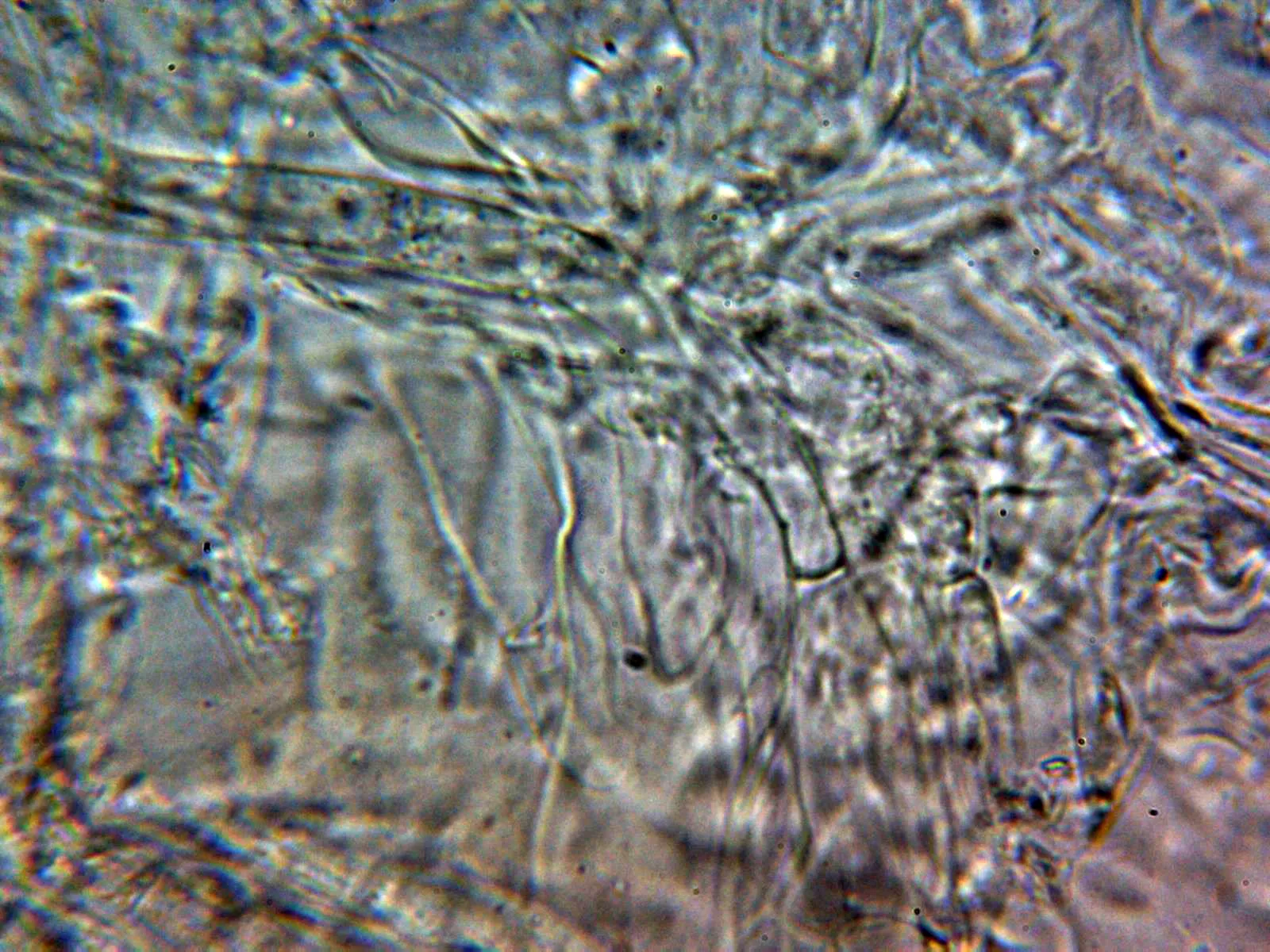
Cuticle filamentous, composed of hyphae arranged parallel to slightly interwoven, smooth- and slightly thick-walled, 4 to 8 µm wide, with slight brownish intracellular pigment, septate and with clamp connections.
Caulocystidia present on the upper stipe, grouped in clusters, cylindrical, slightly sinuous, with rounded ends.
According to literature, cystidia are cited as absent in this species, although the gill edge displays sterile, cylindrical, irregular to bifurcate terminal cells, 20 to 30 µm long and 6 to 10 µm wide.
Basidia clavate, 25 to 35 µm long, 6 to 9 µm wide, with abundant siderophilous (carminophilous) granules inside, basal clamp connections, mostly 4-spored.
Spores ovoid to ellipsoid, smooth, hyaline, thin-walled, with an eccentric apiculus at one end, 7.5 to 9 µm long, 5 to 6 µm wide, generally with a large oil or lipid droplet inside, inamyloid in Melzer's reagent.
Geographic references
Map generated from global occurrence data from GBIF. GBIF.
Study measurements
Values in Microns (µm)Macroscopic gallery
Microscopic gallery