Tapinella panuoides
(Fr.) E.-J.Gilbert
Study description
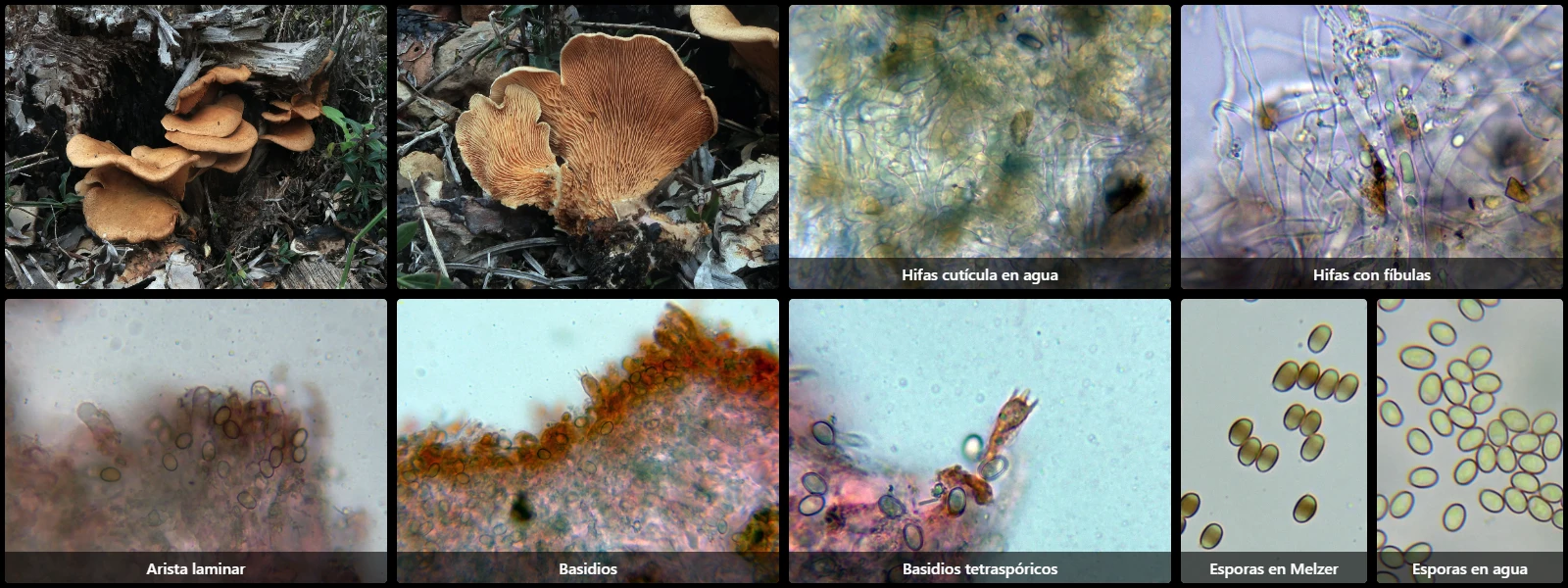
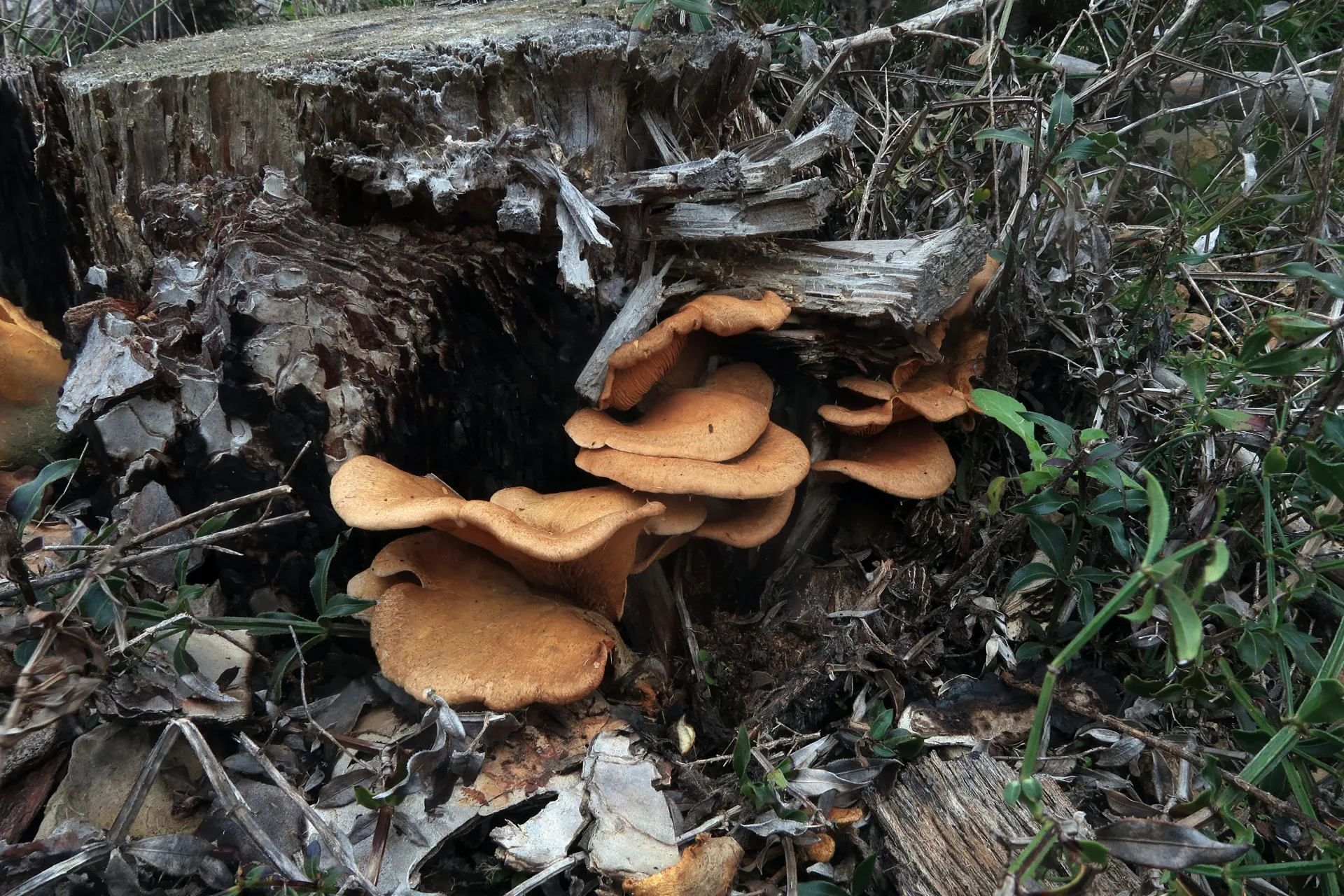
On dead conifer wood, such as stumps or fallen logs on the ground, growing in fascicles, with a bracket-like (sessile) to flabelliform pileus, 3 to 10 cm in diameter, velvety ochre-brown surface, decurrent anastomosing yellowish-brown lamellae, very short or absent lateral stipe, pleasant odor, and sweet taste.
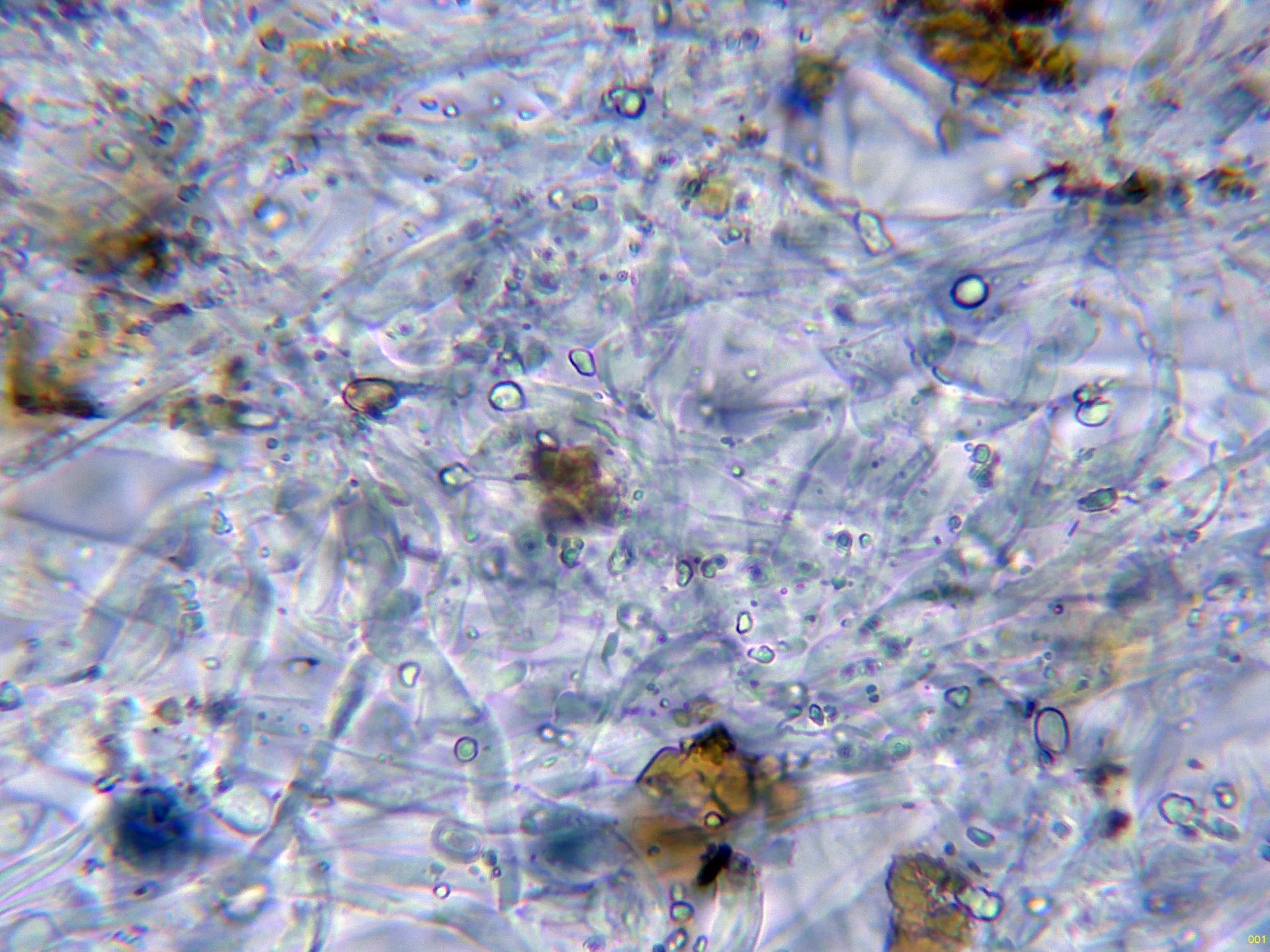
Cuticle formed by filamentous, smooth, thin-walled, densely interwoven hyphae, 2 to 6 µm wide, with abundant yellowish intracellular pigment, septate and with clamp connections.
Without clearly differentiated cystidia, but with clavate to fusiform terminal cells on the gill edge, with dimensions identical to those of the basidia.
Lamellar trama bilateral.
Basidia clavate, 30 to 45 µm long, 6 to 8 µm wide, with basal clamp connections, 4-spored.
Spores ovoid to ellipsoid, smooth, thick-walled, pale yellow under the microscope, 5 to 6 µm long, 3 to 4 µm wide, with a tiny, nearly imperceptible eccentric apiculus at one end, containing oil droplets (guttules) inside, and dextrinoid in Melzer's reagent.
Herbarium material available: JTP2301/24.
Geographic references
Map generated from global occurrence data from GBIF. GBIF.
Study measurements
Values in Microns (µm)Macroscopic gallery
Microscopic gallery