Tapesia lividofusca
(Fr.) Rehm
Study description
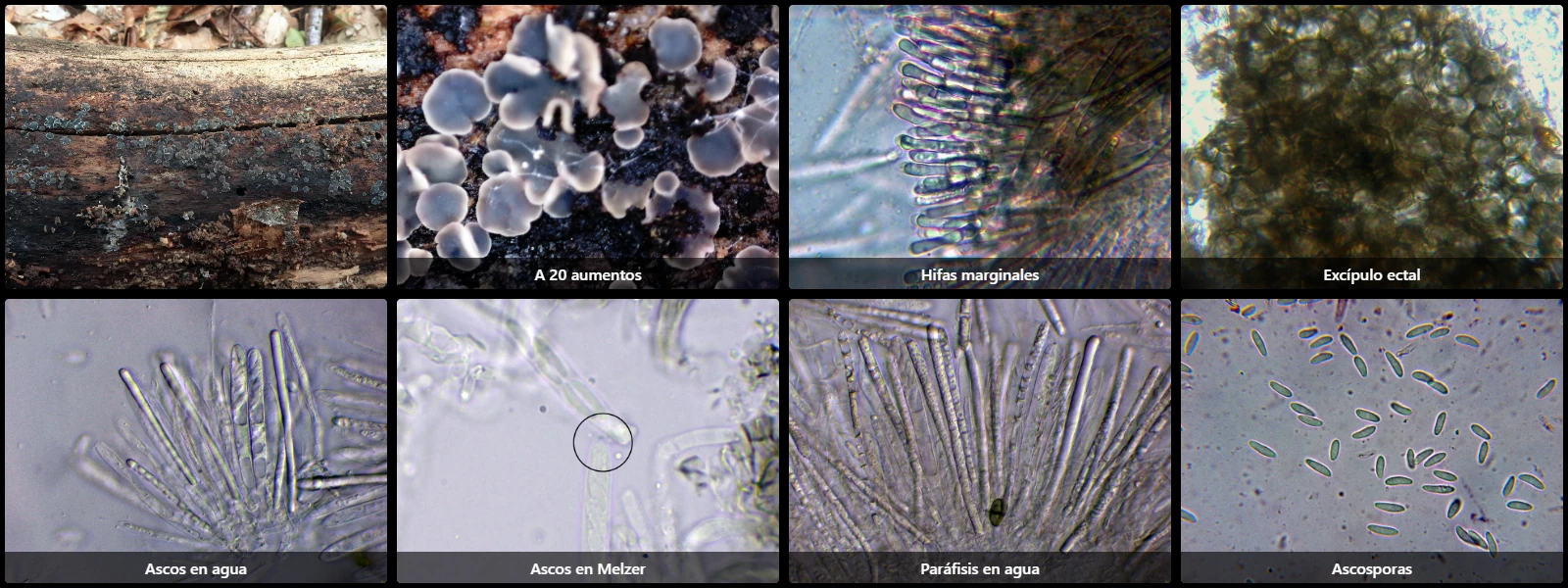
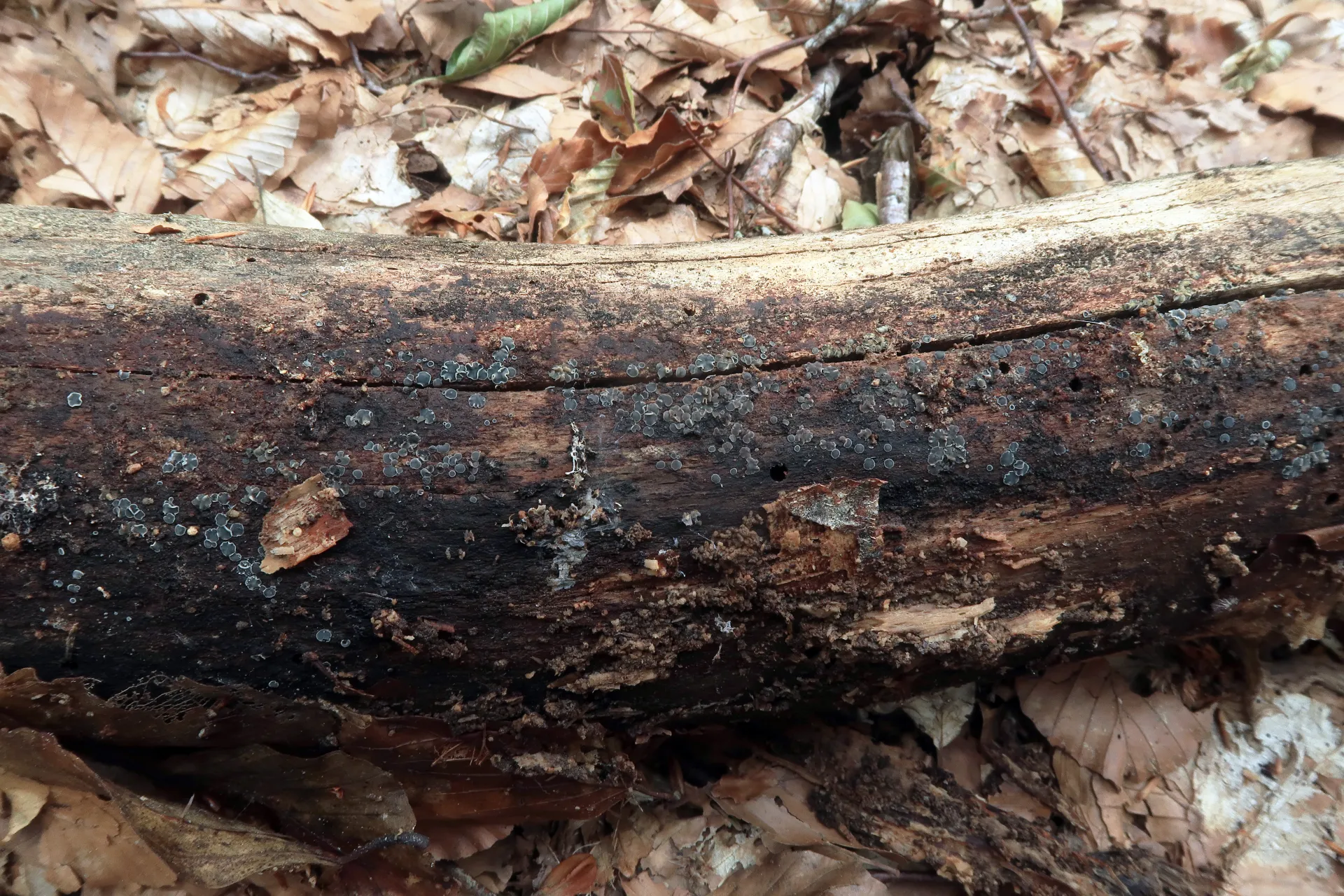
On decaying dead wood on the ground, of both conifers and broadleaves, formerly known as Mollisia lividofusca, with disc-shaped apothecia 1 to 1.5 mm in diameter, bluish-grey, with an undulating, whitish margin.
Marginal hyphae cylindrical to slightly clavate, hyaline, arranged parallel, 20 to 40 µm long and 3 to 6 µm wide.
Medullary excipulum of textura intricata, composed of heavily interwoven filamentous hyphae with brown intracellular pigment.
Ectal excipulum of textura globosa-angularis, composed of globose cells deformed by mutual compression, thin-walled and with abundant dark brown pigment inside.
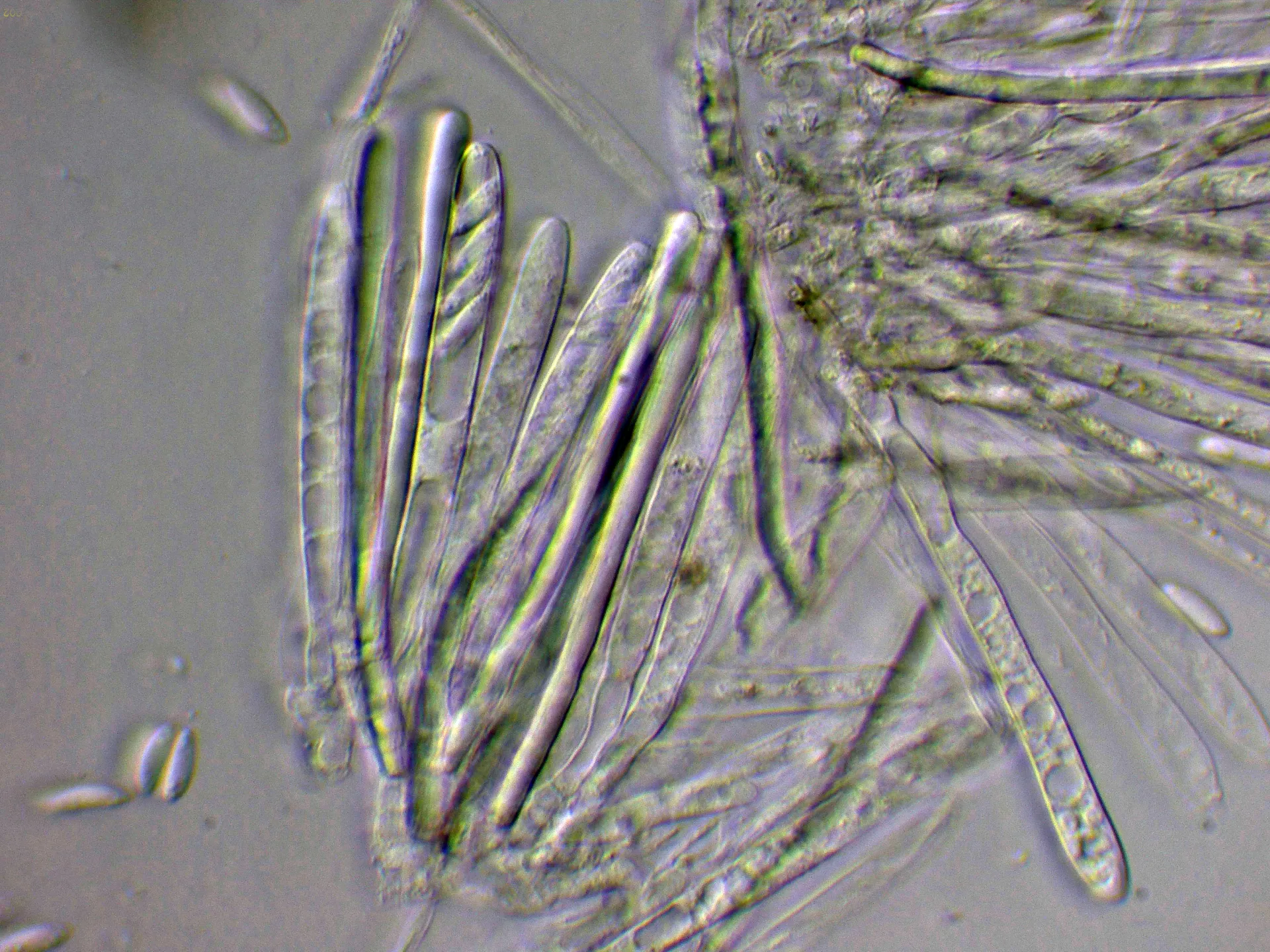
Asci cylindrical-clavate, 8-spored, 50 to 60 µm long, 5 to 7 µm wide, with spores arranged biseriate above to uniseriate below, overlapping obliquely, with basal croziers and an amyloid reaction of their minute apical apparatus in Melzer's reagent.
Paraphyses filiform, simple, with a few septa in the lower portion, hyaline, 55 to 60 µm long, 2 to 3 µm wide, not or scarcely projecting above the asci.
Ascospores cylindrical-fusiform to slightly allantoid, 1-celled, smooth, hyaline, thin-walled, 8 to 11 µm long, 2.5 to 3.5 µm wide, with homogeneous contents, lacking oil droplets inside.
Herbarium material available: JTP2575/25.
Geographic references
Map generated from global occurrence data from GBIF. GBIF.
Study measurements
Values in Microns (µm)Macroscopic gallery
Microscopic gallery