

Stropharia caerulea
Kreisel
Study description
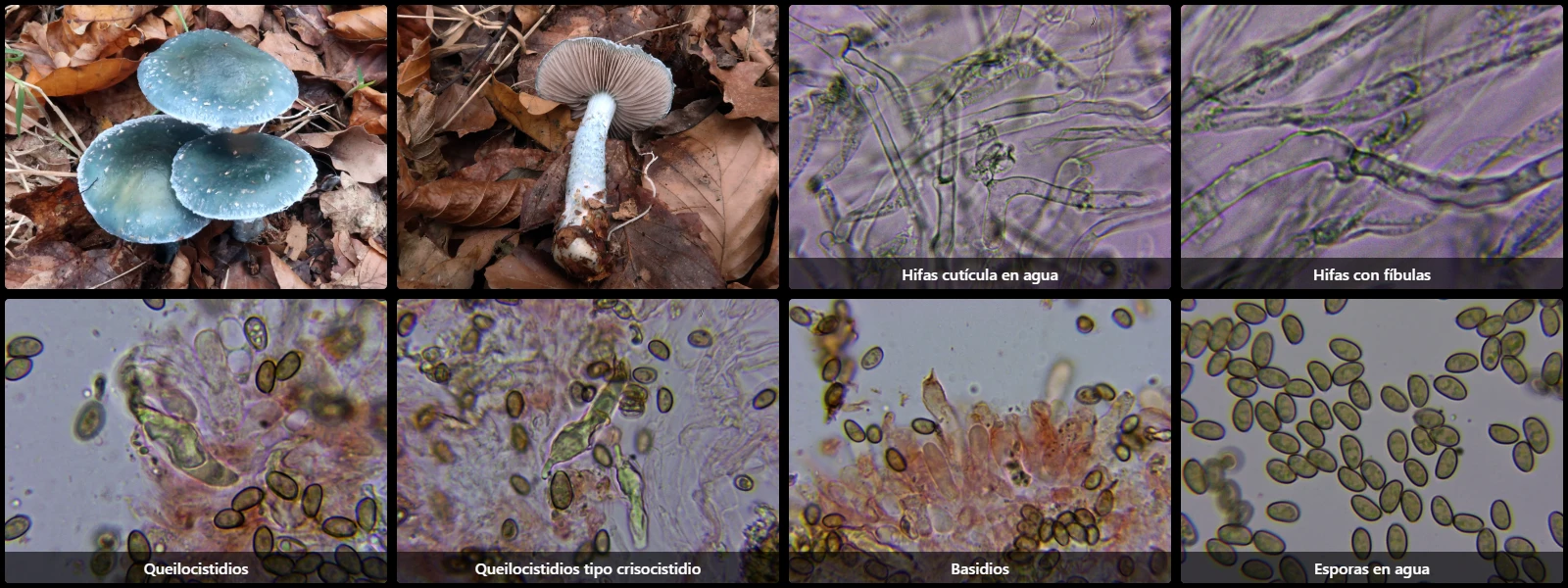
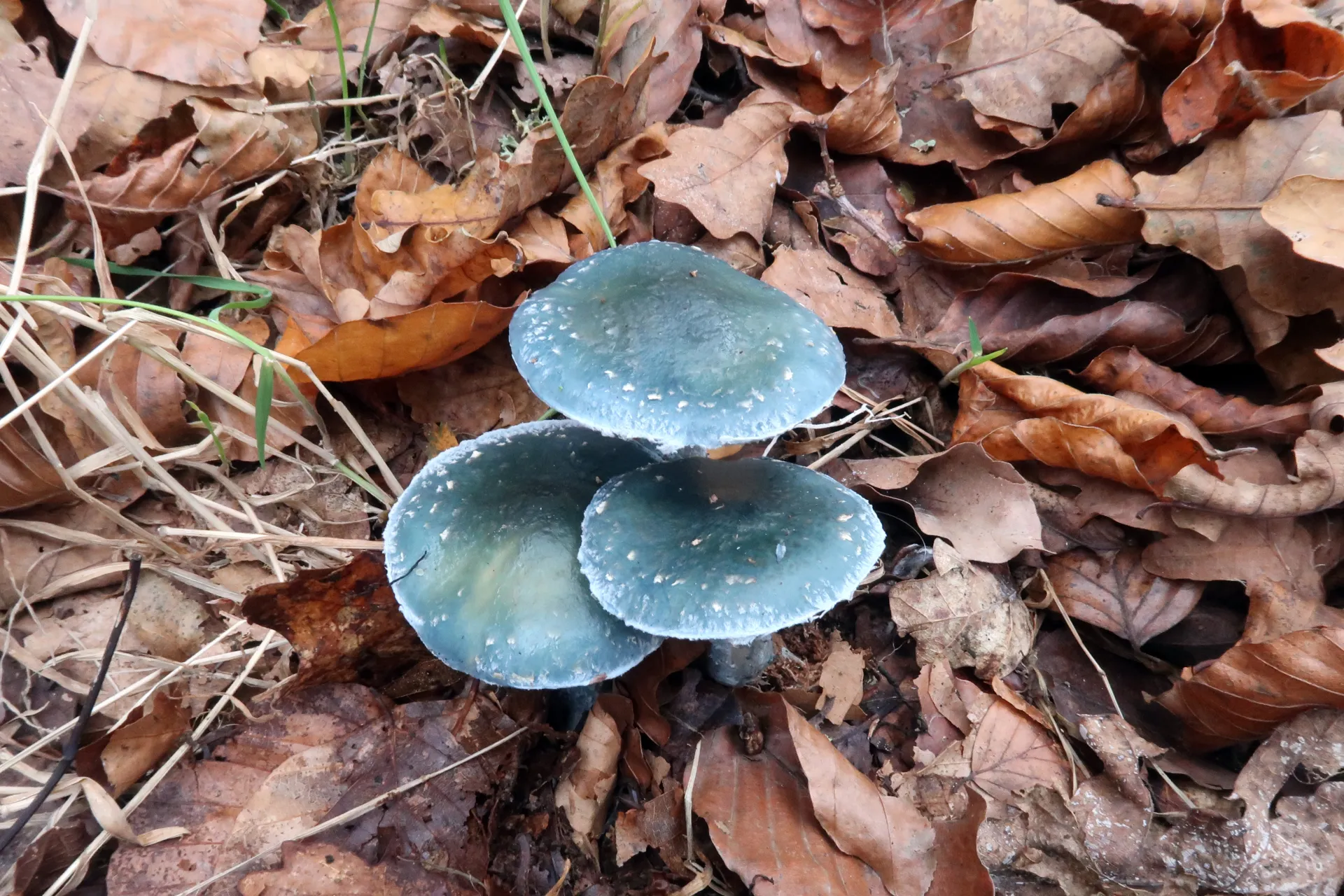
On nutrient-rich basic soils, at forest edges, along roadsides, with a convex to flattened cap, retaining an obtuse umbo, 2.5 to 6 cm in diameter, greenish-blue, sticky surface, adnate gills turning brownish to dark brown from sporulation, a cylindrical stipe, slightly thickened at the base, concolorous with the cap, with abundant whitish scales, with a faint herbaceous odour and sweet taste.
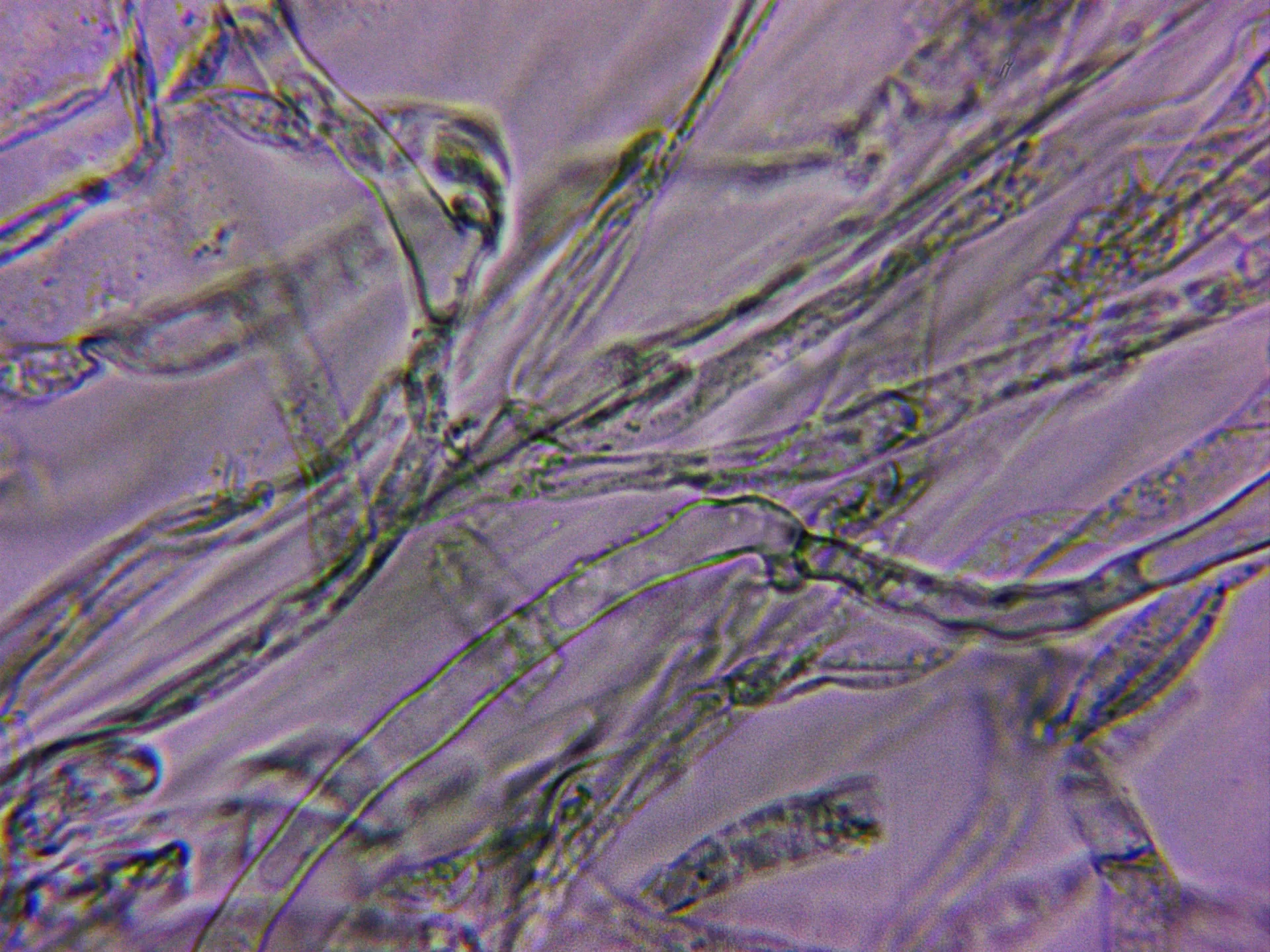
Pileipellis composed of filamentous, hyaline hyphae, arranged parallel to slightly interwoven, 2 to 6 µm wide, those of the upper layer widely spaced by gelatinisation, often with encrustations on their surface, septate and with prominent clamp connections at the septa.
Cheilocystidia and pleurocystidia fusiform to lageniform, with yellowish refractive contents inside (chrysocystidia), 30 to 50 µm long and 12 to 16 µm wide.
Basidia cylindrical-clavate, 25 to 30 µm long, 6 to 8 µm wide, partially clamped, 4-spored.
Spores ellipsoidal, smooth, hyaline, thick-walled, greyish-yellow under the microscope, 7.5 to 9 µm long, 4.5 to 5.5 µm wide, with a minute, indistinct eccentric hyaline apiculus at one end, lacking a germ pore, and with slightly granular contents inside.
Geographic references
Map generated from global occurrence data from GBIF. GBIF.
Study measurements
Values in Microns (µm)Macroscopic gallery
Microscopic gallery