Stereum sanguinolentum
(Alb. & Schwein.) Fr.
Study description
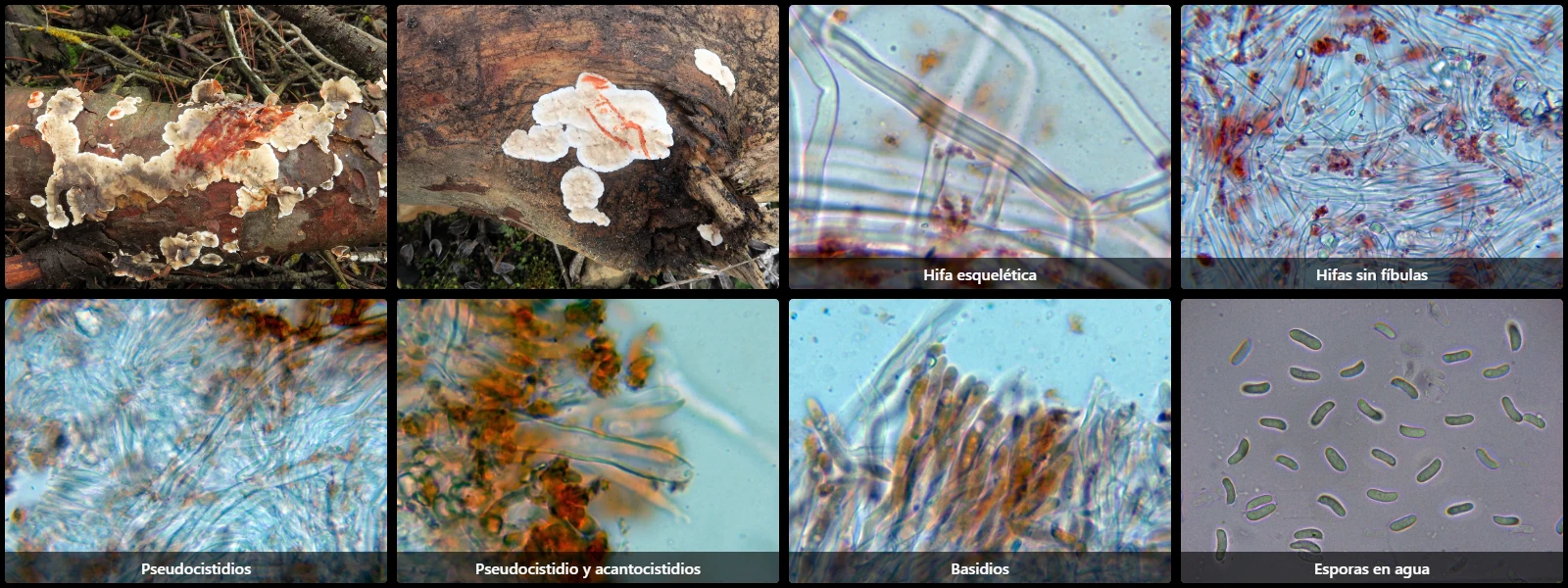
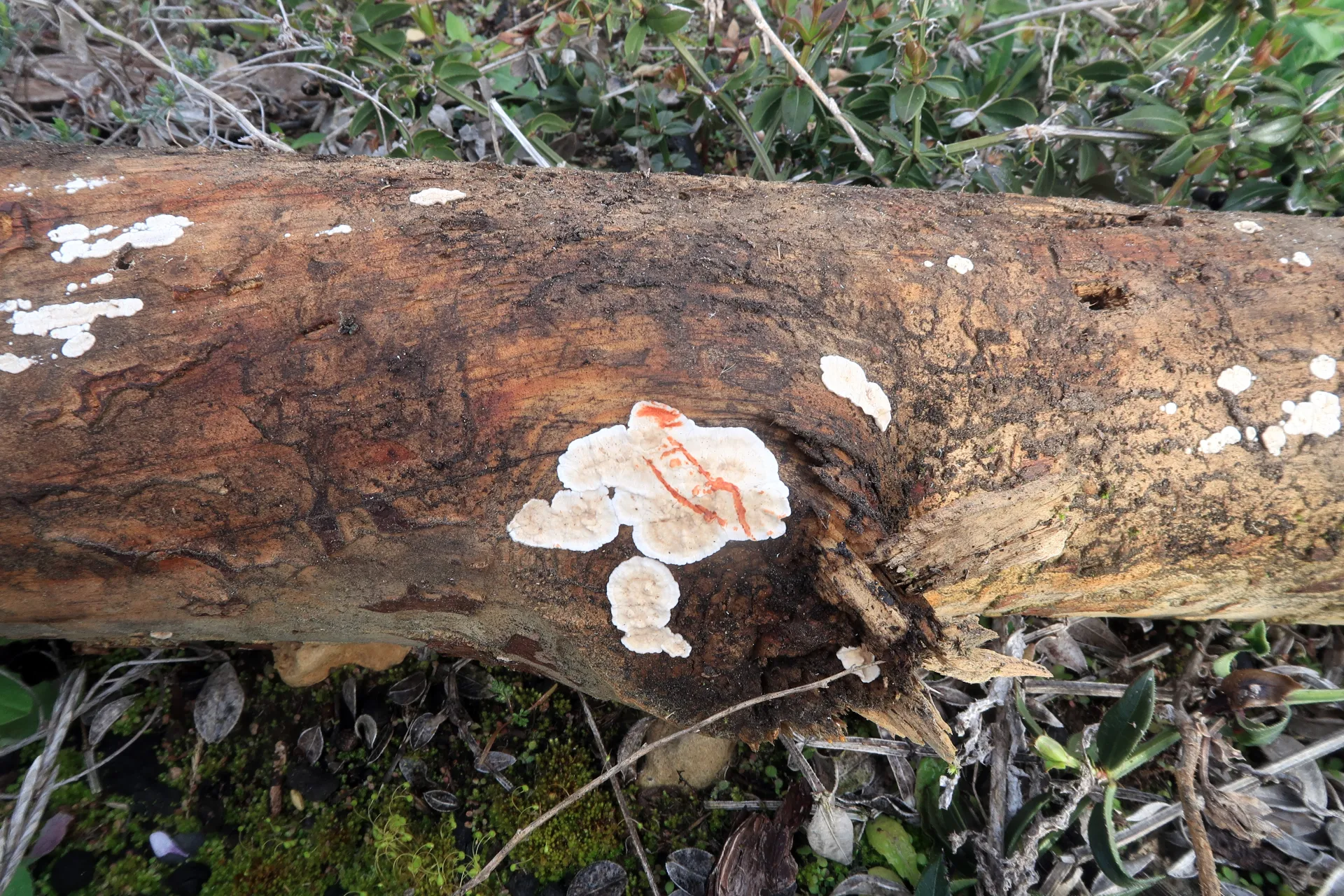
On fallen trunks or branches of conifers, with or without bark, such as Pinus, Abies, or Picea, with resupinate or effused-reflexed basidiomes, easily detachable from the substrate, with a smooth surface, ochraceous-brown to brownish-grey, noticeably bruising red when rubbed or cut, and with an elastic and coriaceous consistency.
Dimitic hyphal system, with thick-walled skeletal hyphae, aseptate, 5 to 8 µm wide, and thin- to thick-walled generative hyphae, 2 to 3.5 µm wide, septate and with simple septa (clamps absent).
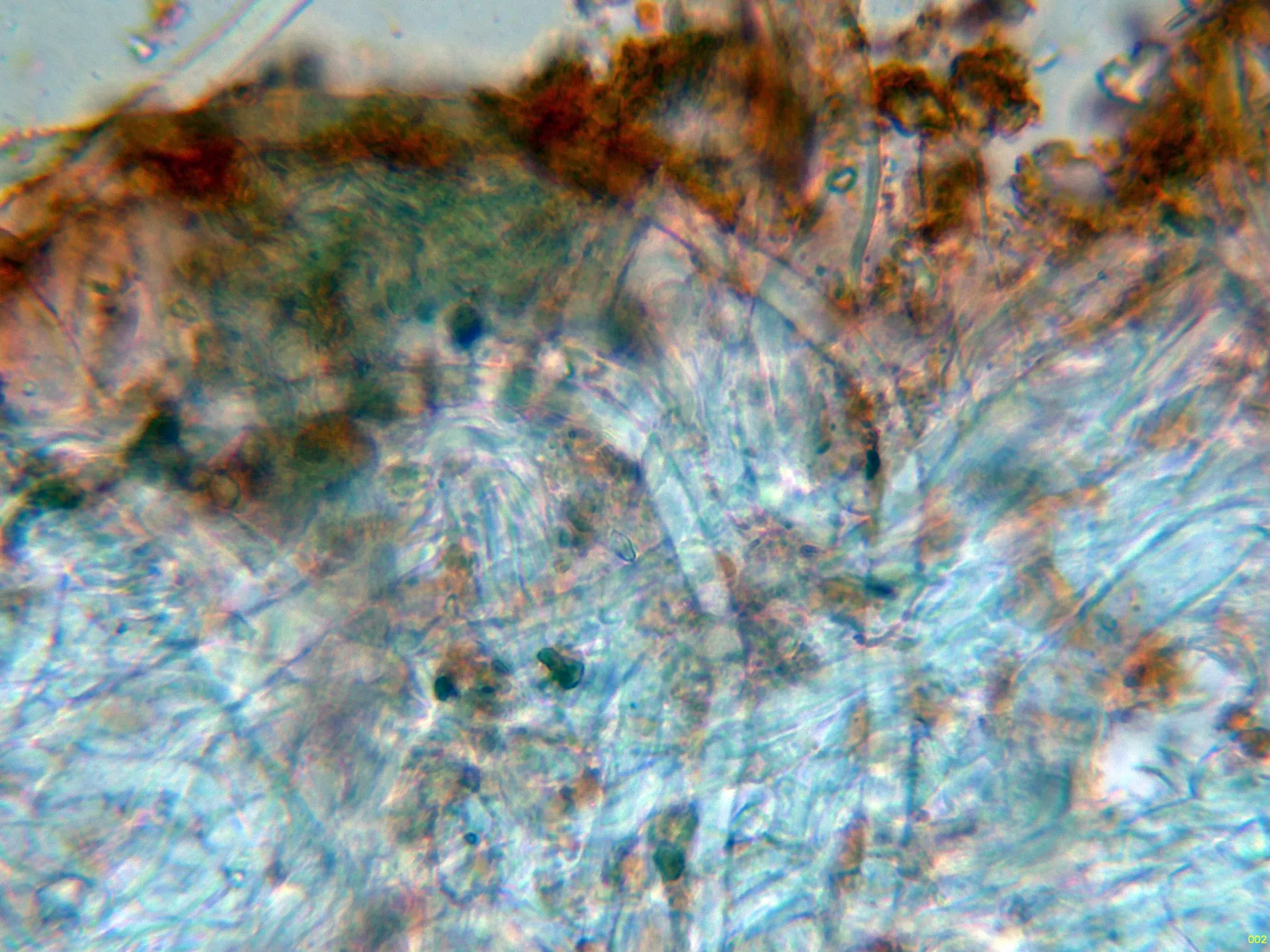
Pseudocystidia originating from skeletal hyphae, cylindrical to fusiform, thick-walled, reaching over 100 µm in length, 6 to 8 µm wide, often with pale brownish intracellular contents and typically projecting beyond the basidial layer.
Acanthocystidia thin-walled, 30 to 40 µm long, 2 to 4 µm wide, and with pointed or spiny apical projections.
Basidia cylindrical-clavate, 40 to 50 µm long, 5 to 7 µm wide, with a simple base, 2- or 4-spored.
Spores cylindrical to slightly allantoid, smooth, hyaline, thin-walled, with an eccentric apiculus at one end, 8 to 11 µm long, 3 to 4.5 µm wide, with subtle granular content inside, and amyloid in Melzer's reagent.
Herbarium material available: JTP2073/24.
Geographic references
Map generated from global occurrence data from GBIF. GBIF.
Study measurements
Values in Microns (µm)Macroscopic gallery
Microscopic gallery