Stereum rugosum
Pers.
Study description
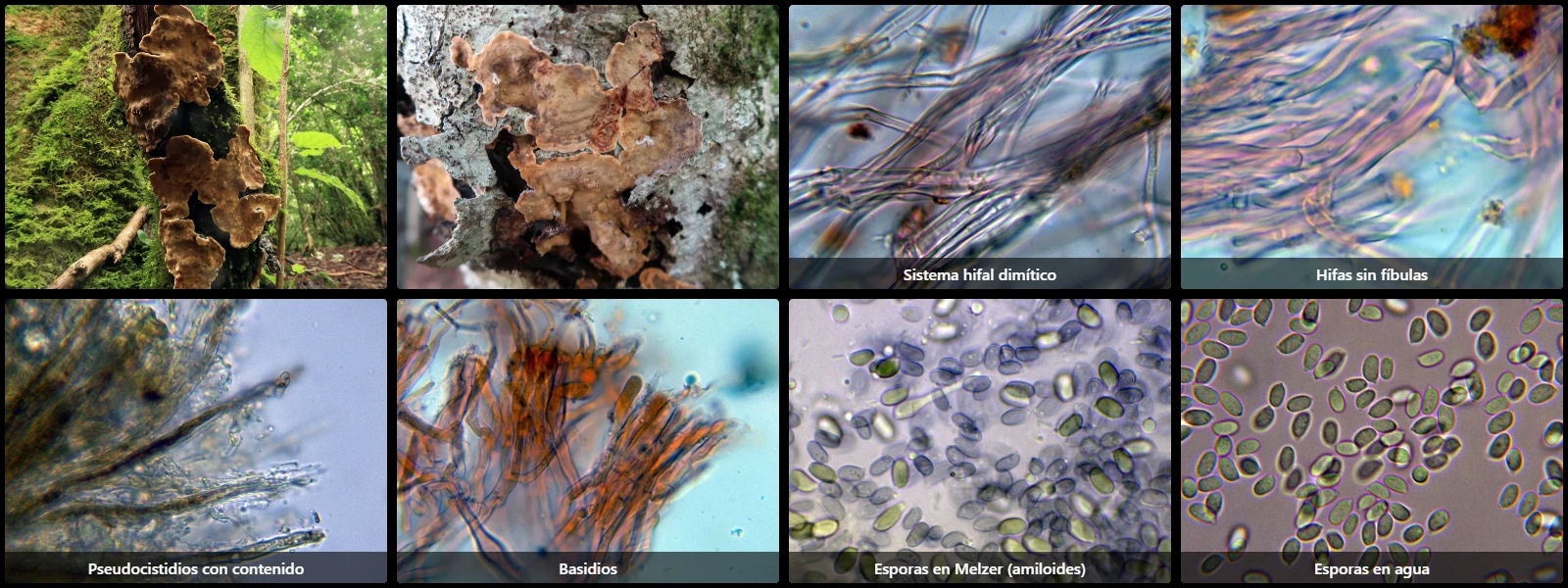
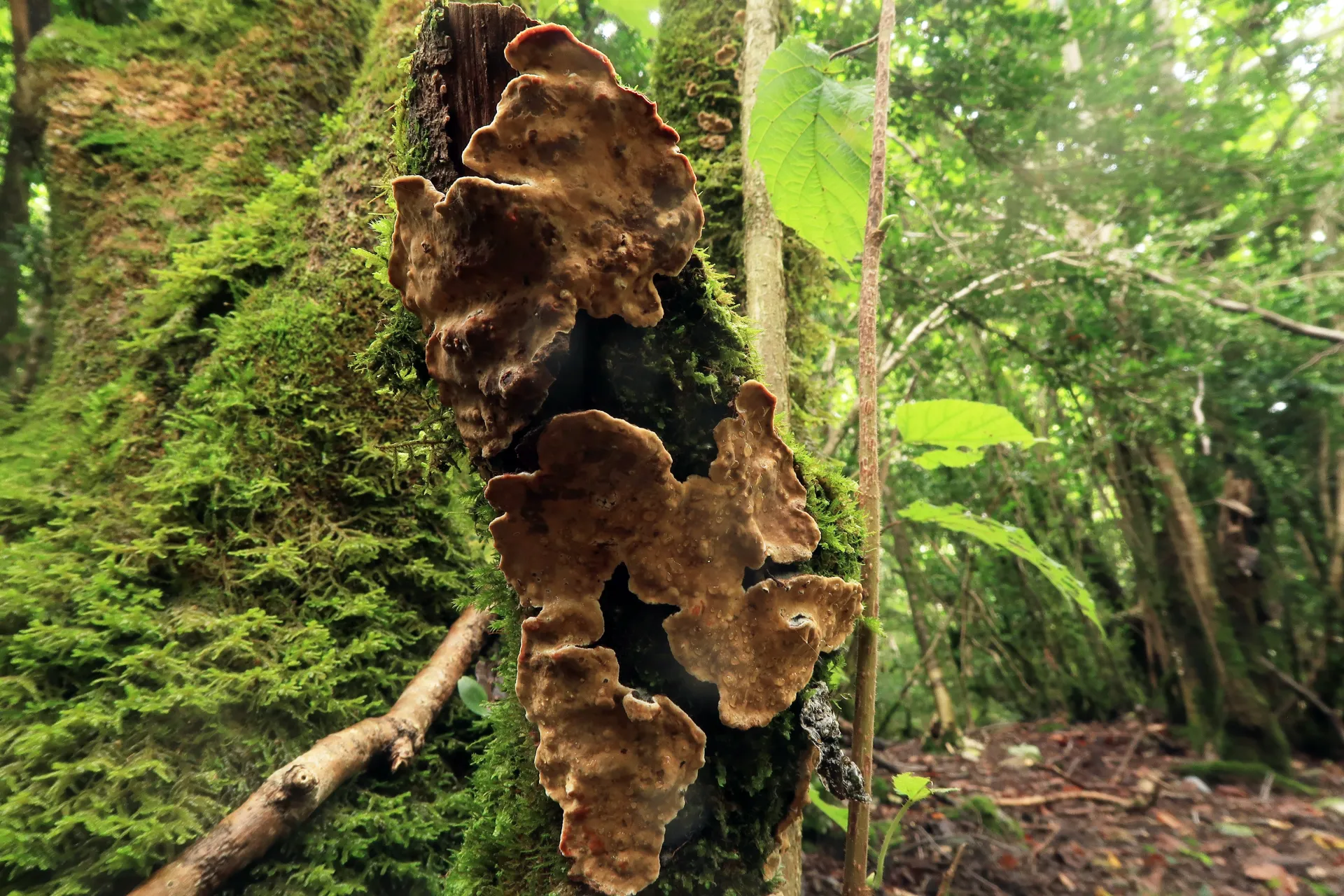
On bark or dead wood of Fagus, Corylus, or Quercus, with resupinate basidiomes, 0.5 to 2 mm thick, smooth surface, ochraceous to orange with greyish tones, bruising red when cut or bruised, with a coriaceous consistency when fresh and hard and brittle when dry, with a well-delimited growing margin and easily detachable from the substrate.
Dimitic hyphal system, with thick-walled skeletal hyphae, 5 to 8 µm wide, aseptate, and smooth generative hyphae, thin- to thick-walled, 2 to 3.5 µm wide, septate and with simple septa (clamps absent).
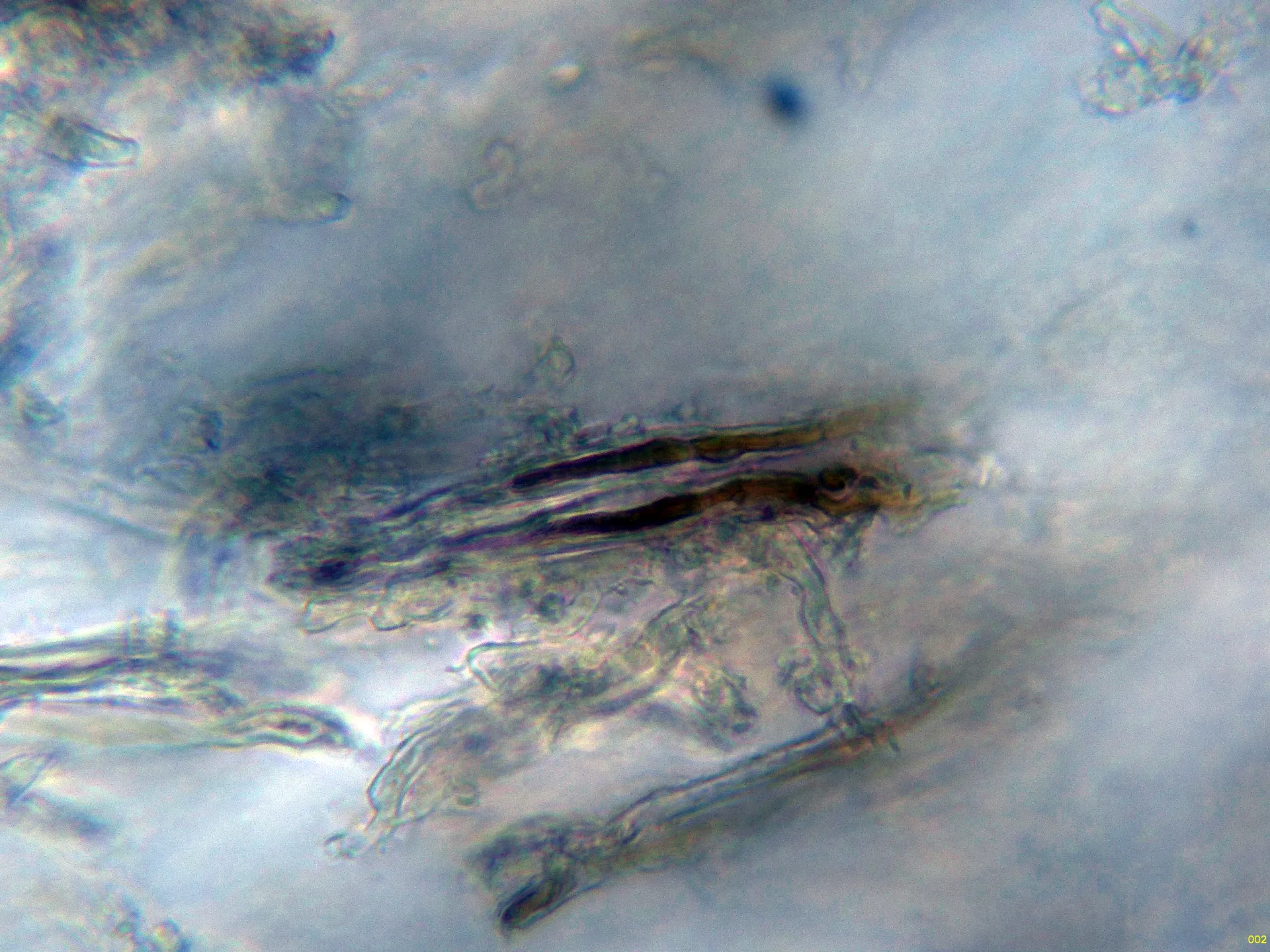
Pseudocystidia, as conducting hyphae arising from skeletal hyphae, thick-walled, up to 250 µm long, 5 to 6 µm wide, and often with abundant reddish-brown contents inside.
Basidia cylindrical-clavate, 30 to 40 µm long, 5 to 7 µm wide, with a simple base, 4-spored.
Spores ellipsoidal, with one side more flattened, smooth, hyaline, thin-walled, 6.5 to 8 µm long, 3.5 to 4.5 µm wide, with an eccentric apiculus at one end, and amyloid in Melzer's reagent.
Herbarium material available: JTP2217/24 and JTP2676/25.
Geographic references
Map generated from global occurrence data from GBIF. GBIF.
Study measurements
Values in Microns (µm)Macroscopic gallery
Microscopic gallery