Stereophlebia tuberculata
(Berk. & M.A.Curtis) Zmitr.
Study description
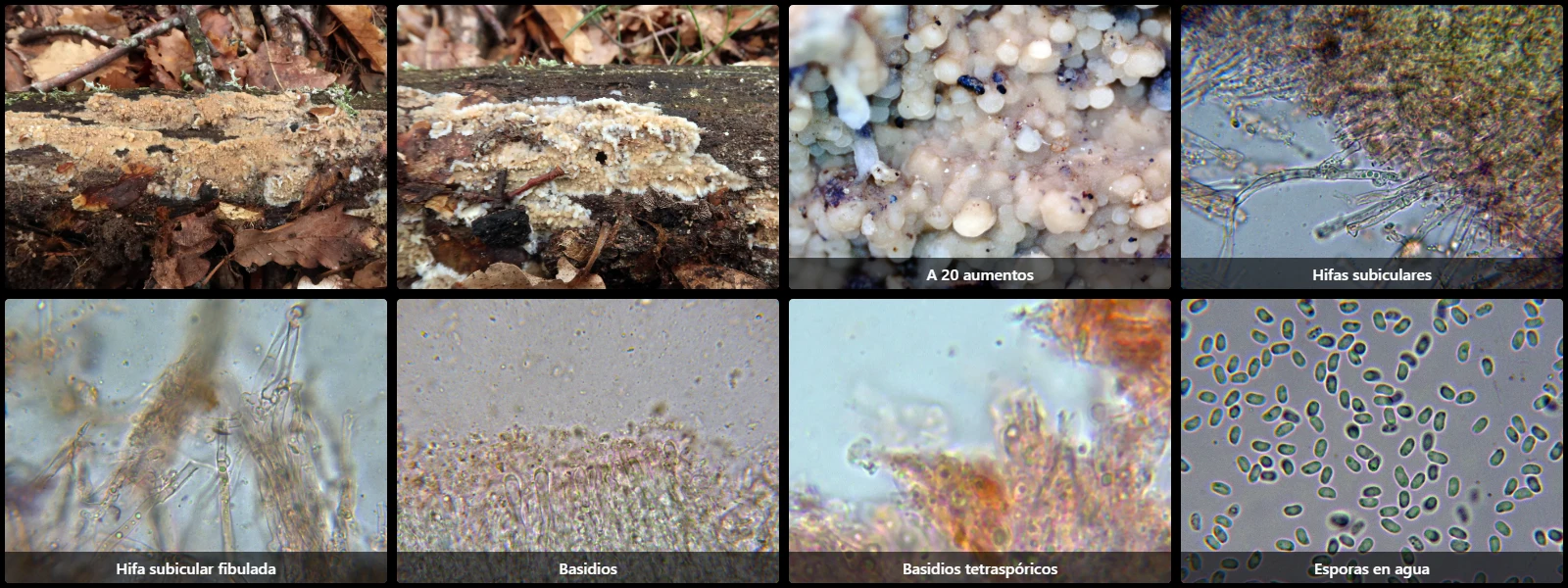
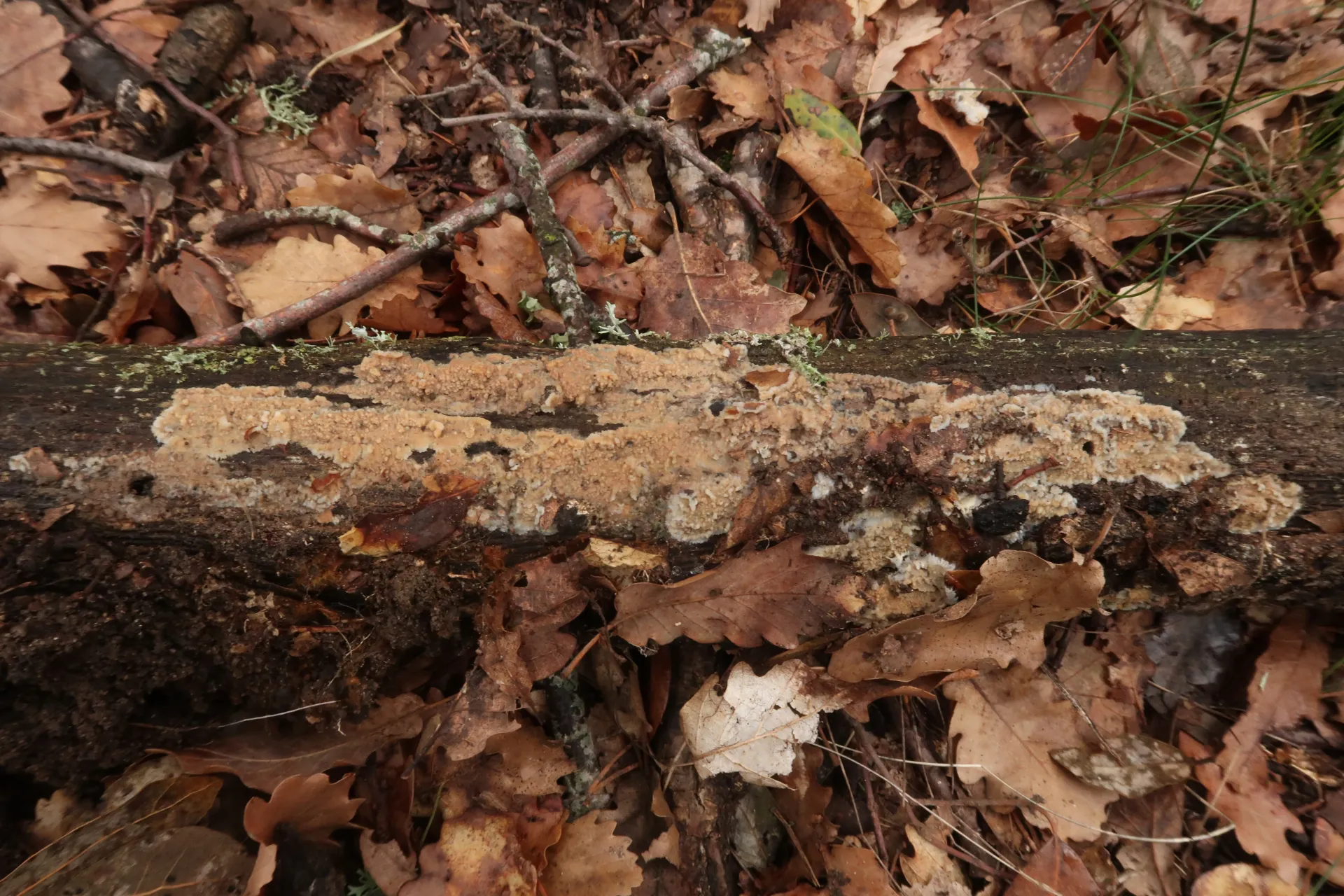
An uncommon species on decaying broadleaf wood, formerly known as Phanerochaete tuberculata, with resupinate basidiomes tightly adhering to the substrate, up to 0.5 mm thick; verrucose surface, ochraceous to cream, with a fibrous whitish margin.
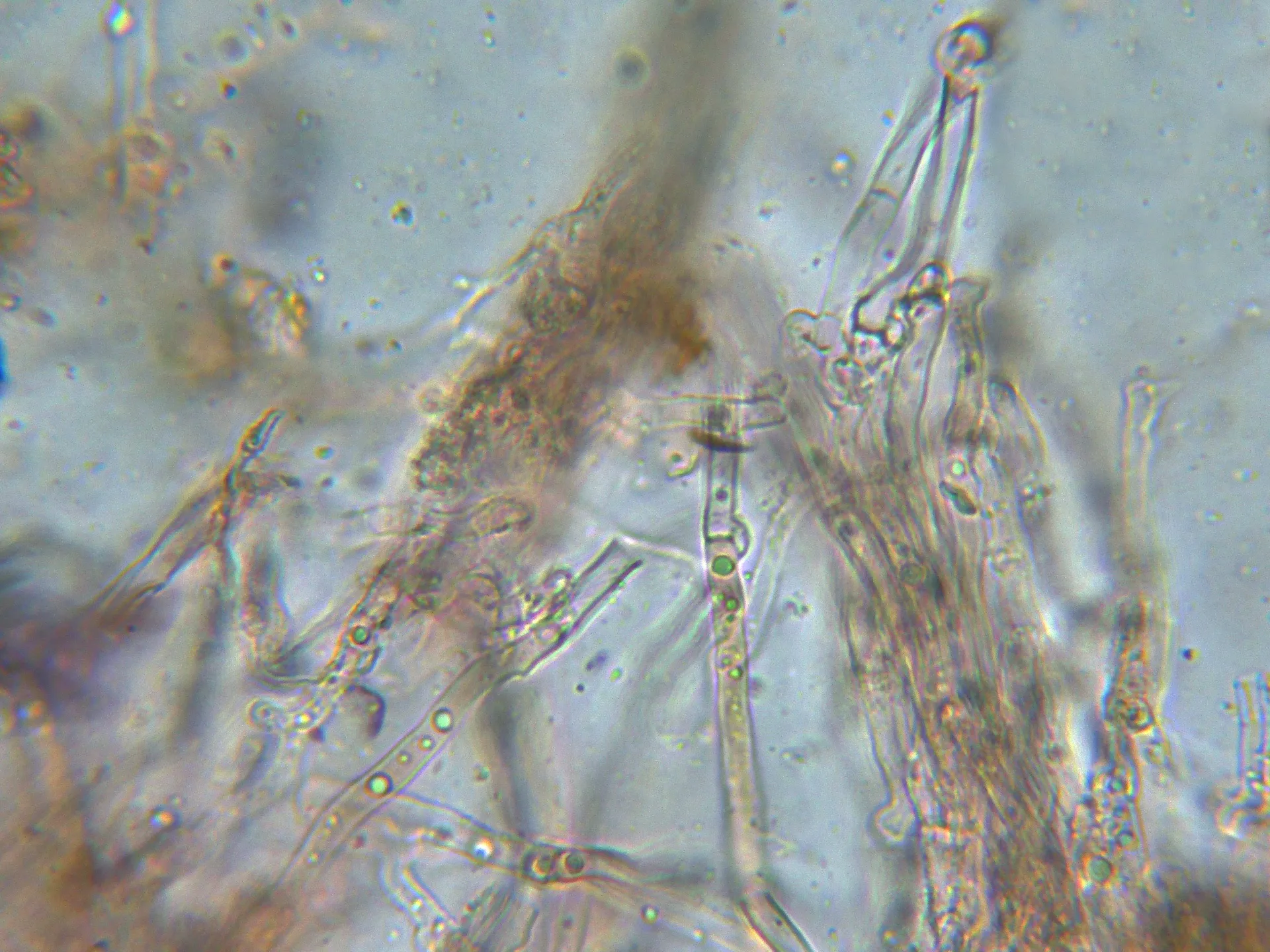
Hyphal system monomitic, with hyaline generative hyphae, thin- to thick-walled, 2 to 5 µm wide, septate mostly with simple septa, although with scattered clamp connections on subicular hyphae.
Cystidia and other sterile hymenial elements absent.
Basidia cylindrical-clavate, 30 to 35 µm long, 4 to 6 µm wide, simple-based (clampless) and four-spored.
Spores ellipsoidal to oblong, smooth, hyaline, thin-walled, 4.5 to 6 µm long, 2.5 to 3.5 µm wide, with an inconspicuous eccentric apiculus at one end, containing small oil droplets or guttules inside, and inamyloid in Melzer's reagent.
Geographic references
Map generated from global occurrence data from GBIF. GBIF.
Study measurements
Values in Microns (µm)Macroscopic gallery
Microscopic gallery