Steccherinum bourdotii
Saliba & A.David
Study description
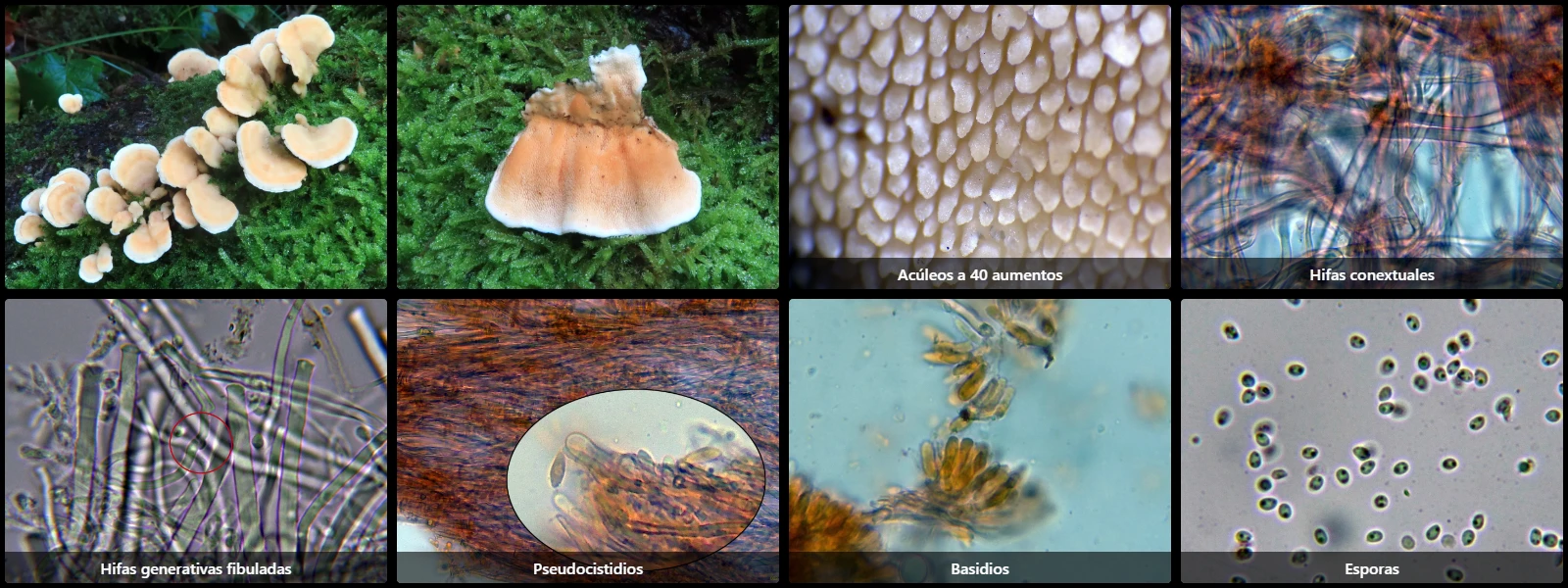
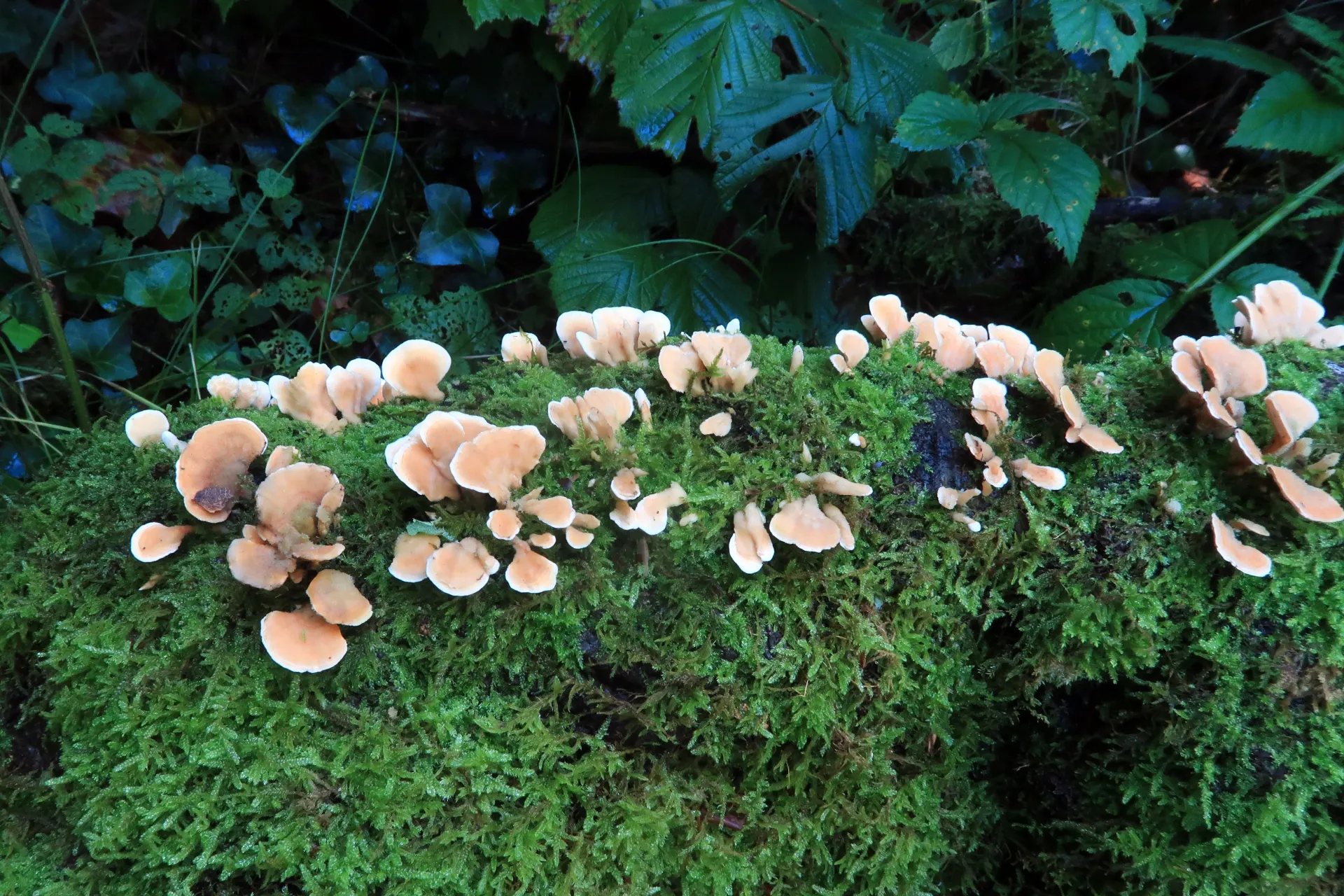
On a fallen hazel (Corylus) trunk on the ground, with effused-reflexed to substipitate basidiomes; pilei 1 to 4 cm across, shell- or fan-shaped, cream with a whitish margin; hymenium consisting of salmon-colored aculei up to 1.5 mm long.
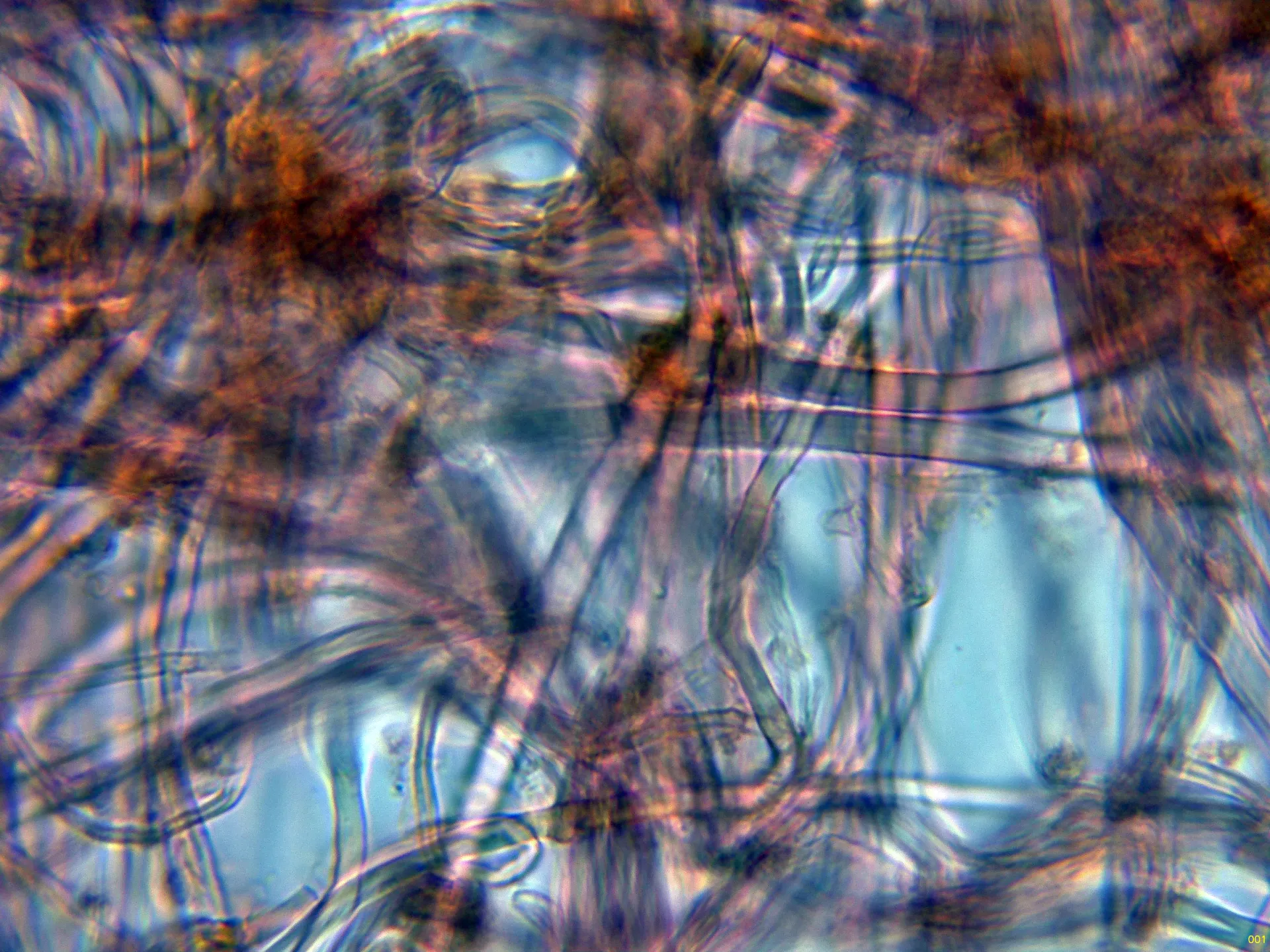
Hyphal system dimitic, formed by very thick-walled skeletal hyphae 3 to 4 µm wide, unbranched; and hyaline generative hyphae, moderately thick-walled, 2.5 to 3 µm wide, branched, septate and clamped.
Pseudocystidia at the spine tips, with crystals that tend to shed, 40 to 60 µm long and 5 to 7 µm wide.
Basidia cylindrical-clavate, 15 to 20 µm long, 4 to 5 µm wide, with basal clamp connections and four-spored.
Spores subglobose to ovoid, smooth, hyaline, thin-walled; in this study 2.6 to 3.5 µm long and 2 to 3 µm wide, smaller than typically reported for the species (4–5 × 3–4 µm according to literature), with an inconspicuous eccentric apiculus at one end, containing oil droplets of varying size inside, and inamyloid in Melzer's reagent.
Herbarium material available: JTP1983/23.
Geographic references
Map generated from global occurrence data from GBIF. GBIF.
Study measurements
Values in Microns (µm)Macroscopic gallery
Microscopic gallery