Spongiporus floriformis
(Quél.) Zmitr.
Study description
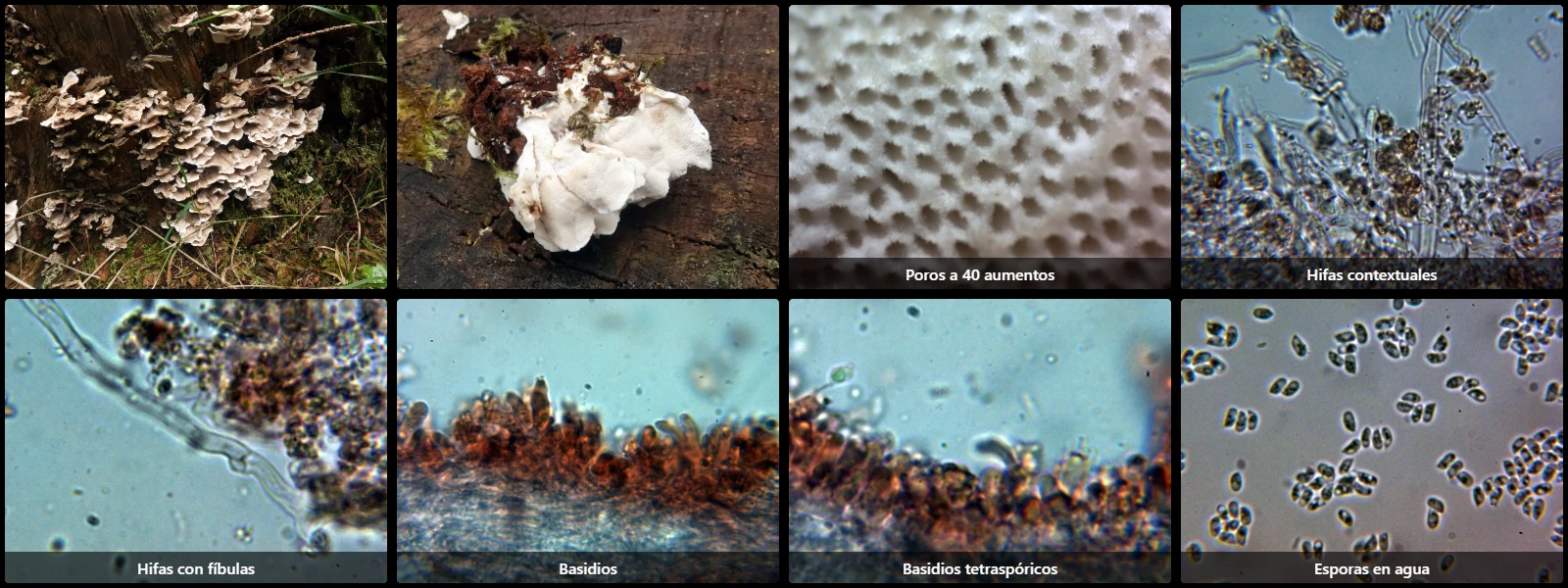
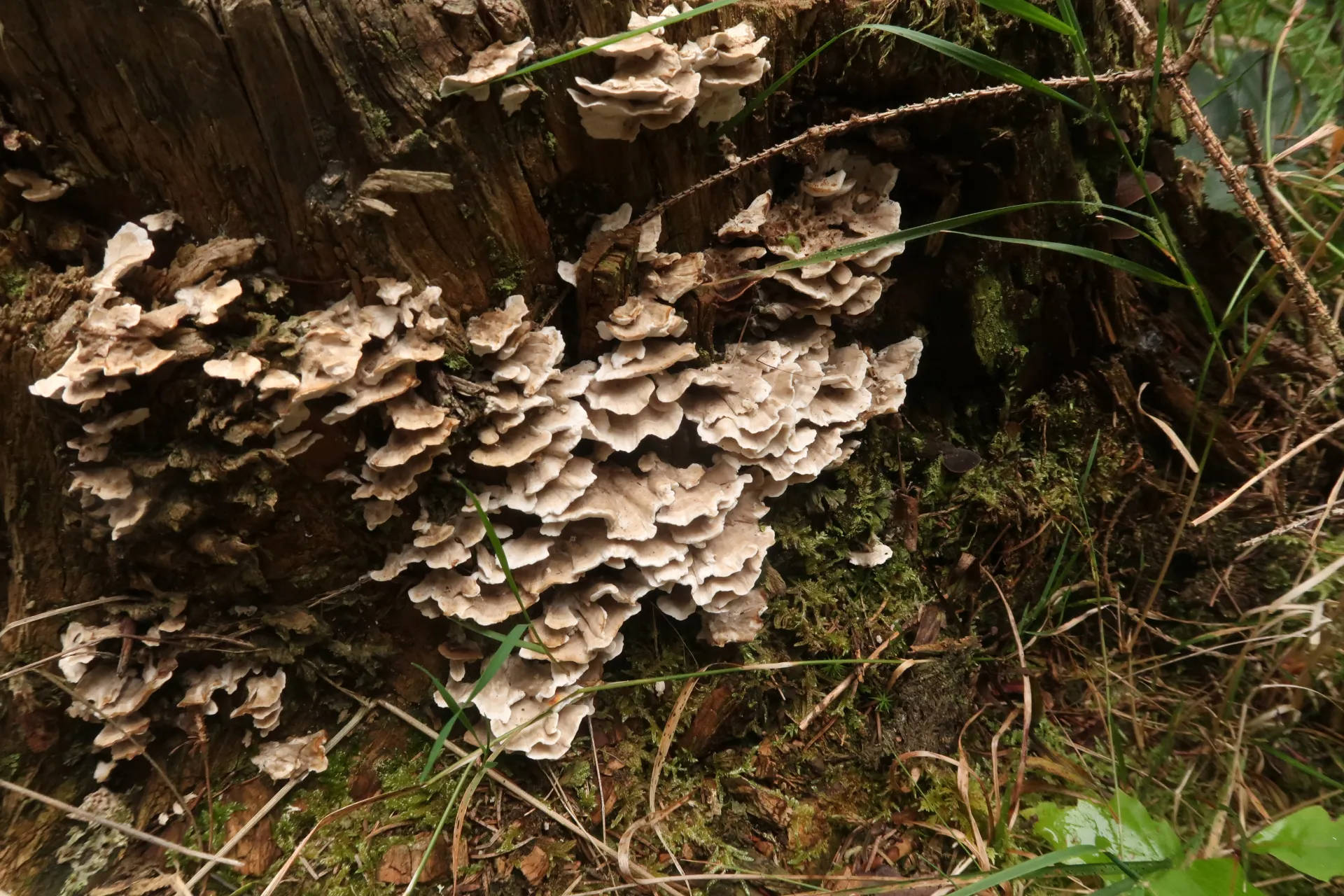
On decaying dead wood of conifers, such as Pinus, Abies, or Picea, with effused-reflexed to substipitate basidiomes, generally imbricate, laterally fused, petaloid in appearance, 2 to 3 cm across; pileus surface white to pale brownish; white pore surface with 6 to 8 angular pores per mm; without distinct odor and with a bitter taste.
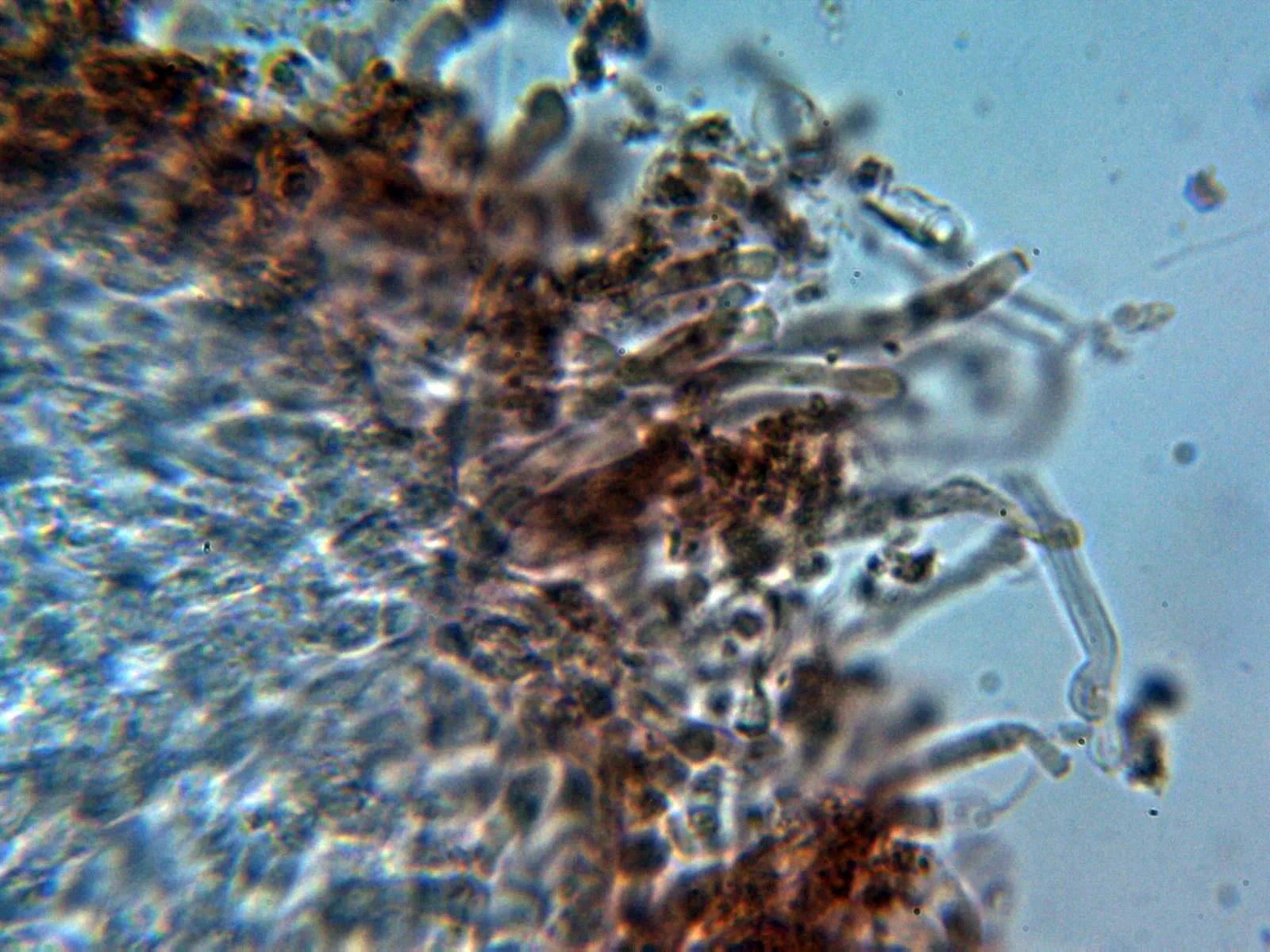
Hyphal system monomitic, with contextual hyphae cylindrical, hyaline, thin- to slightly thick-walled, 2.5 to 5 µm in diameter, with some branches; tramal hyphae similar in morphology but narrower, 2 to 3 µm in diameter; all septate and clamped.
Cystidia and other sterile hymenial elements absent.
Basidia clavate, 15 to 20 µm long, 4 to 6 µm wide, with basal clamp connections and four-spored.
Spores cylindrical-ellipsoidal to oblong, smooth, hyaline, thin-walled, with an eccentric apiculus at one end, 3.5 to 5 µm long, 2 to 2.5 µm wide, containing one or more oil droplets of varying size inside, and inamyloid in Melzer's reagent.
Geographic references
Map generated from global occurrence data from GBIF. GBIF.
Study measurements
Values in Microns (µm)Macroscopic gallery
Microscopic gallery