Skeletocutis nivea
(Jungh.) Jean Keller
Study description
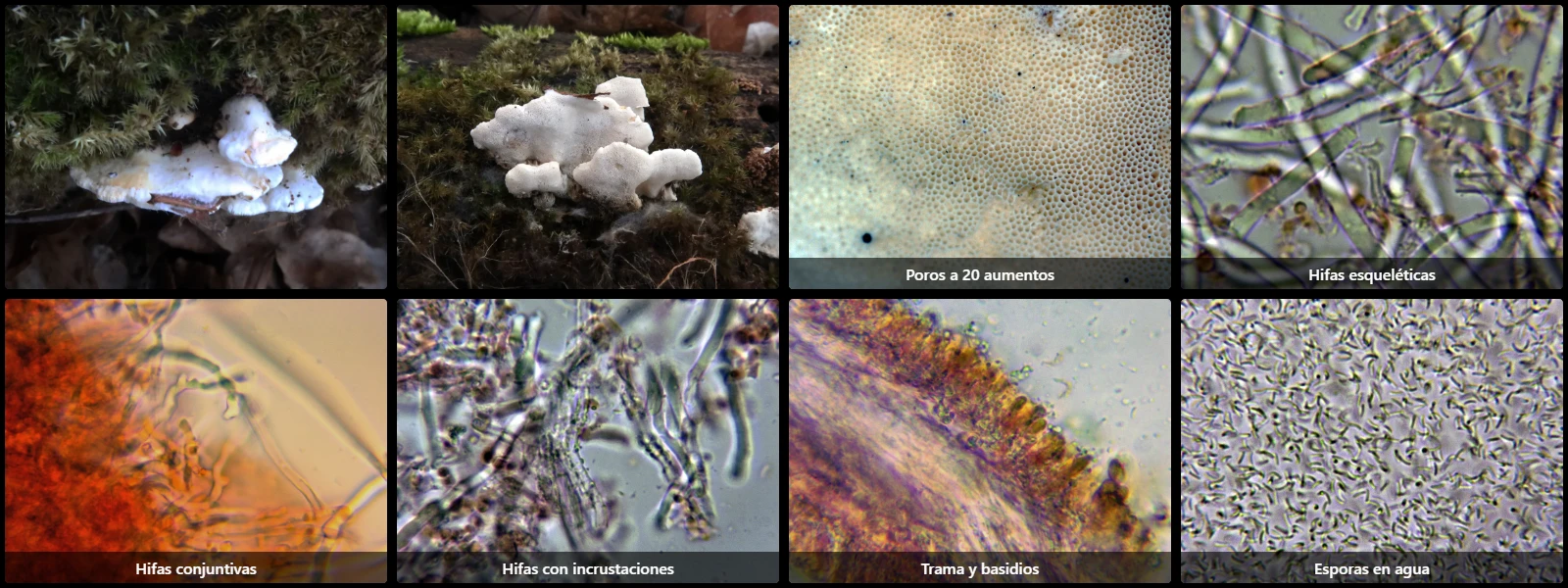
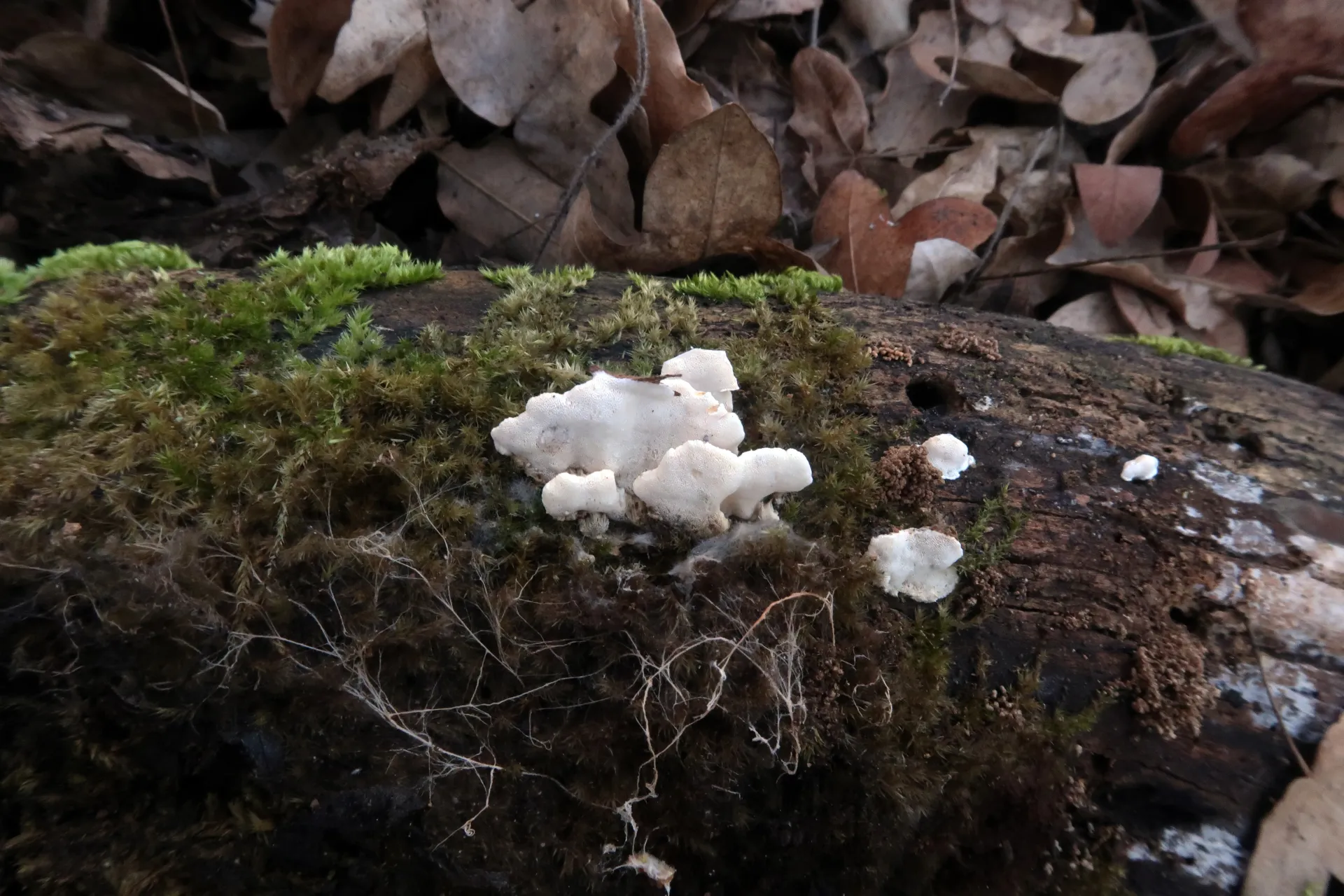
On decaying wood or bark of broadleaves on the ground, with effused-reflexed basidiocarps, pilei often imbricate, up to 3 cm across, white to cream; small circular to angular white pores, 8 to 10 pores per mm; context up to 5 mm thick and tubes up to 2 mm long.
Hyphal system trimitic: skeletal hyphae thick-walled, unbranched, 3 to 5 µm thick; generative hyphae hyaline, thin-walled, sparsely branched, 2 to 3.5 µm thick, septate and clamped; binding hyphae thick-walled, profusely branched, 2 to 2.5 µm thick.
Cystidia absent, though according to literature scattered fusiform cystidioles of similar size to basidioles may occasionally occur.
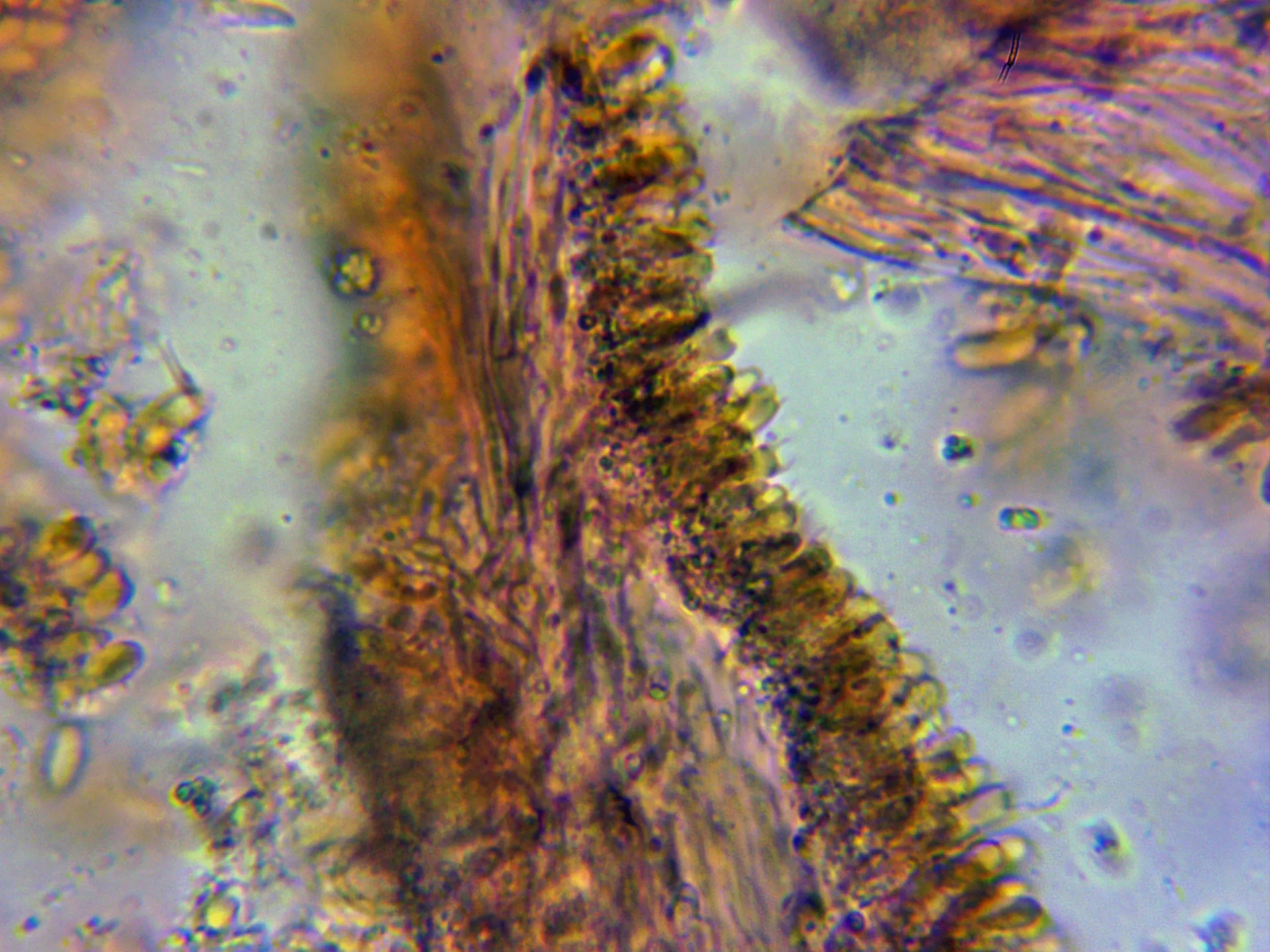
Basidia clavate, 10 to 14 µm long, 4 to 5 µm wide, with basal clamp connections and four-spored.
Spores cylindrical to allantoid, smooth, hyaline, thin-walled, 3 to 4.5 µm long, 0.5 to 1 µm wide, without clearly visible oil droplets inside, and inamyloid in Melzer's reagent.
Geographic references
Map generated from global occurrence data from GBIF. GBIF.
Study measurements
Values in Microns (µm)Macroscopic gallery
Microscopic gallery