


Scutellinia jungneri
(Henn.) Clem.
Study description
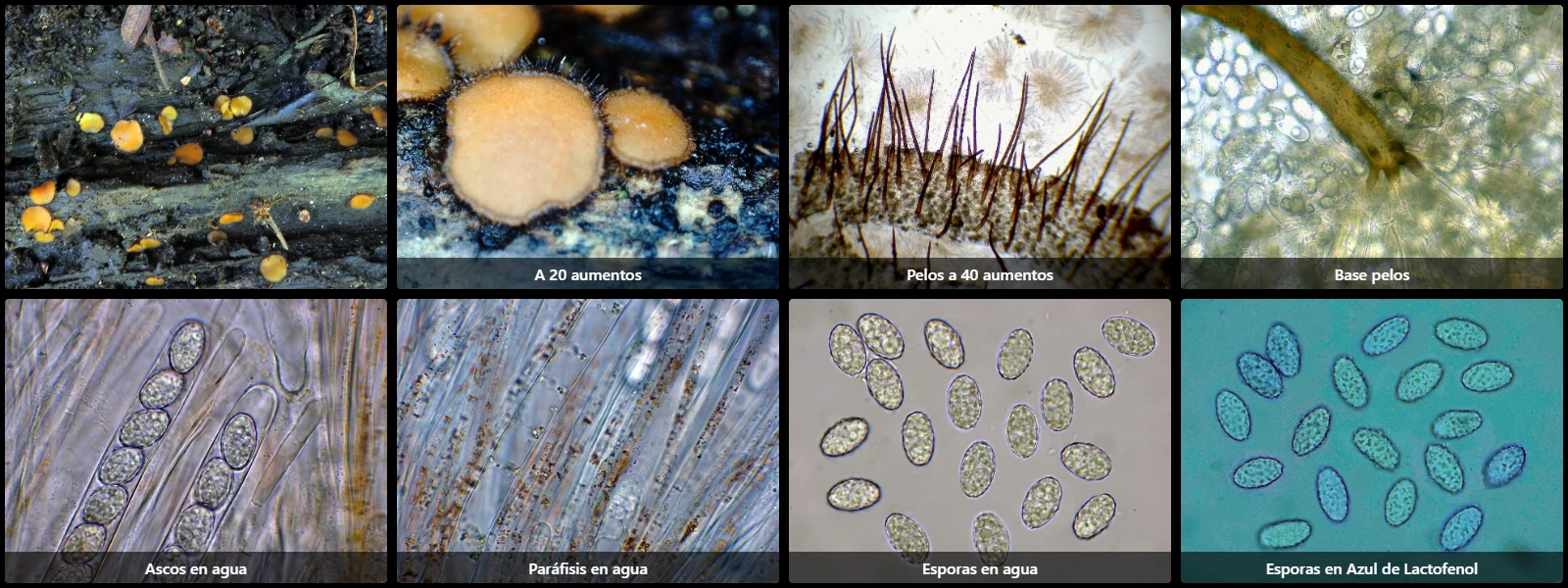
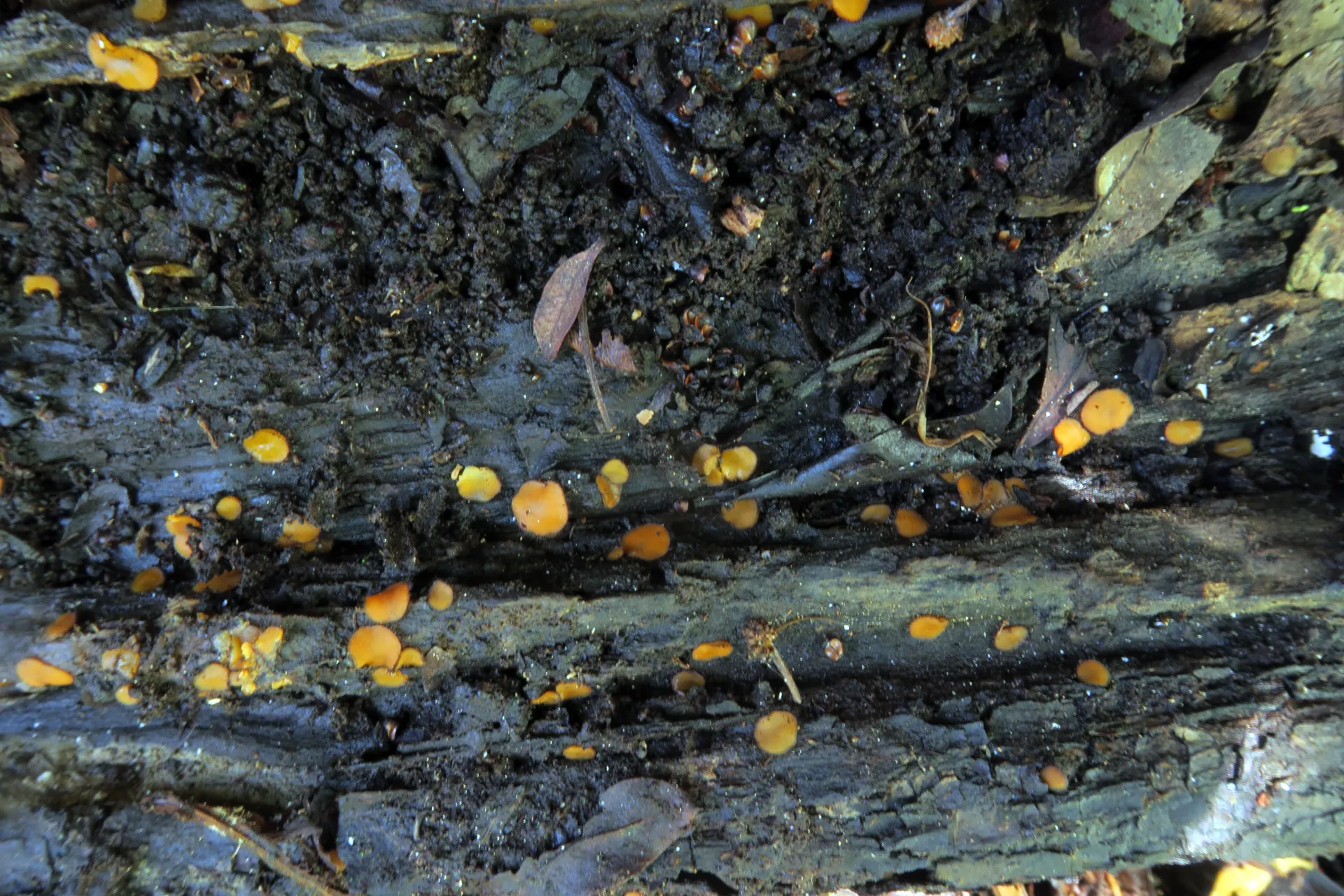
A species typical of tropical climates, on decaying ground wood, with sessile, disc-shaped apothecia with an undulate margin, 0.3 to 0.9 cm across, orange, with the margin fringed with brown hairs.
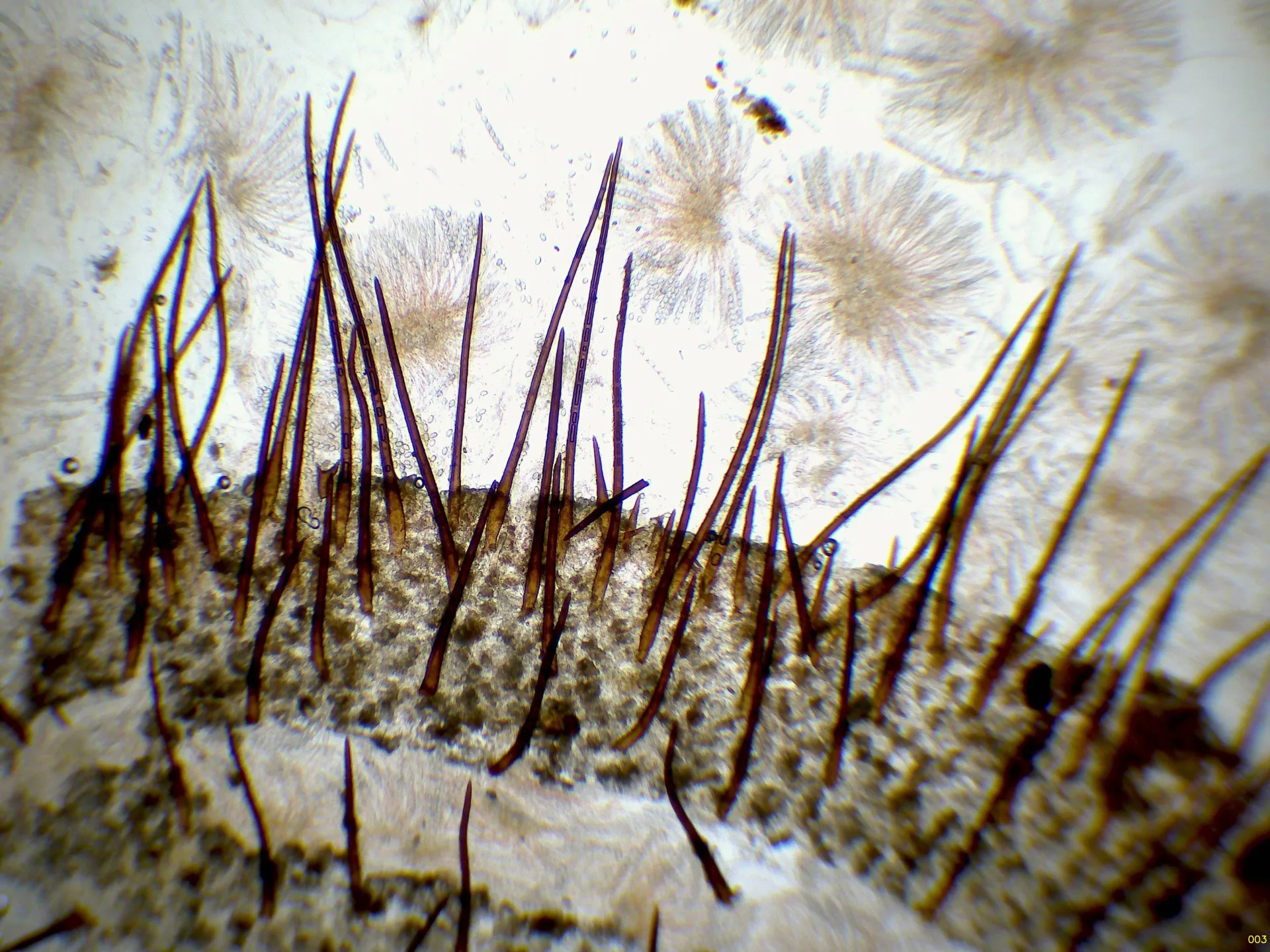
Marginal hairs straight, thick-walled, septate, brown under the microscope, 0.5 to 1.3 mm long, maximum width 50 to 70 µm, with a multifurcate base.
Asci cylindrical, eight-spored, operculate, 170 to 210 µm long, 13 to 17 µm wide, with spores arranged in an oblique uniseriate row, and inamyloid in Melzer's reagent.
Paraphyses filiform, multiseptate, with abundant orange granular pigment inside, 3 to 3.5 µm wide, with terminal cell enlargements of 6 to 7.5 µm, projecting above the asci.
Ascospores ellipsoidal, hyaline, with warts up to 0.7 µm high, 18 to 21 µm long, 10 to 12.5 µm wide, surface covered with coarse warts coalescing into short ridges, visible only in lactophenol cotton blue.
Herbarium material available: JTP2756/24.
Geographic references
Map generated from global occurrence data from GBIF. GBIF.
Study measurements
Values in Microns (µm)Macroscopic gallery
Microscopic gallery
Genetic / Phylogenetic Study
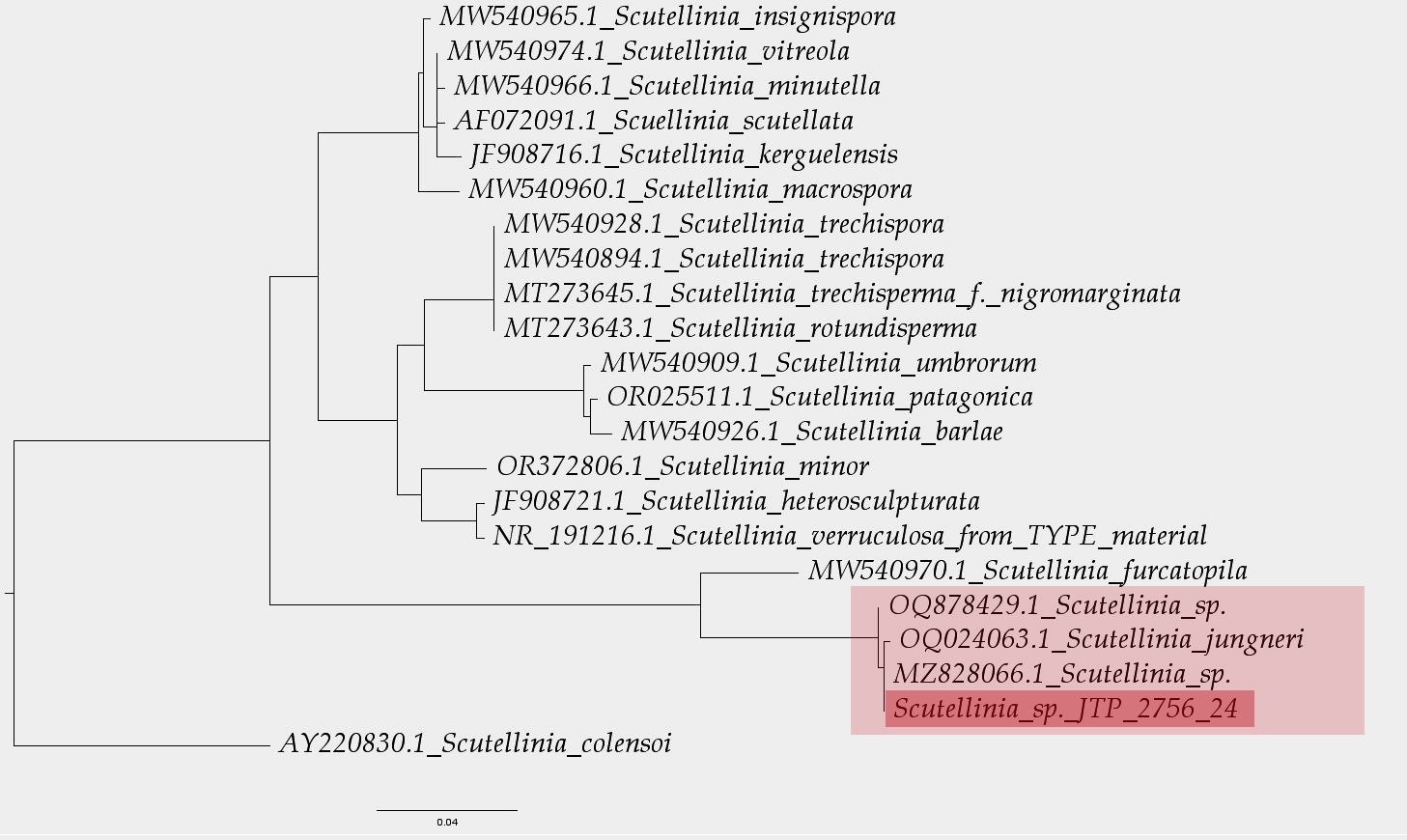
Phylogenetic Tree
Sequences and Data
Sequencing (Chromatogram)
Select a file to visualize the chromatogram