Scopuloides rimosa
(Cooke) Jülich
Study description
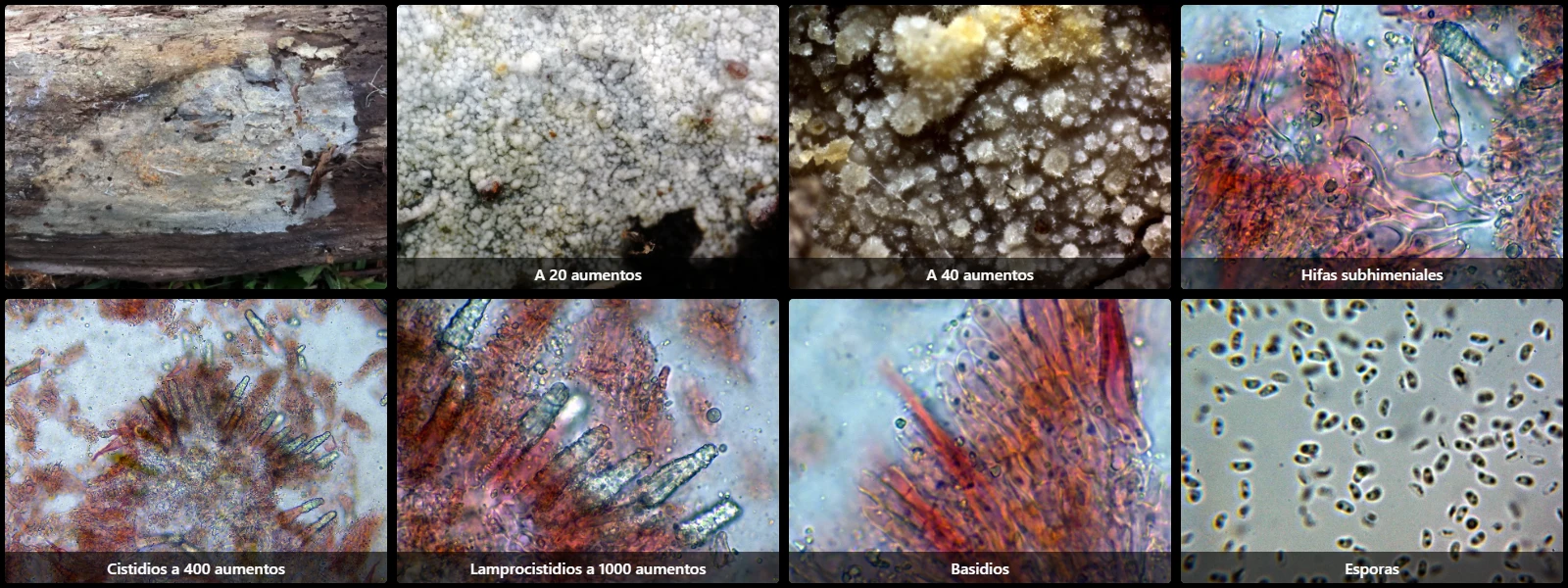
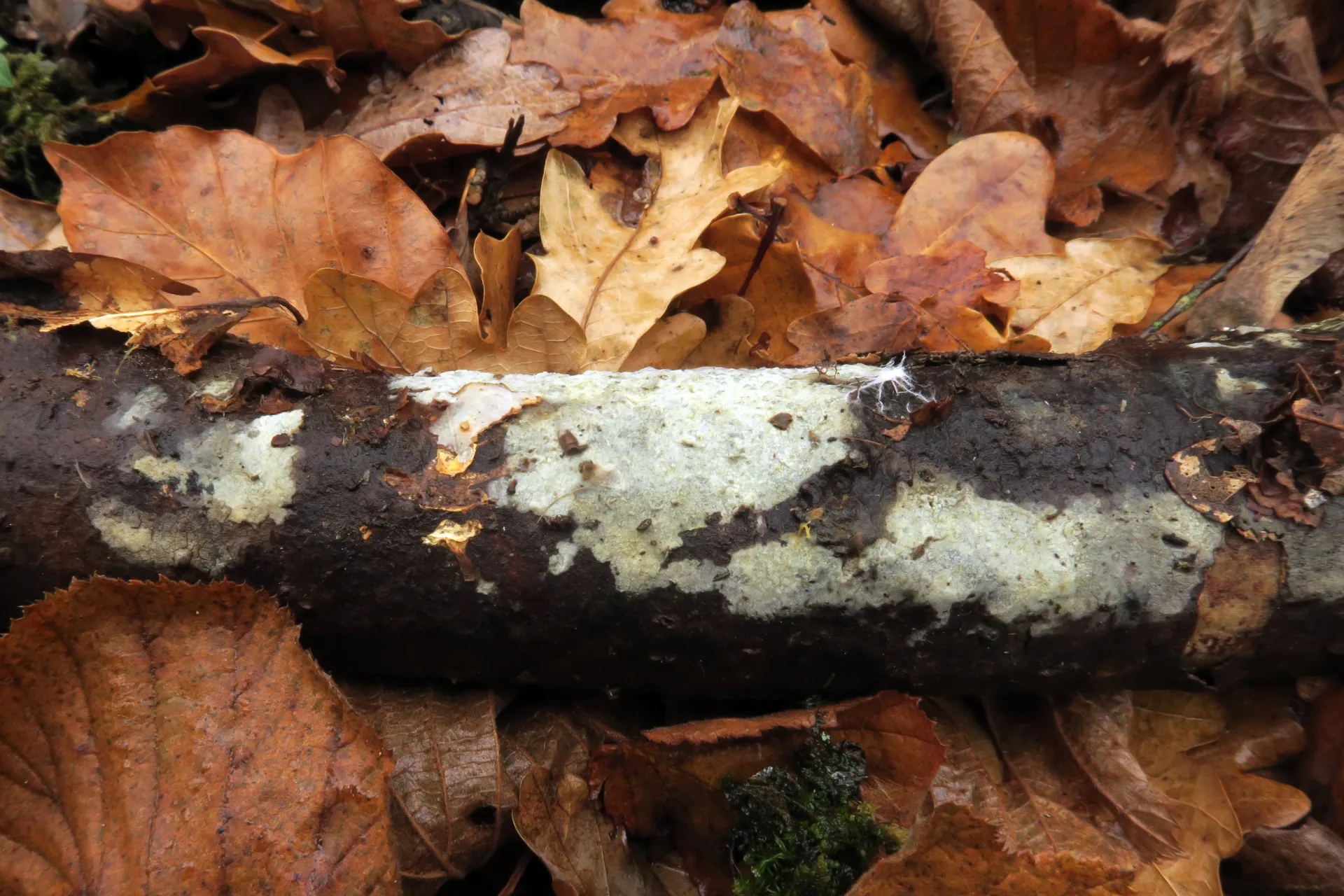
On rotten decaying wood on the ground, especially beech, with resupinate basidiomes tightly adhering to the substrate, greyish white with bluish tints; hymenium formed by fine short aculei up to 0.3 mm high; waxy in consistency.
Hyphal system monomitic, formed by hyaline, thin- to thick-walled hyphae, densely interwoven, 4 to 8 µm in diameter, profusely branched, septate with simple septa (without clamp connections).
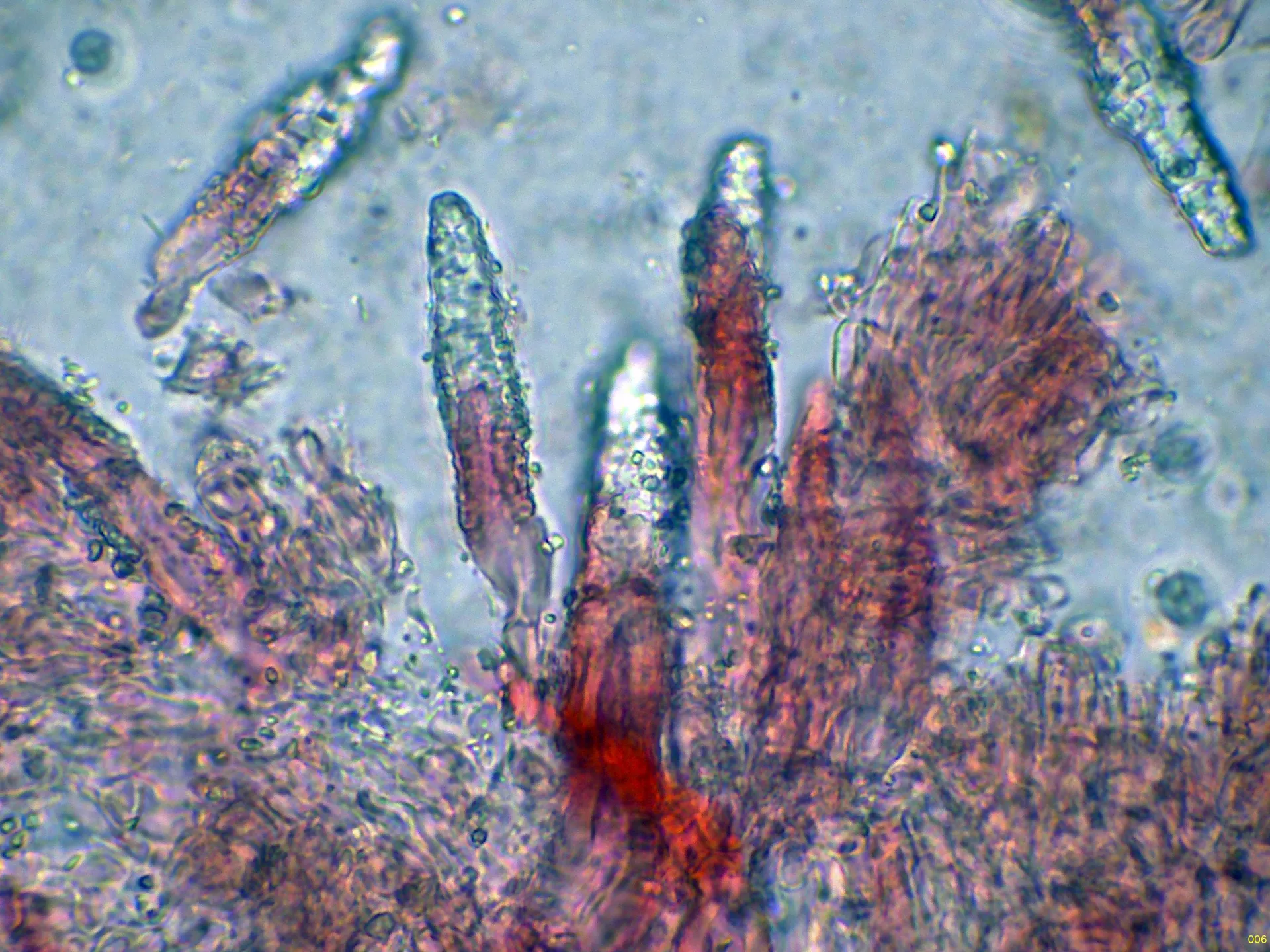
Cystidia very abundant, very thick-walled, of lamprocystidium type, 35 to 50 µm long and 6 to 12 µm wide, intermixed with some emergent cylindrical septocystidia up to 90 µm high.
Basidia cylindrical-clavate, 20 to 30 µm long, 3 to 4.5 µm wide, simple-based and four-spored.
Spores ellipsoidal to very slightly allantoid, smooth, hyaline, thin-walled, with an eccentric apiculus at one end, 3.5 to 4.5 µm long, 1.5 to 2.5 µm wide, containing oil droplets of varying size inside, and inamyloid in Melzer's reagent.
Herbarium material available: JTP2682/25.
Geographic references
Map generated from global occurrence data from GBIF. GBIF.
Study measurements
Values in Microns (µm)Macroscopic gallery
Microscopic gallery