Russula illota
Romagn.
Study description
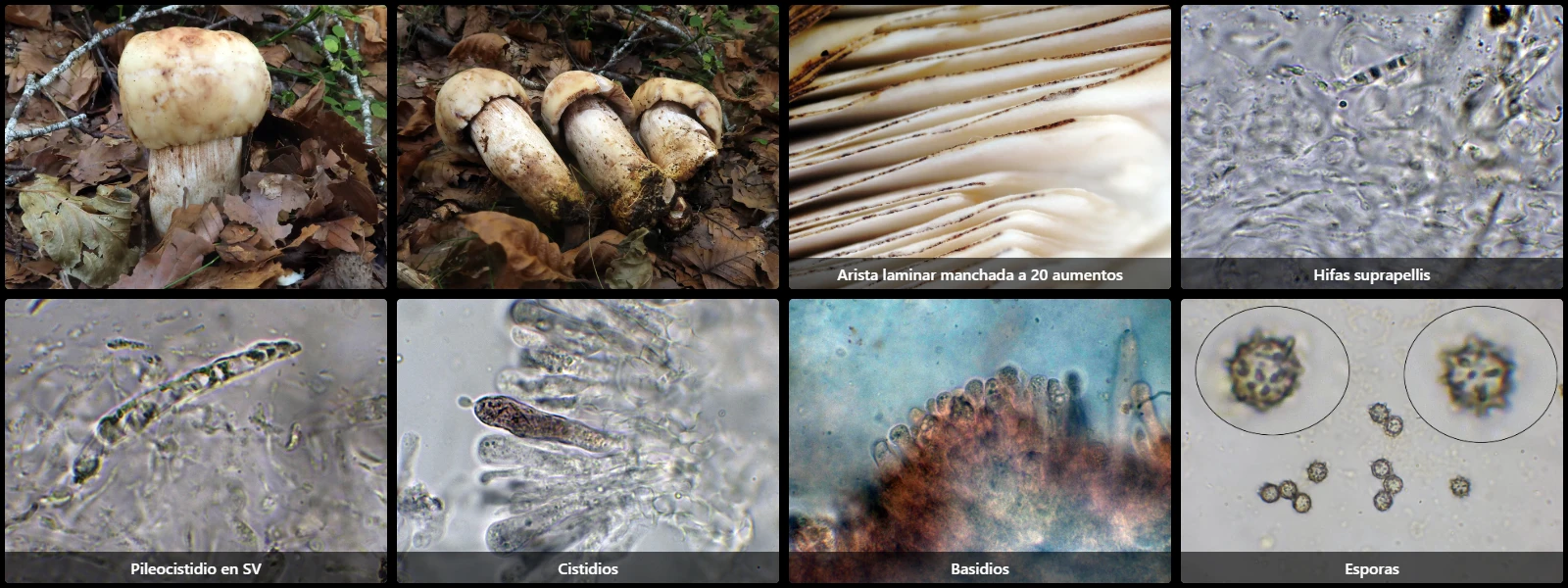
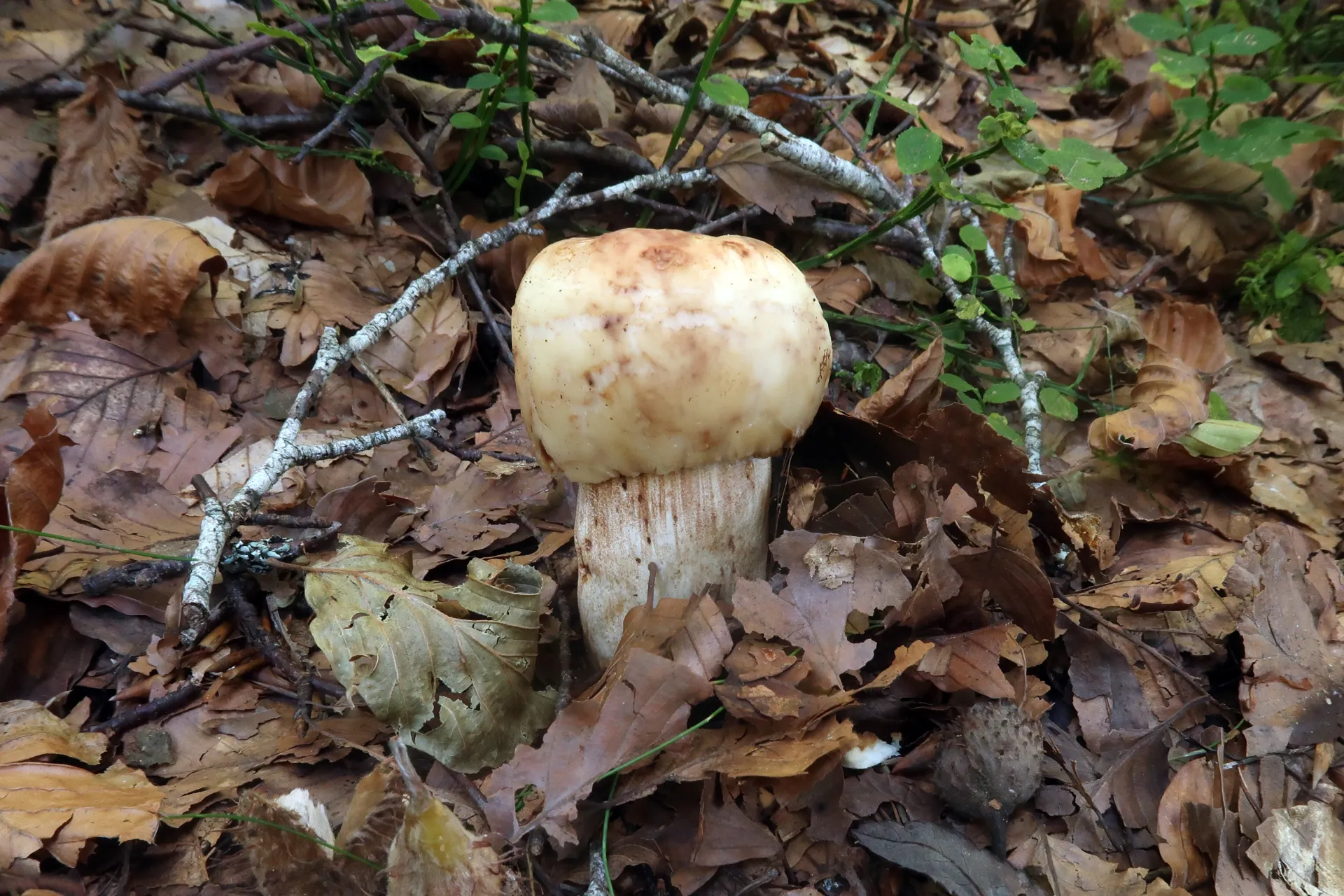
Species associated with calcareous soils under Fagus or Picea, with a hemispherical pileus 4 to 15 cm in diameter, ochre with reddish-brown flushes; pale cream spore print; lamellar edges with characteristic abundant blackish spots; cavernous and hollow stipe; unpleasant odor of bitter almonds and acrid, nauseating taste.
Cuticle formed by filamentous hyphae, interwoven, 3 to 5 µm wide, widely spaced by gelification, with abundant terminal elements acting as pileocystidia, cylindrical to subulate, 3 to 6 µm wide, containing brownish granular pigment, septate with simple septa.
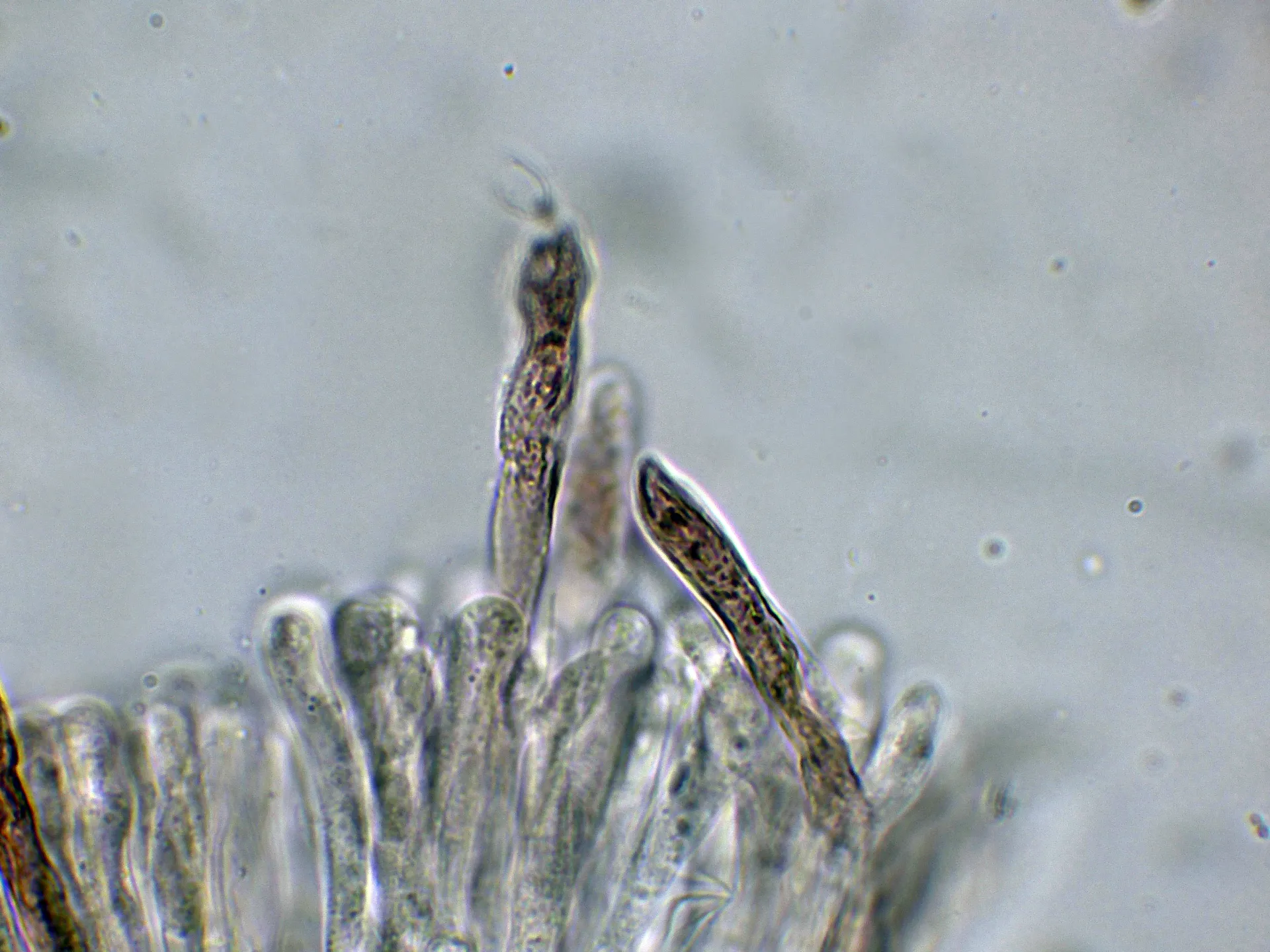
Cheilocystidia and pleurocystidia cylindrical to fusiform, mostly with an apical appendage, 50 to 90 µm long, 6 to 10 µm wide, with granular content that darkens with sulphovanillin.
Basidia clavate, 50 to 65 µm long, 10 to 12 µm wide, simple-based and four-spored.
Spores subglobose, with warts up to 1.3 µm high, 7 to 8.5 µm long, 6 to 7.5 µm wide, ornamented with coarse warts that occasionally join to form short ridges.
Geographic references
Map generated from global occurrence data from GBIF. GBIF.
Study measurements
Values in Microns (µm)Macroscopic gallery
Microscopic gallery