

Russula foetens
Pers.
Study description
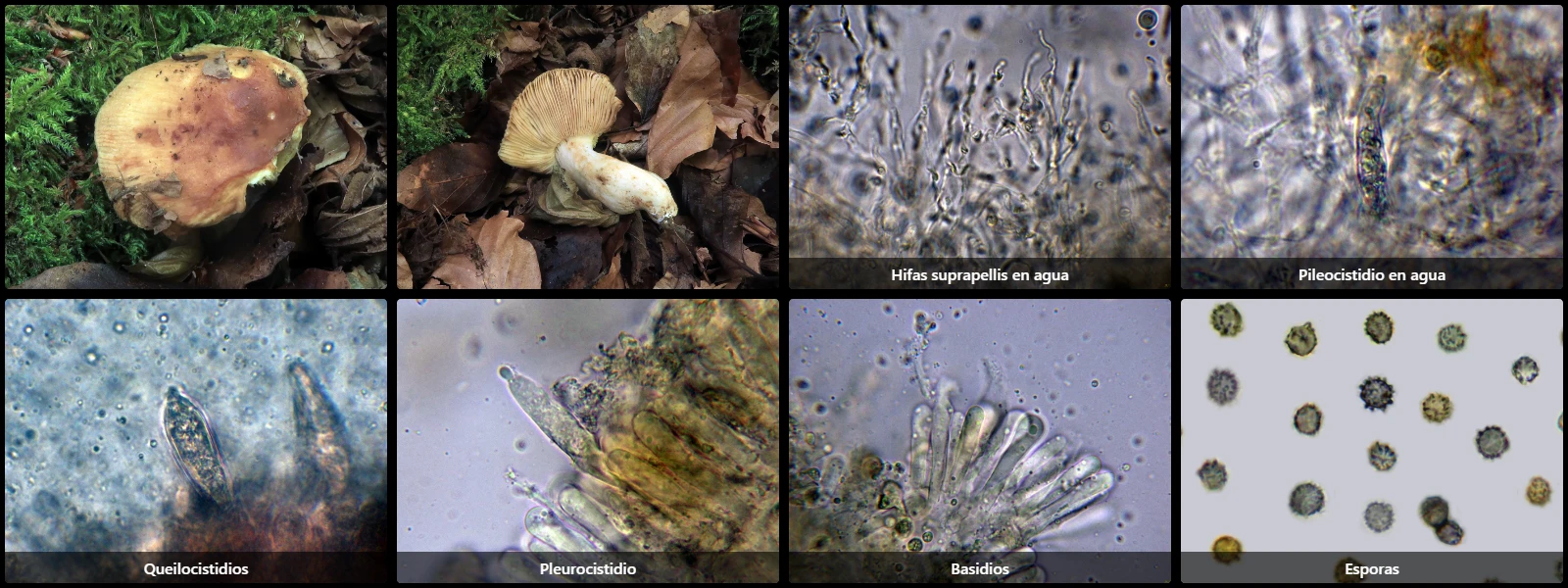
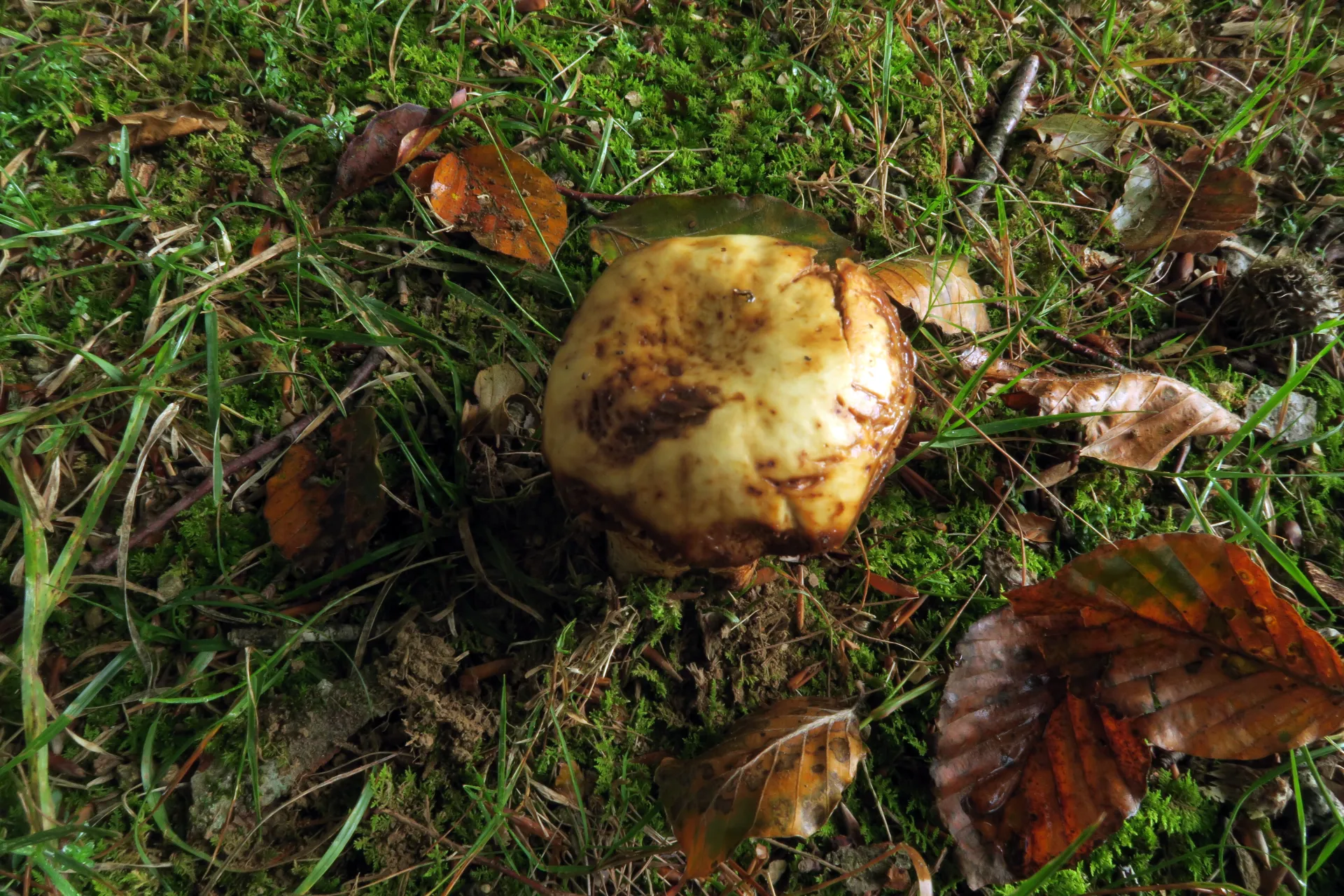
Species typical of broadleaf trees, especially Quercus or Fagus, with a hemispherical to flattened cap, 4 to 8 cm in diameter, slimy yellowish-cream surface reddish-brown in the center, white to cream gills staining reddish-brown, a hollow whitish to pale cream stipe, an unpleasant odour, and an acrid taste.
Cuticle formed by a superficial layer of cylindrical, hyaline hyphae widely separated from each other by gelification, 2.5 to 5 µm wide, with numerous emergent hair-like endings with rounded apices, septate with simple septa, with some scattered subcylindrical to fusiform pileocystidia, 4 to 7 µm wide, containing abundant blackish-brown contents inside.
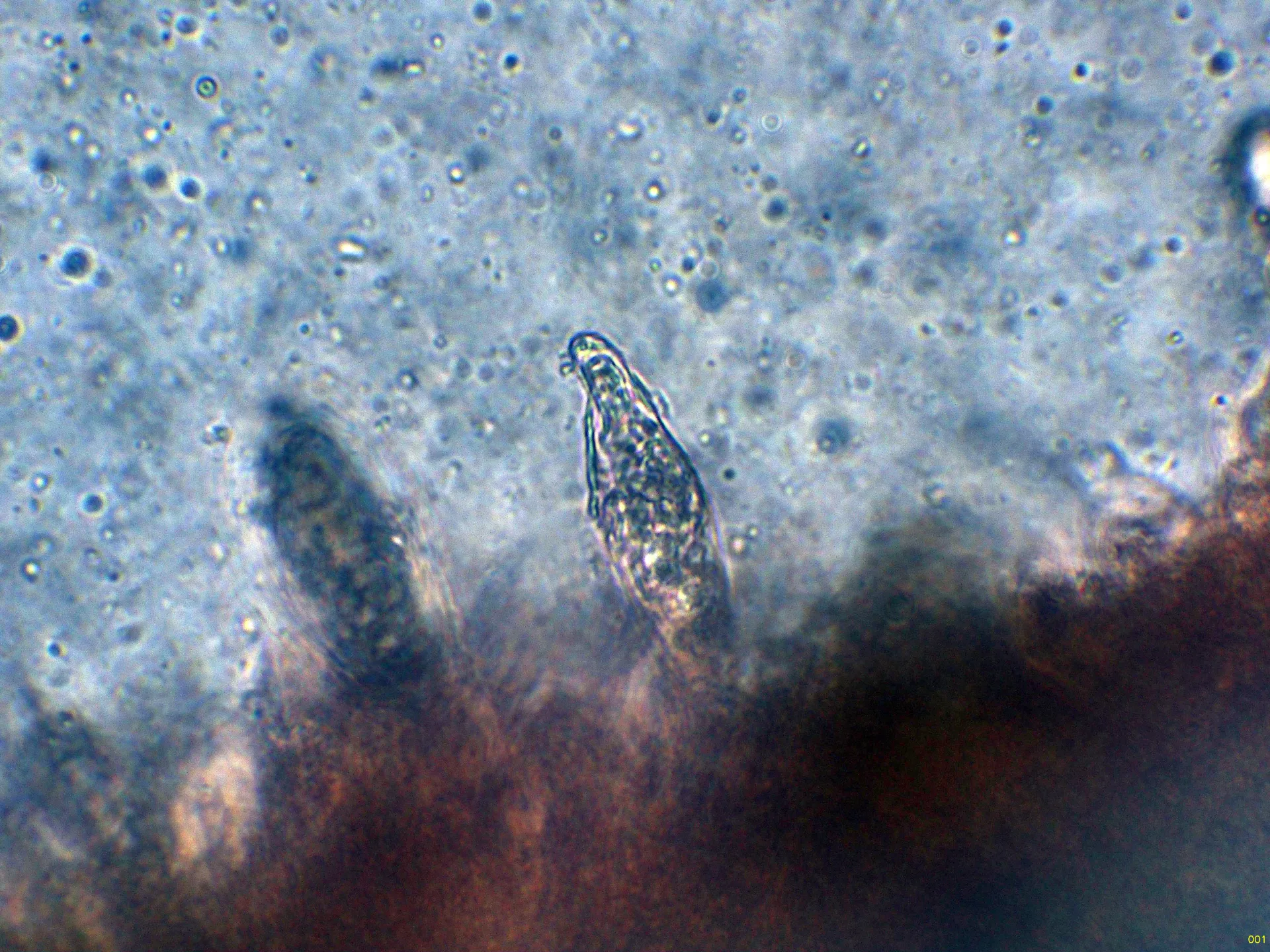
Cheilocystidia clavate to fusiform, mucronate, 55 to 85 µm long by 7 to 12 µm wide, with abundant blackish-brown contents inside.
Pleurocystidia fusiform, with an apical appendage, 70 to 95 µm long by 9 to 11 µm wide.
Basidia clavate, 40 to 55 µm long by 10 to 13 µm wide, with a simple base and tetrasporic.
Spores subglobose to ovoid, with warts up to 1.5 µm high, 6.5 to 9 µm long by 6 to 8.5 µm wide, ornamented with coarse warts, some interconnected but without forming long ridges, and amyloid in Melzer's reagent.
Herbarium material available: JTP2810/26.
Geographic references
Map generated from global occurrence data from GBIF. GBIF.
Study measurements
Values in Microns (µm)Macroscopic gallery
Microscopic gallery