Russula faginea
Romagn.
Study description
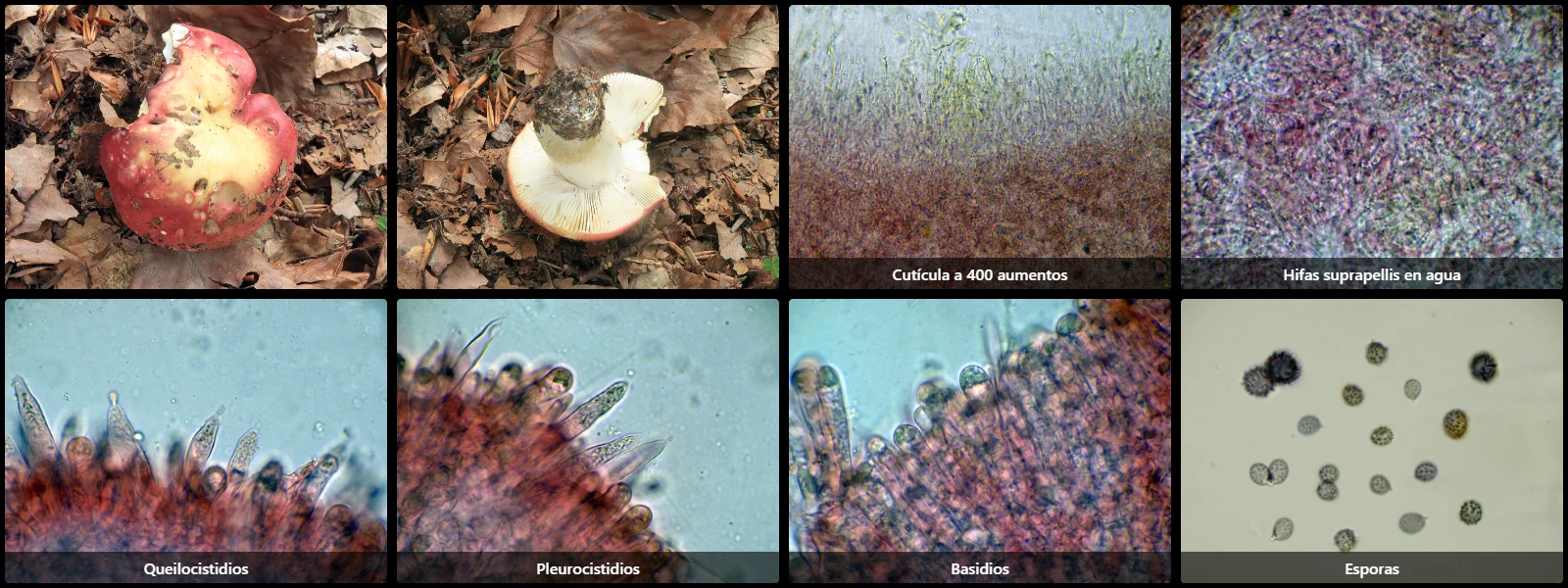
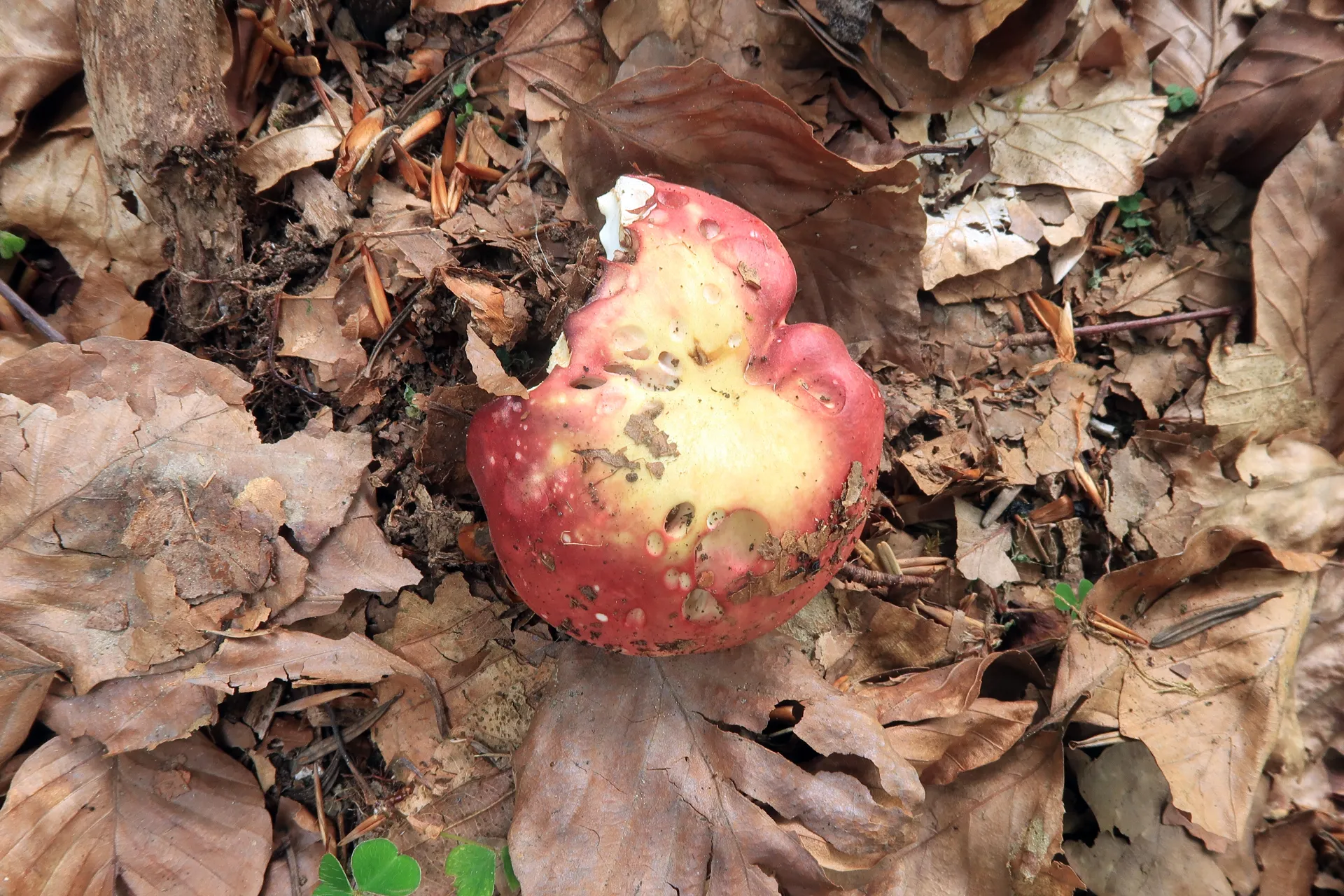
A species, as its epithet suggests, typical of beechwoods (Fagus), with a convex to applanate pileus 5 to 12 cm in diameter, carmine red with a cream-colored center; pale yellow spore print; robust white stipe turning brownish upon handling; cooked shellfish odor and sweet taste.
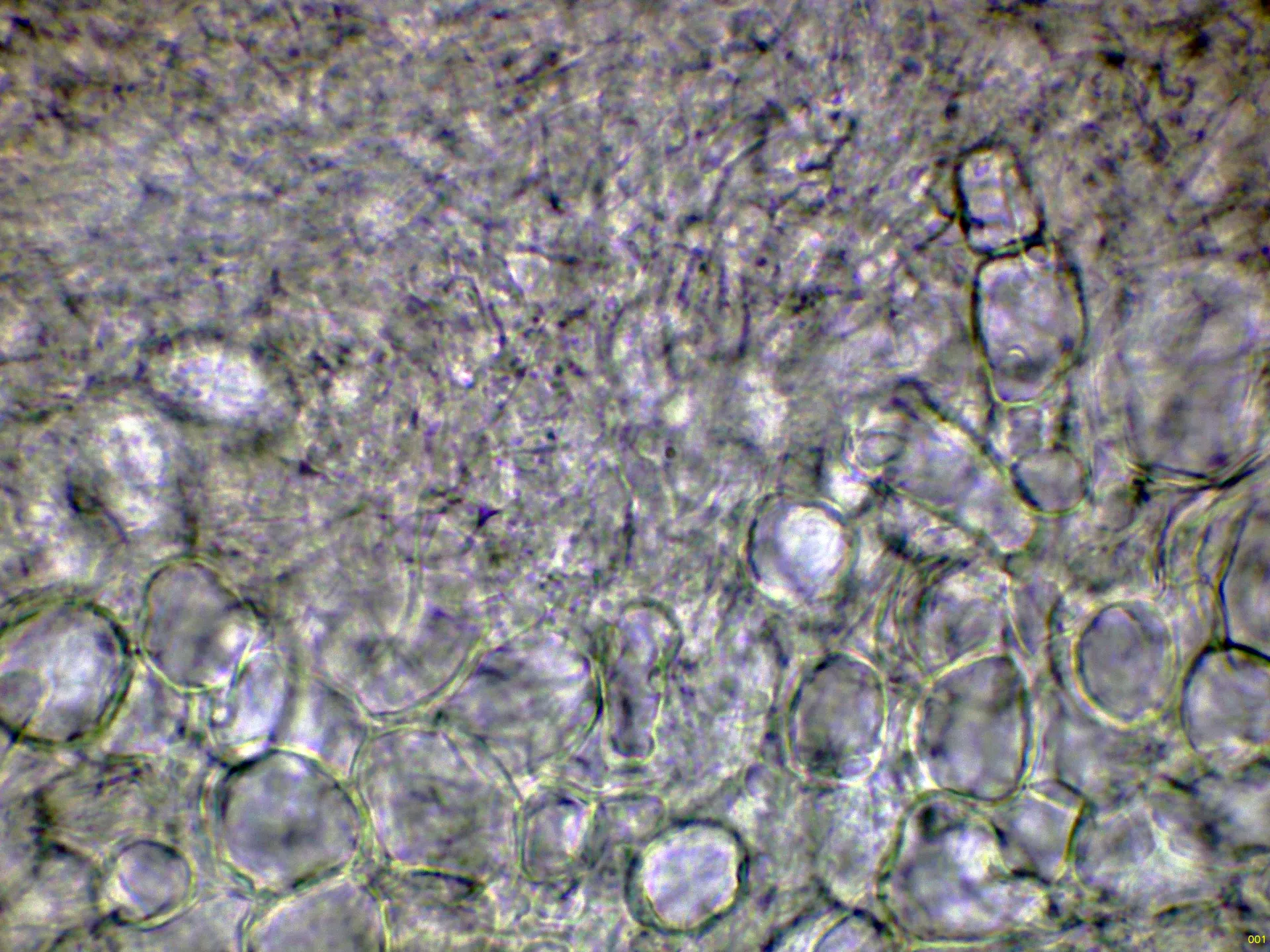
Cuticle formed by cylindrical hyphae densely interwoven, the upper ones slightly separated by gelification, 4 to 8 µm wide, with terminal hyphae acting as pileocystidia, slightly branched, 2 to 4 µm wide, with faint granular content inside, septate with simple septa.
Cheilocystidia abundant, fusiform, some with apical appendages, 45 to 80 µm long and 11 to 14 µm wide.
Pleurocystidia scattered, similar, with a short apical neck, 60 to 100 µm long, 11 to 13 µm wide, and like the cheilocystidia containing granular matter inside.
Basidia clavate, 45 to 60 µm long, 11 to 15 µm wide, simple-based and four-spored.
Spores subglobose to ellipsoidal, with warts up to 1.3 µm high, 8 to 10.5 µm long, 7 to 9.5 µm wide, ornamented with numerous isolated warts, some joined together, but without forming ridges.
Herbarium material available: JTP2564/25.
Geographic references
Map generated from global occurrence data from GBIF. GBIF.
Study measurements
Values in Microns (µm)Macroscopic gallery
Microscopic gallery