Russula acrifolia
Romagn.
Study description
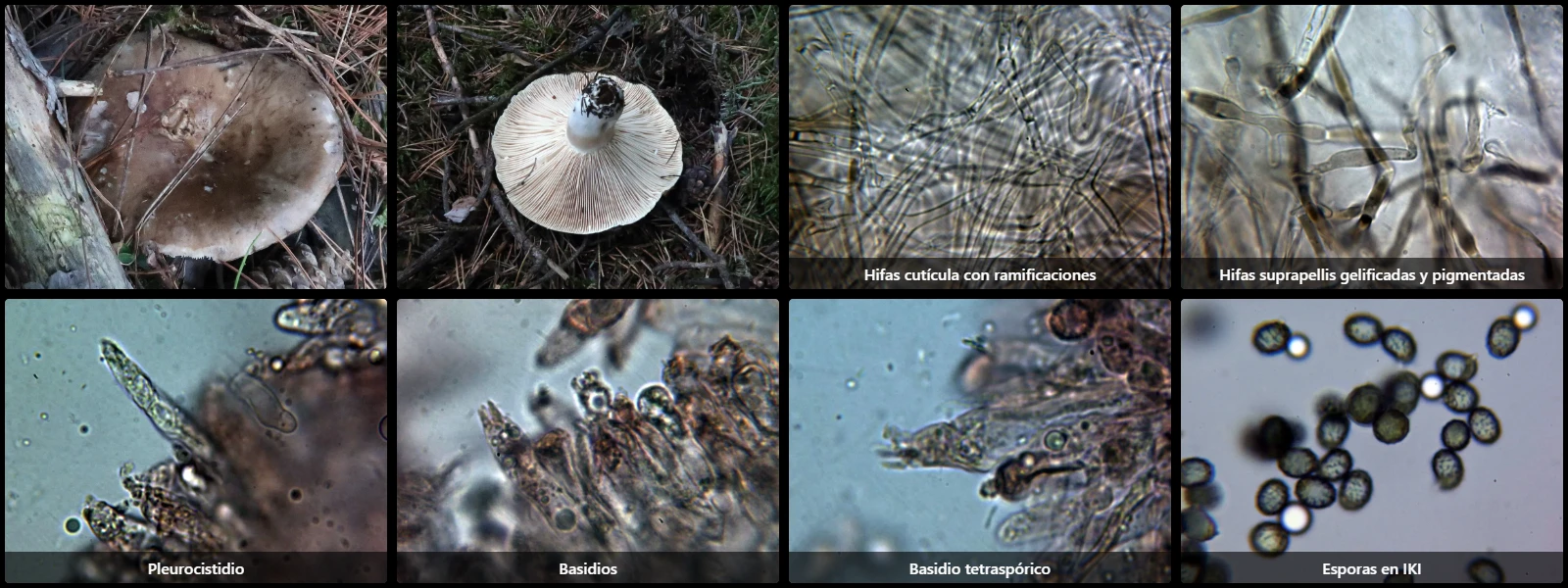
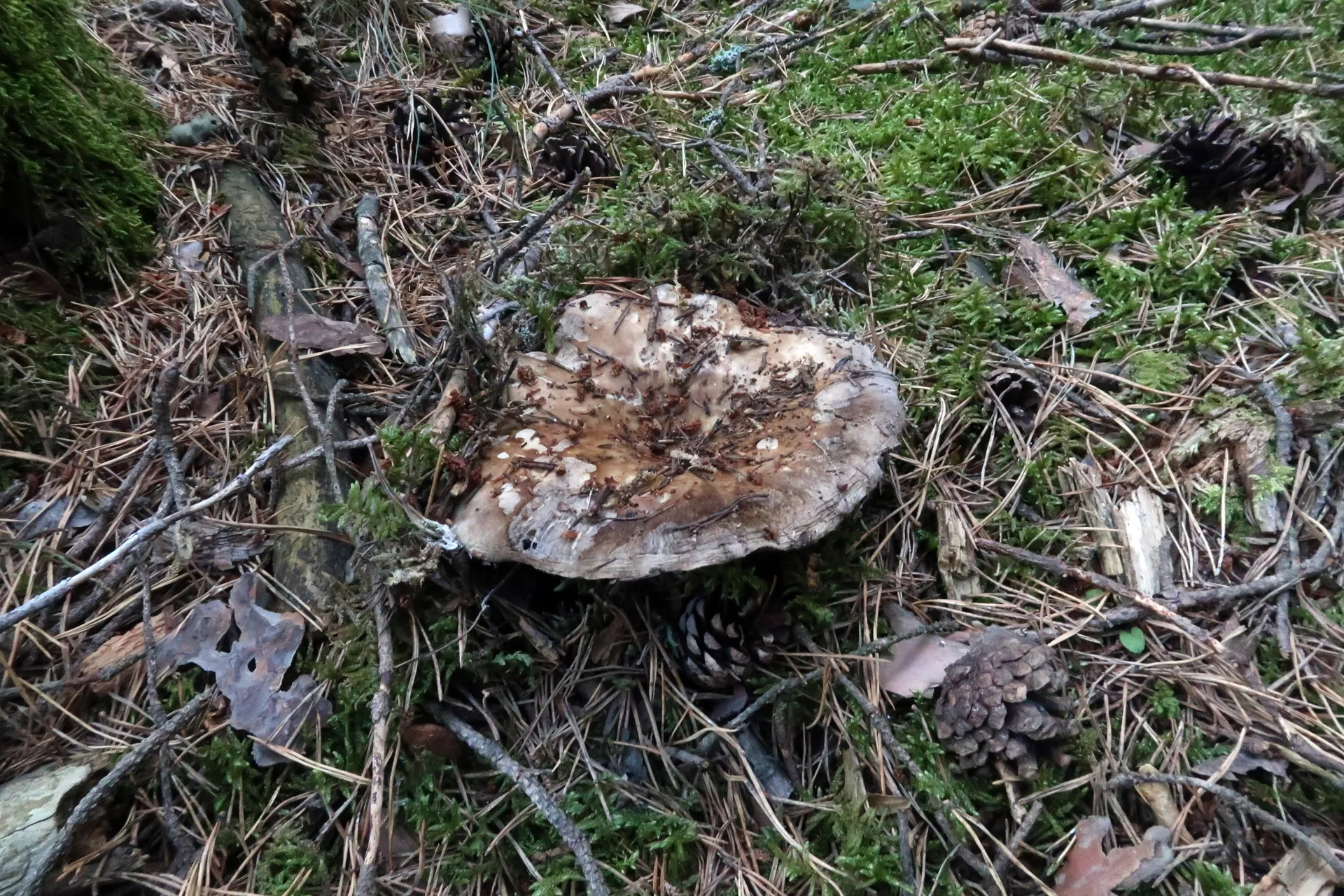
Species typical of both conifers and broadleaves, with a greyish-brown pileus tinged with reddish hues; viscid, poorly peeling cuticle; very acrid lamellae; pure white spore print; cylindrical greyish-brown stipe reddening upon bruising.
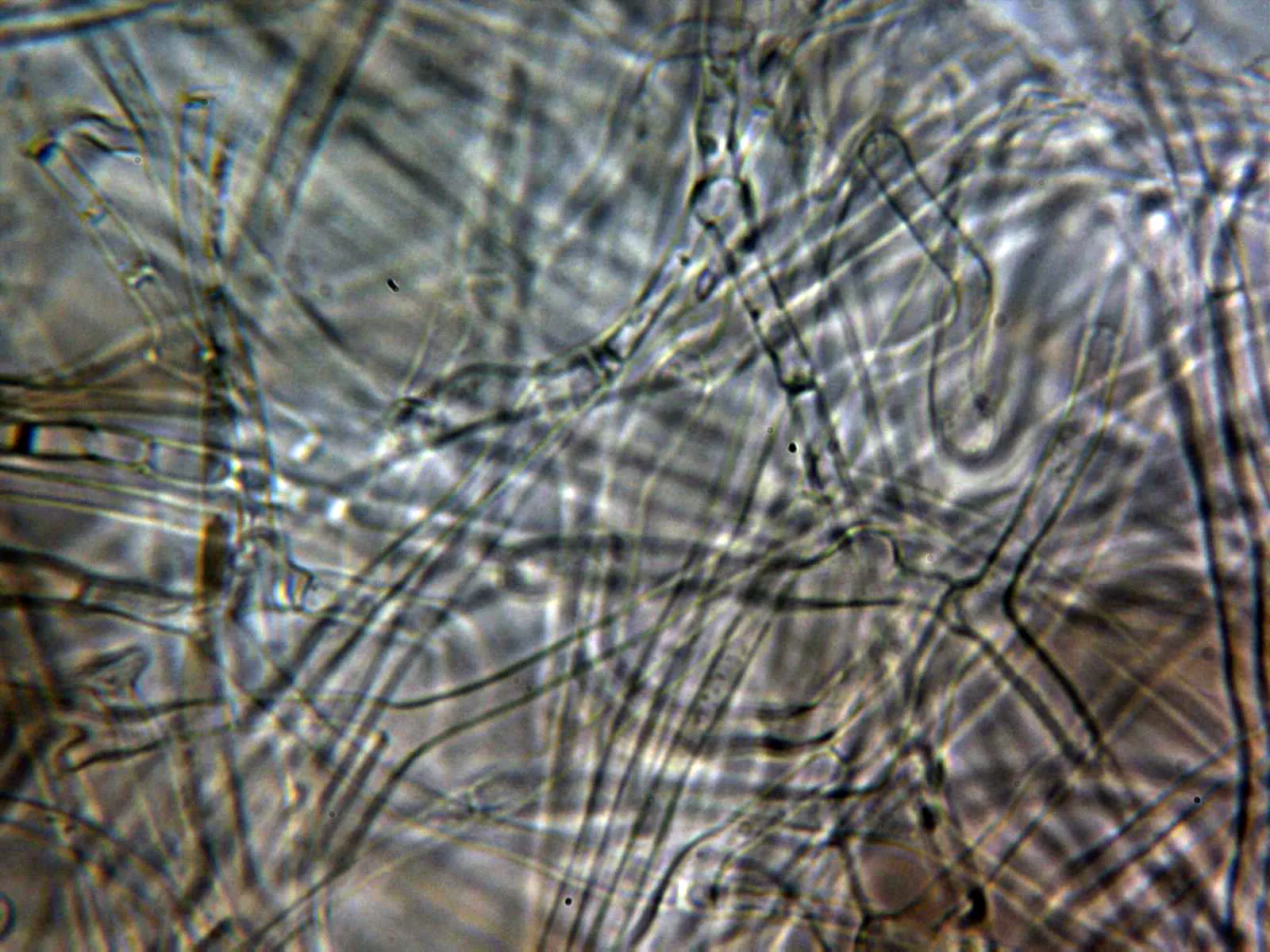
Cuticle formed by cylindrical, hyaline, interwoven hyphae 3 to 5 µm wide, slightly separated by gelification, profusely branched, with terminal hyphae acting as pileocystidia 4 to 6 µm wide with abundant greyish-brown intracellular pigment, septate with simple septa.
Cheilocystidia cylindrical, with a pointed apex, 35 to 50 µm long and 5 to 6 µm wide.
Pleurocystidia similar in morphology to cheilocystidia but larger, 50 to 100 µm long and 5 to 7 µm wide; both bearing slightly refringent opaque content inside.
Basidia clavate, 40 to 55 µm long, 9 to 11 µm wide, simple-based and four-spored.
Spores subglobose to ellipsoidal, with warts up to 0.5 µm high, with a prominent hyaline apiculus at one end, 6 to 8 µm long, 5.5 to 6.5 µm wide, surface with abundant warts interconnected by fine low ridges, forming a faint partial reticulum.
Geographic references
Map generated from global occurrence data from GBIF. GBIF.
Study measurements
Values in Microns (µm)Macroscopic gallery
Microscopic gallery