Rosellinia hyalospora
Theiss.
Study description
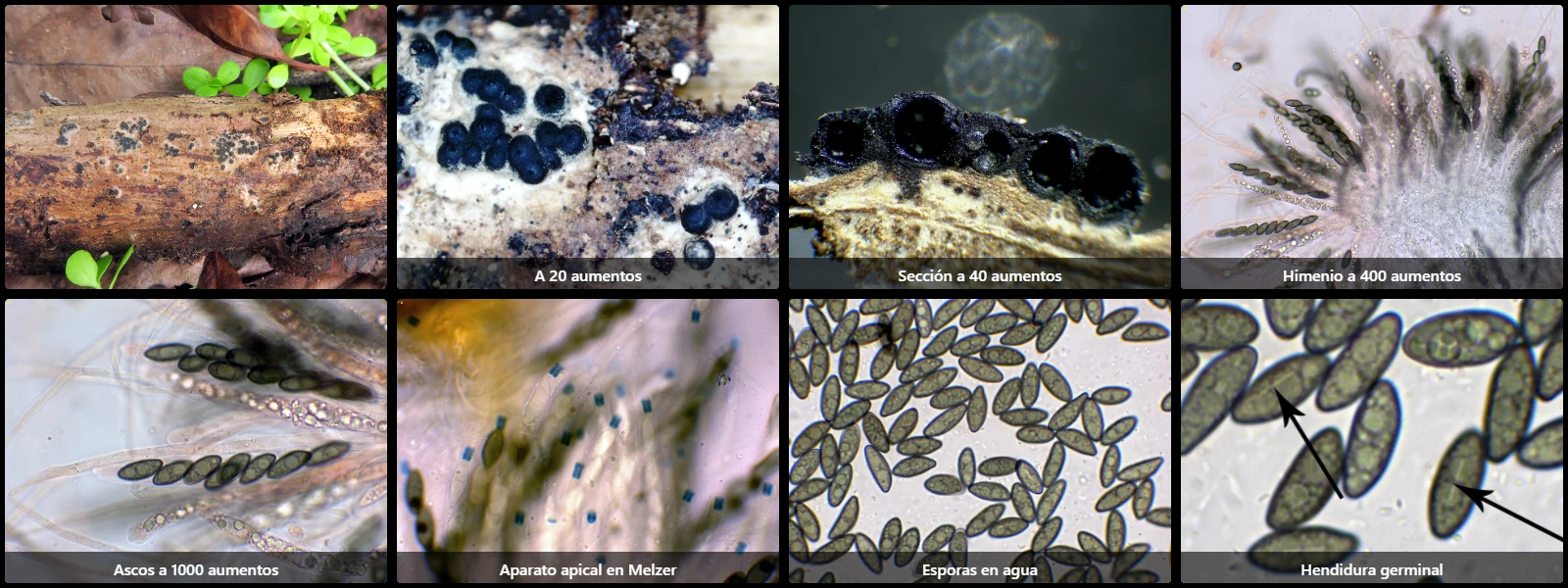
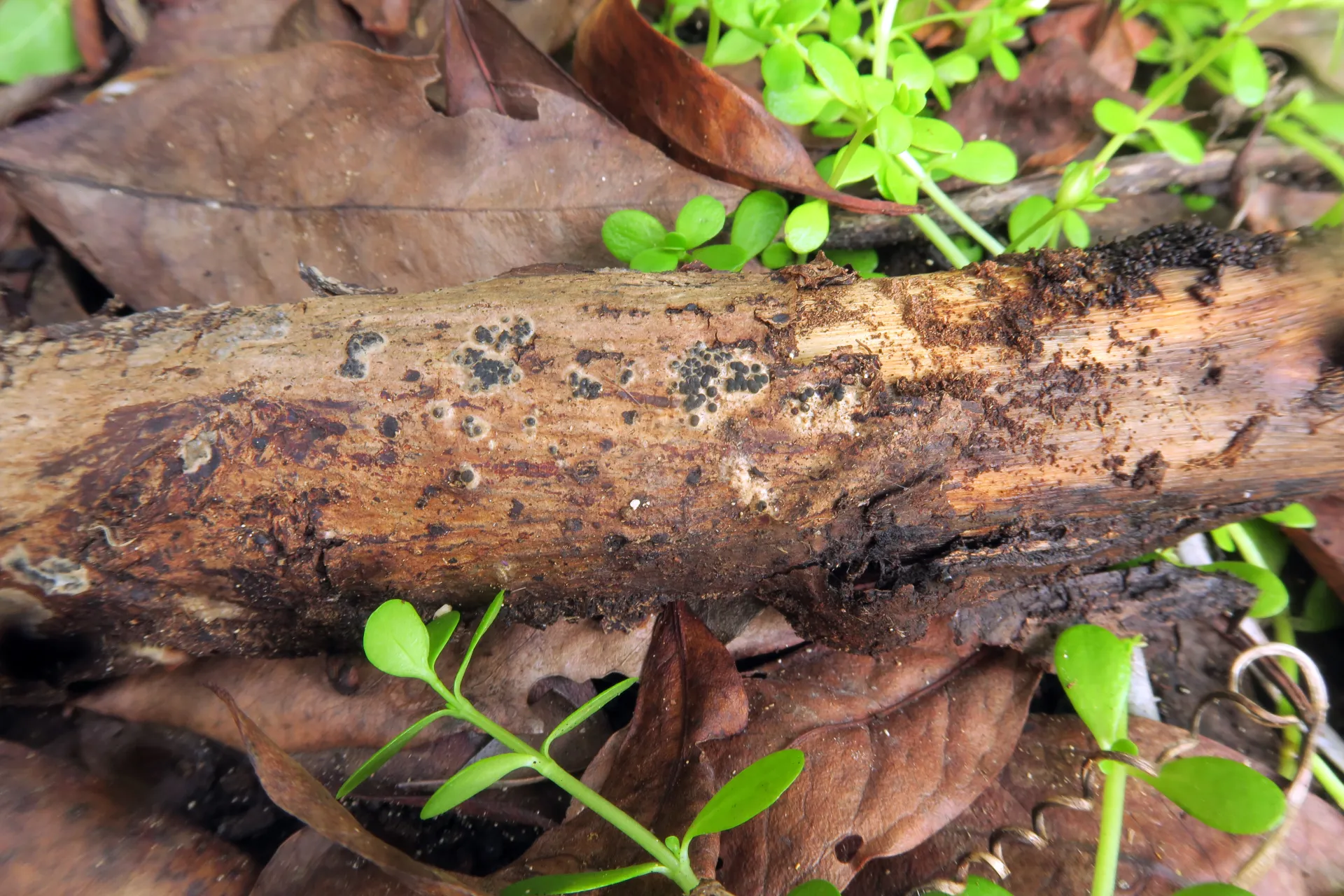
A poorly documented species of tropical climates, collected in mangroves on decaying ground wood, with carbonaceous stromata bearing small subglobose perithecia only 0.5 to 0.7 mm in diameter, black, without a persistent common subiculum, leaving only faint pale brown felted remnants. Its specific epithet refers to the weak pigmentation of its spores compared to its congeners.
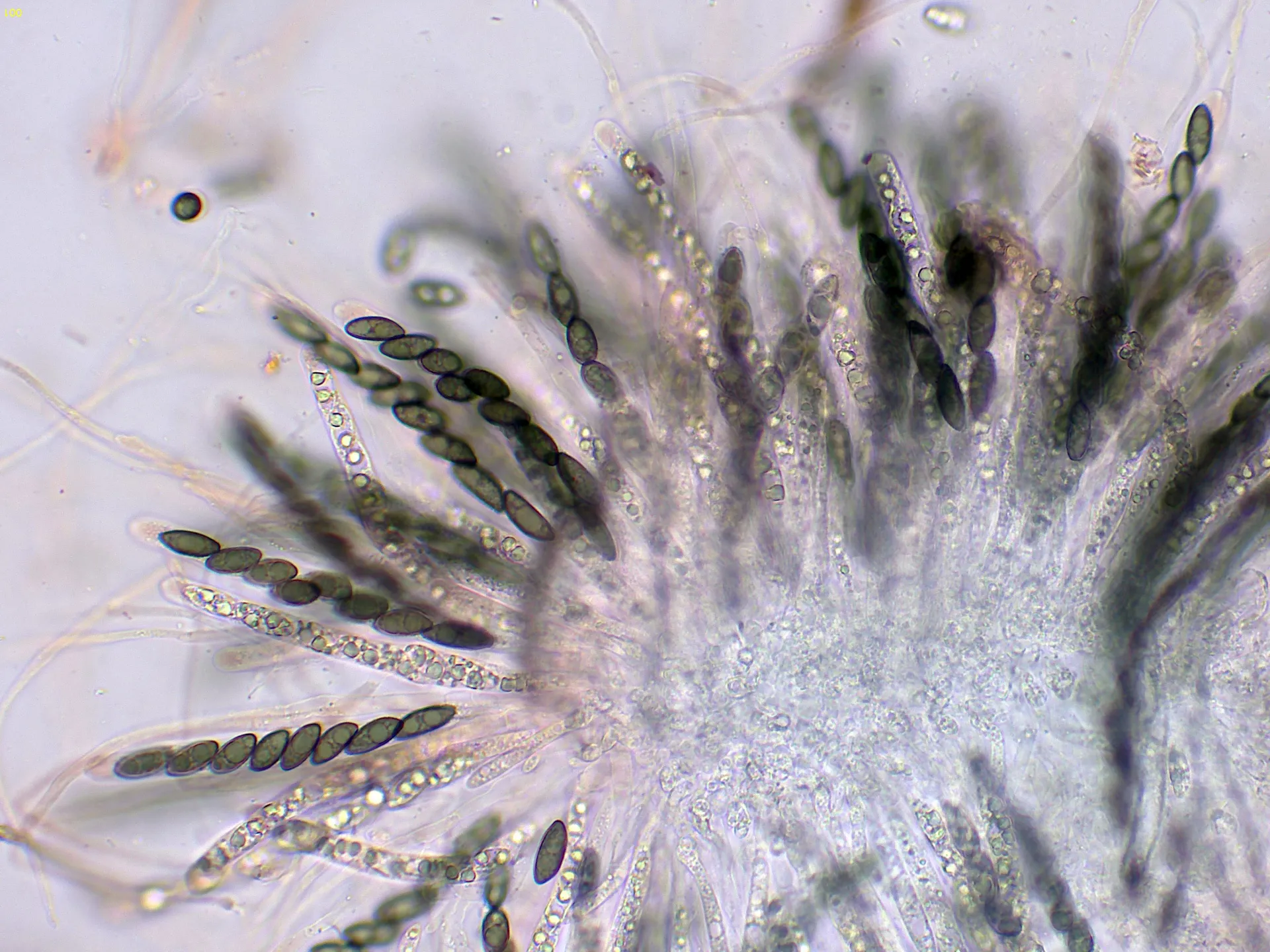
Asci cylindrical, eight-spored, 150 to 180 µm long, 10 to 13 µm wide, with spores arranged in a single row (uniseriate), with an amyloid apical apparatus 4.5 to 6 µm long and 3 to 4 µm wide.
Interascal tissue consisting of filamentous, hyaline paraphyses, 2 to 3 µm wide, projecting considerably above the asci.
Ascospores ellipsoidal, asymmetrical with one flattened side, smooth, pale greenish brown under the microscope in water, 15 to 21 µm long, 6.5 to 8 µm wide, with a straight germ slit occupying almost half the total spore length.
Geographic references
Map generated from global occurrence data from GBIF. GBIF.
Study measurements
Values in Microns (µm)Macroscopic gallery
Microscopic gallery