Rosellinia australiensis
Crous & P.A.Barber
Study description
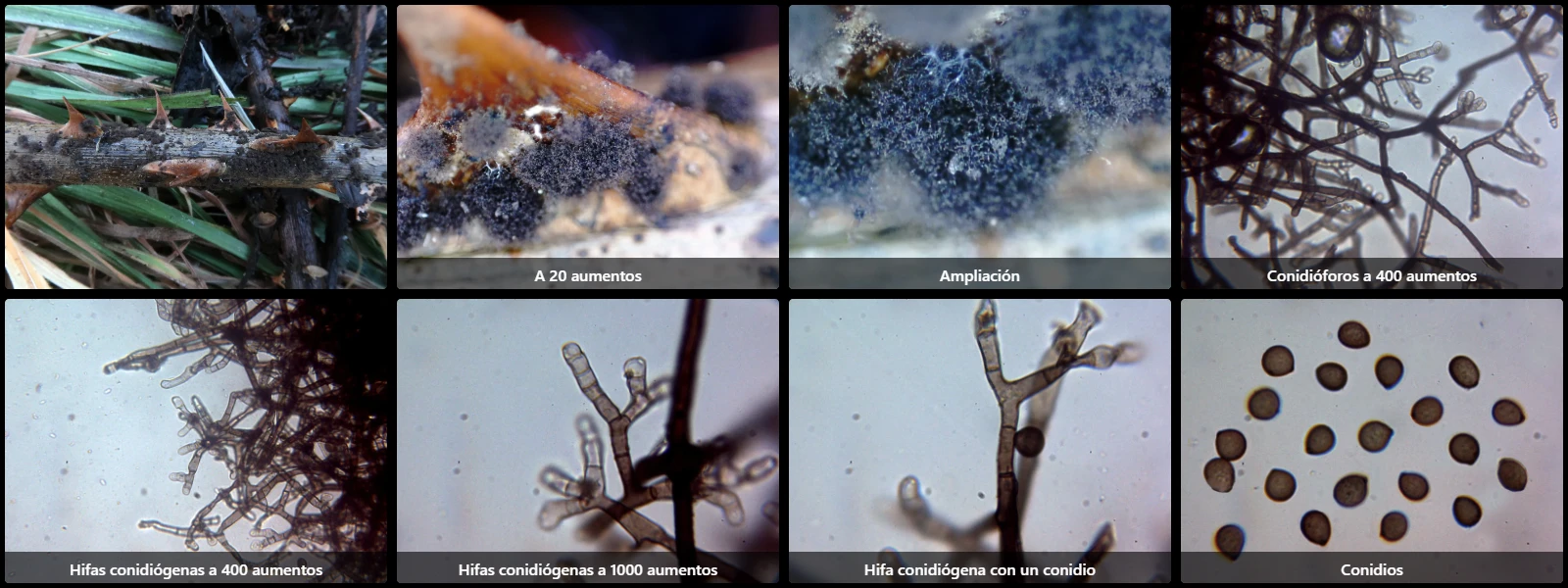
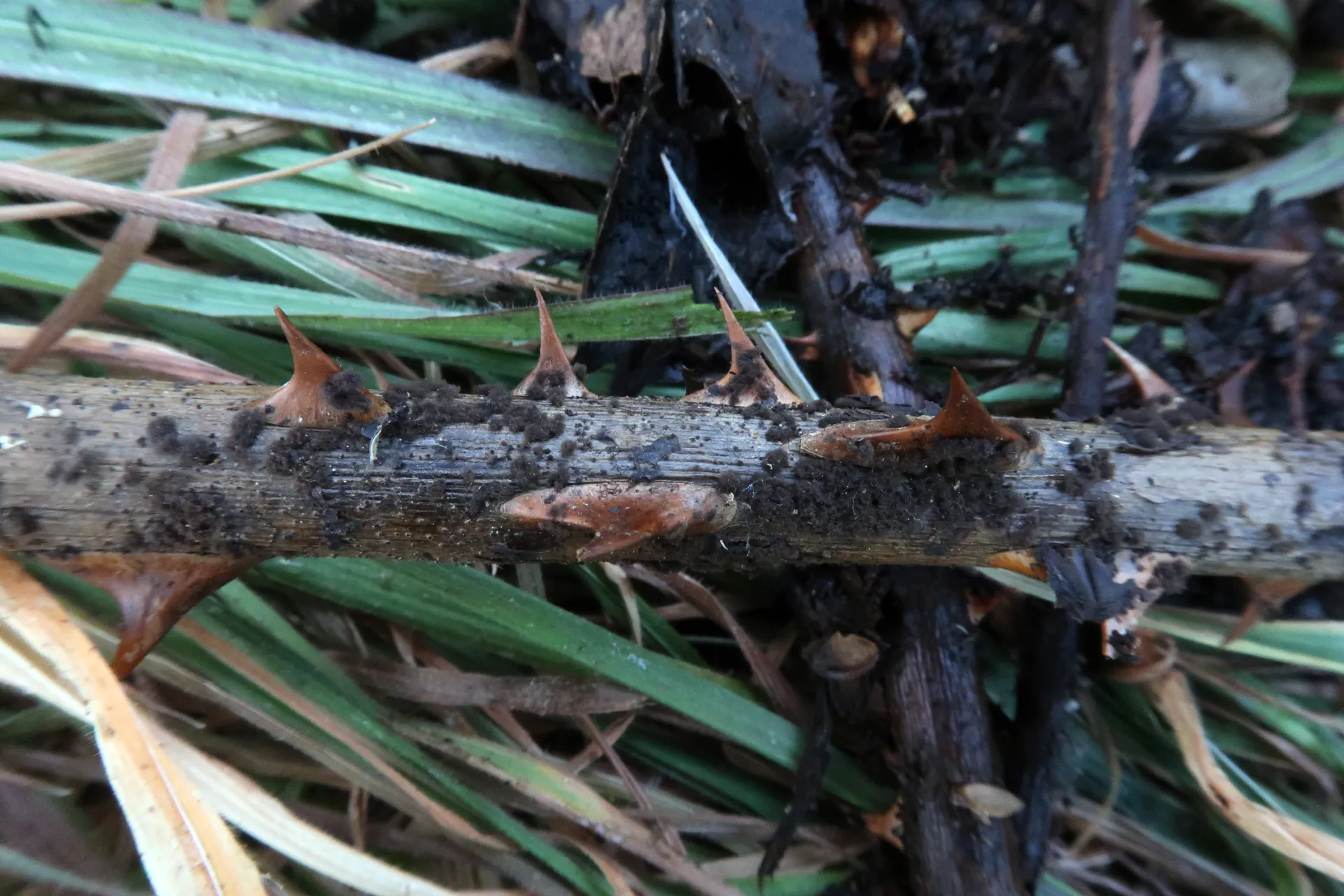
A study corresponding to the anamorph (asexual or conidial stage) of the species, on decaying stems of Rubus sp. Remarkably, while the type species is from Australia, the sample in this study is from my hometown (Balaguer), Spain, featuring irregular conidiomata, cottony in appearance, violaceous brown to blackish, and loosely attached to the substrate.
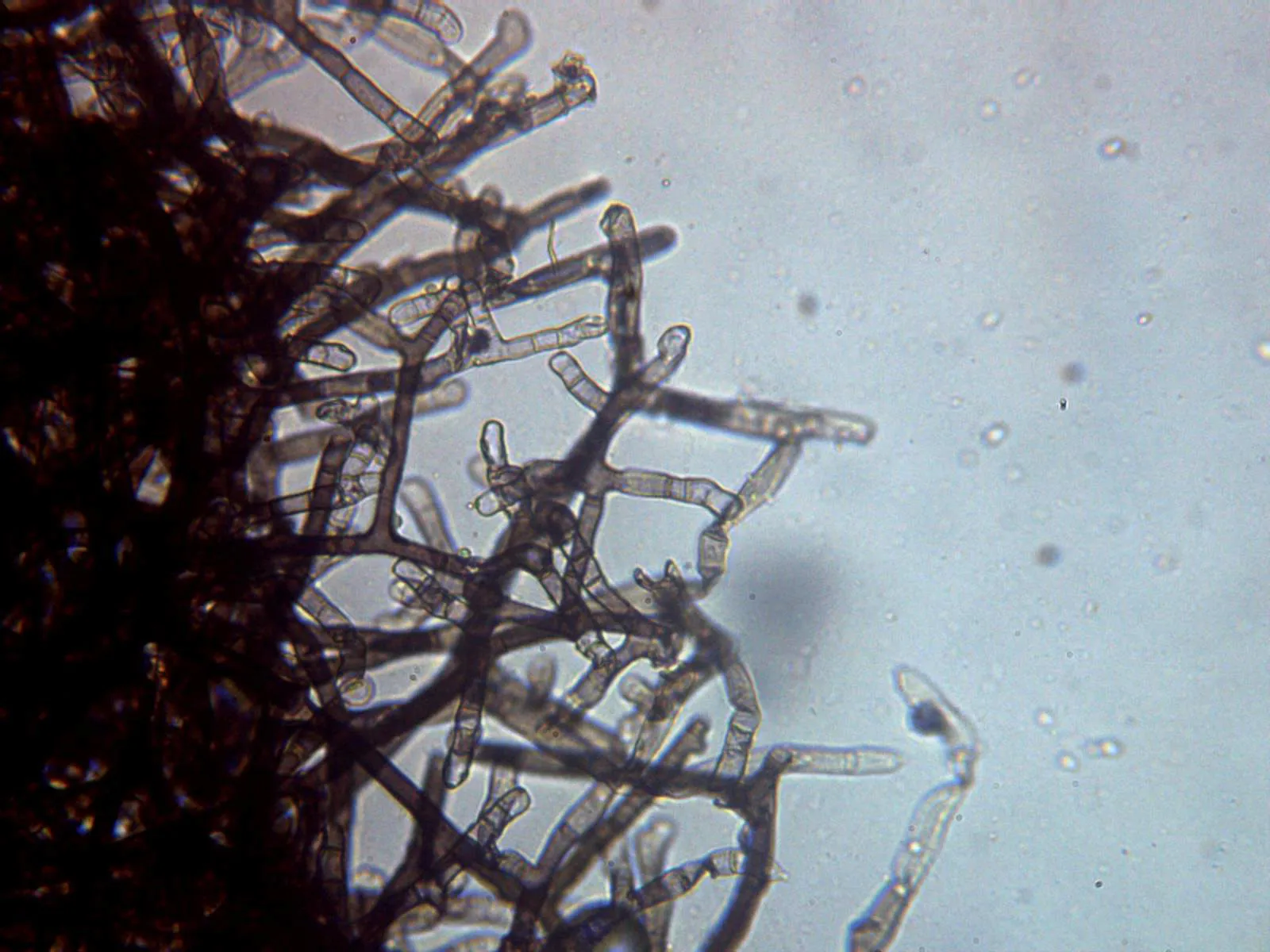
Conidiophores dematiaceous, formed by branched filaments 3 to 6 µm wide, with abundant dark brown intracellular pigment, thick-walled and well-defined.
Conidiogenous hyphae with repeated lateral branches, apices more hyaline, multiseptate, exhibiting geniculate (zigzag) growth.
Conidiogenesis of Geniculosporium type, with ovoid to pyriform conidia, smooth-walled, brown under the microscope, 8.5 to 11 µm long, 7 to 9 µm wide, with homogeneous contents.
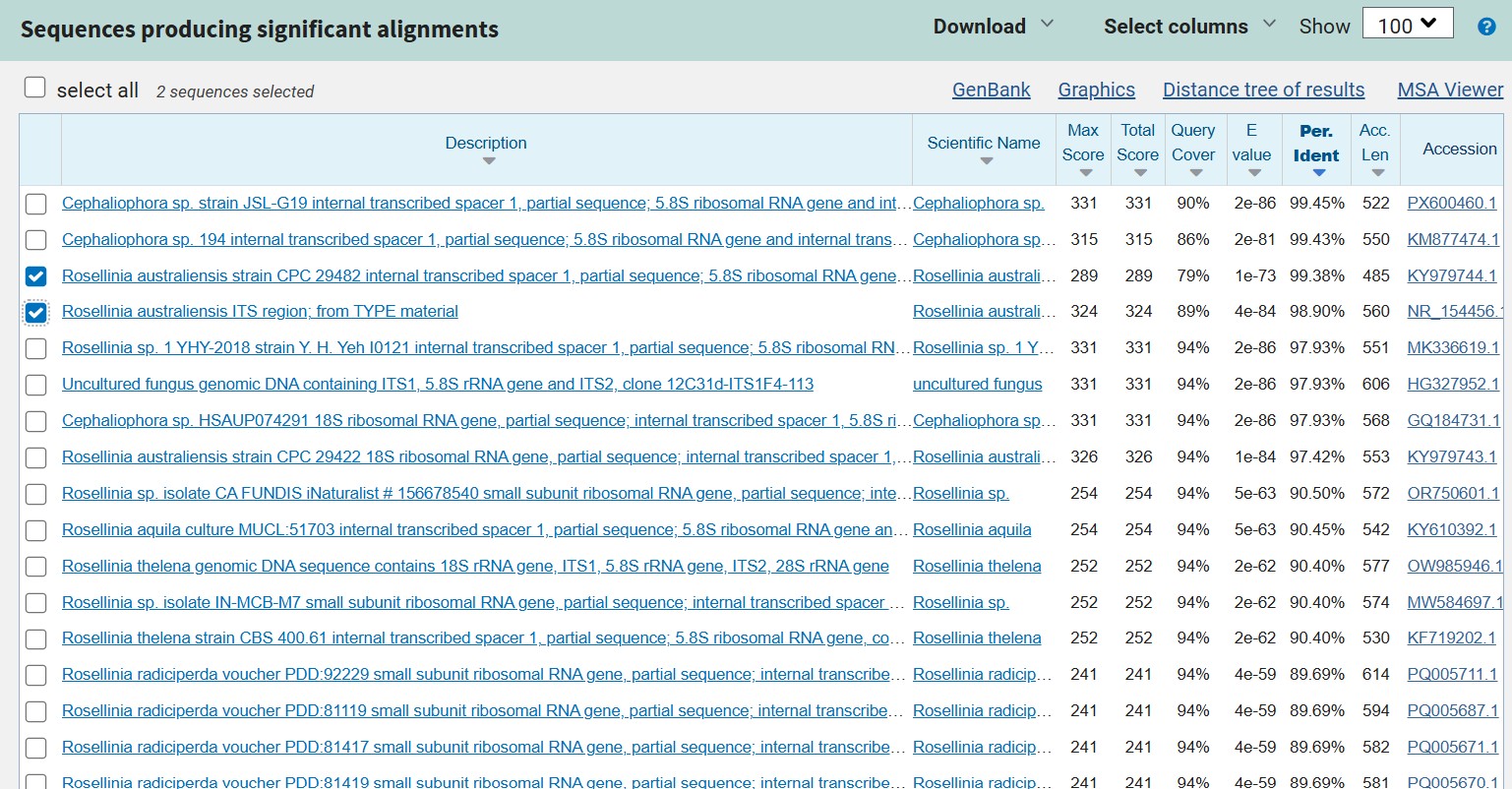
Remarks: Although the BLAST result shows molecular proximity to two sequences of Cephaliophora sp., that option must be ruled out because Cephaliophora produces extremely short conidiophores terminating in an ampulliform (swollen) head from which large, multicellular, clover-shaped or multiseptate conidia arise—wholly unlike the microscopy described here. In contrast, this study shows long branched dematiaceous conidiophores and unicellular, brown, truncate-based conidia, matching precisely what is accepted for Rosellinia australiensis.
Geographic references
Map generated from global occurrence data from GBIF. GBIF.
Study measurements
Values in Microns (µm)Macroscopic gallery
Microscopic gallery
Genetic / Phylogenetic Study
Phylogenetic Tree