Rosellinia aquila
(Fr.) Ces. & De Not.
Study description
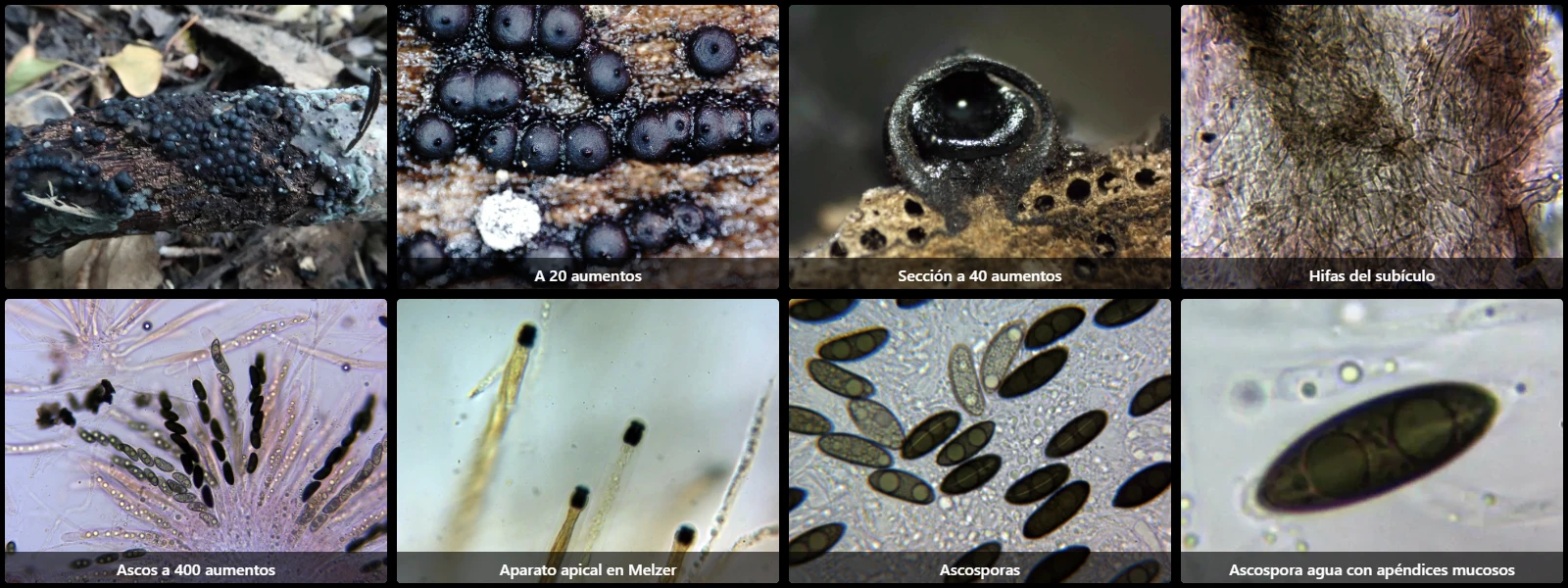
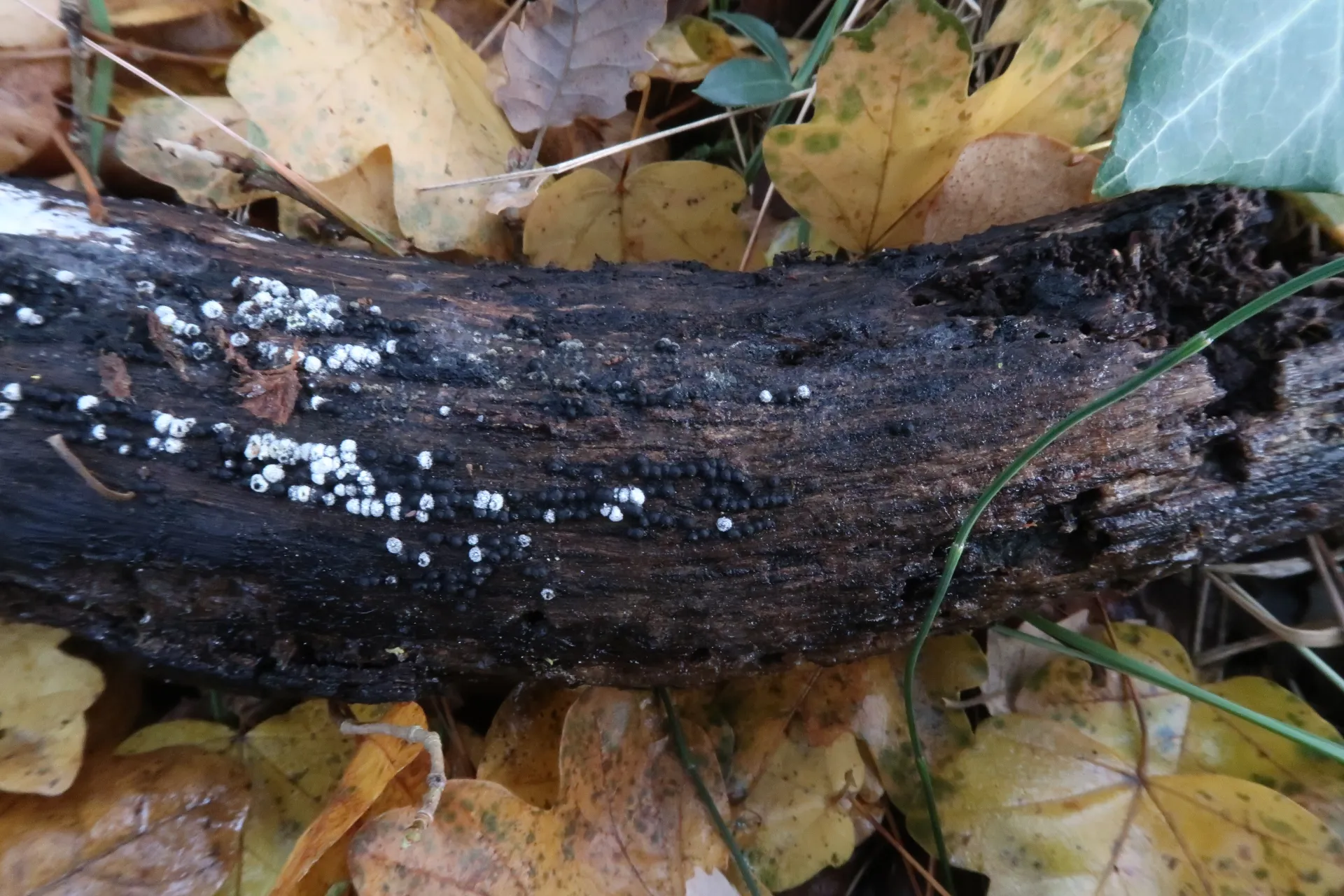
On decaying broadleaf wood on the ground, with stromata scattered to gregarious, bearing subglobose perithecia 0.9 to 1.3 mm in diameter, very dark brown to black, carbonaceous in appearance, with a conical apex, and a persistent violaceous-brown subiculum at least at the base of mature stromata.
Hyphae of the subiculum or inner felt filamentous, regularly branched, interwoven, 3.5 to 5 µm wide, containing abundant violaceous-brown pigment inside.
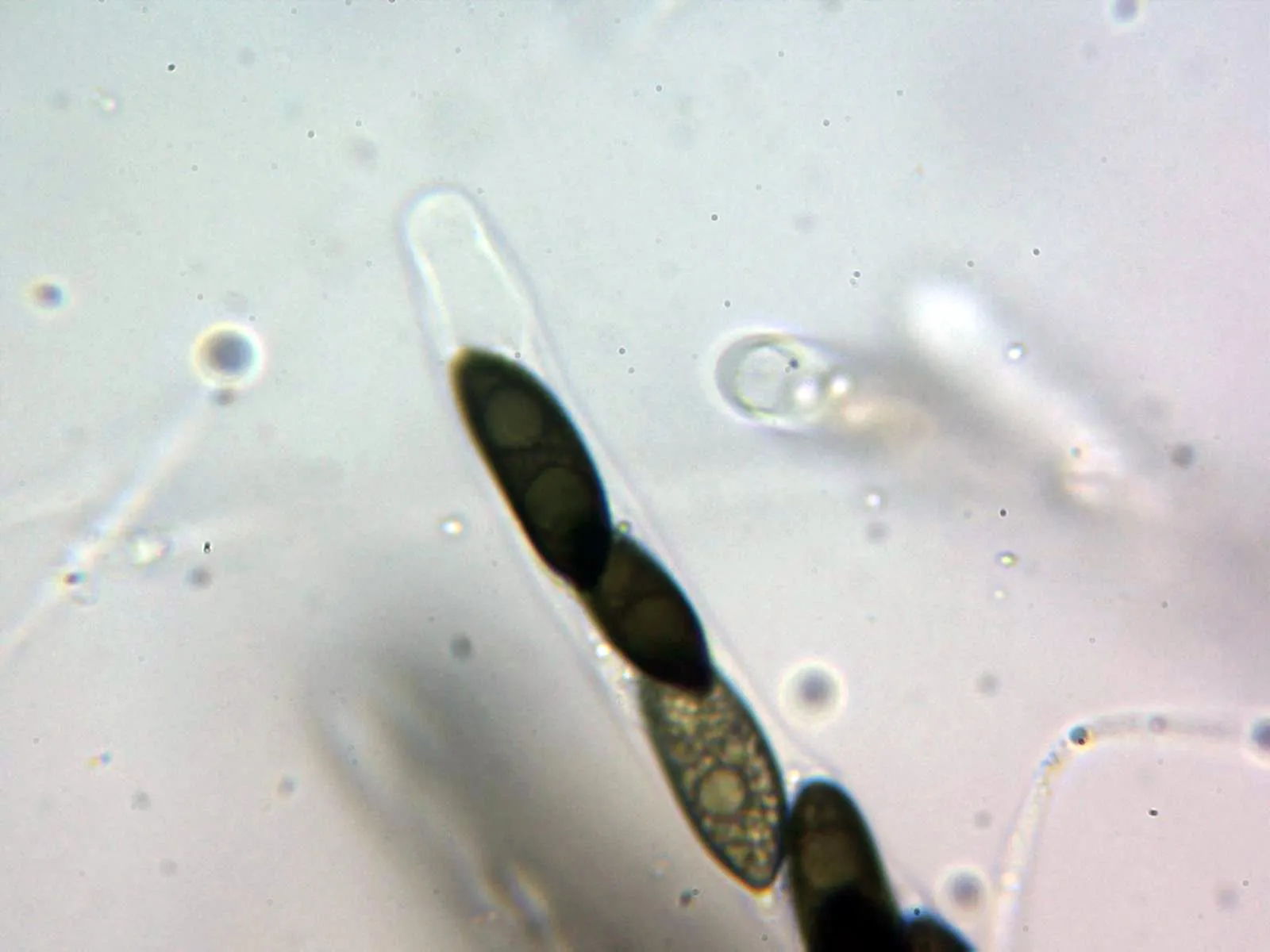
Asci cylindrical, eight-spored, 190 to 210 µm long, 8 to 10 µm wide, with spores arranged in a single row (uniseriate), the ascospores occupying more than half the total ascus length, with a strongly amyloid, urn-shaped apical apparatus 5.5 to 6.5 µm high and 4 to 5 µm wide.
Paraphyses filiform, smooth, hyaline, simple, unbranched, without apical enlargements, 2.5 to 3.5 µm wide and 200 to 240 µm long, comfortably exceeding the height of the asci.
Ascospores ellipsoidal, inequilateral (with one noticeably flattened side), smooth-walled, dark brown under the microscope, 15 to 22 µm long, 6 to 8 µm wide, with a straight germ slit occupying almost the entire length of the spore, and a hyaline appendage at both ends up to 2 µm wide and 1.5 to 1.8 µm high.
Geographic references
Map generated from global occurrence data from GBIF. GBIF.
Study measurements
Values in Microns (µm)Macroscopic gallery
Microscopic gallery