Rhytidhysteron neorufulum
Thambug. & K.D.Hyde
Study description
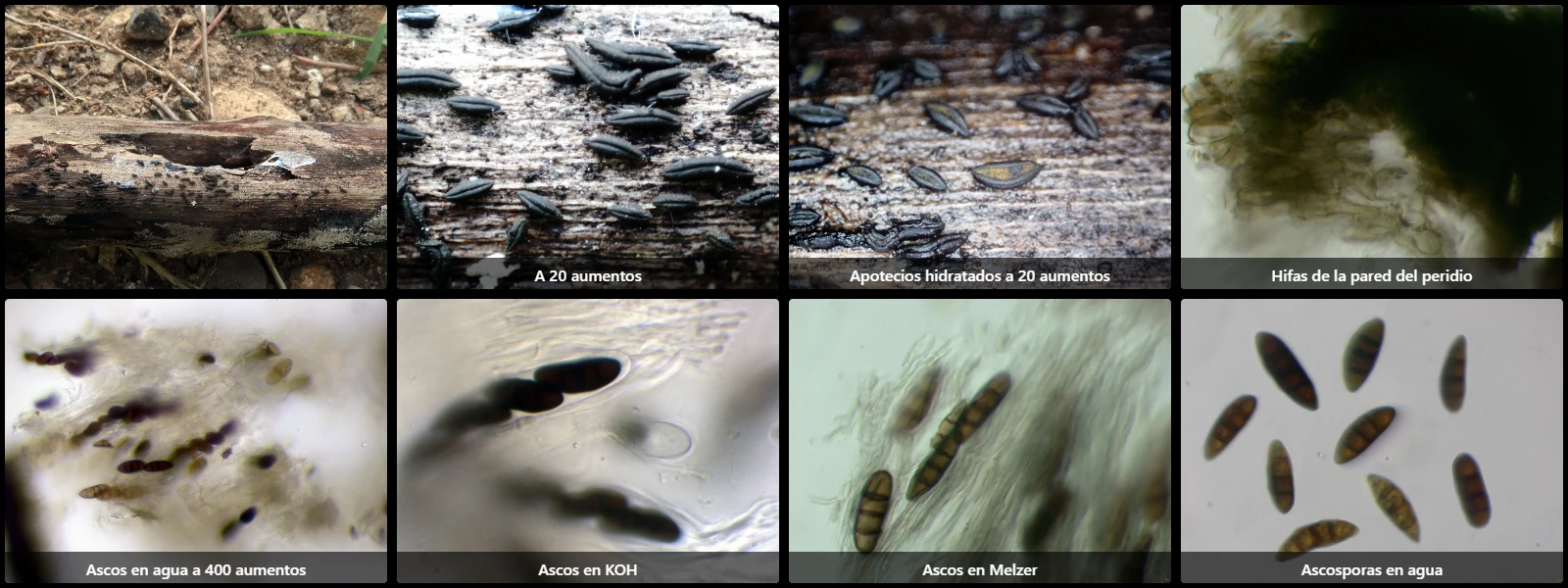
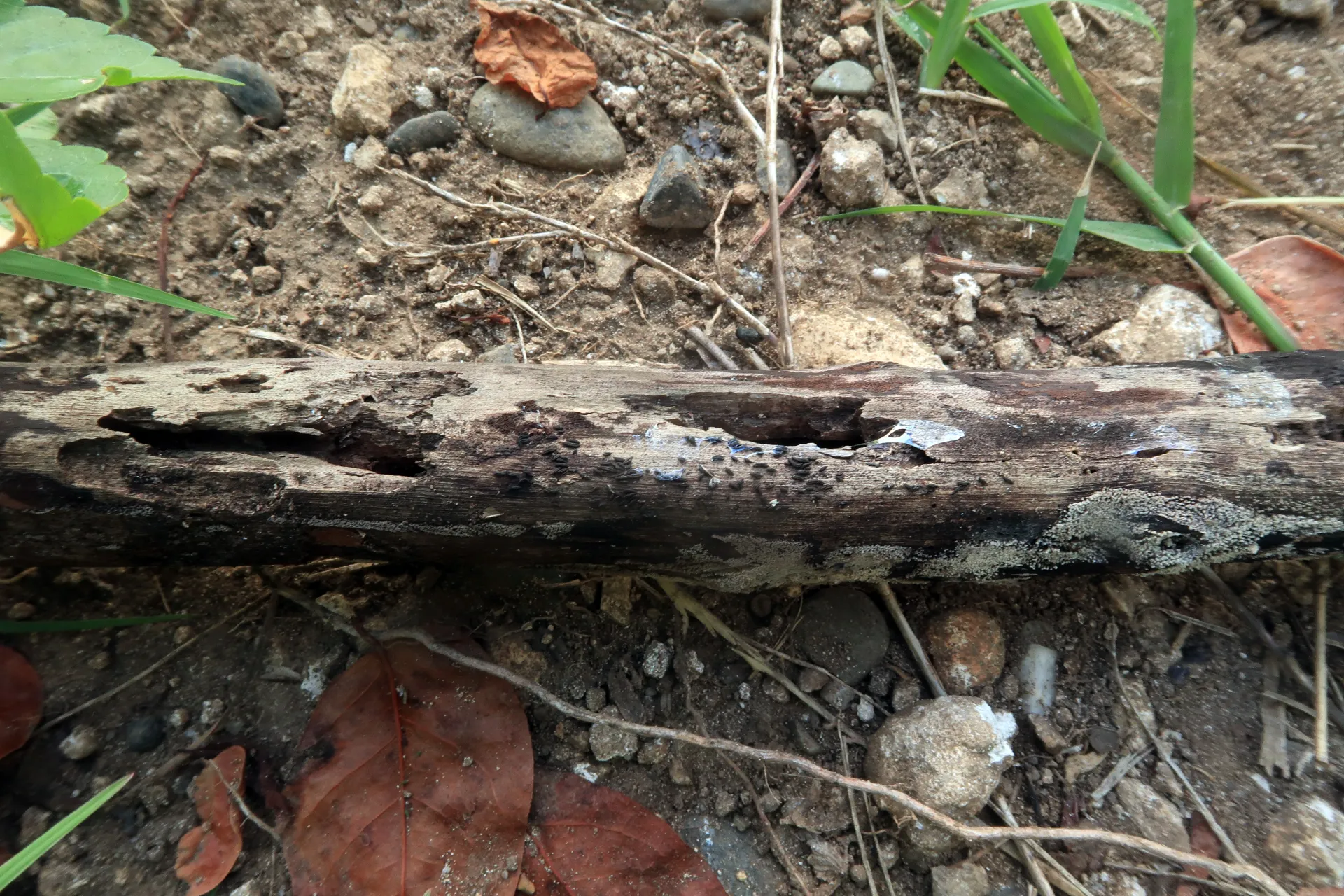
A species typical of tropical climates, with navicular to fusiform hysterothecia 2 to 3 mm long, 0.7 to 1 mm wide, black and carbonaceous in appearance, with a longitudinal slit that opens under moist conditions, becoming lenticular to reveal its pale orange hymenium.
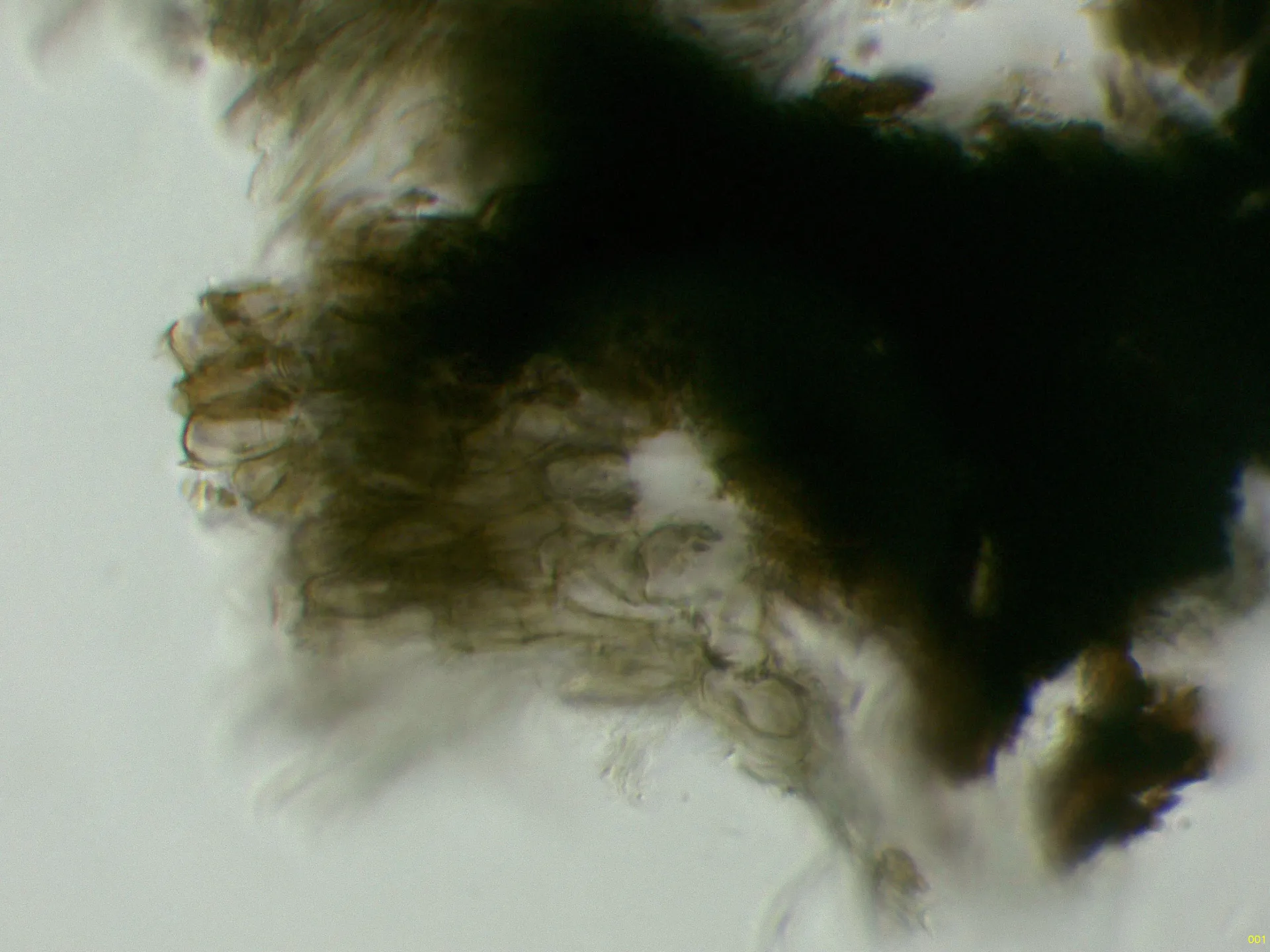
Peridium formed by pseudoparenchymatous prismatic hyphae, 8 to 14 µm long, 6 to 9 µm wide, with thick walls up to 1 µm, and abundant brown pigment inside.
Asci cylindrical-clavate, eight-spored, bitunicate, 225 to 250 µm long, 14 to 16 µm wide, with uniseriate spore arrangement inside the ascus, and inamyloid in Melzer's reagent.
Pseudoparaphyses filamentous, hyaline, unbranched, 1 to 2 µm wide, with slight apical enlargements up to 4 µm, projecting considerably above the asci.
Ascospores ellipsoidal to fusiform, smooth, thick-walled, brown under the microscope, 30 to 36 µm long, 10 to 13 µm wide, with three transverse septa and oil droplets inside.
A species very similar to its congener Rhytidhysteron rufulum, the latter having discoid apothecia when moist and smaller spores measuring 22.4–30.4 × 8–9.6 µm.
Herbarium material available: JTP2532/25.
Geographic references
Map generated from global occurrence data from GBIF. GBIF.
Study measurements
Values in Microns (µm)Macroscopic gallery
Microscopic gallery